
Branded residences: Dubai leads the world, and what the premium actually buys
Dubai has more branded residential schemes than any other city — roughly one in seven worldwide. Where the format started here, what the premium over comparable luxury pays for, and the five clauses to read before signing.
A branded residence is housing sold under the name of a hotel group, fashion house or car marque and run to that brand's standards. Dubai is the world's largest market for the format, and by a clear margin over Miami and New York.
The scale
Industry research puts Dubai at more than 140 live and pipeline branded schemes as of early 2026 — roughly one in every seven such projects worldwide. For context, the global pool tracked by analysts runs to over a thousand schemes across 83 countries.
The premium over comparable non-branded luxury reaches as high as 64% in particular submarkets. That is the top of the range rather than the average; in the broader premium segment the uplift is more modest, and it depends heavily on which brand and on what the brand actually does in the building.
Talk to a licensed broker: 📲 +971 50 120 32 64 on WhatsApp, @dubai_oleg on Telegram
Where it started here
The format arrived with the Burj Khalifa. The Armani hotel in the base of the tower, opened in 2010, was Giorgio Armani's first hotel anywhere, and he worked on the concept and interiors himself. Above it, on floors 9 to 16, sit 144 Armani Residences finished and furnished in the same hand, with access to hotel service.
That looked exotic at the time. Fifteen years later Dubai builds not only branded apartments in the centre but branded villas, beach residences and whole quarters, under names ranging from hotel groups to fashion houses and car manufacturers.
What the premium pays for
It breaks into four components of very different quality.
- A finished product. The unit is delivered fully fitted and furnished to the brand's standard. That is a genuine saving in time and money: doing the equivalent yourself is expensive and takes months.
- Service. Concierge, room service, housekeeping, access to hotel facilities where a hotel is present. This is the part of the premium that works — and the reason the service charge is high.
- Maintenance standards. The brand polices the condition of shared areas because its name is on them. Ten years in, the difference between a branded building and an ordinary one of the same vintage is visible from the lobby.
- The name itself. The most debatable component. It raises recognition on resale and narrows the buyer pool at the same time.
Five clauses to read
- Brand licence term. The name is granted for a period. What happens when it expires is in the documents — and it answers whether your building is still branded in twenty years.
- Who operates. Brand and management company are not always the same entity. Service is delivered by the operator, and the quality follows the operator rather than the logo.
- Service charge per square foot. Several times the ordinary rate. It is a permanent cost for the whole holding period, and over a long horizon it can consume a meaningful part of the premium.
- What furnishing includes. "Furnished by" can mean a complete package or a kitchen and fitted wardrobes. The difference runs to hundreds of thousands of dirhams.
- Letting restrictions. Some schemes prohibit short-term letting outright or require it to run through the management company for a share of the income. For an investment case this is the decisive clause.
On returns
A branded unit holds value better in a falling market and sells noticeably more slowly in any market. Liquidity is lower than in ordinary premium stock, simply because fewer buyers are willing to pay the premium a second time. The format therefore suits owners with a long horizon buying partly for themselves, and suits poorly anyone planning to exit in two or three years. A return calculation that does not carry the entry premium through to the exit price is not a calculation.
Video on this topic
The same subject on the English channel — each clip has a written version of its own.
 36:55The Biltmore Residences Dubai: brand history, the numbers, and what you can actually earn14 July 2023
 5:41Vida Residence Downtown: ready apartments beside the Burj14 June 2024
 23:55Baccarat Dubai: the branded residence next to the Burj16 December 2023
 21:53Southern Cyprus property: Limassol prices, residency and how to avoid losing money10 October 2026
 9:35Mira Verde at Tbilisi Hills: a Dubai developer building in Georgia6 October 2025
 8:54Address Sky View: the twin towers with the bridge, reviewed properly31 May 2024
In the news
Other write-ups on the site about the same thing.

Branded residences in Dubai: 64 completed, 87 in the pipeline and a 64% average premium
Dubai is the world's leading city for branded residences, with 64 completed schemes and 87 in the pipeline (Savills). CBRE puts the average price premium at 64% in Dubai and 87% in Abu Dhabi. What the premium pays for, and how it behaves when the market cools.

Kempinski Floating Palace: 48 self-propelled Neptune villas from AED 29m, and where the project stands in 2026
Kempinski Floating Palace pairs an on-water hotel near Jumeirah Bay Island with 48 self-propelled Neptune villas of 2–4 bedrooms. Summer 2024 prices were AED 29m, 32m and 46m; completion was set for late 2026. What buyers are actually purchasing, and what to check before signing.
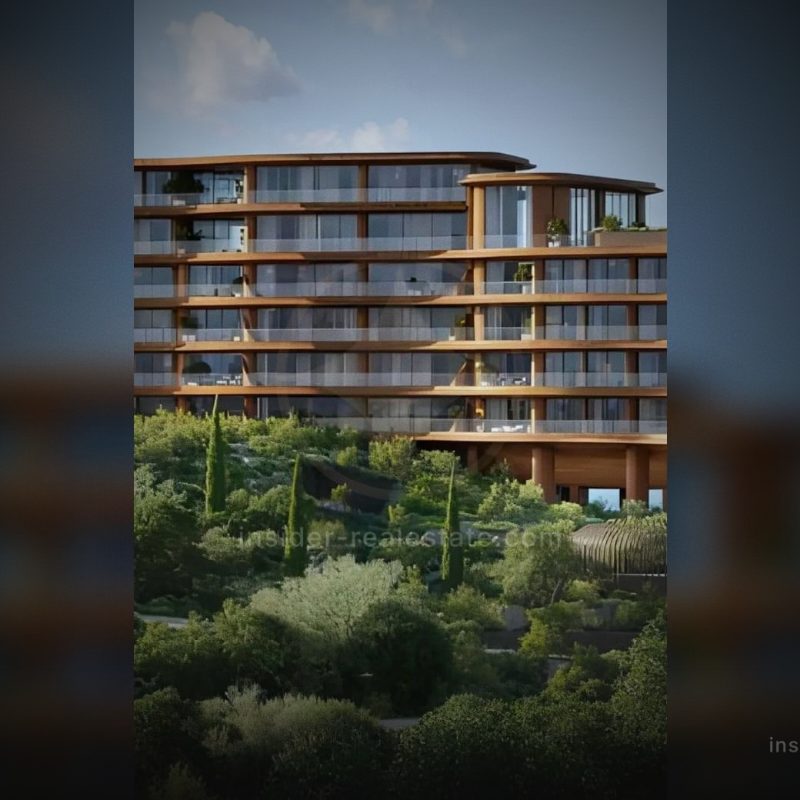
Luxury property on the Jumeirah coast: Aman Dubai, the MGM island and Asora Bay
Dubai's Jumeirah shoreline is becoming the region's priciest resort coast: Aman Dubai with 82 residences, the Wasl–MGM island with Bellagio, Aria and MGM Grand (about 1 400 keys, now due in the second half of 2028), and Meraas's 29-home Asora Bay. What the cluster does to coastal values.

Six Senses Residences The Palm: sky villas and penthouses in a completed scheme
Access has opened to held-back stock in one of Dubai’s most visible finished projects — sky villas, signature villas and penthouses, delivered fully finished. What buying completed premium changes about the risk.

SLS Residences The Palm: 113 homes and a branded building with no hotel in it
The first standalone SLS residence anywhere — no hotel in the scheme. What the composition and location are, and the question that decides the economics: who provides the service, and who funds it.
Trophy property: why it has no ROI, and what to calculate instead
A unique asset cannot be modelled like a rental flat: no comparables, no predictable income stream, no predictable exit. What actually sets price at the top of the market, and which calculations are worth doing there.