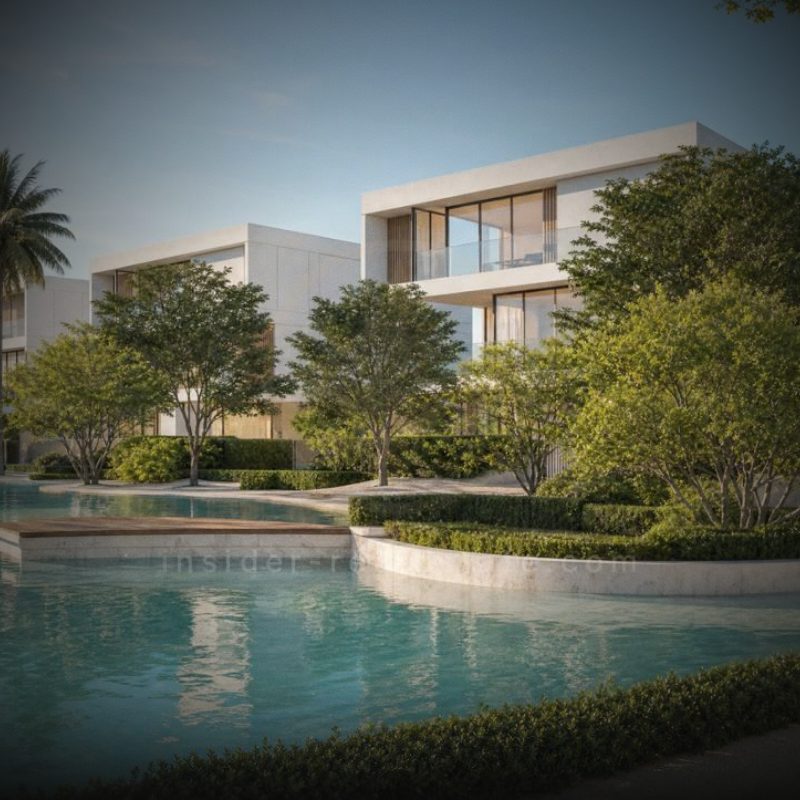
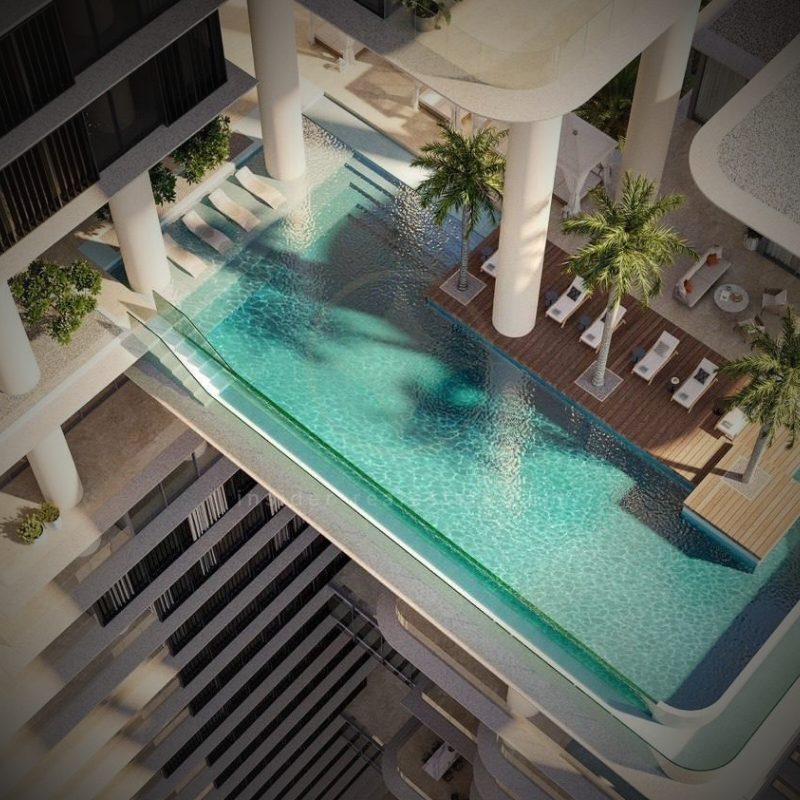
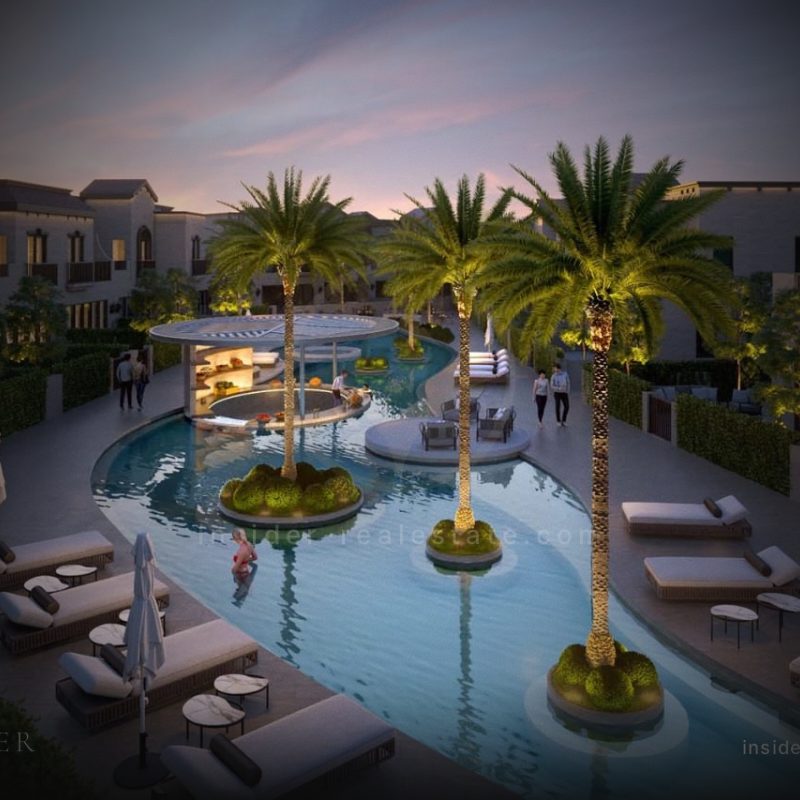
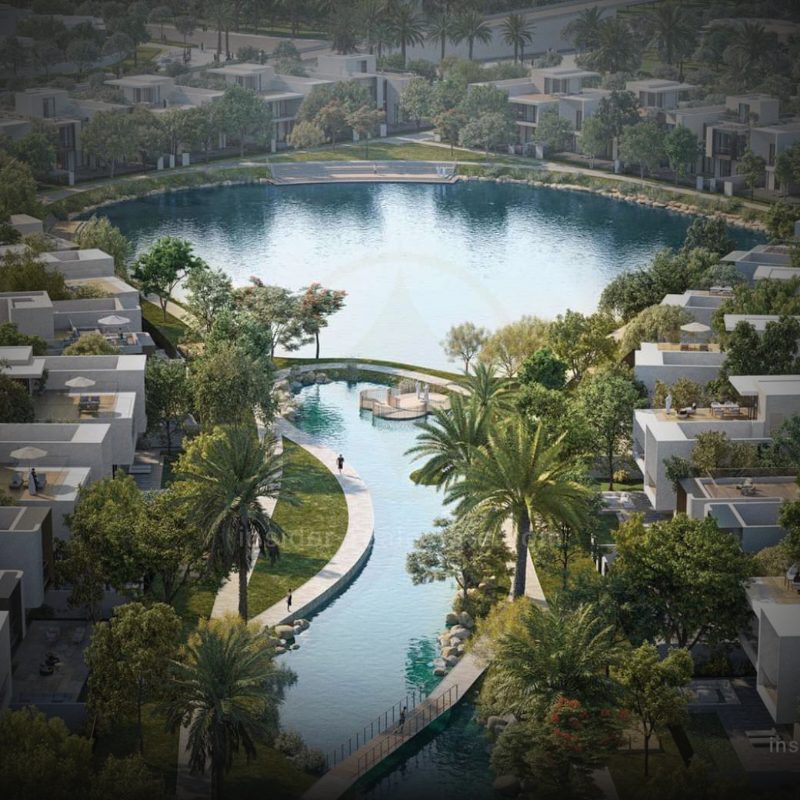
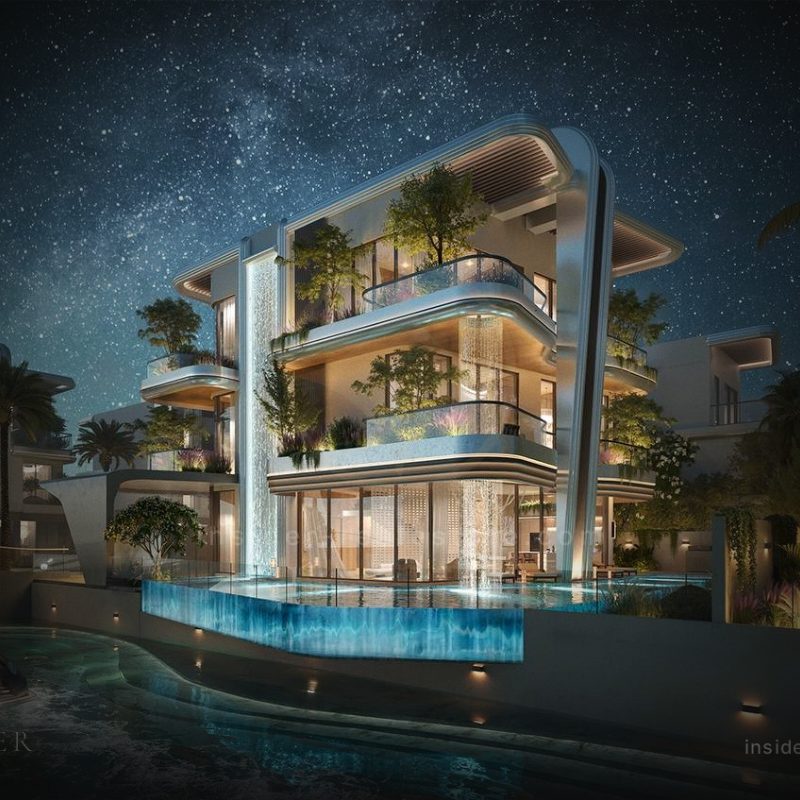
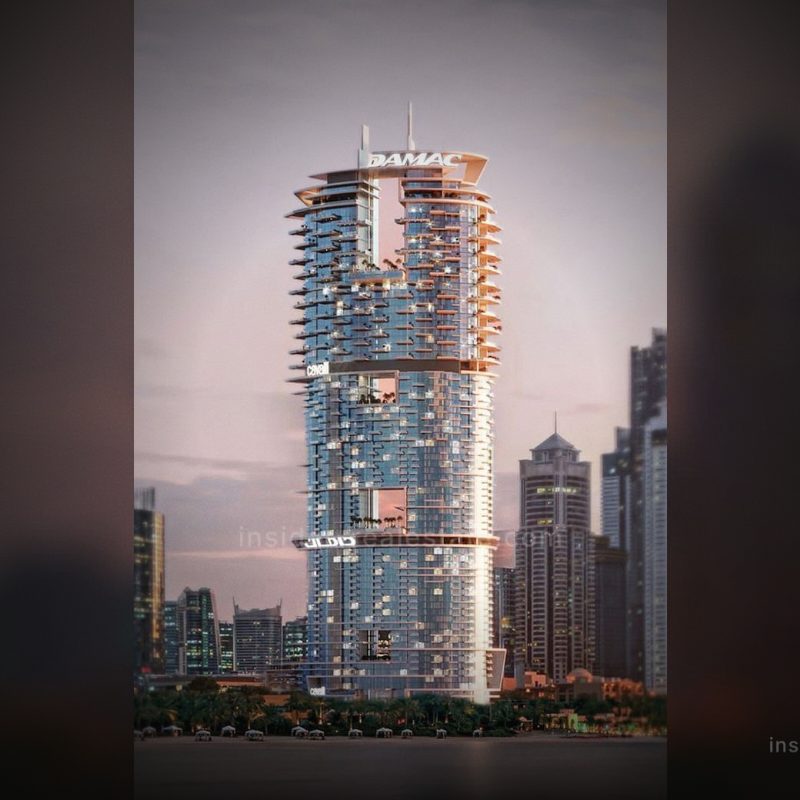
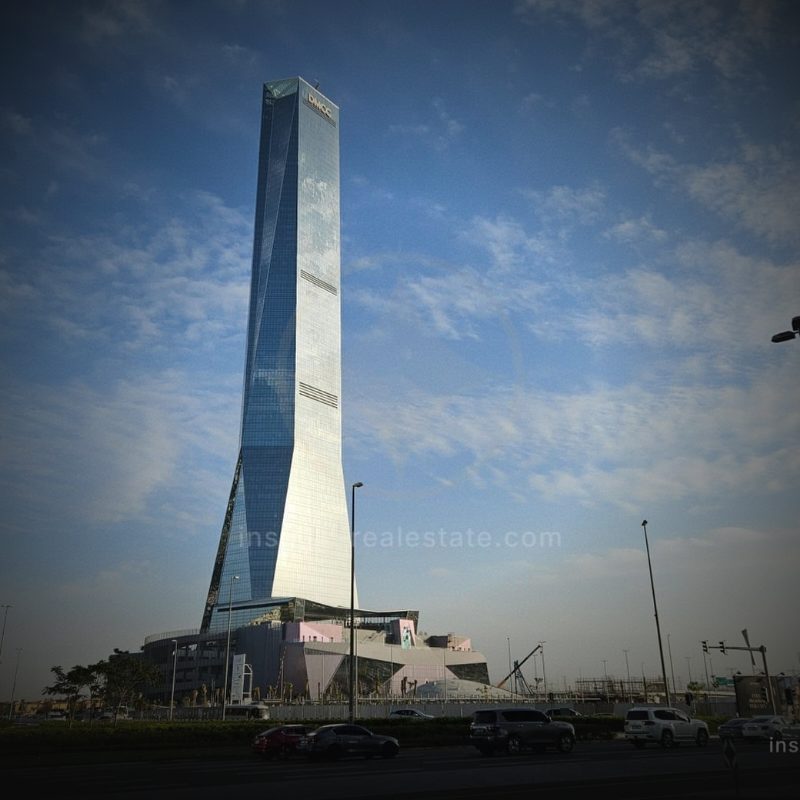
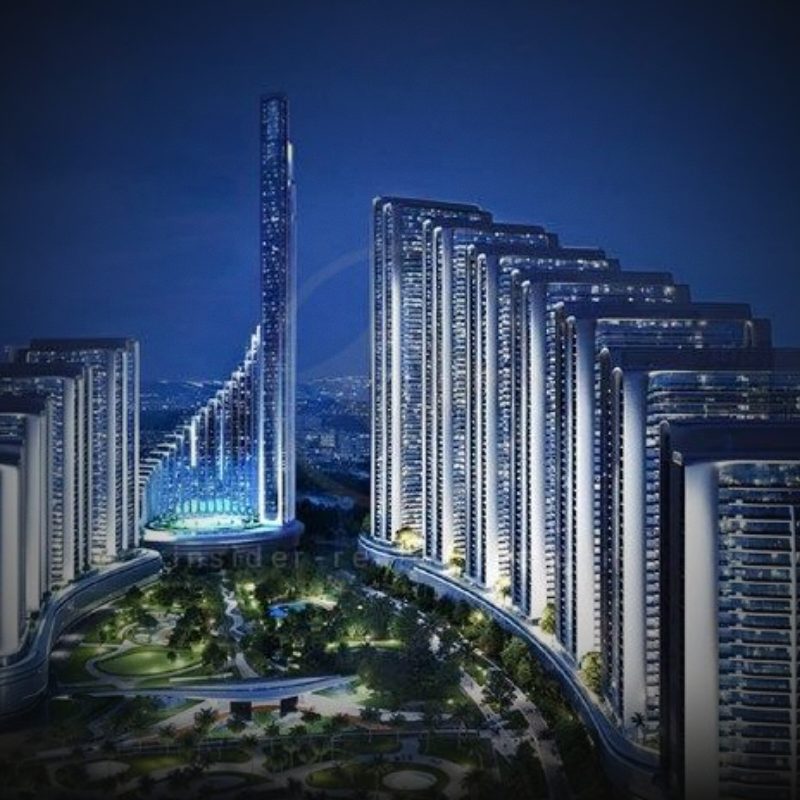
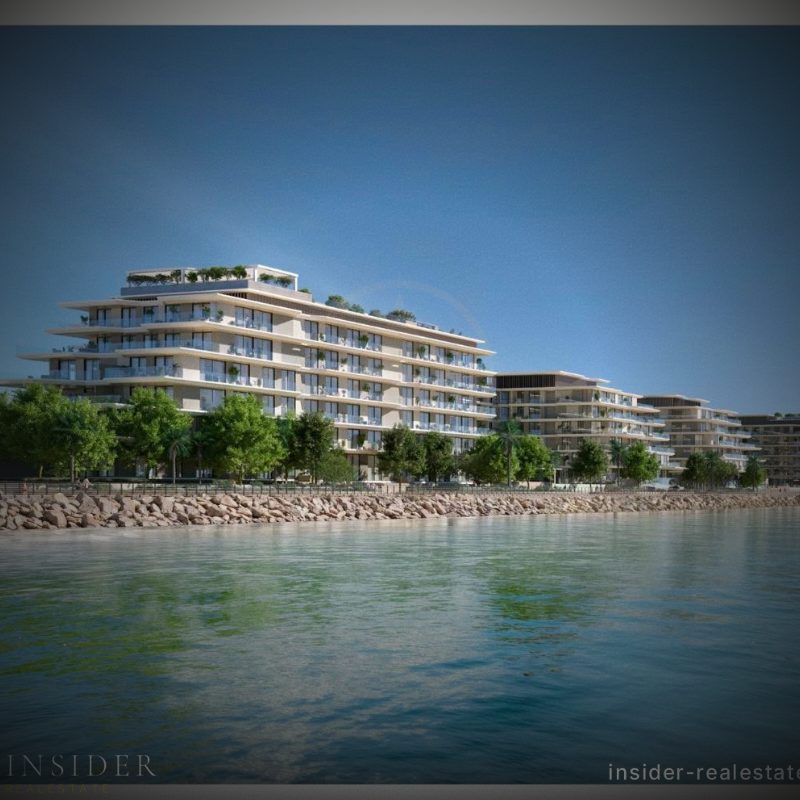
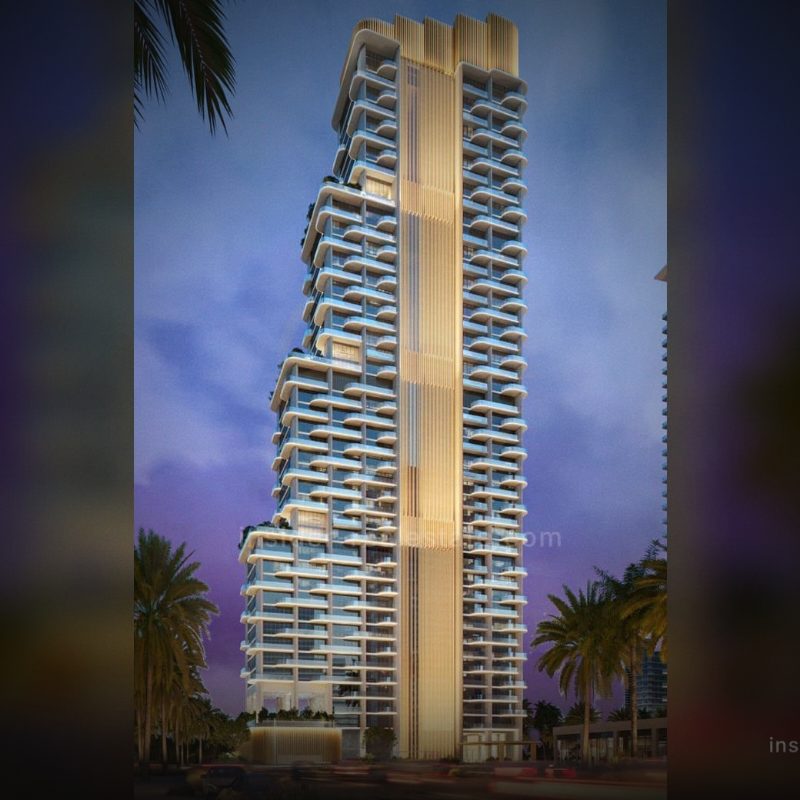
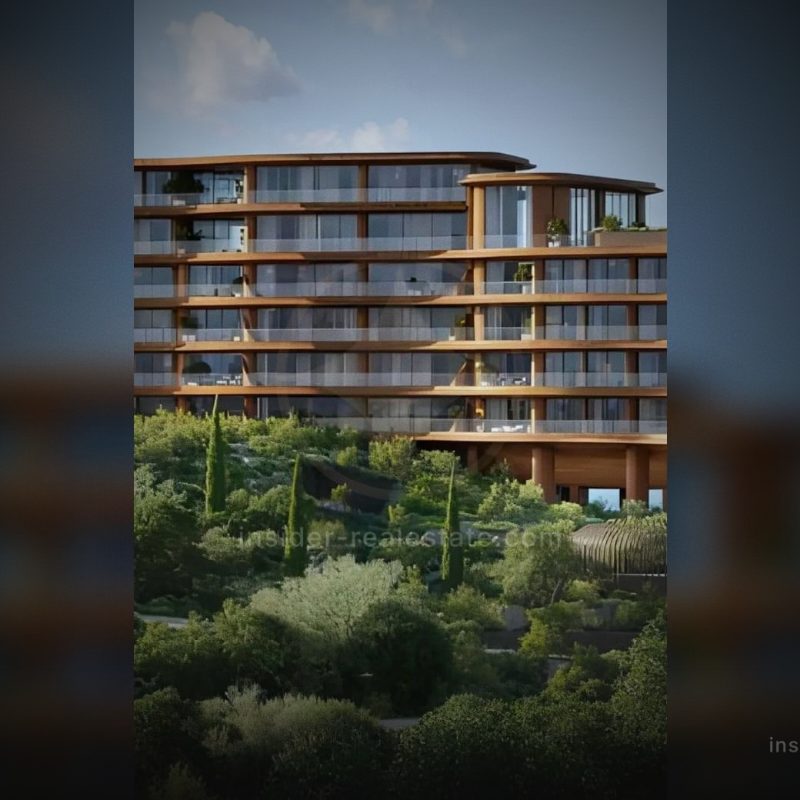
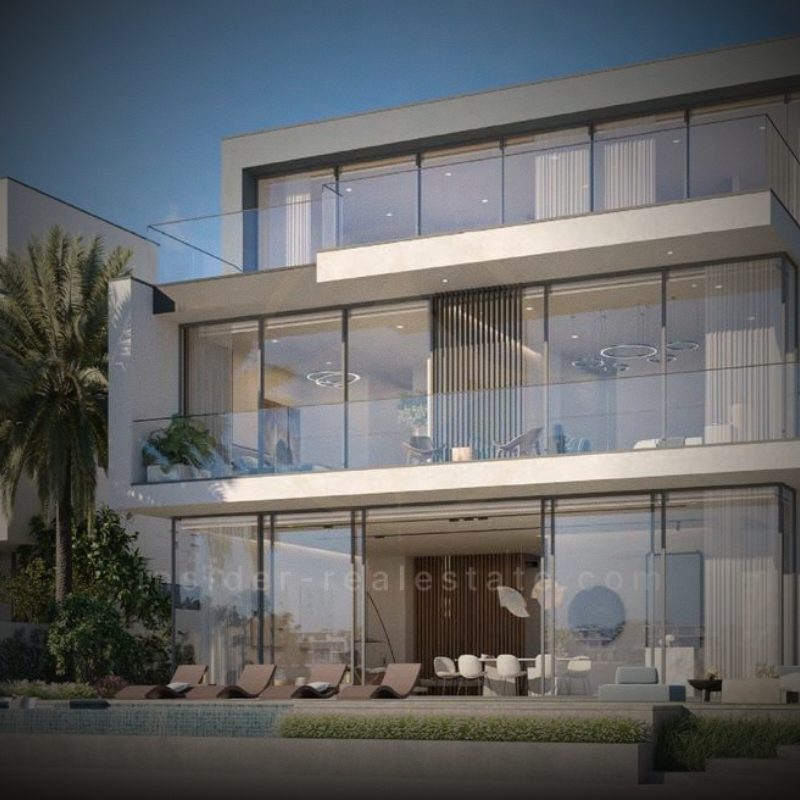
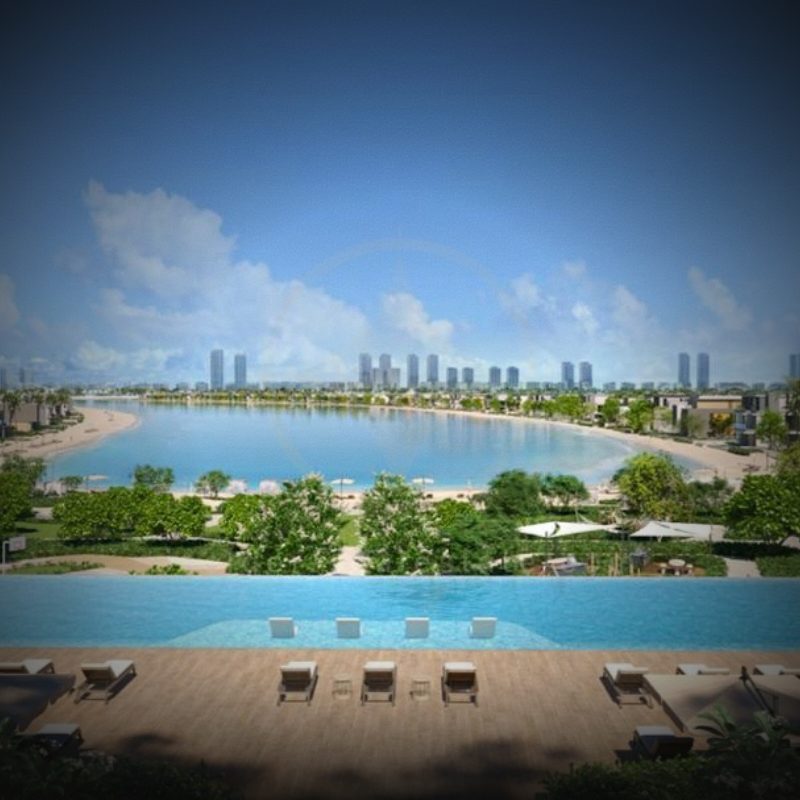
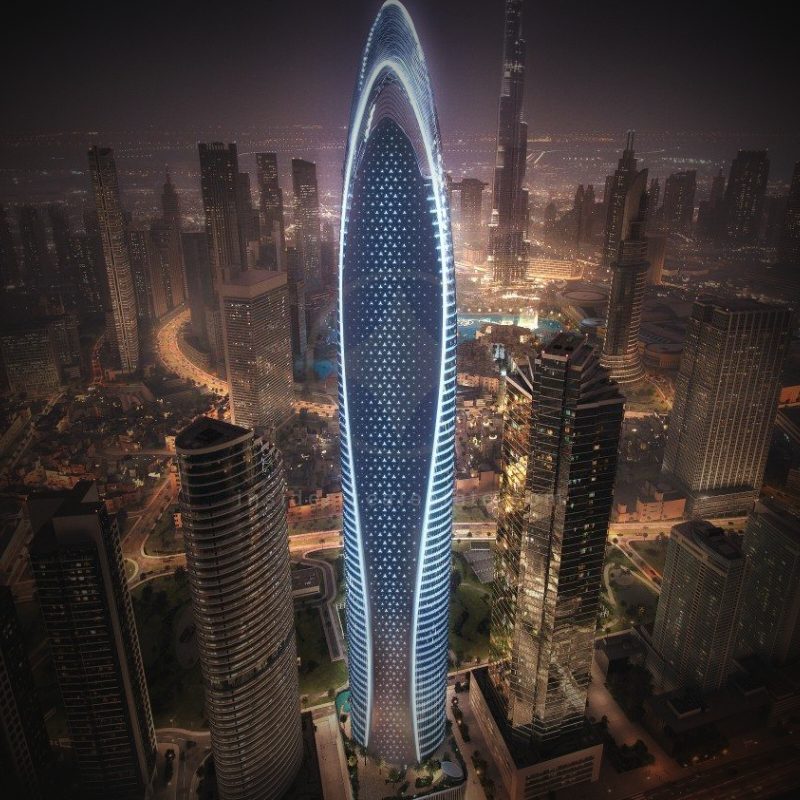
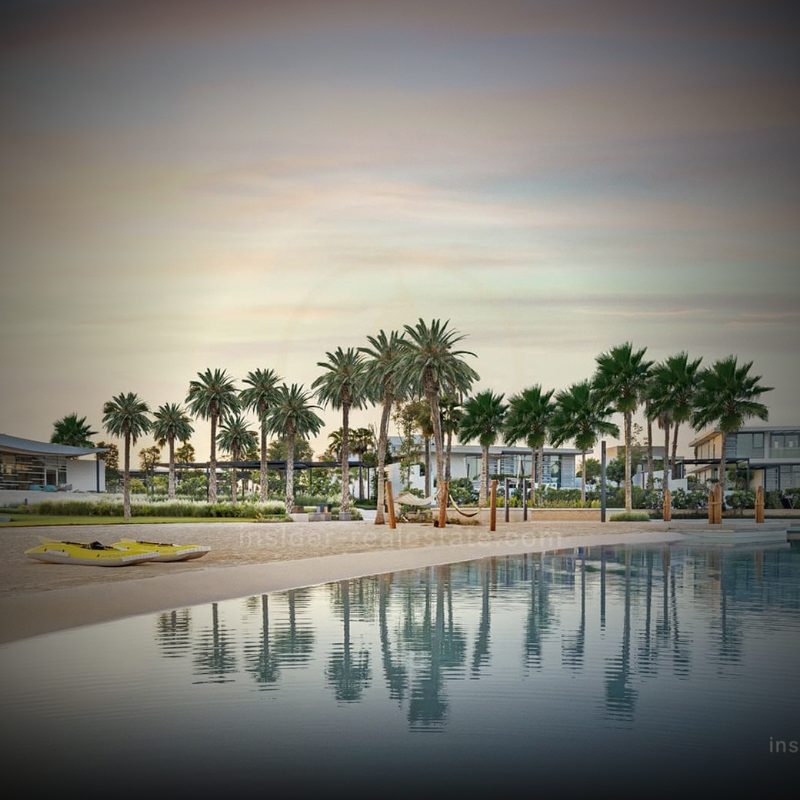
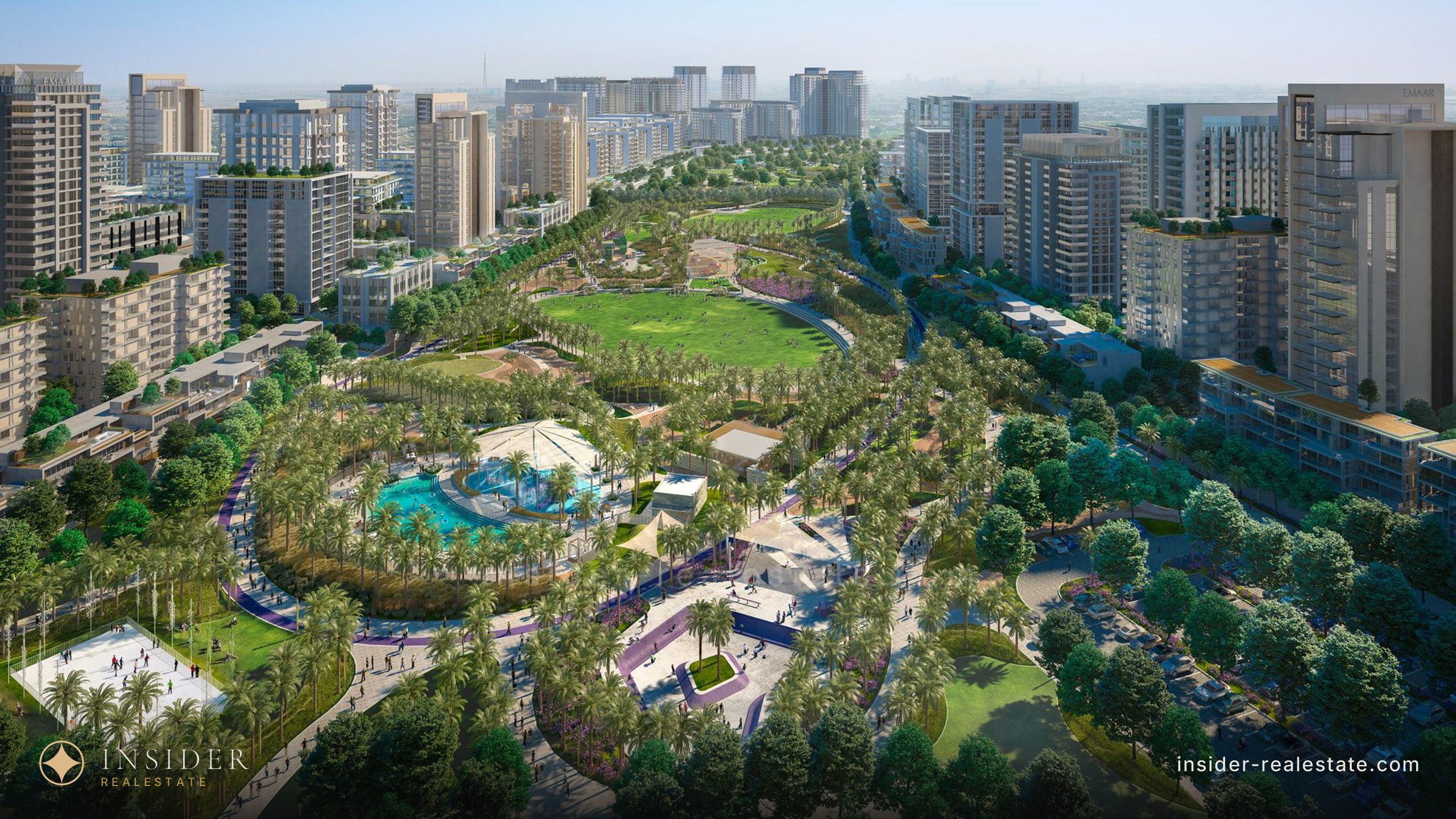
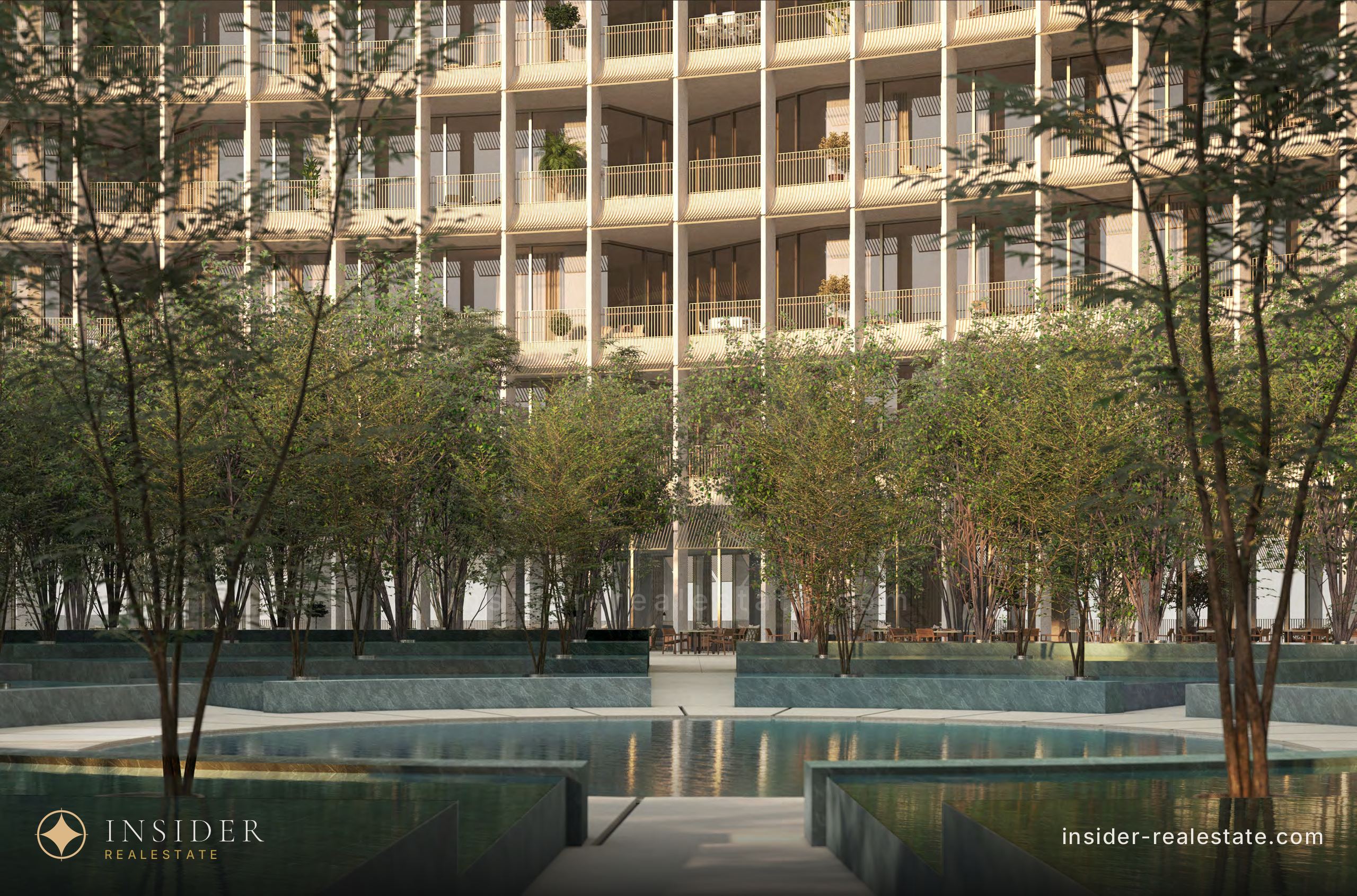
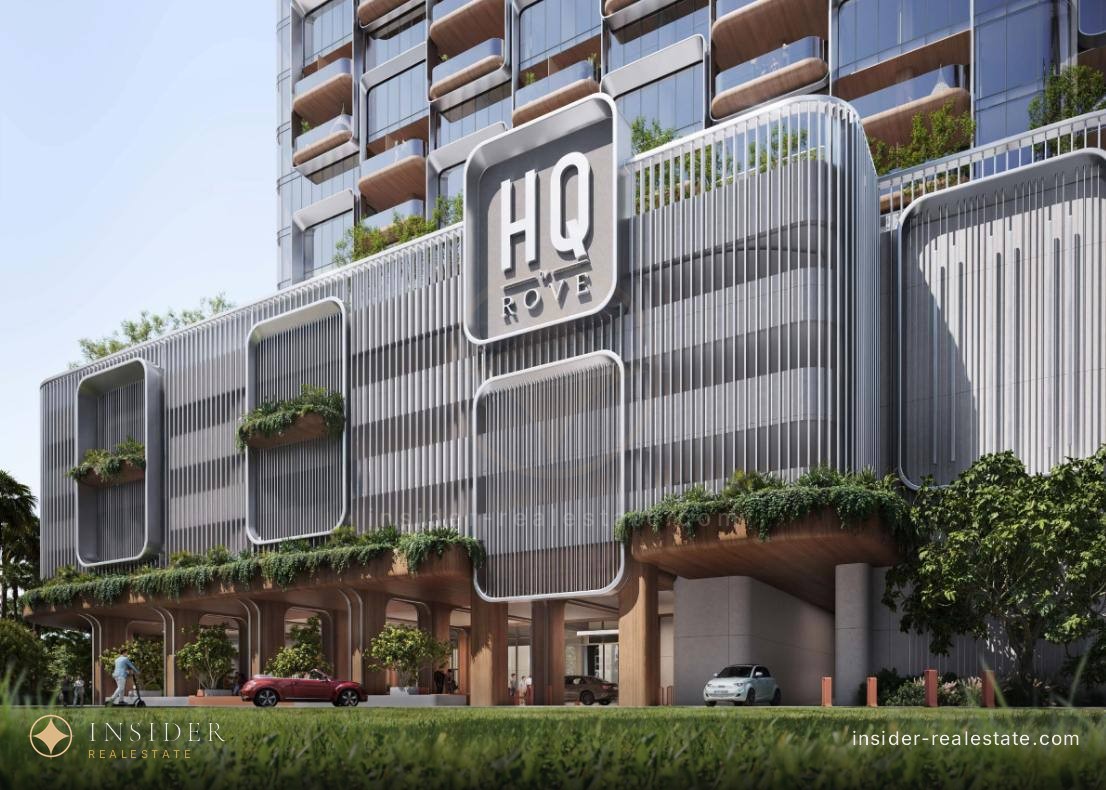
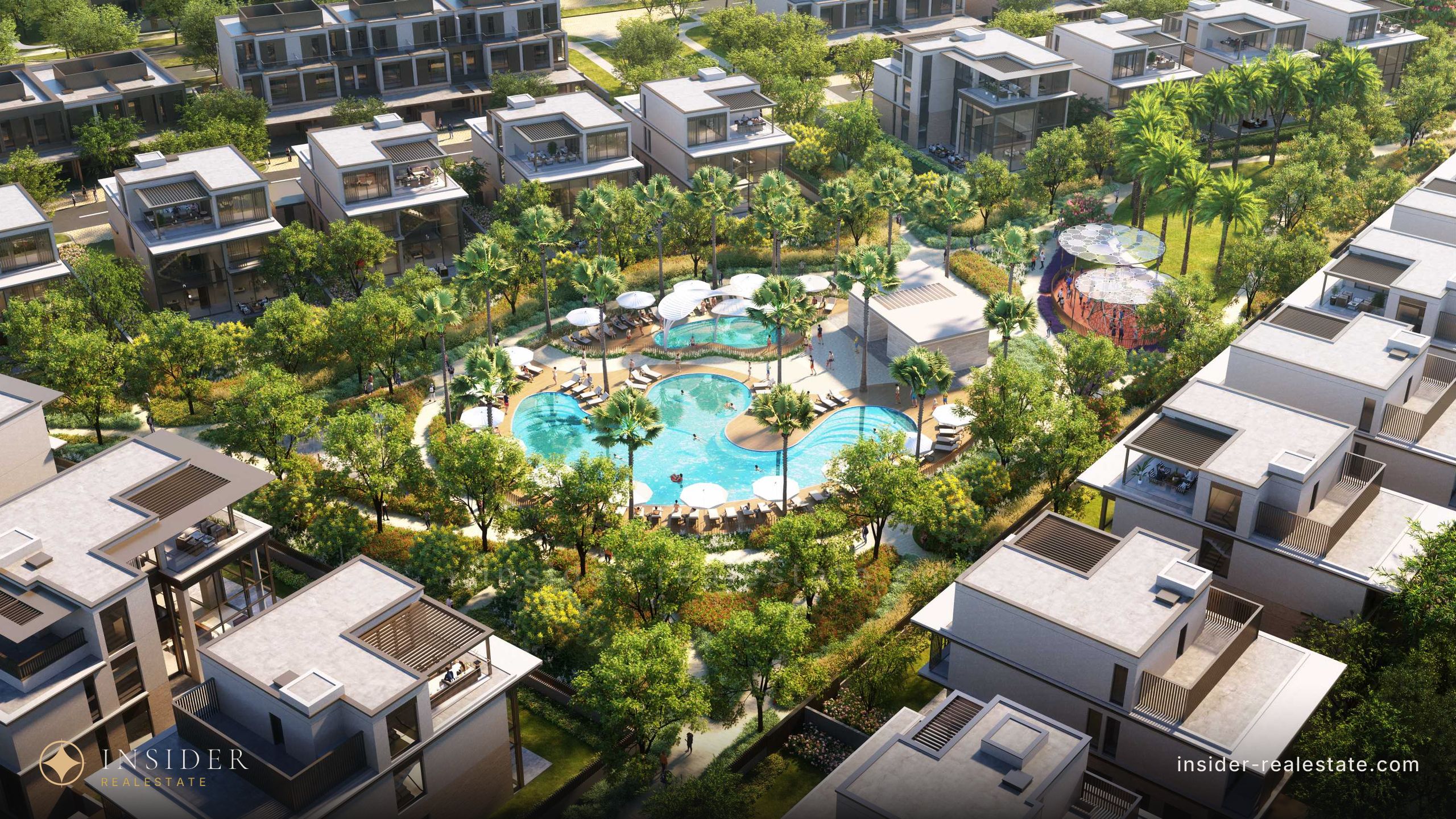
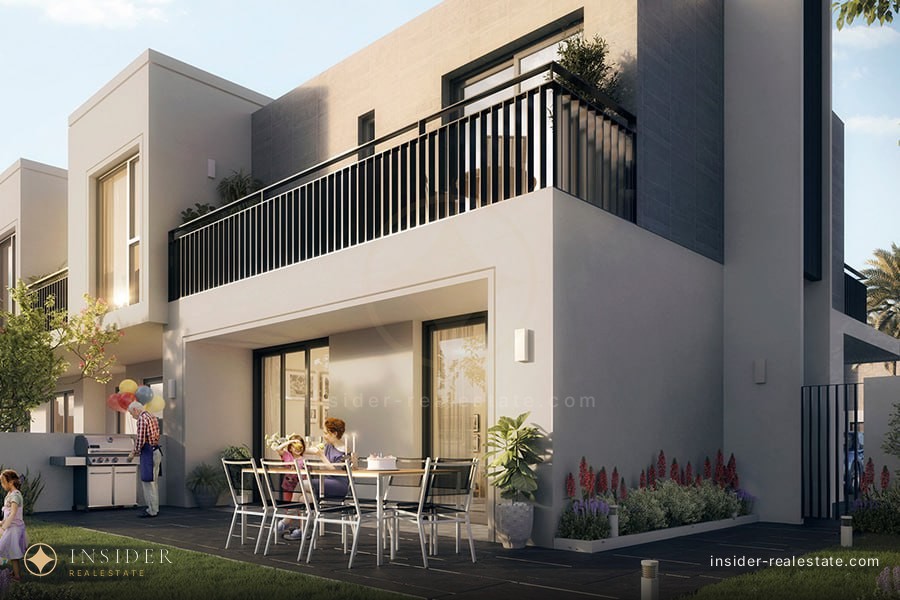
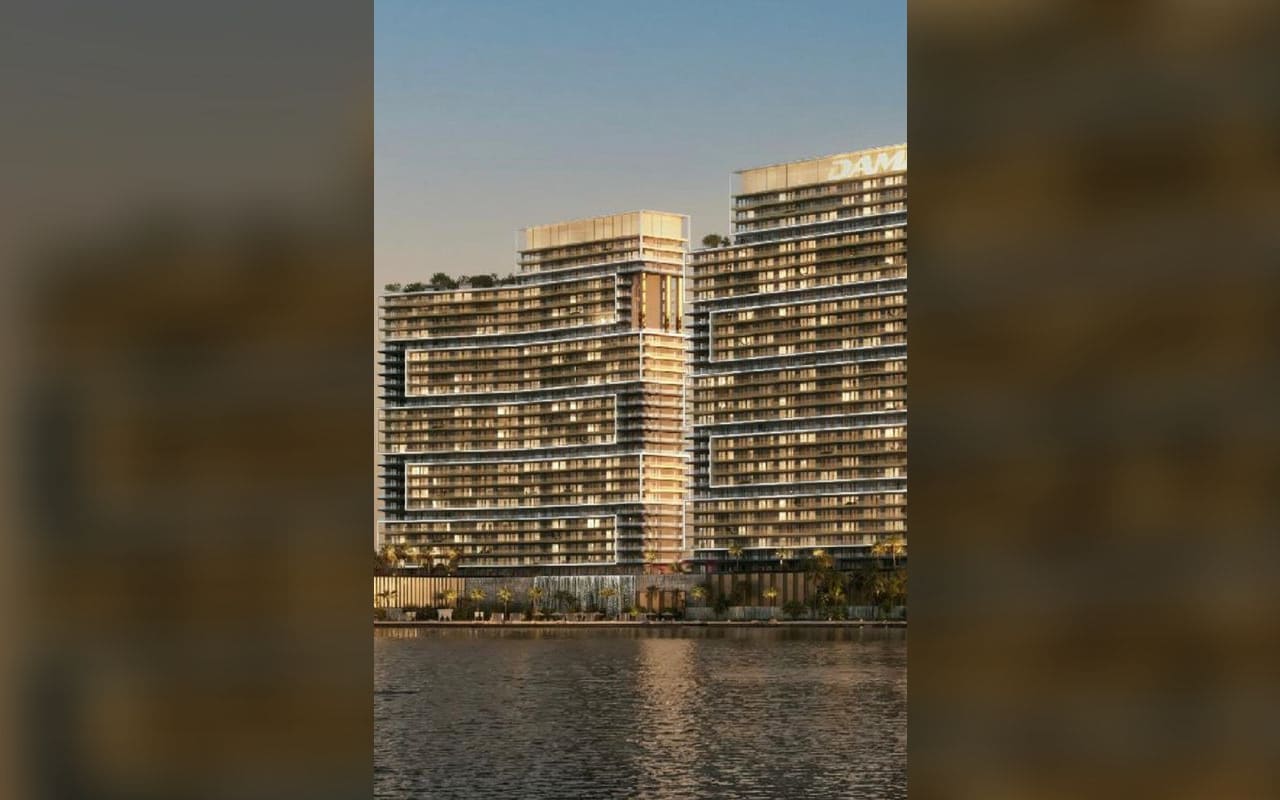
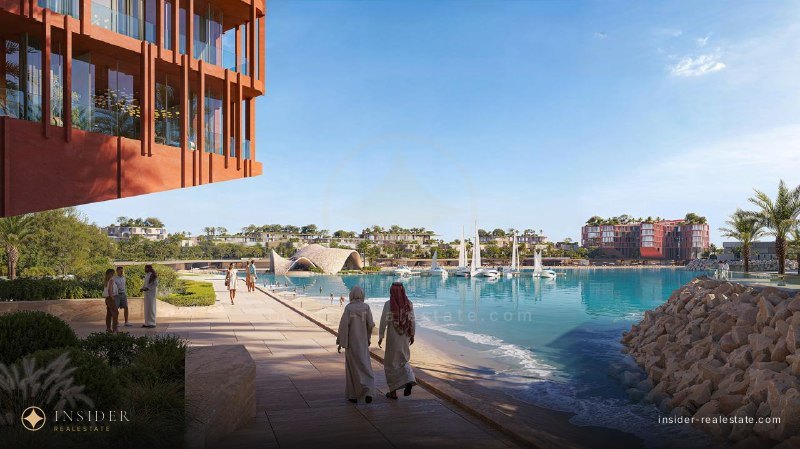
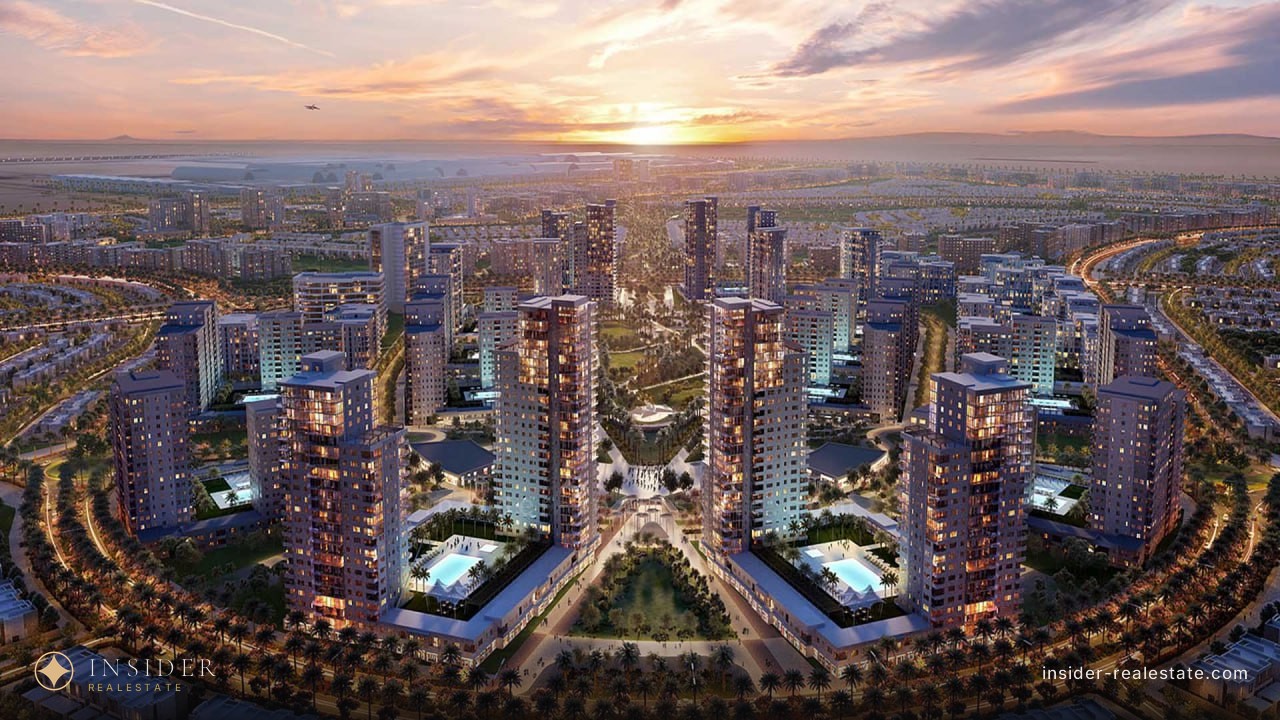
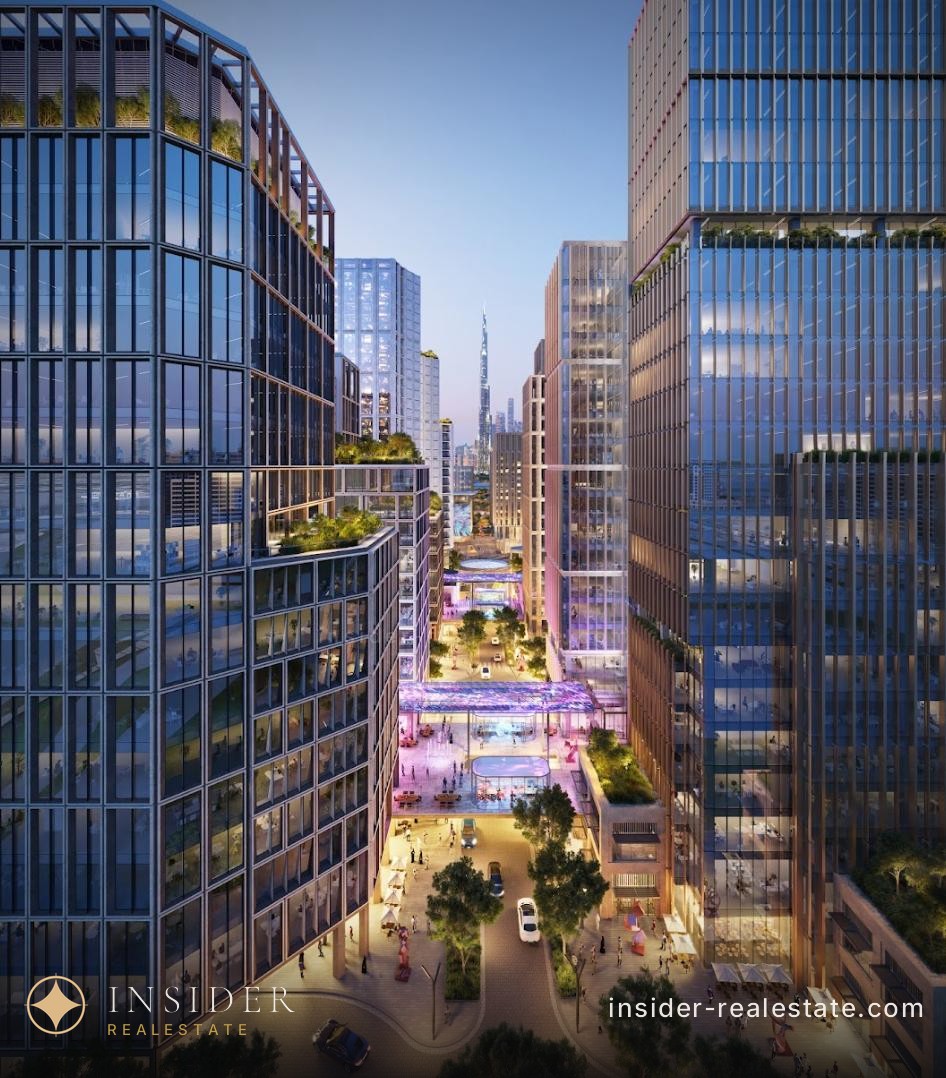
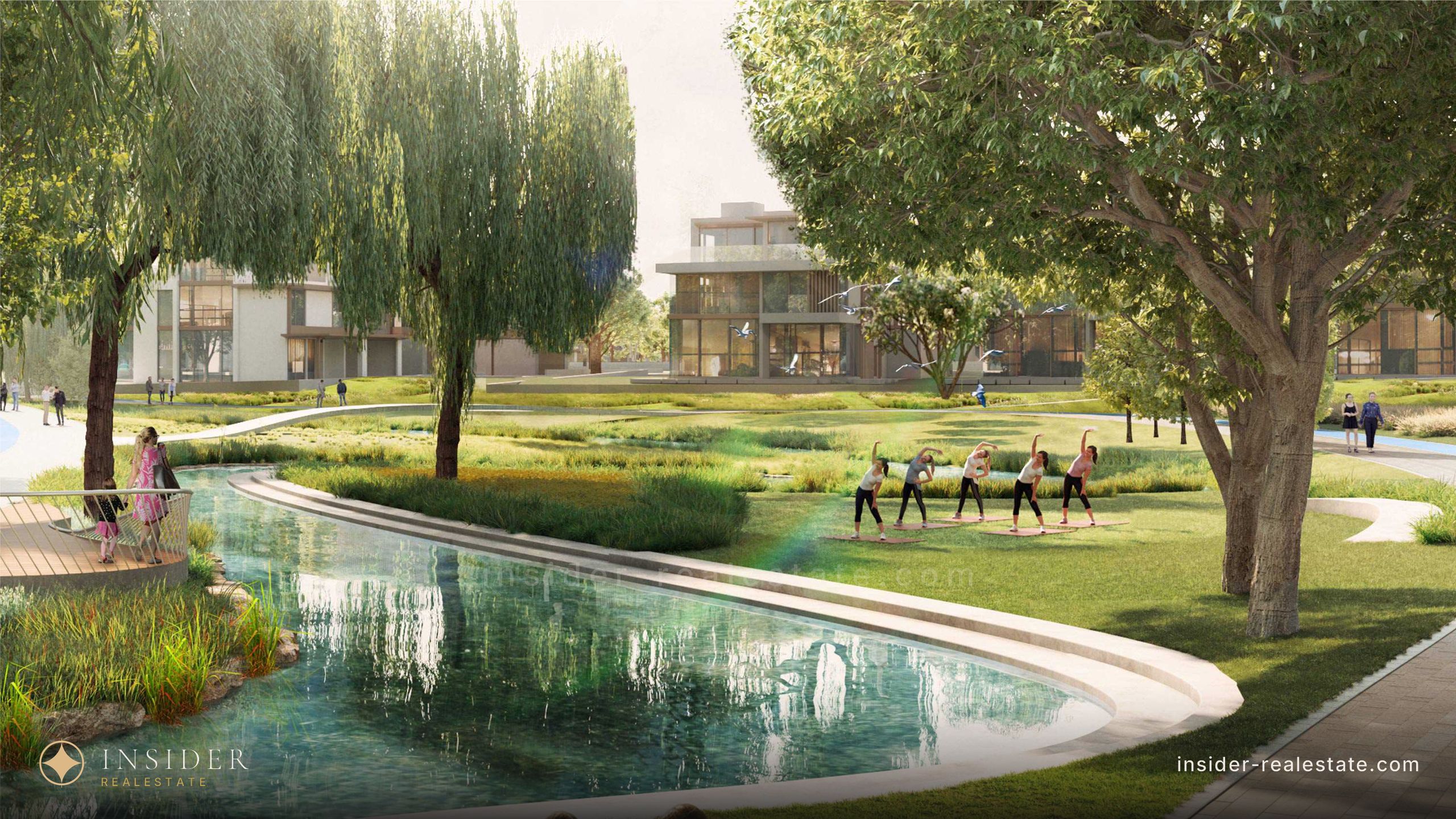
Richmond District is the first fully integrated master-planned community in Al Furjan: John Richmond design, a shared podium with a lagoon, pools and fitness, hotel-style services and Discovery Gardens metro station a minute away. What it means for residents and investors.
Madrid lives outdoors: terraces, the El Rastro market, Retiro park. How Salamanca, Chamberí, Malasaña, Chueca and Lavapiés differ, what tourists spend and what a flat costs — about $6,900 per m², with a gross yield near 4.7%.
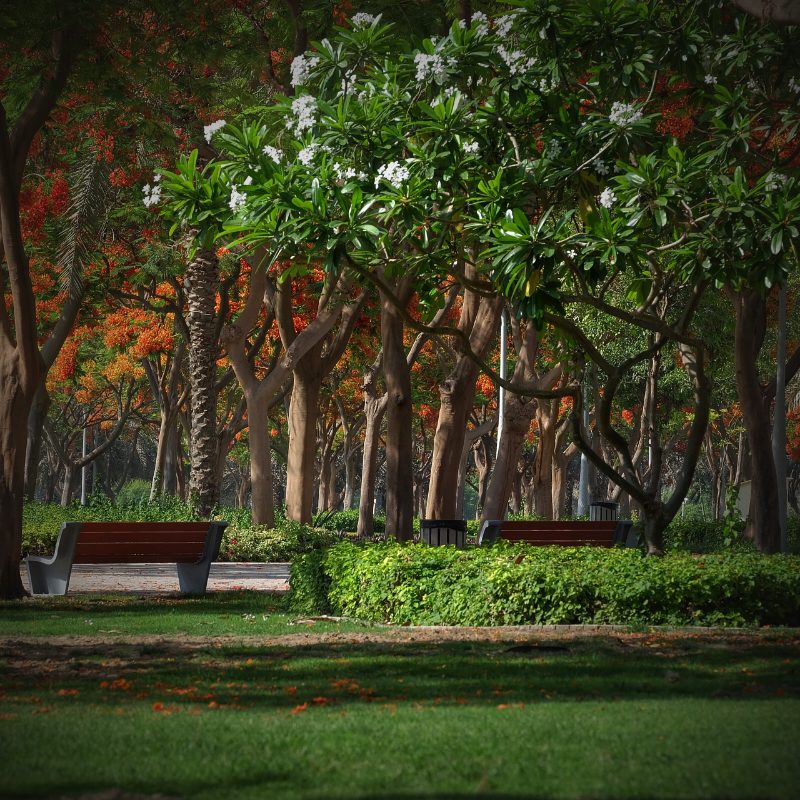
The four best-known parks in Dubai — Mushrif, Zabeel, Dubai Creek Park and Al Mamzar Beach Park: how they differ, which one to pick for a barbecue, a run, the kids or the sea, and why green space in the desert runs on engineering.
Wynn Al Marjan Island has unveiled its two largest suites, the Mayfair Apartment and the Paris Apartment, each about 1,460 sq m with seven bedrooms on the top floors of its 70-storey tower. They are hotel suites, not homes for sale. What they signal for Al Marjan property.
Business Bay recorded 14 prime transactions in August 2026 against Palm Jumeirah's 10 — while Dubai-wide transaction volume fell 37% year-on-year and value fell 44%. Rental search demand rose 44% over the same period. What these seemingly contradictory numbers actually mean.
Dubai's cycling network grew from 560km at the end of 2024 to 636km by the end of 2025, targeting 819km by the end of 2026. E-scooters are capped at 20km/h with a mandatory helmet, and devices have been banned at ground level in JBR since August 2024.
RERA’s Tayseer initiative lets owners clear overdue service charges in instalments of at least six months, and management companies hold off enforcement while the plan is kept. Nineteen companies joined at launch in March 2025; the DLD service page now lists 23. Terms and limits.
Abu Dhabi expects its population and GDP to double by 2040; the emirate had 4.14m residents at the end of 2024. AED 240bn is earmarked for housing, transport, health and schools. The widely quoted "6 million by 2040" is not an official figure. What is actually being built.
Post-handover plans leave 25–50% of the price to be paid after you receive the keys, typically at 1% a month over two to three years. Examples from Tréppan Vision, RAW District and Altair 52, why Lunaya is a different structure, and what to check in the SPA.
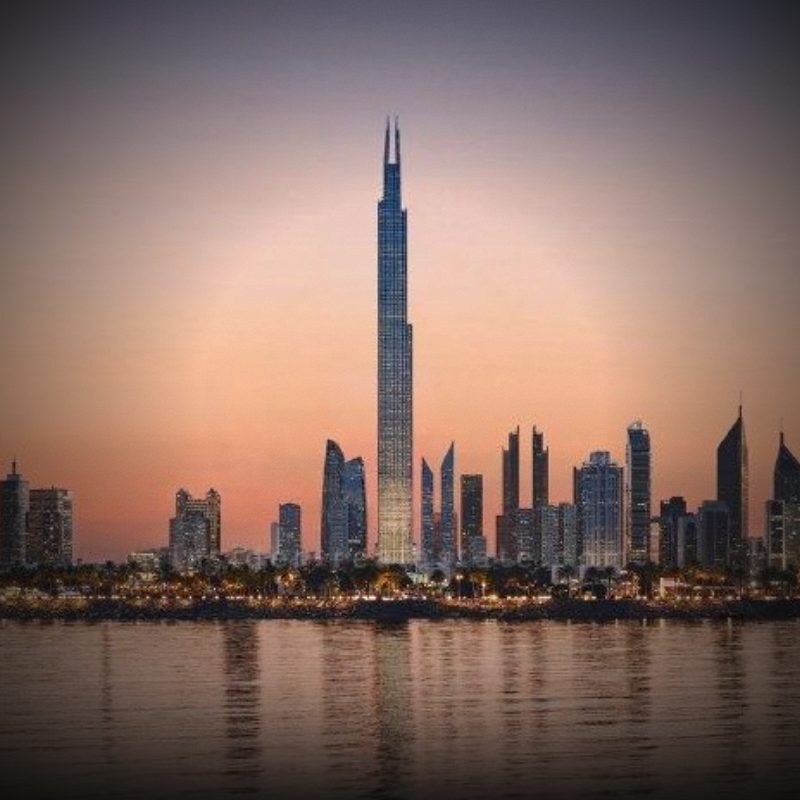
Corinthia Dubai, twin towers above 500 m on Sheikh Zayed Road with a rooftop pool and a Corinthia hotel, is due by 2030. Al Habtoor Group has announced an AED 5bn ($1.36bn) office tower in Al Habtoor City. What the two projects say about the market and who should care.
Keeta Drone has signed an MoU with Sobha Realty to bring drone delivery to Sobha Hartland, home to 11,000+ residents — the service's first tie-up with a developer's smart community in the UAE. It already flies in Dubai Silicon Oasis and Nad Al Sheba. What it changes for tenants and owners.
In May 2024 two of Dubai’s biggest master developers, with 30–40% of sales by value, capped cash at AED 55,000 per deal — the rest by bank transfer. The same threshold triggers mandatory broker reports on cash and crypto-funded deals.
Written landlord permission for a pet in Dubai is mandatory — a verbal agreement is not enough. Keeping a dog in Downtown or Business Bay is close to impossible, while a villa in Arabian Ranches or Al Furjan solves the walking problem by design.
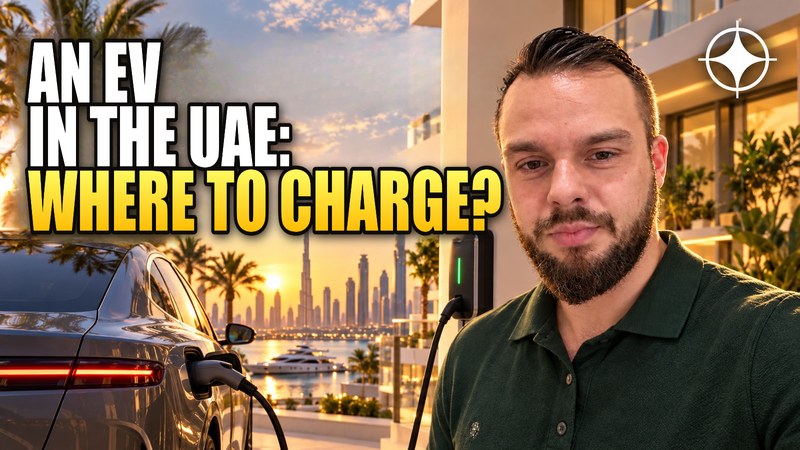
Registered users of DEWA’s EV Green Charger network grew from 16,828 in September 2024 to 23,600 by mid-January 2026. The public charging tariff — AED 0.70/kWh on AC, AED 1.20/kWh on fast DC — has held since September 2024. How the network is built, and what it means for a home with charging.
The market was warned of 210,000 new Dubai homes over 2025–2026. ValuStrat counts about 36,000 units delivered in 2025, 59% of plan, and CBRE about 18,000 in H1 2026. Rents fell 6.2% quarter on quarter in Q2. Where oversupply risk is real and where it is not.
Bought under the AED 2 million golden-visa threshold and the market has moved since? A revaluation from a DLD-accredited valuer — the Taqeemi certificate — can lift the qualifying value to current market price, not your original purchase price. What GDRFA now accepts.
On 10 March 2026 Sheikh Mohammed issued Law No. 3 on the quality and safety of buildings. Every building needs a certificate — valid 10 years if under 40 years old, 5 years if older. Fines run from AED 100 to AED 1m, doubling to AED 2m for repeat breaches. What it means for apartment owners.
Ras Al Khaimah targets 3.5m visitors a year by 2030 (1.35m in 2025), wants to grow hotel stock from 8,700 to about 16,000 keys with 80% premium, and is building a terminal for 3m passengers by 2028. What it means for property buyers.
Concierge, valet, housekeeping, a private chef and help letting the unit: what a hotel-serviced residence includes in the service charge, and what it bills on top. CBRE puts the branded premium at 64% in Dubai and 87% in Abu Dhabi. Where the premium pays for itself, and where it does not.
Dubai Healthcare City has started an AED 1.3bn ($354m) phase one expansion: the 13,000 m² PIXEL office building and the 5,800 m² IBN SINA+ medical complex. Ground was broken on 29 April 2026, with completion planned for 2027. What it means for homes in Al Jaddaf and Healthcare City Phase 2.
One DEWA bill bundles electricity, water and the housing fee — a 5% municipal levy on annual rent, split into 12 instalments. A two-bedroom apartment runs about AED 300–500 a month; a villa with a chiller, AED 700–1,000-plus.
By mid-2026, 78 Russian-owned retail and F&B brands were trading in Dubai, down 27% from 107 in April. No new brand entered the market in the first half of the year, and mall leasing tightened across the board. What one cohort’s retreat says about Dubai’s retail leasing cycle.
In January 2025 DLD allowed owners of 457 private plots — 128 on Sheikh Zayed Road and 329 in Al Jaddaf — to convert them to freehold for all nationalities, for a fee of 30% of the valuation based on gross floor area. What it means for apartment buyers.
Since June 2025 Dubai tenancy contracts can be registered in Ejari over WhatsApp via the Aqari platform and 10 DLD-accredited trustees. Online registration costs AED 177.75, a trustee centre AED 220. The documents, who registers, and why a landlord should not leave it to the tenant.
Dubai Holding awarded a AED 680m (~$185m) contract to build Lantana Hills, 390 townhouses in Dubai Science Park. The modular method cuts construction waste by 30%; handover is set for the second half of 2027. Not to be confused with the existing Villa Lantana next door.
Omniyat bought a reclaimed island in Marasi Bay to build the Burj Khalifa district's only urban beach club and Sunset Park, a private floating island for VELA Viento residents. In March 2026 it priced a $600m sukuk at 7.25% and said its $11.7bn launched portfolio is fully funded to completion.
Knight Frank counted 219 Dubai home sales above $10m in 2022, 434 in 2023 and a record 435 in 2024 (about $7bn). In the first half of 2023 Dubai overtook New York, Hong Kong and London. How a shortage of supply made Palm Jumeirah the core of the market — the background to 2025–2026.
Dubai’s market is transparent by design: every registered transaction sits in the Land Department’s open data, with price per square foot and date. Asking prices typically run 6–9% above what actually registers. How to check a building through Dubai REST and DXB Interact.
Hafeet Rail is a $2.5bn joint venture between Etihad Rail, Oman Rail and Mubadala: 238km from Abu Dhabi through Al Ain to the Omani port of Sohar. The passenger service will run at up to 200km/h; as of spring 2026 the line was 40% complete, and Oman ratified the agreement in September.
Dubai charges no property or rental income tax but a one-off 4% DLD transfer fee and an annual service charge. Moscow has a property tax and rental income tax but far lower purchase costs. A worked example on a $180,000 budget, with every assumption stated.
Terminal A at Abu Dhabi’s airport opened in November 2023 after years on hold: 742,000 sq m, capacity for 45m passengers a year. Renamed Zayed International in February 2024, it handled a record 32.5m passengers in 2025 (+12.8%). What that means for housing on Yas Island and in Al Raha.
Majid Al Futtaim is spending AED 5bn on Mall of the Emirates: about 20,000 m² and 100 new stores. Emaar is adding 240 shops and restaurants to Dubai Mall for AED 1.5bn and building Dubai Square in Creek Harbour. How malls move home values in Al Barsha, Downtown and by the creek.
Russian-speaking investors have opened 30 clinics in Dubai since 2023, and at least 150 CIS doctors relocated in 2024 alone, with roughly 500 more preparing for the DHA qualification exam. Where the numbers come from, and how a foreign doctor actually gets licensed.
On 3 September 2026 the Dubai Land Department launched Oqood 2.0, the new version of the interim register for off-plan sales: a pre-submission questionnaire, auto-filled data, live status tracking. The 4% fee is unchanged. What Oqood is and why a buyer should care.
PRYPCO Mint, the region’s first DLD-supervised tokenised property platform, launched in May 2025 with a AED 2,000 minimum. Its first property drew 224 investors from 40-plus countries; the second, worth AED 1.5m, sold out in 1 minute 58 seconds.
Wynn Al Marjan Island now opens in September 2027 instead of Q1, and the budget is up $600m to about $5.7bn. Licence granted by the GCGRA in October 2024, $2.4bn construction loan closed in February 2025. What the delay means for Al Marjan investors.
In April 2026 three developers signed AED 3.7bn of construction contracts: AED 1.1bn for 850 La Tilia townhouses in Villanova, AED 1.1bn for Burj Azizi's steel frame and AED 1.5bn for 859 Sukoon villas in Sharjah. What a signed main contract tells an off-plan buyer.
Emirates Golf Club, Montgomerie, Dubai Creek, The Els Club, Dubai Hills, Arabian Ranches and Jumeirah Golf Estates: when each opened, who designed it and which communities surround it. A buyer's guide for people choosing the home, not the membership.
Hatta is part of the emirate of Dubai, tucked into the Hajar Mountains, about 90 minutes to two hours from the city. A mountain-bike centre with 50km of trails, hiking, kayaking on Hatta Dam and a night sky free of city glow. What the enclave offers, and what housing there actually is.
Hudayriyat is a 3,000+ hectare island off Abu Dhabi’s southern shore that state developer Modon is turning into a sports and residential district. Nawayef Village’s 378 townhouses (about AED 2bn) sold out on launch day; Bashayer sold roughly AED 3bn in a day in December 2025.
PASSO on Palm Jumeirah, Arancia Yards in City of Arabia and Soulever in Dubai Maritime City are all built by the same developer, BEYOND, yet each draws a different kind of investor. Why one brand does not mean one buyer profile.
Grade A warehouses in Dubai are close to full: JLL put occupancy in Jafza and Dubai Investments Park at 97–100% at the end of 2025, and industrial rents rose 6.8% year on year in Q2 2026 (5% in Abu Dhabi). Leases now run 7–9 years, not 3–5. Who owns the stock and what to check.
Six 2024 Dubai launches two years on: Emaar’s Altus and Ellington’s The Watercrest are sold out and on schedule, DAMAC’s Lagoon Views phases complete in 2027, while One Residence (Ginco), Pristine (Zoya) and V1V1D (Object 1) need their 2026–27 dates checked against site progress.
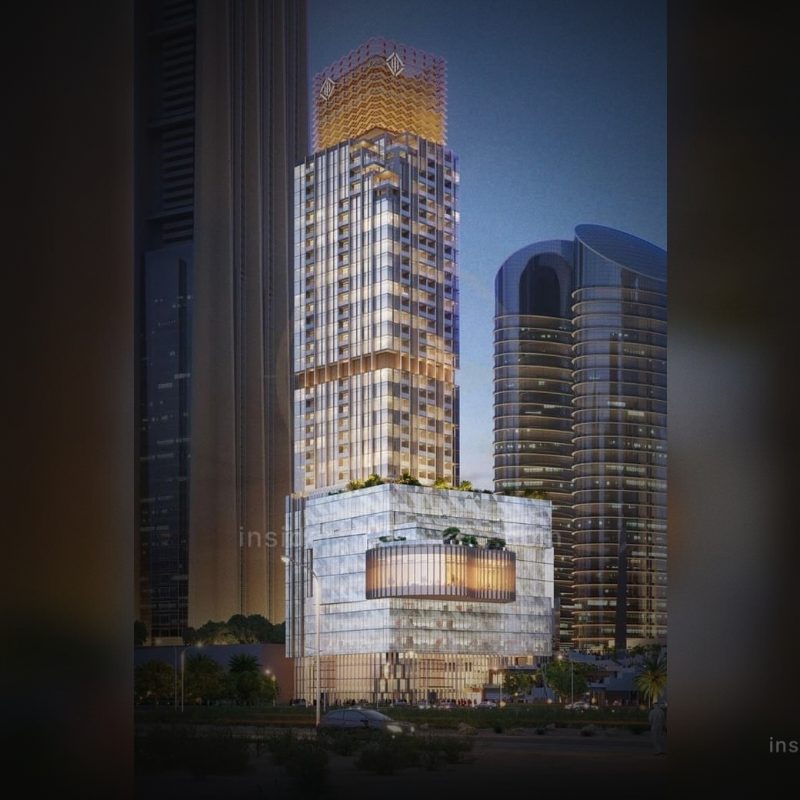
Deyaar is building DWTN (Downtown) Residences in Business Bay: twin 445 m, 111-storey towers with 522 homes — 432 apartments, 76 duplexes, 13 penthouses and a “Royal Palace”. From AED 1.86m with half due at keys. Construction began in January 2026; completion is quoted for 2029–2030.
The same Dubai apartment carries three different figures: what the seller asks, what registers with DLD, and what the bank’s valuer names. Asking prices run roughly 6–9% above final transaction prices. How the gap affects the size of the down payment you actually need.
State developer Marjan is building RAK Central next to Al Hamra: over 4,000 apartments, five Grade A office towers for 6,000+ staff and 1,000+ hotel keys. Every plot sold out in 15 months; the office core opens around 2027, the full district by 2030.
Dubai ecotourism and green communities: Al Layan Oasis in Al Marmoom, Expo Valley Nature Reserve at Expo City Dubai, Hudayriyat Island in Abu Dhabi and Kalba in Sharjah. What is being built, when it opens and why nature is becoming part of UAE real estate.
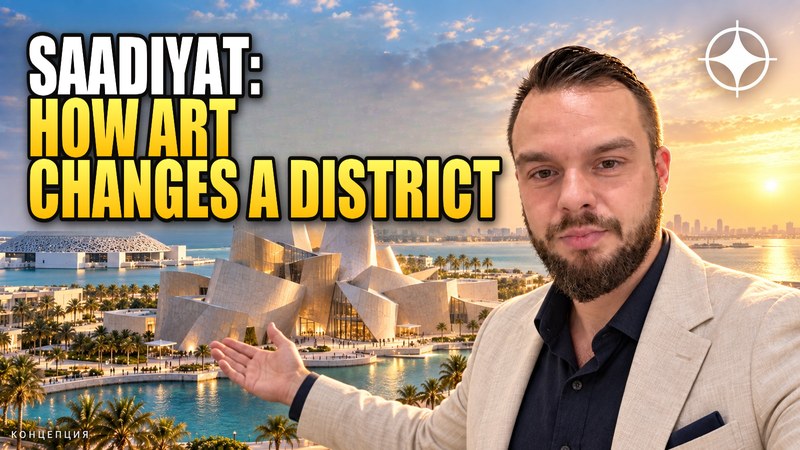
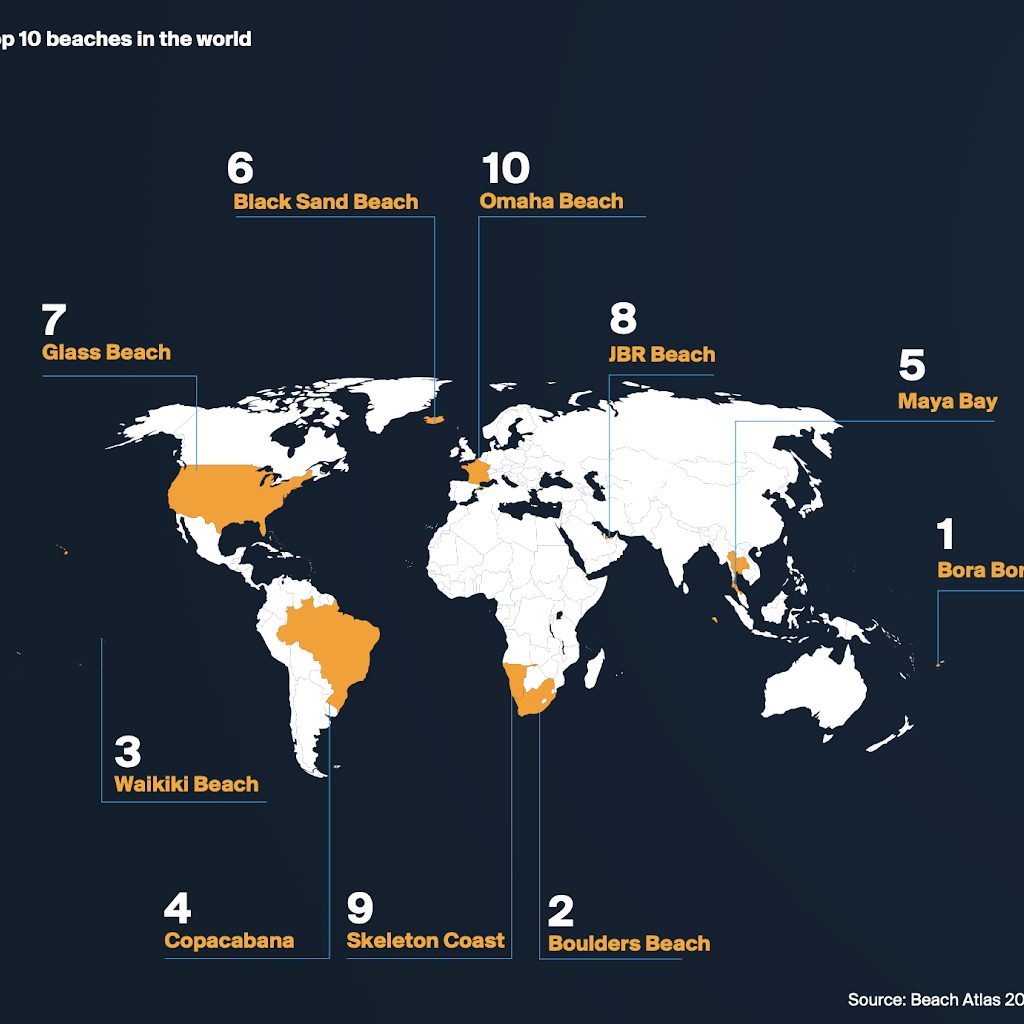
Saadiyat Beach in Abu Dhabi is No. 19 in The World's 50 Best Beaches 2026. Why Saadiyat Island made the list of the best beaches in the world, and how the Louvre, a marine reserve and luxury resorts are turning it into Abu Dhabi's main tourism hub.
Dubai prices fell roughly 45% in 2009 and barely dipped in 2020 — then both times the market recovered and pushed past old highs. We walk through both cycles with sourced numbers, and what that means for anyone timing a purchase in 2026.
In February 2025 Dubai announced Superblock: car-free neighbourhoods with pedestrian streets and more greenery. The first areas are Al Karama, Al Fahidi, Abu Hail and Al Quoz Creative Zone. There is still no public timetable. What it means for rental housing in old Dubai.
ADREC data: AED 117bn of transactions in H1 2026 (+112%), AED 86.1bn of sales and AED 13.8bn of foreign direct investment (+309%, more than all of 2025). Full-year 2025 was a record AED 142bn. What sits behind the numbers.
On sales registered with the Dubai Land Department in the year to July 2026, Jumeirah 2 leads at about AED 7,560 per sq ft, followed by Trade Center 2, DIFC, Dubai Harbour and La Mer. The city median is about AED 1,716. How prices compare with rents, and when a costly square foot pays off.
A sky-villa at Bulgari Lighthouse sold for AED 410m ($112m) in February 2023, more than doubling the previous record. A Como Residences penthouse hit AED 500m in November 2023; a Sky Mansion at Bugatti Residences reached AED 550m in December 2025.
W Residences Abu Dhabi is the first W-branded residential project in the UAE capital, on the financial district of Al Maryah Island. Developer Taraf (Yas Holding) broke ground in January 2025 with Marriott; 1–4 bed apartments, duplexes and penthouses launched from AED 2.2m, with handover in Q4 2027.
RAKEZ registered close to 19,000 new companies in 2025 — a 44% year-on-year jump, taking the zone past 40,000 active businesses. Next door, Innovation City is coming online: an AI, Web3 and robotics free zone built on the site of the former RAK DAO.
From 8 December 2025 the Bank of Russia dropped its caps on transfers abroad for Russian citizens and residents of “friendly” countries: $1m a month to foreign accounts and $10,000 via money-transfer systems. A $2–3m villa no longer has to be paid in monthly slices. What is still hard.
You can buy a UAE home with bitcoin or USDT, but the deal is registered in dirhams: a licensed intermediary converts the crypto. DLD signed with Crypto.com in July 2025, RAK Properties takes crypto via Hubpay, and crypto transfers have been VAT-exempt since 2018.
ELA Residences is Omniyat’s ultra-prime scheme on the Palm Jumeirah crescent: Zaha Hadid Architects design, Dorchester Collection service, three- and four-bedroom homes and duplexes. Launched June 2024, under construction since May 2024, entry around AED 43m, handover still Q1 2028.
Sunrise Valley is H&H’s villa community in Nad Al Sheba 1: about 1,500 homes in five clusters over 10m sq ft, designed by Brazil’s Studio MK27. Three-bed townhouses from AED 7.5m, four-bed villas from AED 13.2m, half the price due at handover in Q4 2029.
Sharjah: about AED 27bn of transactions in 2023, AED 40bn in 2024 and a record AED 65.6bn in 2025. Ras Al Khaimah: AED 6.9bn in 2023 and over AED 15bn in 2024, then 2025 sales down 25% while apartment prices rose 13.4%. Year-by-year tables and the September 2026 status.
In June 2024 the Dubai Land Department fined three developers AED 500,000 each for marketing projects before registration and escrow. Since 16 February 2026 Abu Dhabi takes off-plan EOIs only through ADREC’s Madhmoun platform and a government escrow. What it means for buyers.
JLL puts prime office vacancy at about 0.3% in Dubai and 0.1% in Abu Dhabi. In Q2 2026 Dubai Grade A rents rose 26.2% year on year and Grade B 31.5%; CBRE puts occupancy at 94% in Dubai and 96% in Abu Dhabi. What the squeeze means for office owners and buyers.
Roof colour in Dubai shows the operator, not the price — the RTA fare is the same for everyone: from AED 5 flag-fall by day and AED 2.26 per km. A pink roof means women- and family-only. In Abu Dhabi, Yango now runs alongside Careem.
Jasmine Lane is 138 three-bedroom townhouses in Jumeirah Golf Estates, Elie Saab’s first project in the community. It launched from AED 3.68m and was handed over in summer 2024; resale asking prices now start at AED 5.95m. Who Durar is, and what the project shows about branded low-rise homes.
The UAE non-oil PMI rose to 55.3 in August 2026, its highest since December 2024. Real GDP grew 3% in Q1, with the non-oil share at 79.4%. Dubai private schools ranked 6th in the world for reading and 8th for maths in PISA 2025. Why the economy looks stronger than the housing mood.
Salaried UAE residents typically need AED 15,000+ a month to clear most banks’ first screen; the self-employed face a higher bar; non-residents earning abroad face a separate, stricter set of terms. The one constant: total debt payments cannot exceed 50% of income.
Construction Week ranks the 100 largest developers in the Gulf by the value of completed and under-construction projects. UAE developers hold more than half the spots — from Emaar and Aldar to DAMAC and Danube. How to read the ranking, and what it tells a buyer.
Dubai is the world's leading city for branded residences, with 64 completed schemes and 87 in the pipeline (Savills). CBRE puts the average price premium at 64% in Dubai and 87% in Abu Dhabi. What the premium pays for, and how it behaves when the market cools.
Three hotel-branded schemes in Dubai Hills: Mallside Residences with Curio Collection by Hilton next to the mall (sold out, due Q4 2026), Emaar’s Address Residences Dubai Hills (December 2024, from AED 1.9m, due Q1 2029) and the completed Address Villas Hillcrest, from AED 20.95m in our stock.
The Heights Country Club — 81 million sq ft, an estimated AED 55bn, near Al Maktoum Airport, launched May 2024 with townhouses from ~AED 2.4m and handover around 2028. Grand Polo Club & Resort in Dubai Investments Park 2 followed in 2025: three polo fields, Chevalia Estate villas from AED 7.88m,…
In 2023 Pioneer (trading as MERED), Orange Group and Vos’hod announced UAE entries. By autumn 2026 the 66-storey, 310-unit Iconic Tower had reached level 22 with handover due 2027–28, Orange runs a completed 115-key building in JVC, and Nobu on Al Marjan has slipped to 2028.
Dubai's summer market isn't a pause: DLD-based data shows summer 2024 was the year's busiest period for sales, up nearly 38% on the year before. Here's what genuinely changes in June–August — negotiating power, not deal volume — and what it means for timing.
Therme Dubai, a 100 m tall wellness resort of about 500,000 sq ft, is planned for Zabeel Park at a cost of AED 2bn (about $545m). It expects 1.7 million visitors a year and is due to open in 2028. What it means for Zabeel, Downtown and the neighbouring districts.
Dubai and Abu Dhabi air taxis start commercial flights in 2026: the first vertiport at DXB is finished and the capital has priced its routes. Where the vertiports are, flight times, what an Abu Dhabi to Dubai air taxi will cost and what it means for property.
Saudi Arabia real estate is going global: Laheq Island, a 400-hectare private island on the Red Sea, offers villas from SAR 17.6 million and apartments from SAR 5.9 million. Who is building it, what the masterplan includes and whether buying property in Saudi Arabia makes sense yet.
In Jumeirah 2, H&H is building Peninsula Dubai: a waterfront district with a marina, a 195-key Rosewood hotel, 63 Rosewood residences and five villas by Hopkins Architects, and residential buildings by RSHP. Rosewood opens in 2029; the RSHP residences target early 2029.
In October 2024 UK-founded LEOS moved its global headquarters to Dubai and announced a $7bn fund for 10+ UAE projects. A year later it launched LEOS Royal with Dubai Holding: about 800 villas and townhouses in Wadi Al Safa 5, valued at AED 5bn+. How to read a developer like this.
Dubai South’s free zone issues a same-day e-licence for qualifying digital activities, from AED 12,500, entirely online. At the national level the goal is bigger: from 1.2 million companies today to more than 2 million by 2031, plus at least ten new unicorns.
Damac and ADIB opened finance on projects 35% built once the buyer has paid 50% (March 2025). In 2026 Emirates NBD launched a scheme for Meraas, Nakheel and Dubai Properties from 30% completion, and ADCB a 12-month pre-approval from 3.49%.
ADGM has covered Al Reem Island since 2023. By H1 2026 it had 13,974 active licences, 190 asset managers (+23%), 276 funds (+32%), AUM up 54% and 49,027 people working in the district. Why that matters for Al Reem landlords.
The Unicode Consortium has approved an official dirham symbol for Unicode 18.0, due for release in September 2026 — Apple, Google, Microsoft and Samsung can now build it into their systems. Separately, the UAE is developing a digital dirham, a state digital currency, not a cryptocurrency.
DMCC is adding two office towers to Uptown Dubai — 21 and 15 storeys, more than 560,000 sq ft of Grade A space and 82,000 sq ft of retail. Leasing opens in the second half of 2026 and completion is due in Q1 2028, taking the district past 1m sq ft. What it means for nearby owners.
Thyme is a low-rise Meraas building in Central Park at City Walk with one- to four-bedroom homes, sold by ballot in May 2023 from about AED 2.1–2.3m for a one-bedroom. Handover was set for Q3 2026; portals now list it as ready and sold out, like Celadon, Viridian, Erin and Castleton.
Since 1 January 2025, health insurance has been mandatory nationwide for private-sector staff, but the rules differ by emirate: Abu Dhabi employers must cover up to four family members, Dubai only the employee. What a basic policy covers, and where you pay extra.
In October 2024 Binghatti said it would lift its portfolio from about AED 40bn to AED 100bn ($27.2bn) in 18 months. In 2025 revenue reached AED 12.43bn, more than 17,000 units were sold, and the AED 30bn Binghatti City launched in Nad Al Sheba. What the growth means for buyers.
A UAE mortgage cannot transfer to a new property — selling always means paying it off in full, either with the seller’s own cash or the buyer’s funds at closing. Early settlement is capped at 1% of the balance or AED 10,000. Here is what a seller actually pays.
Downtown is Dubai's tourist and status core, around AED 2,433/sqft on our own data. Business Bay is the business district next door, home to 17,000+ companies, around AED 1,871/sqft. We compare lifestyle, rental economics and who should pick which.
Since mid-2025 the Dubai Land Department issues the sale cheque in the name of the owner on the title deed, not the attorney. Circular 29/R/2025 of 16 July also tightened the POA itself. What an overseas seller needs, and in what order.
Knight Frank counted 500 Dubai home sales above US$10m in 2025, worth US$9.05bn, against 30 in 2020. The first half of 2026 added 296 more worth US$5.1bn, a half-year record. Where the money went and why the top of the market held up.
Started in 2009 and never finished, the Al Saqran tower in JLT went to auction in February 2024 at a AED 110m opening bid. Over four hours, more than 130 bidders pushed the price to AED 210m. MBL Signature is now under construction on the site.
In October 2025 ADREC launched the Digital Buy & Sell Journey, the region’s first end-to-end online property transaction: mortgage release, registration, UAE Pass signatures, a trustee on video and settlement through ADREC-managed escrow. What it changes for a buyer abroad.
Altrata's Billionaire Census 2026 counts 43 billionaires living in Dubai, joint eighth among world cities with Shenzhen. The UAE has 59 with a combined $201bn. How that shows up in Dubai's AED 100m-plus villa market, and what it does not change for everyone else.
Abu Dhabi in 2023 and 2024, from ADREC: 22,751 transactions worth AED 87.1bn with sales value up 2.6 times, then 28,249 worth AED 96.2bn and foreign direct investment up 125% to AED 7.86bn. ValuStrat had Saadiyat villas up 19.9% in a year. Figures and the September 2026 status.
RAK Properties closed 2024 with revenue of AED 1.41bn (+40%) and net profit of AED 280.9m (+39%), but withheld its dividend to speed up construction ahead of the $5.1bn Wynn Al Marjan Island resort, now targeting a September 2027 opening. What it means for buyers on Al Marjan Island.
Al Reem now has two branded schemes: the world’s first standalone Radisson Residences (phase one, AED 1.2bn, sold within a day; phase two with 437 furnished units in September 2026) and 386 Rixos residences by East & West, one-bedrooms from about AED 2.1m, completing Q1 2029.
In March 2024 Nakheel and Meydan were folded into Dubai Holding and their boards dissolved. By 2026 Palm Jebel Ali has 544 villas on Fronds A–F and 728 on K–P in finishing works, and 892 homes at Jebel Ali Village are being handed over. What changed for buyers, and what did not.
Over summer 2026, Binance launched direct dirham settlement through bank ADCB, Crypto.com won a central bank licence for regulated crypto payments, and the UAE climbed from 5th to 2nd in the Henley global crypto adoption ranking. Here is what sits behind each development.
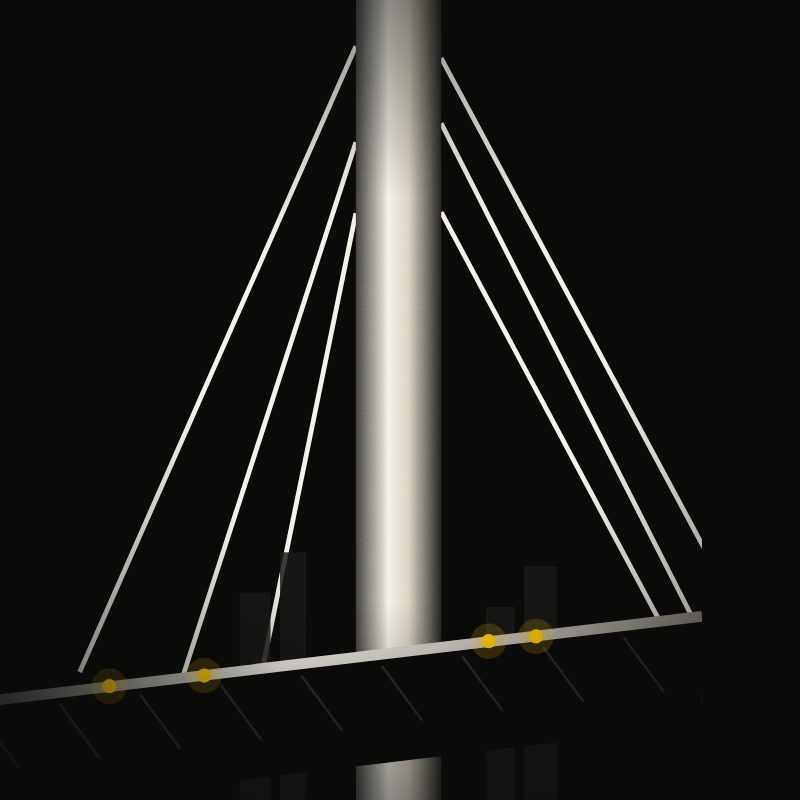
A 1,425 m bridge across Dubai Creek will link Dubai Islands directly to Bur Dubai: four lanes each way, 16,000 vehicles an hour, 18.5 m above the water. The AED 786m contract targets completion by the end of 2026. What the bridge changes for the islands and the old city.
Miral will invest over AED 12bn (about $3.3bn) on Yas Island over five years in park expansions, new rides and hotels — separate from the Disney resort, whose opening date and site are still not officially disclosed. What it means for rentals on the island.
DIFC Living — 41 floors and 170 homes sold by the DIFC Authority itself — launched in September 2023 with handover scheduled for Q3 2026; our stock shows units at AED 3.85–5.4m. Next up: Four Seasons (Q1 2027), DIFC Heights (2029) and The Residences DIFC (Q4 2029).
Dubai's Crown Prince approved designs for two 20,000-seat stadiums back in March 2024 — homes for Al Wasl in Al Jaddaf and Shabab Al Ahli in Al Ruwayyah 3. We check the status two and a half years on, and what an anchor of this scale would mean for the district by the Creek.
There is still no personal income tax in the UAE. A freelancer registers for 5% VAT above AED 375,000 turnover, while corporate tax kicks in only above AED 1m — a different threshold people confuse. Since 1 February 2026, sponsored content also needs a media permit, and a fine has been issued.
From 28 February through September 2026, UAE real estate absorbed a shock, a dip and a recovery: transactions fell by roughly a quarter, then by summer had outpaced 2025. A factual timeline of the market and banking response, no political commentary.
Between September 2024 and December 2025 the UAE Central Bank cut its base rate six times, from 5.40% to 3.65%. On 17 September 2026 it followed the Fed with a 25 bp rise to 3.90%. On an AED 1.5m, 25-year loan that is about AED 210 a month.
In December 2023, regulator Trakhees issued Nakheel Dubai's first 3D-printing construction licence, for Al Furjan Hills. Printing itself took 20 days — but the structure was a gatehouse, not a home. Dubai's target is 25% of new buildings by 2030. What is actually on the market in 2026.
Official night swimming is limited to five spots: Sunset Beach runs 24/7, four more stay lit until sunrise. Surf season runs November to February. Since June 2026, swimming outside marked zones carries a AED 500 fine.
Ras Al Khaimah is building its own vertiport by Al Marjan Island, Uber and WeRide are already carrying driverless passengers in Jumeirah, and Abu Dhabi has signed on for electric Seaglider service. Status as of September 2026 on all three.
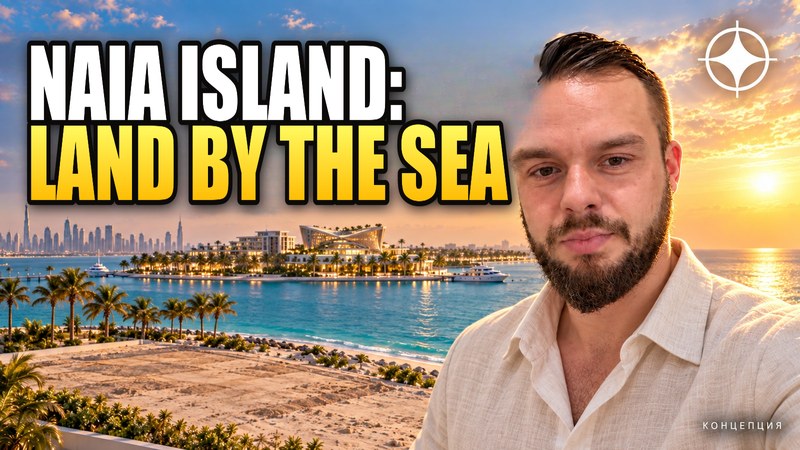
Between April and June 2026 three beachfront plots on Naia Island, off the Jumeirah coast, sold for AED 377m, 560m and 167m — about AED 1.1bn ($300m) in total, all to buyers building their own homes. Shamal Holding is developing the island around the region's first Cheval Blanc Maison.
August 2026 in numbers: about 10,900 homes sold for AED 23.4bn, average prices 1.7% below a year earlier, three quarters of sales off-plan, and Dubai South leading on volume. What changed over the season and what to expect this autumn.
Plenty of Dubai owners keep paying a developer under a post-handover plan for two to three years after moving in — and that unit can still be sold, even at 40–50% paid. A developer NOC, a pre-title deed, and the buyer’s mortgage close the remaining balance. How the deal is structured.
The UAE has signed the international agreement for automatic exchange of crypto-asset data, CARF. Local platforms begin collecting client data when the framework goes live in 2027, with the first cross-border exchange in 2028. It does not introduce a tax on crypto income in the UAE.
Abu Dhabi has launched FIDA, a cluster for fintech, insurance and digital assets targeting AED 56 billion in added GDP and 8,000 jobs by 2045. We look at how it extends ADGM and who it matters to.
Eagle Hills launched five buildings on Maryam Island in 2024. Rehan and Anbar (from about AED 480–513k) are now complete; Topaz and Layla are due in Q1 2027; Citrine has moved from Q1 2027 to Q2 2028. What that means if you are buying now.
Hilton enters Abu Dhabi housing with two flags: Aldar’s Waldorf Astoria Residences Yas sold all 133 homes on launch day for AED 850m, and Emirates Developments’ Hilton Residences Al Raha offers 176 sea-view homes from AED 2.5m. Both complete in Q4 2028.
A district built by one master developer and a district built by dozens of unrelated companies carry very different price predictability. We break down how to tell them apart from a project brochure, and the trade-off between the two.
Modon's first residential project on Hudayriyat Island — 157 villas and 330 apartments — sold out completely on launch day, bringing in about $820 million. The developer has already followed up with Bashayer Final Phase, the last release in this cluster.
Transferring a Dubai home to a spouse, child or parent as a gift costs 0.125% of the DLD valuation (minimum AED 2,000) rather than the standard 4% transfer fee. On a AED 2m apartment that is about AED 2,500 instead of AED 80,000. Who qualifies, the paperwork, and the traps.
fDi Markets data shows Dubai attracted 754 new greenfield creative-industry projects in 2025, worth $3.76bn and creating 19,304 jobs, the top city out of 233 for the fourth year running. Separately, Al Maktoum airport is getting a 50km underground people mover. What both mean for rental demand.
CG Developers is building Dubai's first JW Marriott residence, priced from AED 1.72 million with a Q1 2028 handover. In parallel, Nakheel has awarded a AED 527 million contract for Island B's core infrastructure — roads, water and sewage for a future 49,000 homes.
DIFC crossed 10,000 active companies in H1 2026, up 30% year on year. We look at what is behind the numbers and why it keeps pushing demand for offices and homes in Za’abeel and around the district.
SOM designed Burj Khalifa and a 74-metre metro station in Creek Harbour that will be the tallest in the world. Zaha Hadid Architects built The Opus and is now building Oystra in Ras Al Khaimah. What separates a real premium from a marketing line.
Three major office schemes are rising around DIFC and Business Bay: Immersive Tower ($300m, 58,573 sq m, 2027), Aldar's 88,000 sq m tower by Emirates Towers metro (Q4 2027), and an office park with a theatre on Business Bay's largest plot. Vacancy in central clusters sits at 2–5%.
The RTA and Dubai Holding signed an AED 6bn (about $1.6bn) road programme: four new JVC access points with interchanges, double the capacity and 70% shorter journeys. Hessa Street phase two adds a 780 m bridge and a 480 m tunnel out of JVC. What it means for owners and buyers.
UAE banks don't ban crypto, but a large transfer from an exchange typically triggers a compliance review — statements, tax returns, source-of-funds documents — and the account is frozen while it runs. Here is how to route the money through a licensed exchange and avoid a lengthy hold.
Since 2 June 2026 Abu Dhabi has cut the permitted annual rent rise from 5% to 0% for homes, offices and industrial units, until further notice — still in force in September. ADGM communities on Al Reem and Al Maryah islands are excluded and follow their own rules.
Ardee has poured foundations for its AED 2bn Fairmont Residences, while Richmind's Oystra — with a curved steel truss designed by Zaha Hadid Architects — sold out its first phase and launched a second. Here is what is actually under construction on the island next to the Wynn resort.
In February 2026 Aldar added more than 2.3m sqm on Saadiyat, Yas and next to Yas for about 3,000 homes with a GDV near AED 23bn ($6.26bn). That averages AED 7.7m per home — what it says about the launches to come.
In March 2026 S&P saw no liquidity pressure at Emaar, DAMAC, Omniyat and PNC Investments. In July Moody's reported most UAE projects due in 2026–27 on schedule despite imported materials costing 20–25% more. What off-plan buyers should take from both.
Aldar entered Ras Al Khaimah with two Al Marjan Island schemes: Nikki Beach Residences (November 2023, 1–4 bed apartments plus villas) and Rosso Bay Residences (July 2024, from about AED 1.5m). Both are sold out by the developer; portals show handover in Q4 2028.
Dubai in the first half of 2025: 125,538 transactions worth about AED 431bn (+26% and +25%), per the DLD. Knight Frank counted a record 51,000+ home sales in Q2 and 94,000 worth AED 268bn over the half. Prices +13.7% a year, villas +16% and 49% above the 2014 peak.
Dubai’s GDRFA launched the AI platform Salama: renew a residence visa without visiting a centre, and see the whole family’s status in one app. Add a five-minute video call through Virtual Amer, and the right to pick your own biometrics slot. What it means for a property-visa holder.
Since December 2024 Abu Dhabi has offered a 10-year Golden Visa to owners of yachts of 40 metres or more and to senior yachting executives under Golden Quay: Yas Marina nominates, ADIO processes. No berthing contract is needed and family can be included. What it signals for Yas Island.
Foreign tourists spent a record $59.2 billion in the UAE in 2024, and the sector’s GDP contribution topped $70 billion in 2025. We look at how that spending flows into short-term rental demand and what it means for an owner.
Dubai's Jumeirah shoreline is becoming the region's priciest resort coast: Aman Dubai with 82 residences, the Wasl–MGM island with Bellagio, Aria and MGM Grand (about 1,400 keys, now due in the second half of 2028), and Meraas's 29-home Asora Bay. What the cluster does to coastal values.
Two branded launches on Saadiyat six months apart: Aldar’s Mandarin Oriental Residences (about 228 homes, designed by BIG, from AED 6.2m, Q3 2028) and Nord’s Henge Residences (166 homes, from AED 1.1m, 2028). Guggenheim Abu Dhabi opens on 11 December 2026.
Buy a villa in a strong district, upgrade the interior, pool and landscaping, resell — the strategy rides on real demand for finished, high-end homes. We break down the actual cost lines, from renovation to entry and exit fees, and what genuinely moves resale value.
Two neighbouring Abu Dhabi islands, two different entry strategies: Radiant Garden on Al Reem starts from AED 548,000 with a late-2026 handover, while St. Regis The Residences on Al Maryah is a Marriott-branded tower priced from AED 4.6 million, due in 2028.
Sign the standard Form F MOU on a Dubai resale and the buyer’s 10% deposit is at risk if the deal falls through — AED 150,000 on a 1.5 million-dirham flat. A financing clause protects a mortgaged buyer if the bank says no. How to word it, and why pre-approval should come before the MOU.
Free tuition at UAE public universities is for citizens only. Foreigners pay: a Russian state-university branch in Dubai, Western university campuses, Khalifa University in the QS top 300. What it costs, and how it shapes where a family settles.
Mered has entered Abu Dhabi with a 240,000 sqm waterfront project on Oval Bay, designed by Swiss firm Herzog & de Meuron, complete with a private marina. Handover is set for March 2029; deep-foundation works began in spring 2026.
In January 2025 Spain's government proposed a tax of up to 100% of the purchase price for non-EU buyers. By autumn 2026 the bill still has not reached a vote in parliament and has no scheduled date. We cover its actual status and how Dubai compares in the meantime.
Dubai climbed five spots to 7th place among the world’s most expensive cities in Julius Baer’s 2025 report. In the 2026 edition it dropped to 14th — not because it got cheaper, but because of the dirham’s dollar peg.
Three branded RAK launches of 2023–24: Nobu Hotel & Residences on Al Marjan (nearly 300 homes, handover now Q1 2028 rather than 2026), Moonstone with Missoni interiors (from about AED 1.29m, due Q4 2026) and Ritz-Carlton villas in Al Wadi (from about AED 16m, sold out, due Q1 2027).
Kempinski Floating Palace pairs an on-water hotel near Jumeirah Bay Island with 48 self-propelled Neptune villas of 2–4 bedrooms. Summer 2024 prices were AED 29m, 32m and 46m; completion was set for late 2026. What buyers are actually purchasing, and what to check before signing.
Since 1 February 2025 UAE banks may not finance the 4% Dubai Land Department fee or the roughly 2% agent commission. On a AED 2m apartment that is about AED 122,000 on top of the deposit. The full cash budget for a financed purchase, and where it can be reduced.
Sharjah’s Law No. 5 of 2024, in force since September 2024, bars rent rises for the first three years of a lease without the tenant’s consent, and for two more years after an agreed rise. A tenant can be evicted after 15 days of non-payment.
Eagle Hills and Bvlgari are building a resort with 60 keys, 30 beach villas and 90 mansions of 1,650–2,500 sqm on a private island facing Qasr Al Watan, some with docks for 25 m boats. Opening 2030. How it differs from Bvlgari in Dubai.
In May 2026 Dubai Holding took ICD's 22.27% of Emaar for AED 23.9bn, lifting its stake to 29.73%. Mubadala raised its Aldar holding from 26.26% to 28.03% between March and August. What the reshuffle means for buyers of the UAE's two flagship developers.
CBRE expects branded-residence transactions in Abu Dhabi to grow 126% year-on-year — twice Dubai's pace — with buyers paying an average 87% premium, versus 64% in Dubai. Here is where the numbers come from and what they mean for a buyer weighing both markets.
Ras Al Khaimah Municipality registered about AED 2.89bn ($787m) of property transactions in January–June 2026: AED 1.35bn of sales, AED 1.16bn of mortgages and AED 0.38bn of transfers without payment. CBRE puts apartment prices up 18% on the year, and 23% on Al Marjan Island.
On a AED 1.4m ($381,000) one-bedroom in Dubai Hills, we compare the actual mortgage payment at a 4.5% rate with market rent for the same unit, including every upfront fee — and show why the real answer depends on how long you plan to hold.
S&P keeps the UAE at AA, Moody’s at Aa2, Fitch at AA, all stable. At the same time, JPMorgan is removing the UAE from its emerging-market bond indexes from March 2026 — not a downgrade, but a graduation.
In 1979 Dubai's tallest building was the 149-metre World Trade Centre. Today the UAE has 37 towers above 300 metres — second only to China's 122 and ahead of the US with 31. Five record holders, what comes next, and what height means for a buyer.
Nakheel has released 44 beachfront villas on Palm Jebel Ali’s Frond F: Beach Collection (5–6 beds, 7,500–8,500 sq ft) and Coral Collection (6–7 beds, up to 12,500 sq ft), ten designs by NAGA, SAOTA, LW Design and LOCI. 544 villas are under construction; the first mall, The Yard, opens in 2027.
Dubai’s second layer, district by district: Alserkal Avenue in Al Quoz and the DIFC galleries, the free Jameel Arts Centre on the Creek, Deep Dive Dubai’s 60-metre pool, cinemas in the malls. What to do at 40 °C, and why cultural infrastructure shapes where you choose to live.
The RTA is planning a 55 km, five-station Airport Express Line from DXB via Al Jaddaf and Al Khail Road to JVC and Al Maktoum, with flight check-in at the stations. Etihad Rail is separately building a 350 km/h Abu Dhabi–Dubai line with a 30-minute journey. What it means for JVC and Al Jaddaf.
Abu Dhabi launched HELM, a life-sciences and longevity cluster based in Masdar City, in April 2025. Targets for 2045: $11.5bn of investment, 30,000 jobs and $25.6bn added to GDP. The first shared lab opened in 2026. Who it brings to the capital and where they will live.
Abu Dhabi completed about 2,700 apartments, villas and townhouses in the first nine months of 2025 — Dubai delivers more than that in a single quarter. Colliers puts the supply peak at 2028, around 21,800 units, with roughly 71,000 new homes citywide by 2030.
A foreigner cannot hold freehold on Bali at all — only a right-to-use, a lease, or a stake in a PT PMA company. In Dubai, freehold with a title deed is registered directly to an individual. We compare ownership structure, taxes and real, rather than advertised, yield.
Nakheel awarded AED 3.5bn of contracts for 544 Palm Jebel Ali villas due in Q4 2028; Dubai Retail is building The Yard, the island's first retail hub with 26 concepts, for 2027; and Select Group became the first private developer on the island. How a stalled project is turning into a district.
In January 2024 Aldar opened two mid-market schemes: Manarat Living 2 on Saadiyat (232 homes, from about AED 730k) and Reeman Living 2 in Al Shamkha (from about AED 420k). Reeman Living 2 was scheduled for Q1 2026 and Manarat Living 2 for 2027.
RTA fully opened phase one of the Hessa Street upgrade in April 2026: 4.5km, four lanes each way, capacity up from 8,000 to 16,000 vehicles an hour, and the Sheikh Zayed Road–Al Khail Road run cut from 15 minutes to about 4.
Fake "developer" messages, a staged "wrong transfer," listings with no Trakheesi permit, and a promise to flip three units in three months for 100% profit. How each scheme works and what to verify before sending money: the QR-coded permit, broker BRN, title deed and escrow account.
Dubai in 2024: 226,000 transactions worth AED 761bn (+36% and +20%) and 110,000 first-time investors, per the DLD. ValuStrat had prices up 27.5% — villas +31.6%, apartments +23.6%, Jumeirah Islands and Palm Jumeirah villas above 42%. Figures, leading districts and the September 2026 status.
A non-paying tenant in Dubai is removed through the Rental Disputes Centre: 30 days to pay after a notarised notice, a filing fee of 3.5% of annual rent (AED 500–20,000). Recovering a unit to sell or live in needs 12 months’ notice; changing terms needs 90 days.
Emaar sold about AED 65.8bn in Dubai in 2025, DAMAC AED 35.9bn, Sobha about AED 30bn and Binghatti AED 26bn. Meanwhile 258 developers launched 648 projects with 167,000 units. What that mix of concentration and crowding means for buyers.
The UAE visit visa for exploring business opportunities needs no sponsor and runs for 60, 90 or 120 days, single or multiple entry. In Dubai it costs AED 200/300/400 plus a AED 1,000 deposit and takes 48 hours. Who needs it, and where it fits before a property purchase.
Converting a maid's room into an office, or moving a wall, needs sign-off from both the developer or owners' association and Dubai Municipality (or Trakhees) — plus a licensed contractor. Budget weeks for a simple change, and a few months if the project gets sent back for revisions.
Gross rental yield in Dubai in 2026 runs around 6.3–7.1%, Istanbul 5–9%, London and Singapore 3–4%, New York 2.5–5%. We compare five world markets and show why the tax regime moves the ranking more than the headline rate does.
RAK Properties is building two ultra-prime schemes at Mina: Four Seasons (about 150 keys and 130 private residences, villas of 4–6 beds) and the world’s first Armani villas on Raha Island. In 2026 the Four Seasons masterplan was finalised and Armani beach works began. What is known, and what is not.
Dubai has more than 200 KHDA-licensed nurseries, from AED 2,500 to AED 8,000 a month. Montessori, British EYFS, Reggio and Russian-language groups. How to choose one, and what to check before paying a deposit.
Dubai grants a five-year retirement visa to owners aged 55 and over with property worth AED 1m or more. DLD fees come to about AED 6,985 for the applicant and AED 4,968 per family member, with processing in 7–10 working days. When it beats the two-year and Golden Visa routes.
Aldar (60%) and Mubadala (40%) will develop the last major plot on Al Maryah: 1.5m sqm of space, 450,000+ sqm of Grade A offices, 3,000+ homes and three new bridges, with a GDV above AED 60bn. What it means for Al Reem and Saadiyat owners.
Two premium Aldar launches on Saadiyat: Nobu Residences (88 homes, November 2023, from about AED 7m) and The Source Terraces designed by BIG (June 2024, from about AED 3m). Both are sold out and due in 2027 — so the only way in now is a resale contract.
DP World was mandated in 2024 to expand Dubai's car market eightfold; in November 2025 the project was unveiled at 22 million sq ft — 1,500 showrooms, capacity for 800,000 vehicles a year, an auction house and a hotel. Current turnover of AED 6.8bn is expected to double.
Three weekend escapes from Dubai: the east coast at Khor Fakkan and Fujairah, 1.5–2 hours by car and now reachable by Etihad Rail from Abu Dhabi; and Saadiyat, where the Louvre is joined by new museums and the Guggenheim opens on 11 December 2026. What each tells a property buyer.
Emaar has announced its largest masterplan ever: AED 200bn, 4.5 million m² of floor area, about 150,000 residents, five zones and a promised metro link. The name and site are still not official. Separately, it bought land in Ras Al Khor for AED 2.9bn. What it means for buyers.
The ValuStrat Price Index for Dubai stood at 219.2 points in July 2026: down 0.3% on the month and 1.6% on the year. Villas were flat year on year at AED 2,039 per sq ft; apartments fell 4.2% to AED 1,397. Which districts are rising, which are falling, and what it means.
Apollo has put $1.9 billion into Aldar’s bonds across four deals, Brookfield owns a DIFC tower and is building in Dubai Hills, and Mapletree plans $2 billion across the Gulf. We look at why the world’s largest funds are choosing Dubai.
DAMAC is building a 37-home Zaha Hadid Architects tower in Miami from $15m, Sobha has bought land in Texas and Australia, and Eagle Hills lost its $12.3bn Budapest scheme to the city. What overseas expansion means for someone buying from these developers in Dubai.
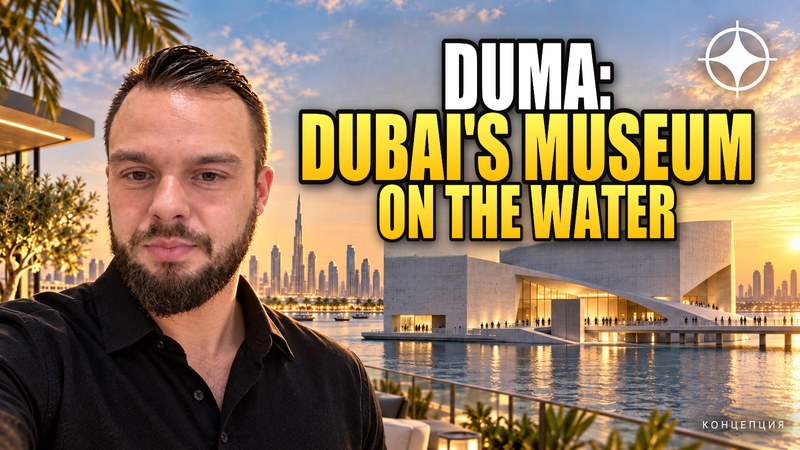
Unveiled by Sheikh Mohammed in October 2025, DUMA will be Dubai’s first museum of modern and contemporary art: a five-level Tadao Ando building on a jetty in Dubai Creek, developed by Al-Futtaim. No opening date or budget yet. What it means for Creek-side homes.
A.R.M. Holding and Bjarke Ingels Group are turning the Jebel Ali Racecourse into a 5 sq km district: eight neighbourhoods around a central park of about 1.5 sq km, with equestrian venues kept. Work was due to start in 2026; no price list yet. How it compares with Dubai Hills.
An Expression of Interest reserves a place in line for a Dubai off-plan launch — usually with a deposit, and the SPA has to reach Oqood within 90 days of signing. Whether the deposit is refundable depends entirely on the developer’s own terms, not on any regulation.
Dubai's economy is forecast to grow 4.5% in 2026, Britain's just 1–1.2%. Dubai home prices are projected up 5–10% for the year; London's forecasts range from minus 4% to plus 1%. We compare taxes, yield and price growth across two markets that draw the same investors.
Property Finder's Market Pulse for August 2026: buying intent among active Dubai property seekers rose from 68% to 71%, while about 53% still expect prices to fall. The median price per square foot moved from AED 1,271 to AED 1,301 over the month.
Family offices in Dubai grew from about 600 in 2023 to roughly 1,000 by mid-2025, and the assets they manage through DIFC alone hit $1.2 trillion by mid-2026. We look at who is relocating and what it means for prime housing demand.
Wynn Al Marjan opens in September 2027, and branded homes around it deliver in the same window: W Residences from AED 1m, Jacob & Co Residences (223 units, AED 300m sold in 12 hours), 141 Sheraton residences and Park Beach Residences 2. Where the risk sits.
Market commentary puts the premium for a direct sea or marina view at roughly 15–60% over an equivalent unit without one, depending on the building and floor. When that premium pays off in yield, when it only pays off on resale, and how to judge a view from a floor plan before the tower exists.
Ramhan Island launched in 2023 with 3–7 bedroom villas from about AED 6.5m. In 2024 Marriott signed a 50-villa Ritz-Carlton Reserve there, due in 2029. First villa handovers have slipped to late 2026–2027, and the bridge to the island is still being built.
Khor Al Mamzar Beach reopened in May 2026 after a AED 500m upgrade: the region's first floating pedestrian bridge, a 3.6km swimming line, a 300-metre night beach and 5.5km of trails. The Al Mamzar corniche is still finishing, while the 6.6km Jebel Ali Beach is being delivered in phases.
By mid-2026, new-build homes above 1 million rubles per square metre are selling in 14 Moscow districts — four more than a year earlier. In Dubai that same price level remains the preserve of just four addresses: Jumeirah Bay Island, Palm Jumeirah, Emirates Hills and Downtown Dubai.
Dubai is rolling out a 200-plus project quality-of-life plan through 2033, anchored by a 15km green corridor along Sheikh Zayed Road. We break down what is already under way and which districts benefit first.
Since January 2025 Dubai’s rental index rates every residential building from one to five stars on 60-plus criteria. The renewal caps are unchanged — 0% to 20% — but the benchmark is now your building, not the district average.
Dubai in 2023, from official data: 166,400 real estate transactions worth AED 634bn (+36% by number, +20% by value) and 71,000 first-time investors. Knight Frank had villas 9% above the 2014 peak while apartments were still 10% below it. A reference review, with the status as of September 2026.
The Blue Residency is a 10-year, sponsor-free UAE residence for environmental scientists, award winners, activists and clean-energy investors. Announced in May 2024, nominated via ICP for AED 350, with a 180-day entry visa for AED 1,250. Who it suits — and why it is not a property route.
The threshold is AED 2m everywhere, but it is not measured the same way. Since January 2024 Dubai counts a mortgaged home at its full DLD valuation; Abu Dhabi wants AED 2m of your own equity. Mortgages, off-plan, three emirates and what the visa gives beyond residence.
Zayed National Museum opened on 3 December 2025, the Natural History Museum on 22 November and teamLab Phenomena in April 2025. Guggenheim Abu Dhabi is set for 11 December 2026. What is finished, what is not, and how it feeds Saadiyat prices and rents.
Wasl is extending Jumeirah Golf Estates by 4.68m sq m: 12,345 homes, of which 780 villas, 62 hilltop mansions and 10,654 apartments, a 131,850 sq m central park and a Mandarin Oriental resort. The first villa clusters sold out in under 48 hours. What it means for buyers in the original community.
Eagle Hills has confirmed it is developing Lulu Island, a 400-hectare reclaimed island 500 m off the Corniche. No masterplan or prices yet, but machinery is on site. What is known, what is not, and why early "reservations" are not purchases.
At AIM Congress on 7 September 2026, Mohamed Alabbar said Dubai prices could adjust 5–10% as the 2026–27 supply wave lands, and called a 15% fall "very unrealistic". What the forecast rests on, and what Emaar's own numbers show.
Eid Al Adha 2026 closed government offices from 25 to 29 May, while the private sector got four days. National Day on 2–3 December is next. What a holiday freezes in a Dubai purchase — transfer, manager’s cheques, mortgage release, biometrics — and how to time your trip.
The Boring Company’s Dubai Loop: a 6.4 km pilot with 4 stations between DIFC and Dubai Mall for about $154m, a full 22.5 km, 19-station network for about $545m. The RTA contract was signed in February 2026 and tunnelling is due in the second half of the year. What it means for buyers downtown.
July 2026: 13,930 sales worth AED 34.9bn, down about 31% in number on a record July 2025. August: around 11,600 sales worth AED 27.9bn, down 37% in number and 44% in value. Where the slowdown is real, and where it is a base effect.
RTA swaps licences from 57 countries with no test for about AED 1,000–1,200. Everyone else goes through a driving school — 10 to 20 mandatory hours and AED 4,500–7,500. All three routes, and where people lose money.
UAE banks offer conventional mortgages and Sharia-compliant financing side by side, open to any buyer regardless of faith. Ijara (lease-to-own) dominates residential deals; murabaha and diminishing musharaka show up less often. The Central Bank caps — 80% LTV, 50% DBR — apply to both.
Market mortgage rates in Russia sit near 18.7% in September 2026; a non-resident in Dubai can borrow from 5%. On a comparable loan the total cost over 25 years differs several times over. We run the numbers and explain who can actually access the Dubai rate.
D33 targets AED 32 trillion in economic activity over ten years and AED 650 billion in foreign direct investment by 2033. We unpack the numbers and why they already translate into rental demand.
Mayfair Gardens, Majid Developments’ first Dubai building, has 64 homes (24 studios, 40 one-bedrooms) launched in 2024 from AED 875,000. Handover slipped from Q2 to September 2026. What the delay means, and what to check before you sign the handover papers.
A Dubai "1BR" is a living room plus a separate bedroom — closer to a European two-room flat than a one-room unit. Formats, typical sizes in sqft, and how the choice between studio, 1BR and 2BR+maid affects rental yield and resale liquidity.
Five car makers now put their names on Dubai homes: 182 Bugatti Residences in Business Bay, the 341-metre Mercedes-Benz Places, Aston Martin interiors at Viewz, a 19-storey Pagani tower on the canal and Bentley Home villas from AED 20m. What the badge actually buys.
Elysian Mansions is a gated enclave of 94 five- and six-bedroom mansions on the Tilal Al Ghaf lagoon by Majid Al Futtaim. Launched in 2023 from about AED 18.5m, resale listings now run from AED 22m to 55m, and handover has slipped from late 2025 to late 2026.
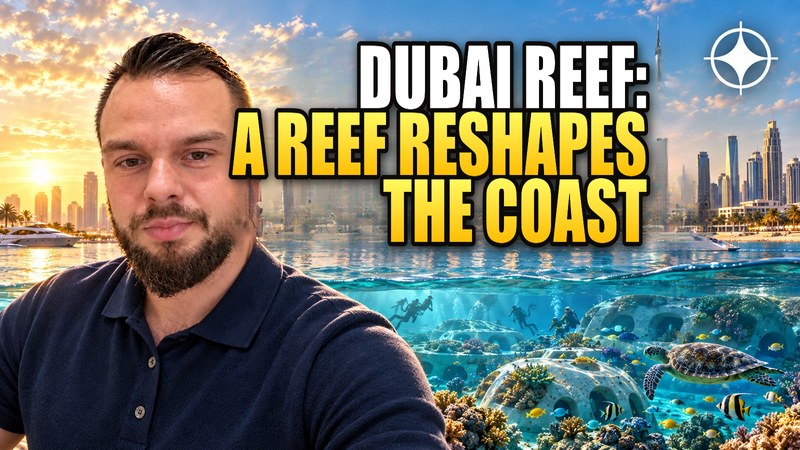
Dubai Reef plans 20,000 concrete reef modules over roughly 600 sq km by the end of 2027. By September 2025, about 39% of the modules were manufactured and around 3,600 were already on the seabed, with fish biomass up eightfold on pilot sites since 2021.
A buyer of retail space looks at price per foot, location and stated yield. The tenant the unit is bought for looks at something else entirely — and their list is shorter.
A school comes up in almost every conversation about Swiss property. That is not accidental — but Switzerland separates three things that other countries connect.
The construction mentioned most often and understood least. And the most common mistake is registering as an entrepreneur in order to let one apartment.
Georgia belongs on the low-tax lists deservedly, but the reason is not one rate — it is that the system is territorial. And the annual property tax has an unusual trigger.
A continental model: a notary executes the contract, the right arises on the cadastre entry. The scheme is clear, and the problems arise not in it but in the condition of the property.
The Torrens title system is among the most reliable in the world, and a register entry confirms the right by itself. The difficulty for a foreigner is not the register but the entry gate.
A continental transaction: notary, registration, a buyer’s own lawyer as standard practice. What tends to alarm foreigners is not the structure but the time — and the reason is historical.
An international stability study ranks the UAE second worldwide, ahead of Canada, Germany and Japan. GDP per capita rivals Western Europe, and the country’s sovereign wealth funds hold trillions of dirhams in assets.
A market where the right to buy is settled before the price. So a transaction starts not with a viewing but with establishing which zone the property is in and what right is transferred there.
The Omani transaction differs from the Dubai one on a single defining point: a foreigner’s right to buy comes from the status of the property, not from the status of the buyer.
One of the most developed mortgage markets in the world looks different to a buyer with no British credit history and no sterling income. The difference starts with who will even look.
It is usually described as "the way to buy land in Bali", and that is the first thing to correct. The company does not make a foreigner a landowner — it solves a different problem.
“Buy a villa, let it to tourists” is sold as passive income. Legally it is hotel activity, requiring land rights, a building permit, an accommodation licence and tax registration.
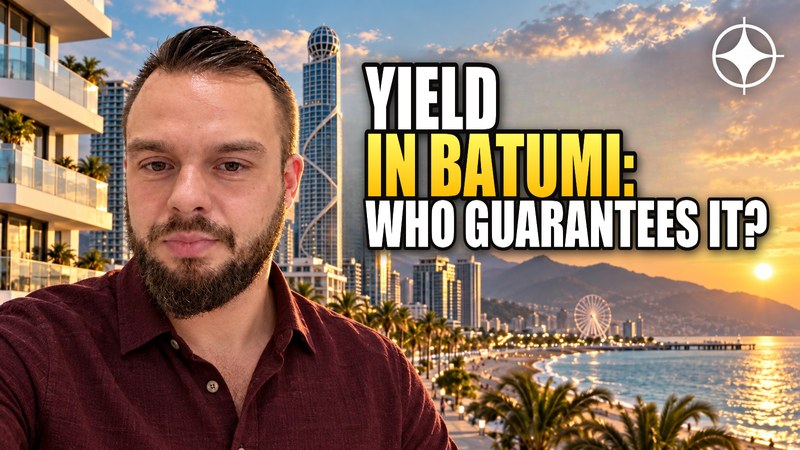
The Batumi market rests largely on one product: a small studio in a seafront tower sold with a promise of fixed income. The structure looks simple, which is why it is rarely taken apart.
The yield figure usually quoted is summer rates multiplied by twelve months. The reality works differently, and the gap between the two calculations decides the purchase.
The Australian rental market has lived in persistent shortage: low vacancy in the big cities and demand sustained by migration. For an owner that means a fast let and a watchful regulator.
British letting is regulated in detail, and the volume of an owner’s duties is markedly larger than a buyer used to Gulf markets expects. Not knowing them does not soften the consequences.
The yield on a Turkish apartment is almost always calculated in hard currency and received in lira. Between those two lies inflation — and it, not the rent, decides the result.
The Omani rental market splits exactly in half, and both halves work unlike Dubai’s. Mixing them in one calculation is not possible — different occupancy, costs and horizon.
The easiest way into the Doha rental market is one figure: the overwhelming majority of Qatar’s population are foreigners who came to work. Demand is employment-driven, not domestic.
An index of 219.2. An asking price of AED 1,397 a foot. A registered sale price. These are three different kinds of number about the same market, and none of them converts into another.
Every few weeks Dubai reports another record total of property transactions. The figure is real, but it is not a measure of how many homes were sold, how much they cost, or whether the market rose. Here is what it does measure.
Over January to July 2026 one developer signed 8,411 transactions and took AED 7.5bn; another signed 2,768 and took AED 8bn. Both topped a league table. Which table you are reading decides which company looks like the leader.
A badge saying "20% below market" is only as good as the comparison behind it. Here is exactly what ours is measured against, the three things no algorithm can see, and the cases where a real discount is still not a bargain.
The average price of a district is one of the least useful numbers published about Dubai. It moves when the mix of what sold moves, even if no property changed price — and a handful of penthouses can carry it on their own.
In July 2026 nearly three quarters of Dubai residential transactions were off-plan. The two halves moved in opposite directions that month — and any headline that adds them together is describing developer launches, not the housing market.
In July 2026 the blended residential index was down 1.6% over the year. Underneath it, villas were flat and apartments were down 4.2%. The blended figure was accurate and told a buyer of either nothing at all.
One index says Dubai housing rose 8.9% over the year. Another says it fell 1.6%. Both are correct, and the reason is not spin — it is that they measure different things over different periods against different starting points.
A finished interior is the norm here rather than an upgrade, which surprises buyers arriving from markets where a new flat is a concrete shell. What is included, what is quietly not, and where furnishing money is well spent.
Almost nothing in the arrival process is difficult on its own. What catches people is the sequence: several of the steps are locked behind one another, and starting in the wrong place costs weeks rather than money.
Every Dubai district claims good amenity. The difference that shows up in daily life is not how much retail there is but whether you reach it on foot — and that difference is set by the masterplan, not by the listing.
Dubai does not have four seasons, it has two, and the household budget, the letting income and the shape of an ordinary day are all different in each. What moves with the calendar, and what to do with that if you own something here.
Whether you can keep a dog in Dubai is not answered at the level of the city or even the district. It is answered by the building, in a document most tenants and a surprising number of buyers never read before signing.
A property visa is issued to one person. Everyone else in the household is attached to it, which has consequences the brochure does not mention — including what happens on the day the property is sold.
Health cover in Dubai is a condition of residence rather than an optional purchase, and the part that decides what it is worth is not the premium but the network. What a new resident should establish, and why some of it is a property question.
A launch sells out in an afternoon, which is exactly the problem: the buyer has the least time to think at the moment the most is being decided. What the price list is actually telling you, and which columns matter.
Most of Dubai is built around driving, and in most districts a household without a car is a household with a problem. A handful are genuinely different. Which ones, what makes them different, and why the answer changes in July.
The off-plan risk that matters is not the developer failing. It is a hundred near-identical apartments handing over in the same district in the same quarter as yours — and it is visible years in advance if anyone looks.
The question that decides everything else is asked least often. A home and an income asset are selected on different criteria, in different districts, and the flat that is a compromise between them usually fails at both.
The area in a Dubai listing is usually the internal suite plus the balcony, and sometimes a share of the common parts on top. Two units with identical quoted areas can differ substantially in the space you can put furniture on.
The service charge on a villa is usually levied on plot area rather than built area, and running one often works out three to four times cheaper than an apartment of comparable size. What it does not cover is the part that surprises people.
Work inside your own walls still needs approval — from the building’s management and from the authority that regulates your community. Unapproved alterations do not stay hidden: they surface at resale, in someone else’s survey, at the worst possible moment.
Owners from other markets expect to vote out a managing agent. Dubai’s joint-ownership framework does not work that way: the management company is appointed, the money sits in the building’s own escrow account, and the route for a dissatisfied owner runs through the regulator.
Delay is the normal condition of off-plan construction, not the exception. What the contract gives you, which percentage to trust, why stopping payments is the worst available response, and the point at which the regulator becomes relevant.
The sale and purchase agreement decides the next three years of the purchase: when you may resell, what happens if the date slips, how much the area may differ, and what the developer may substitute. Eight clauses, and why each one costs money.
Perhaps half the resale stock in Dubai carries a bank charge. The title cannot move until the loan is settled, and in many of these deals it is the buyer’s money that settles it — weeks before the buyer owns anything.
A resale in Dubai does not complete at a lawyer’s office over several weeks. It completes at a registration trustee counter, usually in one appointment, and almost everything that can go wrong has already gone wrong before you get there.
Two identical layouts in the same building can differ by half again in price purely on what the windows face. The premium is real, it is priced explicitly, and it is the one attribute of an apartment that cannot be renovated in later.
The Thai market for a foreigner usually reduces to Phuket and Bangkok. Two other notable markets sit around them, and they get considered exactly when Phuket prices surprise.
Bali is sold as one place, but the island long ago split into several markets with different economics. A villa in Canggu and one in Ubud are different businesses.
A district that is being built and a district that is finished are not the same purchase at different prices. One is priced on what exists, the other on what is drawn — and the gap between them closes slowly, unevenly, and sometimes not at all.
Australian cities sit consistently at the top of world unaffordability rankings. That is not an anomaly of recent years but a durable construction of several independent causes.
London is not one market but several dozen local ones, and the difference between neighbouring districts can exceed the difference between cities in another country.
The law opened twenty-five zones to foreigners, but real liquidity and real turnover are concentrated in two of them. That is not a shortage of choice but a consequence of structure.
A rent argument, a service-charge argument and a developer argument go to three different places, and almost all of them are decided on paperwork rather than on merits. Which forum handles which, and the file you need before you get there.
On a new build the developer pays the agent; on resale the buyer does, at 2% plus VAT. The Land Department fee, the no-objection certificate and the trustee office each have their own answer, and three of them are market practice rather than rule.
Freehold is ownership including the land, and it is the only form that supports a residency application. Leasehold is a long right of use, up to 99 years. The difference is decided by the specific project, not by the name of the district.
Electricity, water and cooling are separate accounts with separate providers and separate deposits, and none of them moves automatically when the property does. What to close, what to open, which deposit comes back, and why an empty apartment still runs a bill.
Two names on a title deed is a decision about more than the deposit. How the shares are recorded, what happens when one owner wants out and the other does not, what a joint mortgage binds you to, and the arrangement that can only be made while both owners are alive.
Both are possible, and the Land Department registers both. The differences appear afterwards — in the residence visa, in succession, in running costs and in who is allowed to sign. The questions to settle before the reservation, not after it.
No personal income tax, no annual property tax, no capital gains tax on an individual. What replaces them is a 4% fee at the start and a service charge every year — plus the question that is answered in your country of residence, not in Dubai.
Oman for a foreigner is not a whole country but a set of tourism complexes along the coast. The two main addresses inside that set work on fundamentally different principles.
Property here buys residency in three tiers — two years, five and ten. What each one requires, why the construction stage matters for one of them and not another, and the assumption that costs applicants the most money.
The smallest decision in a Dubai purchase is also the one most often made by price alone. A studio and a one-bedroom compete for different tenants, carry different exit risk and behave differently when a district floods with new supply.
The Georgian housing market is two cities, usually described with one figure. In the capital the income is made by someone who lives there; on the coast by someone who came for a fortnight.
One of the simplest markets on this list. No permissions, no limit on the number of properties, registration in a day — and exactly one restriction, written at the highest level.
A short list of countries where a foreigner buys on almost the same terms as a local. “Almost” is the key word, and the line runs through the land rather than the building.
The coast runs about three hundred kilometres, but a foreign buyer almost always chooses between three points — and the markets differ enough that a calculation does not transfer.
Two apartments of the same size in the same city can cost very different amounts a year simply to own. The word doing the work is "community" — a layer of cost above the building that buyers rarely price, and that decides the net yield more often than the rent does.
The roughly $1.7 billion project is going up on Yas Island between Yas Mall and SeaWorld. Capacity of up to 20,000 and a 16K Exosphere screen wrapping the whole building. What it changes for property on the island.
Keys are the beginning of a different set of obligations. The title deed, the service charge that runs whether or not you moved in, the utility accounts and their deposits, the owners association — and the one warranty clock that expires while you are still furnishing.
The valuation is paid by you, ordered by the bank, and non-refundable whether or not the loan is approved — and if it comes in low, the difference is found in cash. What a valuer does, what a valuer explicitly does not do, and what the building policy leaves uncovered.
A fixed rate since 1997 means no local currency risk — and it also means a Dubai mortgage rate is set by decisions taken in Washington rather than by the Dubai property cycle. Three consequences a buyer should price in, and two illusions to drop.
Not a matter of taste. When the money leaves you, when income starts, how a bank treats it and how you get out again are four different answers, and together they point at one option or the other for almost every buyer.
Rent arrives a year in advance, which flatters every model. Here is the rest of it: the registration without which a tenant cannot connect power, the deposit convention, the notice periods, and the six lines that separate gross rent from what reaches you.
Short-let returns are quoted gross, in winter, on a good week. The licence you need, the building that may not allow it, the 15–25% an operator takes, and why the annual number lands closer to a long let than the peak season suggests.
Handover is a sequence, and there is exactly one point in it where you have leverage. What a snag list finds, why the good inspectors are booked out when handovers cluster, and how long a developer stays liable once you have signed.
Off-plan money does not go to the developer. It goes to an account opened for one project, at a bank, under supervision, and is released against verified construction. What escrow protects against — and the three risks it leaves entirely with you.
Most Dubai districts sell one of two things to a tenant — a view of water or a way to get to work without a car. They attract different people, carry different running costs, and fail in different ways. Which one you are buying is worth deciding before the viewing.
Buy off-plan and you do not own an apartment — you own a registered position in a contract. What Oqood registration is, why the 4% is paid at the start rather than at the keys, and what changes on the day the title deed is issued.
A mortgage adds roughly another one and a half per cent to a transaction, and one of those items is payable whether or not the loan is approved. The four costs, the insurance the bank will require, and why they are not financed.
Most guides describe the buyer’s costs. On the other side of the table there is a no-objection certificate that will not be issued with arrears outstanding, a mortgage that has to be discharged before the title moves, and a bank account you now genuinely need.
A new-build purchase runs at a distance almost end to end. A resale needs somebody at the trustee office — you or an attorney. What the power of attorney must say, where it is legalised, and the one person who must never hold it.
A change of owner does not end a tenancy, and it does not let you move in next month. The twelve-month notice, the rent-increase scale that caps what you can charge, and why a tenanted flat has two prices.
Without a registered will the matter goes to court, and the slowest part is not the property — it is the frozen accounts while the service charge and the mortgage keep running. What a DIFC will does, and what survivorship does that a will alone cannot.
Cooling, DEWA, internet, insurance and the appliances inside your own walls sit outside the service charge entirely. The list of what an owner pays after the purchase, and the one line that separates a villa from a flat.
There is no annual property tax in Dubai. There is a service charge, it is the largest permanent cost of ownership, and it is approved building by building — which means it can be checked before you sign rather than discovered afterwards.
The tax side of Bali is discussed less often than the legal side, wrongly: it is what separates a promised yield from a received one. And the form of ownership changes all of it.
The regime existed for more than two centuries and was one of the reasons wealthy foreigners chose London. From April 2025 it is gone, replaced by a residence-based system.
The Swiss system surprises almost every arriving owner: the state treats living in your own house as income. The mechanism is called imputed rental value.
The burden is low by European standards, but it has features that change the calculation — several charges are computed on cadastral value, and there is a VAT exemption written for foreigners.
Rates here are below European levels, and that creates a false sense that there are no taxes at all. There are — they are simply small, and each of the four points has its own rule.
An EU country with a full tax system, and holding property here costs more than in the Gulf. Not an argument against buying, but the costs are recurring and independent of occupancy.
Cyprus is often described as a country with a mild tax regime, and by European standards that is true. But charges arise at all four stages, and the confusion usually starts at the first.
The Australian tax burden on a foreign owner is built not as revenue collection but as a policy instrument: each surcharge answers a specific behaviour the state wants to limit.
A Gulf country, and the tax picture matches: no personal income tax, no annual property tax. As with its neighbours, no tax does not mean no cost — and the main costs are not tax.
Thailand often appears in a buyer’s conversation as one market. It is at least two, with opposite logic — and mixing them into one yield figure is the most common error.
The Turkish market is usually discussed as a whole, though inside it splits into two almost unconnected stories — one urban with domestic demand, one coastal and foreign-funded.
Greece in investment conversations usually reduces to islands and a golden visa. The market actually splits into at least three parts with entirely different economics.
Cyprus is small, and that creates an illusion of uniformity. In reality the three main cities live different lives, and buying in each solves a different problem.
A rare developed market where a foreigner cannot simply arrive and buy. Approval is obtained before the purchase, and buying without it means a forced sale and a fine.
The trap is not access — there are no restrictions on foreign buyers. It is the form of right: “bought a flat” in England does not mean what it means in Dubai.
One of the most open markets in the region and simultaneously one of the most procedural. Buyers usually learn about the filters at the moment one of them trips.
Before 2018 a foreigner could buy at exactly three addresses. The law rewrote the rules and split the country into three parts — and which part a house is in is the first question.
The Omani market for a foreigner is arranged simply and strictly: purchase is possible only inside integrated tourism complexes. Outside them, nothing is sold.
What is interesting is not the technology but its purpose. It is a precise illustration of an approach to city administration that shows up in other areas too.
Tax refunds on online purchases had not worked anywhere. Individually each such measure changes little; together they decide occupancy in short-let apartments.
Five things worked at once. But a phase selling out in hours is an indicator of the market’s state at that moment rather than proof of the project’s quality.
A developer’s financial statements are not obvious reading for an apartment buyer, but they answer the main question: will the company finish what you are paying for?
Not a three-person representative office but dozens of staff. Companies that size open offices for the flow expected over a decade, not for today’s deals.
Rankings of this kind are built on surveys, which is exactly why they predict behaviour well. The connection to property is direct in four ways and indirect in one.
Roughly 900 new residents a day. No construction rate covers that immediately — which is why the rental market recovers faster than the sales market. And where the limit is.
Land Department data recorded a divergence worth unpacking: rents jumped while sale transactions slipped slightly. Rent and price respond to different things.
Some indicators say more about a property market than the property market does. Company registrations are one, because a registered company is an obligation stretched over time.
Six of the twenty tallest construction sites on the planet are in Dubai, and the whole UAE top ten is one city. What height means for a buyer is more prosaic than it sounds.
Thirteen large developers and five banks. The most underrated item in it is not the discount — it is the two-year interest-free instalment on the 4% registration fee.
A desert city’s drainage is designed for a desert climate, and that is an engineering compromise rather than negligence. The problem is that such events became more frequent.
A quarter of 2023 is useful not for its records but for one number reported less often — and it is the number that makes the choice of developer matter more than the choice of layout.
Talk about Dubai yields is usually percentages without a denominator. Four transactions with every figure named, including costs — and one caveat that governs all of them.
Three transactions Dubai quotes as benchmarks. Looking at them together is more useful than at any of their percentages — and what they have in common is not repeatable.
The change needs describing precisely, because headlines describe it wrongly. Price is what something sells for; liquidity is how long it takes to find the buyer.
Demand for quality commercial property is not driven by the forces that drive apartment demand. Four regulatory shifts explain the turn — and one of them makes refurbishment pay.
Little is said about UAE industrial property, and yet it is a segment with clear economics and long tenants. What feeds it, and the three strategies people use.
The office shortage produced a solution that would have looked illogical a few years ago. One district proved it works; the next candidate is an assumption rather than a fact.
When buying an office, price is not the first thing to establish. The first thing is whose business moves in and what they pay out of — you are buying a stream of rent, not square feet.
Office project decks often show a yield range. It looks like a range of outcomes. It is not — it is three different rent forecasts laid out in a table.
A term that barely exists in residential. What you buy alongside the building is a lease, and the measure that prices it cannot be dressed up the way a gross yield can.
On the north-east of the map there is a place that looks like a printing error. There are only two arrangements like it in the world — and the way the border was drawn is the interesting part.
It is easy to fall into two extremes about a cultural landmark next door — that it automatically lifts prices, or that it means nothing. Neither is right.
Not one operating line, not one station. The metro maps circulating online are drawn from plans rather than from reality — and the difference matters before you choose a district.
The city ranks 18th in the world by millionaire count. The ranking matters less than the rate: +102% over a decade, beaten by only three places on earth.
The largest developer’s return to Dubai Marina prompted a look at its earlier projects there. The valuable number in that statistic is not the growth percentage.
Listing-portal data has one advantage over the transaction register: no registration lag. A cross-section of the secondary market two months into an unstable period.
When the index falls, headlines turn it into “the Dubai property market is falling”. In some weeks of 2026 the index dropped 17% — and not one apartment moved by 17%.
The inflow makes sense from the developer’s side. From the buyer’s side it says the opposite thing, and a licence in the Land Department register is not the answer to it.
Almost every third dirham spent on Dubai property in March 2026 went into one company’s projects. Concentration rose not because the leader improved but because the buyer got cautious.
The dirham is pegged to the US dollar, so the cost of money in the UAE is set by the American rate. While it is high, mortgages and funding cost more and investors decide more slowly. How the mechanism works and what it means in practice.
The largest rental transaction in the emirate’s history. The detail that matters more than the sum is that the owner turned down offers of up to 15m — on multi-year terms.
A 2,277 m² plot on Jumeirah Bay sold for $34m; the previous owner had bought it at $9.9m — a 242% gain. Land behaves differently from an apartment, in four specific ways.
Packages that did not exist before appeared in summer 2026. Their arrival is itself informative — it signals cooling demand rather than generosity. Here is how to convert one into money.
Five real 2026 cases with the numbers. The spread runs from 3% to 19%, and it is not random — the deepest discounts sit at the top of the market, not the bottom.
The Swiss housing-bubble index places Dubai in fair-value territory: inflation-adjusted prices were still about a quarter below the 2014 peak, and rents grew faster than prices. How that compares with cities the index rates as overvalued.
A five-bedroom villa is the most sought-after coastal format, which makes it a convenient way to compare locations. Four reference points, and the three factors behind the near-twofold gap.
One of the clearer market observations of 2026: apartments are losing ground in several segments to competition and oversupply, while townhouses hold up noticeably better.
A niche on the Dubai secondary market that works independently of the cycle — buying dated stock, refurbishing properly and selling to someone who will pay for “move in tomorrow”.
Of everything that affects a Dubai home’s value, two stand out for consistency. Both work for the same reason — and both have a limit at which the potential is already paid for.
A project built around three names, with fifty-three apartments in the whole scheme. Why the district’s price per foot tells you nothing about it, and what to check in projects like this.
Indian nationals are the largest group of foreign off-plan buyers. The shares of British and Chinese buyers grew noticeably, Gulf states were active, and Russian demand concentrated in the premium segment.
Two processes worth looking at together — record population growth and a visible shift in who is buying and why. The second is a consequence of the first.
Four passengers and a pilot, electric, between the four locations with the heaviest ground traffic and the most expensive property. What it does to prices, and what to treat with caution.
One of the most-quoted lines in the 2040 master plan. Where the extra 84 kilometres come from — and why more coastline is not unambiguously good news for a waterfront owner.
Dubai Land Residence Complex spent years being what agents delicately call “out of town”. The pattern that repeated twice before says what a station does next.
Palm Jumeirah is the showcase of Dubai letting, and its numbers get quoted most often. Here is the calculation on two unit types with every cost deducted.
International tables measure how many years of rent it takes to repay a home’s price. Dubai is regularly at the bottom — and that is the right place to be.
Two acronyms presented in decks as if they were the same thing. They are not, and in Dubai the difference reaches a factor of nearly two — because of post-handover payment plans.
The first half of 2026 fits neither the crash forecasts nor the stories of uninterrupted growth. The correction happened — but not where it was expected.
The Land Department’s updated rent index recorded what had until then only been discussed as a feeling. Three reasons, and why the third matters more than the first two.
One feature of Emirati practice drops out of most models even though it affects the outcome more than a couple of tenths of a percentage point of yield.
An archipelago of man-made islands, built out only in part. Buying here is not property in the ordinary sense, and it has to be assessed by different rules.
Plots here are on a scale the city no longer subdivides. Space has a running cost, it scales with area, and it is the part buyers reliably underestimate.
Most of Dubai is somebody’s project, with a master plan and a community charge. Al Warqaa was built plot by plot, and that changes five practical things.
New ground by the canal where the first projects are under construction and no building is occupied. The usual checks do not apply — so check different things.
A new community of houses with lakes and green corridors. The right comparison is not other brochures — it is what the neighbours delivered three years ago.
A media and printing free zone with housing around a lake. When demand rests on one industry, that is both the strength and the single point of failure.
One address covers protected lagoons with flamingos and one of the city’s largest industrial areas. The distance between the two halves is measured in kilometres.
Warehouses, workshops, galleries and housing mixed together in the middle of the city. The space is cheap; the questions are not the ones you ask in a residential district.
A zone where housing, offices, warehouses and light industry sit side by side by design. The neighbouring plot affects daily life more than the apartment does.
A manufacturing and logistics zone with its own residential stock. Demand here is not city demand — it is employment demand, and it is counted differently.
A dense older quarter minutes from the centre. Before price, establish whether the specific plot is open to foreign ownership at all — often it is not.
Low-rise buildings from the early 2000s beside a metro station, let almost entirely rather than owner-occupied. The stability of rents here has three concrete causes.
A technology park with housing inside it and universities alongside. Ownership is not the standard freehold, and the tenant pool comes with an academic calendar.
A quarter for design, fashion and creative business, with housing among it. Demand here is occupational and narrow — which is both its strength and its single point of failure.
A residential quarter opposite a major resort complex. Proximity delivers a great deal — and it is worth separating what proximity gives from what your documents give.
A family townhouse community in Dubailand. Comparing its yield with an apartment’s in the usual way produces the wrong answer, for five specific reasons.
One of Dubai’s first villa communities, long settled and traded entirely second-hand. A mature district is assessed differently — and that is its advantage.
A community built around man-made lagoons with Mediterranean-themed clusters. Water is a genuine differentiator with a permanent operating cost attached.
A family community well beyond the current edge of Dubai. The argument for buying is straightforward, and it rests on four numbers rather than a master plan.
A standalone island has no city utilities, waste collection or emergency services in the usual sense. All of it is someone’s daily work and someone’s budget.
A mall on your doorstep means convenience and a constant flow of cars. Between two buildings in the same quarter, the difference is measured in a few hundred metres.
An early phase is cheaper and means a longer wait; a later one costs more and sits closer to a finished community. The difference can be calculated rather than guessed.
The minutes of the owners’ association are the most informative document about a building, and they are available on request. Here is what to look for in them.
In districts with lots of similar apartments, your rent is set by the buildings next door, not by yours. You can calculate it before buying, and the figure is concrete.
In a sector-based district, housing demand comes from the companies nearby. Their number and occupancy can be checked, and they are the best leading indicator you have.
In a mixed-use zone, apartments are not the only thing for sale. Offices and warehouses come with a different tenant, a different lease and different economics.
In low-rise communities, ground-floor units come with a terrace and a patch of garden. It is a format between an apartment and a house, with its own benefits and its own costs.
In Dubai’s dense old centre many apartments are rented by several people at once. For the owner that means a higher rent and faster wear — and there are rules worth knowing first.
The mix of owners decides whether a building gets maintained. You can find it out before the purchase, and there are more ways to do it than you might think.
The industrial part of Ras Al Khor is a separate rental market with its own logic. It is more stable than residential, and it calls for a different approach.
High ceilings and large floor plates at well below residential prices are tempting, but the permitted use of a unit decides what you may legally do in it.
Dense housing from past decades, surrounded by new projects. The neighbourhood lifts the value and adds uncertainty at the same time — and an owner needs to understand both.
Houses on the water sell for more, and the water needs constant care. Who is responsible for it and what it costs is a question for the community charge.
In a district with universities, a noticeable share of rental demand comes from students and teaching staff. That demand runs on its own calendar and has its own requirements.
In a large master plan it matters not only what gets built but when and where. The phasing plan tells you where the construction site will be for the next few years.
A large villa community is built in several house types, and the difference between them moves price and resale more than the state of the finishes does.
Every gated community has a rulebook: what you can add, where to park, who can come in, whether you can let. It is rarely read — and that is a mistake.
A twenty-year-old house comes with a predictable list of works. The order matters as much as the total: some spending comes back when you let, some never does.
In mainland districts part of what is on offer is not freehold but a long-term right of use. It is a different instrument, and confusing the two is expensive.
Early buyers move into a finished house in the middle of an unfinished district. That means several years of very specific living conditions, and they are worth picturing in advance.
The city panorama across the water is the district’s main selling point and the most expensive part of the price. What protects it, and what could block it.
A vast estate of near-identical blocks, where the gap between two neighbouring buildings is wider than between whole districts. You measure it on foot, not from a listing.
Jumeirah Village Triangle combines villas, townhouses and apartment buildings. That is two rental markets at one address, and they need to be calculated separately.
A pedestrian quarter in the centre, with shops at street level and homes above. Walkability is rare in Dubai — and it comes with a price tag worth understanding.
Villas, apartment blocks, hotels and a major mall in the middle of the city. Convenient to live in — but what a foreigner can actually own here changes from one plot to the next.
A corridor of towers along a twelve-lane highway. The address could not be more central, and almost everything here comes down to the floor and the side of the building.
A port, a free zone and residential clusters along the main highway and the metro line. Here what counts is not the district but the distance to a specific station.
A district where a single developer owns the land, designs, builds with its own workforce and maintains the grounds. That brings coherence — and creates dependence.
A quiet strip of coast with universities, hotels and low-rise housing. One of the best locations in the city — and very little of it that a buyer can actually purchase.
A peninsula between two harbours, planned as a hub for shipbuilding and ship repair, with residential towers on the same land. Here the neighbours matter more than the view.
A dense cluster of towers on reclaimed land between the Marina and the sea. The main risk to the view is not someone else’s plot but the next phase of the same project.
A small island with an observation wheel, restaurants and a promenade that draws the whole city. For an owner it is both the main asset and the main drawback.
A small man-made island in the ultra-prime segment where both land and houses are sold. They are two different assets, with different liquidity and a different wait before you can move in.
From June 2026 the maximum permitted annual increase in the emirate is zero, replacing the 5% cap in force since 2016. A rare position for a tenant, and a direct constraint on a landlord’s model.
Two of the largest construction programmes in the emirate’s history are running at once. They, rather than any developer’s payment plan, will determine what these districts look like in five years.
Investment analysis in the UAE is usually built around Dubai. The neighbouring emirate runs on a different price level and different maths — a worked scenario with a mortgage and positive leverage.
The final waterfront plot on an island that already has a Formula 1 circuit, theme parks and a mall. What it means to buy into the closing phase of a fully formed destination.
The number explains less than the structure does. There is no single pot: several independent institutions with separate mandates, and that arrangement is what makes the capital behave the way it does.
A product the off-plan market did not have: bank financing that accompanies the buyer from the start of construction through to handover. How it works, and why it closes the segment’s structural problem.
The concluding part of the island’s master plan — 6.4 million square metres, the largest marina in Abu Dhabi, hotels and culture. What is significant is not the scheme but that an entire island is being completed.
The capital’s housing market showed a turn Dubai did not: demand moved into finished stock. The half-year numbers, how much is being built, and why the buyer here behaves differently.
Regulator and exchange platforms now publish actual closed prices, medians and price per square foot. Why that matters more than it sounds — until now the capital was assessed on assertion rather than on records.
Residential brochures state height as a formula. Decoded, it explains why the “fifth floor” in a Dubai tower can be at the height of a ninth — and whether paying for height is worth it.
The most common mistake in choosing between two schemes. A real example from Business Bay where two similarly priced one-bedrooms turned out to differ by 33% once reduced to area.
A payment plan looks convenient at the start and commits you for years. What formally happens when a payment is missed, how much of your money is at risk, and the three routes that are better than default.
A broker and a developer had agreed a specific unit, the buyer had confirmed and sent documents, the deposit meeting was booked. The day before, the price went up. Why this happens with new entrants, and how to close the gap.
One of the most common approaches to an owner in Dubai, and one of the least often true. What the tactic is for, how to test it in one question, and when it is genuine.
Assessing this market by current prices is close to useless: they react last. Three other things say far more — liquidity, buyer caution and the accumulating volume of future supply.
Every developer selling off-plan in Dubai has a registration and an escrow account. That is not an achievement, it is the condition of entry — and buyers read it as a guarantee.
Developer marketing here is exceptional — renders, showrooms, immersive galleries. None of it tells you what you will receive. The only method that works, and specifically which building to visit.
A good screening method fits on one page and produces an answer quickly. Six criteria, each scored out of five — payment terms, developer, price per foot, liquidity, product and location.
Dense building-by-building development with no shared master plan and no amenities of its own. A cluster like this is assessed not as a district but as a set of individual addresses.
The tower the whole master plan was built around went through a design competition and a new concept. Why a landmark matters to a district’s prices, and at what point in construction the market starts pricing it in.
A mixed format within one perimeter: high-rise buildings and villas around a golf course. The combination has real advantages and one typical source of conflict.
A self-contained town with a park, schools and its own retail street. There is a simple way to tell whether a place like this is lived in, or so far only built.
Access has opened to held-back stock in one of Dubai’s most visible finished projects — sky villas, signature villas and penthouses, delivered fully finished. What buying completed premium changes about the risk.
A master plan this size is delivered in phases over decades. What that means for someone moving into the first phase, and how to value what does not exist yet.
A JVC tower built by private individuals rather than a company. It happens more often than people think, and it changes exactly one thing: who your protections actually work against.
Architecture by SAOTA, interiors by Kelly Hoppen, up to seven bedrooms. Why building around water rather than a golf course changes what the product is — and why thirteen houses rather than three hundred.
A developer with a completed building in Al Furjan. Gross yield, net yield and return on invested capital are three different figures — and sales decks show the least useful one.
The developer of a Business Bay tower. Off-plan purchase agreements are signed almost unread, yet eight of their provisions decide nearly everything — here they are.
The distinction is practical: a cluster has its own master plan, its own infrastructure and its own growth logic. What is planned, how it connects, and what a crystal lagoon does to rents.
Dubai’s second palm archipelago, restarted after a long pause. Its dimensions are worth stating in full, because they are what explains its effect on the market — including on the mainland behind it.
Exposition sites usually decay after closing — it is nearly a rule. Dubai converted its into a permanent district, and the reason it is growing is the opposite of the usual Dubai story: the infrastructure came first.
One documented case broken down by numbers — 88% growth, AED 5,813 a foot, AED 666,700 of annual rent — and the mistake people make when they use a story like this as a forecast.
A closed site with a similar buyer pool and comparable asset classes — so the spread in outcomes is explained by the projects rather than by the market. Up to 40% during construction in one, no registered resales at all in another.
A chain of reclaimed islands under a single government master plan. Almost no coastal land with direct beach access is left inside the emirate — and one or two new projects launch here every month. The opportunity and the risk are the same fact.
A developer with a tall tower under construction in Meydan. A large jump in scale is a specific risk, distinct from being new — and it is assessed differently.
A developer building in Discovery Gardens. Off-plan buyers do the work before signing and nothing afterwards — and the period in between is where problems are still cheap to catch.
A developer with a completed building in an outlying district. A low price is only a bargain if somebody wants to live there — and that is checkable before you buy.
A developer building in International City. The lowest entry prices in Dubai buy a real asset with a real yield — and a specific set of limitations worth stating plainly.
A developer building in Dubai South. Ownership and residency are separate things here, and the practical consequences of leaving are smaller than most owners fear — with exceptions.
A developer building in a golf-course community. A fairway view is one of the few outlooks that cannot be built out — and the arrangement behind it has a price.
A developer building on the Dubai Islands. Between handover and the first tenant there is a list of connections and registrations, and every one of them needs someone on the ground.
A developer building on the Dubai Islands. The dirham’s peg to the dollar shapes the currency risk for every foreign buyer — and the transfer mechanics have costs of their own.
A district designed from nothing on a Vancouver waterfront model, built between 2003 and 2008. The numbers behind it, and what a fully man-made location tells you about how value is created in Dubai.
A JVC building delivered by individuals together with a company. Co-ownership is common and simple to set up — and difficult to unwind without an agreement written at the start.
A developer with a Business Bay tower from 2016. Rental disputes in Dubai go to a dedicated tribunal, and the outcome usually turns on paperwork rather than on argument.
A developer with a completed Al Furjan building. A tenanted unit comes with income from day one and with a contract you did not write — and you inherit both.
A developer building a tower in JVC. Two apartments of identical size can live completely differently, and the plan shows which — if you know the five things to look for.
A developer building in Majan. The handover inspection is the last moment at which defects are cheap to fix — and most buyers spend twenty minutes on it.
A developer building a Business Bay tower. Off-plan contracts allow the final measured area to differ from the sold area — and the clause that governs it is worth finding.
A developer building in JVC. Circumstances change over a three-year build, and there is a defined framework for a buyer who cannot or will not continue.
A developer with a small JVC building from 2013. A remote purchase is entirely normal here — and it turns on one document that most buyers grant far too broadly.
A developer with a JLT tower completed in 2018. The title deed is the only document that proves what you own, and most buyers glance at it once — here is what each line means.
A developer with a completed JVC building. Whoever you are buying from, the checks that matter are public, quick and almost never done — here they are in order.
A developer with a low-rise building in JVC, a district otherwise going vertical. Low-rise has structural cost advantages that almost nobody prices in.
A developer building in Al Jaddaf, minutes from the centre and rarely mentioned. Overlooked districts are either an opportunity or a trap, and four checks tell you which.
A developer with projects in Al Barsha and Nad Al Sheba. Mainland Dubai is not uniformly open to foreign ownership, and the map of what is does not follow district boundaries.
A developer building in Arjan and Discovery Gardens. In districts with large amounts of old, cheap rental stock, your new building competes with it — and that sets a ceiling.
A developer building a mid-size tower in Business Bay. The unit mix decides who your neighbours are, how the building is run, and how your service charge gets set.
A small developer with residential projects in JVC. Specifications are written to sound generous, and four phrases in particular mean far less than buyers assume.
A developer building villas on the Dubai Islands. A house bought off-plan on new land combines two kinds of waiting, and they resolve on different timetables.
A developer building branded homes on the Palm and branded villas in MBR City. Putting a fashion name on a house works differently from putting it on a tower, in three specific ways.
A developer with buildings in both Downtown Dubai and Dubai Sports City. The oldest question in property investment, answered with the numbers that actually decide it.
A developer with buildings on both sides of Sheikh Zayed Road. The two districts look interchangeable on a map and behave differently — here is what the price gap actually buys.
A Dubai Marina tower from 2011. In buildings owned mostly by absent investors, decisions stop being made — and the symptoms are visible in an afternoon if you know them.
A Dubai Marina tower completed in 2023. Much of the stock in a newly delivered building is sold on by off-plan investors — and buying from one is its own transaction.
A Dubai Marina tower completed a few years ago. Buildings at this age go through a predictable event that shapes their prices — and it is a buying opportunity if you can see it.
A family developer whose JBR towers date from 2006 and who retained a large share of them. A developer that stays as a major owner changes how the building is run — for better and worse.
A tall branded tower under construction in Dubai Marina. Infill development in a built-out district has a particular economics — for the buyer and for the neighbours.
A holding company developing the Dubai Harbour waterfront. A marina and cruise district is not the same as a residential waterfront, and the difference shows up daily.
A hotel group creating a new resort destination with residences on it. Purpose-built islands have advantages a normal waterfront does not — and one structural dependency.
An investment-managed developer behind a mixed tower in DIFC. Funds behave differently from family developers, and the difference is a timetable you are not told about.
A company building a project marketed under another developer’s brand. The split between the name on the tower and the name on the contract is the single most useful thing to understand here.
A Palm Jumeirah building delivered by two companies together. Joint ventures are common in Dubai development and they change one thing that matters: who exactly owes you what.
A developer with a tower under construction in Business Bay. The district has plenty of demand and even more supply — and that ratio, not the building, decides the outcome.
A developer building a 33-storey tower in Jumeirah Village Circle. Height in a low-rise cluster changes the economics in both directions — here is how.
A developer with mixed retail-and-residential buildings in Al Furjan. Living above active commercial space has specific advantages and specific problems, and both are checkable.
A developer running a single branded residential series in Dubai Science Park and JVC. Why the same product name in two districts means two different investments.
A developer with a numbered series of buildings in Jumeirah Village Circle. A series in one cluster has a specific consequence that is rarely mentioned at the sales table.
A mid-market developer building a lagoon-themed project in Dubailand. Water features are the current standard amenity — here is what they actually add and what they take every year.
A developer with a tall tower under construction in Jumeirah Lake Towers. JLT is laid out and governed differently from the rest of Dubai, and that shapes what you own.
A developer with a mid-size Downtown Dubai tower completed in 2018. What an ordinary building in an extraordinary district is worth, and how to price it honestly.
The property arm of a large regional engineering and contracting group, with towers in the Marina and on the Palm. What an engineering parent means in a delivered building.
A developer with a tall JBR tower delivered in 2014. What the beachfront strip offers as an address, and the specific things to check in a building above a retail promenade.
A smaller developer with a mid-2000s Dubai Marina building. Most towers are not landmarks, and valuing an ordinary one is a different exercise — here is how it works.
A Dubai Marina tower completed in the year the market turned. Why buildings from that cohort are worth understanding as a group, and what to verify in one.
A diversified investment group whose Dubai Marina tower completed in 2006. What the district’s earliest buildings offer, and the systems that come due at that age.
A boutique developer whose project sits within a large master-planned community. Two developers shape your daily life in that situation, and only one of them signed your contract.
A jewellery and retail business developing residential buildings in Al Furjan. What carries over from another industry, what does not, and how to check a first-generation developer.
A regulated savings company that also develops property. What an institutional balance sheet changes for an off-plan buyer, and where it makes no difference at all.
A developer with a tall branded tower at the planning stage. The earliest entry point carries the lowest price and the widest range of outcomes — here is what that actually means.
A developer whose branded residence on the creek completed recently. The year after handover has its own checklist — defects liability, association formation, and the charges nobody has tested yet.
A resort developer whose Palm Jumeirah buildings sit beside its own hotels. What sharing a site with a hotel means for daily life, service charges and governance.
The authority that governs and develops the Dubai International Financial Centre. Property inside DIFC sits under a different legal framework from the rest of the city — and that is the whole story.
A boutique company with a handful of projects. Small-developer risk is real and it is also manageable — here is what it consists of and how to price it.
A developer building in Jumeirah Village Circle, the most competitive rental cluster in Dubai. What decides a single building’s performance when everything around it is comparable.
A developer running a large affordable-segment pipeline in both Abu Dhabi and Dubai. What working across two emirates changes, and the checks that matter in the volume model.
A very low-density community built around planted landscape. Low density is the rarest product in Dubai — here is what it delivers, and the recurring cost that pays for it.
A developer whose main project is a large, completed townhouse community. Why a delivered project is worth more than any pipeline — and how townhouse economics differ from apartments.
The Dubai arm of a construction group with a very long history. What a contractor’s lineage genuinely tells you about a building, and what it does not tell you about the sale.
The developer of two of Dubai Marina’s tallest residential towers, now traded entirely second-hand. The practical realities of super-tall living, and the checks a building of that height demands.
A developer building low-rise beachfront residences on Palm Jumeirah. What separates a low-rise waterfront building from a tower, on cost, tenant profile and resale.
A developer with a small, concentrated portfolio of hotel-branded towers in the financial district. What concentration in one central location means, and what to check in a mixed hotel-and-home building.
The developer behind one of Dubai’s first fashion-branded buildings and a tall tower on the creek. What happens to a branded premium once the building is no longer new.
A developer whose portfolio is essentially a single branded project on Palm Jumeirah. What to do when there is no delivery record to examine and no second project to compare against.
A brand appearing on Dubai and regional projects through licensing rather than construction. Why the licensing structure matters here more than usual, and what to establish before buying.
The operator behind Atlantis and One&Only, with residences attached to its resorts. What an operator-led residence gives, what it costs annually, and where the value sits.
The main listed developer of Ras Al Khaimah. What changes when you buy in a northern emirate — registration, ownership, visas and the demand story behind the current interest.
A listed company that owns and leases Dubai’s business districts rather than selling them. What it means to buy a home inside a district whose owner’s business is commercial rent.
A long-established Dubai company listed on the local exchange, and the creator of Motor City. What a smaller listed developer’s reporting tells a buyer, and which lines matter.
A development shaped like a falcon, with quarters themed on world landmarks. Long-running master plans have a particular risk profile, and it is not the one buyers usually expect.
A master development built around sports venues and academies. Themed districts age in a specific way, and this one is old enough to show how — which makes it unusually easy to assess.
The master developer turning the World Expo site into a permanent district. What a legacy site starts with that a normal master plan does not — and the one question that decides it.
The developer of the residential districts around Al Maktoum International. What an infrastructure-led location offers, and how to think about a thesis that depends on someone else’s timetable.
A developer with two projects on the Dubai Islands. Beach access is sold as a feature and defined as a legal arrangement — and the two are not always the same thing.
A developer building in both Jumeirah Village Circle and Jumeirah Village Triangle. They share a name and a price bracket and behave differently — here is how.
A developer with two residential projects in JVC. The second building is where a company either becomes a developer or stays a one-off, and the difference is visible before you buy.
A developer with a serviced residence tower by the World Trade Centre. Event-driven districts have a demand pattern unlike anywhere else in the city, with the disruption to match.
A developer building a villa community in Dubailand. Villa pricing splits into plot and structure, and the two behave completely differently over time.
A developer with a tall Dubai Marina tower from 2017. Within one building, floor bands are effectively different assets — and the price gaps between them are often mispriced.
A developer with a small Downtown Dubai building from 2017. View premiums are large, real and frequently temporary — and whether yours survives is a matter of public record.
A developer with a small JVC building from 2017. Service-charge arrears are somebody else’s problem until they become yours, and in a small building that happens faster.
A developer with a tower in Barsha Heights. Parking allocation is a line most buyers skim and tenants treat as decisive — and in some districts it is worth more than the finish.
A developer with a tall tower in Barsha Heights. Furnishing a rental is a capital decision presented as a decorating one — the arithmetic is straightforward and rarely done.
A developer with a low-rise Dubai Marina building from 2005. An old apartment in a good position plus a proper refit is a strategy — here is when the numbers work.
A developer with a Dubai Marina tower from 2010. Most large Dubai buildings buy their air conditioning from a utility, and its charging structure catches out almost every new owner.
A developer with a completed Business Bay tower. Finished property can be mortgaged, off-plan mostly cannot — and the terms available to a non-resident are their own subject.
A developer building serviced-style units in Business Bay. Short letting in Dubai is licensed and regulated — and three separate permissions have to line up before you can start.
Two companies that together delivered a branded low-rise on Palm Jumeirah. Buyers plan the purchase in detail and the exit not at all — here is the process, the costs and the timeline.
A developer with a Downtown Dubai tower completed in 2015. How you hold the title changes succession, transfer costs and privacy — and the default outcome surprises most foreign owners.
A developer building a small residential project in JVC. The service charge is the largest recurring cost of owning in Dubai — and it is regulated, budgeted and challengeable.
A retail group developing a tower in Dubai Maritime City. Whoever you buy from, the rules on tenancy registration, rent increases and notice are the same — and they favour a prepared landlord.
A developer building in Discovery Gardens. Whatever you buy, the price is not the cost — here is the full list of what you pay on top, and roughly what each one is.
A developer with a supertall Dubai Marina project long under construction. Stalled projects are the risk off-plan buyers fear most — and Dubai has a defined process for them.
A developer with a record built in another market, now building in Dubai. Which parts of an overseas track record are real evidence here, and which are not.
A long-established conglomerate whose Dubai residential towers sit within its own hotel and leisure complex. What a hospitality-anchored address gives a resident, and what it costs.
A small developer working at the top of the Dubai market. How to value something that almost never trades, and why the exit assumption matters more than the entry price.
A recent entrant building branded residences. The method for assessing any new developer with a famous name on the render — and why the two must be checked separately.
The developer of one of Dubai Marina’s best-known towers. What a landmark address does for resale and rent — and the specific costs an unusual building carries.
A developer selling rooms in operating hotels rather than apartments. What a hotel unit is legally and financially, and the questions that decide whether it makes sense.
A developer whose Dubai Marina buildings now trade almost entirely second-hand. What an older tower offers that a launch cannot, and the checks that replace construction risk.
A developer competing on decoration in Arjan and the mid-market districts. Where a distinctive facade genuinely helps, where it does not, and what to check underneath it.
A developer of hotel-branded buildings on Palm Jumeirah. Operators can change over a building’s life — what that does to the asset, and what to establish before buying.
A developer whose projects are all branded. What that concentration means, and how to compare two licensed brands that look equally impressive on a render.
A newer name building branded residences in Dubai. The problem with a short track record is not that it is bad — it is that it is absent, and here is what you can check instead.
A developer whose Palm Jumeirah buildings are run by hotel operators. The difference between a serviced apartment, a hotel unit and a normal flat — and why it decides everything else.
A boutique developer working almost entirely in Dubai Marina. Why a single-district portfolio is both the strongest and the weakest thing about a company like this.
A boutique company building branded residences in Dubai. When the developer is small and the brand is famous, you have two counterparties to check — and only one of them is building anything.
The international arm of a Saudi developer, listed in London. What a listing gives you, and what changes when the property you buy sits outside the UAE.
The owner of Mall of the Emirates and a large regional retail business, with a property arm building master-planned communities. What an anchor tenant that owns itself changes for a resident.
The company behind Meydan City and much of the district around it. Why the name on the master plan is often not the name on your building, and what each of them is responsible for.
A mid-market company that went from a handful of projects to a large pipeline in a few years. What rapid growth does to risk, and the specific evidence that separates a good scaler from a stretched one.
A state company that owns and lets a very large share of Dubai’s rental stock. Why a developer that keeps its buildings behaves differently, and what that means for the units it does sell.
JBR, Business Bay, Dubailand and Mudon came from one company inside the state holding structure. What a mature district offers that an off-plan launch cannot, and where the risks move to.
A diversified conglomerate whose property arm spans affordable housing and ultra-luxury wellness residences. What a diversified parent changes for a buyer, and what to check at each end of the range.
The largest developer in Sharjah, now also building in Dubai. Where foreign ownership in Sharjah differs from freehold, what the emirate offers in exchange, and what to establish before buying.
A developer that put nearly everything into a single town — Town Square. What a single-project company means for a buyer, and how to judge a community that is still filling up.
A developer that builds few buildings at the very top of the market. How the ultra-prime segment behaves differently on pricing, liquidity and comparables — and what due diligence looks like there.
One of the oldest builders in the affordable segment. What a low entry price is built from, and the specific checks that matter more here than anywhere else in the market.
A public company with a long delivery record and an in-house property management arm. Why the second part changes the ownership experience, and what to check in the buildings it runs.
A fast-growing mid-market developer known for pool balconies and rental guarantees. What a guaranteed return actually is, and how to price the features it is attached to.
The developer that made the monthly instalment its main product. How the 1% plan actually works, what it does not include, and what to verify before committing to sixty payments.
The largest listed developer in Abu Dhabi, now building in Dubai too. Where the two emirates diverge on ownership zones, registration and rent regulation — and what that means for a foreign buyer.
The state developer behind Palm Jumeirah and the Dubai Islands. The difference between a master developer and a building developer, and why it matters for what you own.
A developer built around Dubai Marina and the harbour districts. Why the water is the whole thesis, what a waterfront service charge looks like, and where the resale market for these units sits.
A company running a large number of simultaneous projects in the mid-market. What the volume model implies, how to verify a delivery record, and what density does to achieved rents.
A company that builds few buildings and competes on architecture and floor plans. What the boutique format gives on quality and costs on liquidity, and what needs checking with a smaller developer.
A developer that builds with its own construction arm instead of appointing a main contractor. What that does to programme and quality, where the concentrated risk sits, and what to check.
List prices stay put through a slowdown while the effective price falls. Where the discount actually hides — in the payment plan, the fee waivers and the furnishing package — and how to compare two offers properly.
Part of Dubai Holding, responsible for City Walk, Bluewaters and La Mer. The approach — public space first, housing into it — and what it means for rents, resale and the annual cost of holding.
One of Dubai’s oldest private developers, built on partnerships with fashion houses and on large master-planned communities. What the brand licence actually covers, and where the premium goes on resale.
“Who needs all these apartments?” has a simple numerical answer. Dubai has 4.4 residents per residential unit against 2.3 in the EU — and the honest limits of that comparison.
A family developer that became the second largest by project count in Dubai. The model behind the architecture — concentration in a few districts, fast delivery, branded collaborations — and what a buyer should check.
The largest developer in Dubai is a public company with audited accounts. What that gives you that a private developer cannot, how its master-planned communities work, and what to read in the sale agreement.
Discussion of the correction treats the market as one thing. It is not, and in 2026 its parts diverged more than they have in years. Where the pressure is real, and where it barely registers.
A widely reported record month for off-plan office sales turned out to contain deals closed six months earlier. Registration date and transaction date are not the same thing, and the gap distorts every monthly headline.
“Prices cannot fall because construction is getting dearer” is heard constantly. The cost figures are real. The conclusion drawn from them is not — and the reason is that land, not materials, drove the market.
The buyer map by nationality, and the most revealing figure in it. Egyptian investment rose 150% for a stated reason — currency devaluation — and that mechanism explains a large share of demand from elsewhere too.
The primary market closed the quarter at records on all three metrics — volume, average price and value. The detail worth noticing: transactions grew twice as fast as prices, which is the healthier of the two directions.
Owners of off-plan property are regularly told the resale market has stalled. The figures say otherwise: about 180 transactions a day including weekends. What the profit number does and does not mean.
Five districts generate more than 60% of all location searches in the emirate. Their average price per square foot, and the single most useful thing to do with the table: test a developer’s price against the established market.
A unit let to a recognisable brand looks like the safest income in property. What decides whether it is: lease length, the covenant behind the name, the rent against turnover, and what happens at the break.
Rate per square foot is the least useful number when comparing offices. What actually determines whether a floor works: efficiency, lift ratios, parking allocation, cooling and the fit-out you inherit.
The office segment has outrun residential on rental growth for two years and a standard set of arguments has formed around it. Going through them in order — and adding what such lists usually leave out.
The flexible segment has moved upmarket: most of it now sits in class A buildings. Where it makes sense against a conventional lease, and the point at which the arithmetic reverses.
A practice that used to be an exception is now standard: tenants sign before delivery, fixing rate and floor area. What drives it, and what it does to the classic risk of buying an office off-plan.
Comparing office markets on rent alone is meaningless — ownership form and taxation decide the owner’s outcome. Three global business centres on all three parameters at once.
The standard objection to buying an office here is that everyone saw the shortage and started building. Testing it against the pipeline: 24.2m sq ft to 2030 against a stock of 122m, and why 4% a year is absorption rather than oversupply.
Location matters more in offices than in housing — the spread across the city is threefold. The annual rate per square foot in the main business clusters, and what tenants are actually paying for in DIFC.
Vacancy in the best stock sits near 3%, and between zero and two per cent in DIFC and Downtown. What that means in practice — a balanced market runs at 8–12% — and where rents went.
Total stock is 107.9m sq ft. Announced 2025 completions were 848,800 sq ft while take-up in the first half alone passed a million. Why supply cannot catch up, and which sectors are pulling demand.
Foreign ownership is confined to designated areas, and not everything sold there is freehold. What a long lease actually grants, how it prices against outright ownership, and the clauses that decide whether it is worth the discount.
Holiday-home letting produces higher gross income and much higher costs. What the licensing requires, where the format works and where it does not, and the occupancy level at which the two strategies converge.
Gross yield, net yield, cap rate and return on equity are four different numbers and get confused constantly. A worked structure that turns an advertised 9% into the figure your account will show.
Why a developer pays for money arriving early, how much that is worth, and what an escrow account does and does not protect. The single number to check before any off-plan payment.
Sometimes, and rarely in full. What the law allows when the developer is at fault, what happens when the buyer walks away, and why the amount returned depends on how much of the building is finished.
Keys are issued after a completion certificate, not when the hoardings come down. What to inspect, why the defects list is a separate stage, and which warranty periods run from the handover date.
A guaranteed return is a contract with an end date, and an advertised ROI is usually a gross figure with the costs removed. How both are constructed, and the four deductions that turn 9% into something closer to 5%.
Assignment is the standard exit from an off-plan purchase, and it fails more often than it works. The three conditions that decide it, and why the developer’s permission is the smallest of the problems.
The most-advertised off-plan structure in the city, and the arithmetic behind it. Where the money really falls due, why the schedule matters more than the headline price, and what a post-handover plan costs in practice.
Non-residents borrow in the UAE, at a larger deposit and a higher rate than residents. What the loan-to-value caps are, which documents decide the answer, and why the valuation rather than the price sets the loan.
A family of four runs AED 12,000–20,000 a month, or 18,000–25,000 with private schooling. Plus the change that reframes the whole calculation: from June 2026 the permitted annual rent increase in the emirate is zero.
In 2023–2024 an overpriced launch was fixed by time. With transactions down 35% year on year it accumulates a visible history of reductions instead. How the price is set, and what to do with a listing that has already stalled.
On one Central Park tower in City Walk an internal inspection reported 95.4% complete while the regulator’s reported 88.3%. Both are official. Where the gap comes from, which number to trust, and for what.
Nakheel’s tallest building on Palm Jumeirah — one or two apartments per floor, an elevated private beach, an AED 1.8bn contract. Delivery has slipped from Q3 2027. What that costs a buyer, and how to read a schedule change.
The first standalone SLS residence anywhere — no hotel in the scheme. What the composition and location are, and the question that decides the economics: who provides the service, and who funds it.
The only Emaar project where land was sold to buyers to build on themselves. How Dubai’s most expensive villa community works, why prices inside it differ thirtyfold, and what to do with statistics drawn from eleven transactions.
A Meraas island off Jumeirah Beach Road: 128 plots for bespoke villas, the Bulgari resort and residences, and the Bulgari Lighthouse tower. How Dubai’s most private address works, and why record prices there describe a deal rather than a market.
A Meraas island opposite JBR that spent almost three years with its anchor attraction switched off. What that did to retail, to housing and to short lets — a rare clean experiment in what an anchor is actually worth.
After the April 2024 flood Dubai approved the largest single stormwater collection scheme in the region, running to 2033. What is being built, and the three questions worth asking about any specific district before buying.
The first 200 MW goes live in 2026 and the wider campus is planned at 5 gigawatts across ten square miles. Where the effect on housing and offices is real, and where it is being overstated.
A unique asset cannot be modelled like a rental flat: no comparables, no predictable income stream, no predictable exit. What actually sets price at the top of the market, and which calculations are worth doing there.
Singapore charges a foreign buyer 60% on top of the price, Hong Kong abolished its surcharges entirely in 2024, Dubai levies a 4% registration fee. Comparing the entry barrier on a $1m purchase, and why it outweighs yield differences.
Median townhouse AED 3.6m, median villa AED 8.1m, entry from about AED 1.45m. Tables by bedroom count and by district from 1,884 live listings — plus the finding that price per foot barely moves between three bedrooms and seven.
A gated Nakheel community on man-made islands: 736 villas, exactly 16 homes per cluster, water instead of fences between plots. Why its statistics behave differently from the rest of the Dubai market.
More than 60% of the site is gardens and water, and one address contains three different products — Ixora, Chorisia and the Estate Villas, with medians from AED 8.55m to AED 41.75m. Why a single average for the community means nothing.
A man-made peninsula between Palm Jumeirah and Dubai Marina, and the distinction almost everyone misses: Emaar builds the head of it, other developers build the stem. What to check before buying a sea view here.
Non-residents can open savings accounts with minimum balances from about AED 25,000; a current account with a chequebook requires an Emirates ID, with no exceptions. Which banks still take non-residents, and what they ask about the source of funds.
A free zone licence starts around AED 15,000 and a mainland one runs to AED 50,000. Corporate tax is 9% above AED 375,000 of profit, with relief below AED 3m of revenue. What to choose, and the three mistakes made at the outset.
Rent, utilities, schooling, groceries, a car and insurance — what a family of four actually spends per month. Three scenarios from AED 22,000 to 60,000, and the finding that the price of Dubai is set by schooling and district, not by food.
Dubai has more branded residential schemes than any other city — roughly one in seven worldwide. Where the format started here, what the premium over comparable luxury pays for, and the five clauses to read before signing.
A UAE residence visa opens the door to a personal account at a local bank — multi-currency, no currency controls, no tax on interest. Why a property owner needs one, and what not to expect from it.
Forms A, B, F, I and U — what each one is, who signs it and when. Plus the one-minute check that tells you whether the person showing you an apartment is a licensed broker or somebody’s assistant.
Who pays the agent when you buy a completed apartment, why a buyer pays no commission at all on a developer sale, and which of these rates are law and which are simply custom. Plus the full list of transaction costs beyond the price.
Owners, tenants, brokers and licensed holiday home operators — you cannot let short-term without the last. And the key feature: individuals in the UAE pay no tax on rental income.
Across four prime communities 124 villas changed hands in the half against roughly 190 a year earlier — down about 35%. Median deal value rose in all four. Both facts are true, and neither means what the headline says.
One reading of the Land Department register shows villa and townhouse deals down 37.5% for the half. Another shows villas up 1.2%. Both are honest. Here is what separates them, and what the market-wide numbers actually say.
Two schools in the UAE teach the full Russian national curriculum: the Russian International School in Dubai and the school partnered with the Primakov Gymnasium in Abu Dhabi. How they differ from international schools, and how the school choice fixes where you live.
The Dubai median is AED 12,000–15,000 a month, and the UAE average is higher. How an employment contract is structured, what WPS and end-of-service gratuity are, why expats have no minimum wage and how pay shapes the choice of district.
Russian citizens enter the UAE visa-free for 90 days in any 180. Since 11 February 2026 the overstay fine is a flat AED 50 a day and the grace period is gone. Entry rules, what border officers ask and when you need a residence visa.
Since the 2023 earthquakes, structural quality in Turkey is no longer a theoretical question. The permit year, the code edition, compulsory DASK insurance, urban transformation status — what to look at in a specific building.
Why people move to Cyprus for more than the sea: the corporate tax rate, the non-dom regime with its exemption from defence contribution, the 60-day tax residency rule and what opening a bank account really involves.
Where a foreigner can buy more easily, sell faster, see clearer data and get residency for less. Qatar and Dubai compared on the seven points where they genuinely differ.
A foreigner holds land, or a house with a plot, through a locally registered company. How the company is set up, what it costs each year, what taxes it pays and when you can do without one.
A plot in an agricultural zone, no PBG building approval, letting without an accommodation licence, height limits. What to check in the documents before you pay — and why demolitions are real.
A Thai company with local shareholders as a way to "buy land" is a common offer — and a direct breach of the Foreign Business Act. What happens under scrutiny, and which legal routes actually exist.
Swiss rates are among the lowest in the world, but a bank lends a non-resident less and asks for more. The deposit, amortisation down to two-thirds of value, the affordability rule and the first mortgage nobody repays.
For the World Cup, Qatar built a metro, stadiums and entire districts. What still works for the housing market today, where oversupply was left behind, and why the country opened freehold just before the tournament.
Brisbane is gearing up for the 2032 Olympics, Perth runs on the resources cycle, and the Gold Coast is a resort and migration market. How each differs from the two big cities — and the risks that come with each.
Georgian banks were long the easiest option for a non-resident, but compliance has tightened. What they ask at account opening, why applications get rejected with no explanation, and why an owner needs an account at all.
A classic Cyprus problem: the apartment is paid off and lived in, but no title has been issued because the building carries the developer’s mortgage. How the mechanism works, what changed in the law, and what to check before a deal.
Ras Al Khaimah is building the country’s first integrated casino resort, and Al Marjan Island is being reshaped around it. Ready-to-buy commercial units are almost nowhere to be found — and that’s its own investment story.
The country’s three flagship Alpine addresses run on different rules — cantonal language, buyer type, second-home restrictions and how accessible each one actually is to a non-resident. Why supply stays tight everywhere.
Land and property leases in Thailand are registered for up to 30 years. How the ‘30+30+30’ promise actually works, why renewal isn't guaranteed, and how leasehold differs from the freehold quota in condos.
Turkey closes neighbourhoods to foreigner registration once their share of foreign residents crosses a set threshold. The apartment purchase is legal, but a residence permit at that address can be refused. How to check an address before a deal.
5% customs duty and 5% VAT on import, Salik toll gates at AED 4 and AED 6.30, a 20 km/h radar threshold in Dubai versus zero in Abu Dhabi — and why your choice of neighbourhood shapes your transport budget.
In Switzerland, a foreigner buys under a cantonal quota and permit. The resort of Andermatt got a special regime instead: homes in the project sell to non-residents with no quota at all. Why, and what it means for a buyer.
DLD has merged project management, deal registration and Escrow accounts into one AI-driven platform. SPA registration time has dropped from 30 minutes to under 5 — here is how it works and what changes for buyers and developers.
A numbers-based comparison of Dubai’s property market structure against Spain’s 2008 bubble: cash share, mortgage leverage, escrow accounts, 2026–2027 supply. Why a full crash is unlikely — and why endless growth isn’t the scenario either.
Two interconnected artificial lakes in Dubai’s desert form the shape of giant hearts from above. The story behind the location, the wildlife of Al Marmoom, and the best time to visit.
Roughly eight kilometres of gardens, promenades, beaches and open Gulf views. How a working 1970s shoreline became one of Abu Dhabi’s main public spaces — and what a full day on Corniche Beach actually looks like.
A long-term lease on Bali is a contract, not a title — it protects you only as far as it’s written. Eight clauses whose absence most often turns a purchase into a dispute with nothing to point to.
Abu Dhabi’s cultural cluster is gaining an arts centre designed by Frank Gehry, standing alongside Louvre Abu Dhabi and the future Guggenheim. What museums do to property prices around them.
The fintech has secured licences from the regulator and is preparing to offer banking services in the UAE, including multi-currency accounts and international transfers. For a non-resident property owner, that’s a practical question, not just fintech news.
By market estimates, nine out of ten off-plan projects sold at the foundation stage bring no profit to the investor during construction itself. That’s what feeds the steady stream of forced resales. Here’s how to tell a real discount from a staged one.
The UK doesn't restrict foreign buyers — it charges them more. A non-resident surcharge, an additional-property surcharge, a separate company regime, and capital gains tax on sale with a 60-day reporting deadline.
Abu Dhabi released its first-half 2026 figures: the Sheikh Zayed Grand Mosque welcomed more than 3.1 million visitors. Three Guinness World Records, 82 domes and craftsmen from 20+ countries — the numbers behind the UAE's principal place of worship.
From historic gateways to global networks — the ports that keep the country moving. From Mina Zayed in 1972 to Jebel Ali and Khalifa Port, how the UAE's port infrastructure quietly powers its economy.
A compact European capital by size, but the centre of Finnish business, culture and daily life: neighbourhoods, prices and the seasonal rhythm that shapes Helsinki living.
Dubai’s Roads and Transport Authority has signed a contract to build a direct entry and exit to Island A of the Dubai Islands archipelago from the Bur Dubai side. Here’s what it changes for buyers on the islands.
In February 2025, Dubai property transactions reached AED 41 billion — 17% more than a year earlier. Off-plan made up 59% of deals, villa prices rose 60%, apartments 30%. Worth remembering as the baseline the current correction is measured from.
Mira Developments unveils a waterfront destination within Hawana Salalah, combining branded residences, villas, five-star hospitality and resort services.
The UAE’s non-oil economy has grown to 74.6% of GDP, up 4.5%. Dubai alone attracted $14bn in foreign direct investment — up 33% year on year — and a record 1,117 new greenfield projects.
Between January and July 2026, Dubai saw 7,981 land plot transactions worth AED 125 billion — 8% of all property deals but 39% of total market value. Here’s why developers are buying land faster than they’re building, and what it means for an apartment buyer.
Employers must now provide health insurance to get or renew staff visas, large multinational groups face a 15% corporate tax, and companies with 50+ staff must have at least 8% Emirati nationals. Utility tariffs rose for the first time in a decade.
A double-taxation treaty signed in Abu Dhabi sets a 10% rate on dividends, interest and royalties. The document is intended to apply from 2026. What changes for those with assets in both jurisdictions.
Dubai banks have started financing the purchase of under-construction units on the resale market. Conditions: building at least 50% complete, a limited developer list, and legal residency status. For an owner, it's a way to stay in the deal.
“We have a buyer for your apartment” — the regulator reminded agencies that such outreach without an existing client relationship is illegal. Penalties: a three-month suspension, an AED 50,000 fine, and deregistration for repeat offenders.
The UAE's first passenger rail service launched in late June 2026. Fares start at AED 55, the network will span about 900 km, and ridership is forecast to hit 36 million passengers a year by 2030.
For a sole property owner, the minimum property-value requirement for the two-year residency visa has been dropped. For co-ownership, each owner’s share must still be worth at least AED 400,000.
DIFC occupancy has hit 99.5%, prime office rents are near AED 800 per sqft, and asking prices on large block sales reach AED 7,500. Dubai’s answer is the region’s largest financial-centre expansion: 17.7 million sqft of built space.
Montenegro is the most advanced EU candidate in the Balkans. What membership will change for a property owner, and what it won’t: the right to buy, the currency, the visa regime and expectations that won’t come true.
Rising rents have pushed ready Dubai office prices so high that buying outright now yields just 2-3% a year. An off-plan office at AED 1,360/sqft with a forecast AED 200 rent pencilled out to a 12.3% ROI. Here's what pays for that gap.
While the residential segment went through a correction, Dubai’s office market kept climbing: average rents added 13%, Grade A rose 16%, and occupancy held near 94% — even as new Grade A supply stayed scarce.
A claim keeps circulating that migration hit 165 million people in 2026. No such figure exists in the primary sources. Here’s what the UN and the ILO actually measure, how migrant stock differs from flow, and why different reports give different numbers.
What owning a Thai condo actually costs: the transfer fee, the specific business tax on a quick resale, the annual land and buildings tax, maintenance fees and the sinking fund.
A survey of 4,735 active users of the UAE’s largest listings platform found nearly seven in ten intend to buy property within six months — despite expecting prices to correct. Here’s what that says about the structure of demand.
The tool lets an owner raise financing against property they already hold and put it toward a new purchase. How it works, the mistake beginners make, and how to stress-test the numbers so leverage doesn’t work against you.
In 2022–2024, buyers from post-Soviet countries entered payment plans expecting fast growth. By 2026, the pattern of agency enquiries has shifted: increasingly it’s not a purchase but an exit or an assignment. Here’s why — and what it changes for the market.
Up to 130,000 residential units are due in Dubai by the end of 2026, with another 60,000–70,000 in 2027. Factoring in the typical 6–12 month delay, the real peak in deliveries shifts into 2027 — and that, not geopolitics, will define the next cycle.
A card doing the rounds on social media says the UAE president buys Raketa watches and owns a Big Zero Arabic. The watch is real, costs EUR 2,200 and is genuinely sold in the Emirates. The claim about the president is supported by nothing — here is how to check that in two minutes.
Dubai's commercial resale market holds a 72% share versus 28% for off-plan — the mirror image of residential. A shortage of new supply is keeping prices up, while interest in off-plan offices grew almost 600% in a year.
Dubai's commercial property sales reached AED 30.38 billion in Q3 2025 — up about 30% year on year. Office deals grew 93% by value to 1,153 units worth AED 3.1bn. Business Bay, JLT and Majan led by deal count.
Full land ownership in Indonesia is reserved for citizens. Foreigners can access a right of use, a long-term lease, or ownership through a PT PMA company. What separates the three at the point of exit.
Deals on offices over AED 10 million tripled in six months to 83. DIFC set a record for new company registrations. Why the gap between prime and secondary buildings is set to widen.
Foreigners can own a Thai condo unit outright, but only within 49% of a building's floor area. Land can't be bought at all. The quota, the 30-year lease, and the schemes that don't hold up.
From 1 October 2026 the Federal Tax Authority can refuse a business VAT refunds if a supplier in the chain evades tax — even when the company did not know. What it means for property and fit-out contracts, and how to vet counterparties.
The UAE placed 4th globally among the best countries for foreign residents in the annual Expat Insider survey by InterNations. What drives the result — and why expat rankings are a leading indicator for the rental market.
The UAE has announced the world’s first court-system-wide AI platform: the first phase starts in September, with full rollout over 18 months. The system drafts documents and speeds up case handling; rulings stay with judges. Why court speed is part of an asset’s price.
Through 30 August, Terminal 3 greets arriving passengers with live music, treats, photo spots and gifts. Behind the charm sits Dubai’s most predictable cycle: late August brings residents home and kicks off the rental season.
Formula 1 has confirmed the 2026 season will close at Yas Marina on December 6. Talk of moving the finale to Europe is off the table. For Abu Dhabi's rental market, race week is the single most expensive stretch of the year.
The UAE has planted 51% of its target 100 million mangrove trees by 2030. The program protects the coastline from erosion — and it's the one environmental initiative that directly affects owners of waterfront property.
Dubai climbed four places to rank 7th on the Global Financial Centres Index, its best result ever. At the same time, the UAE posted a record AED 177.3bn in foreign direct investment. How both feed through to apartment prices.
Abu Dhabi is cheaper to enter and usually yields more; Dubai is deeper, more liquid and simpler for a foreign owner. A comparison on entry price, ownership rules, tenant profile and — the part that decides it — what happens when you sell.
The most recognisable building on earth and one of Dubai\u2019s most argued-over assets. What is actually sold inside it, how the price per foot compares with the rest of Downtown, and why investors so often buy the tower across the road instead.
A family moving to Dubai chooses a school first and a district second. That order explains why some villa communities let without voids and others sit — and it is worth understanding even if you have no children.
What each threshold actually buys, what the visa does not give — including the assumption that it makes you a UAE tax resident — and how to choose the asset when the visa depends on holding it.
No annual property tax and no personal income tax — but there are payments, and they are simply called something else. 4% on purchase, 5% municipality fee on rent, service charge every year, VAT on commercial. And the part your home country still expects.
Red, Green and the 30 km Blue Line with 14 stations opening in 2029. Not the map — everyone has the map — but what walking distance to a station actually does to price, to time-to-let, and where you are overpaying for it.
What a tenant pays on move-in, how the rent-increase cap works, and — the half nobody publishes — what is left of the rental stream after service charge, DEWA, agency fee and void periods. Both sides of the same transaction.
Studios from about $218k, one-beds around $531k, two-beds about $1m by median. District table for twenty areas with median price, price per square foot and entry point — computed from our own live stock, not from asking prices in a portal.
The Knight Frank Luxury Investment Index ten-year table has rare whisky up 191.7%, antique furniture 140.9%, watches 125.1% — and coloured diamonds up 3.8%. A useful table, routinely misused against property. Here is the honest comparison with a Dubai apartment.
UBS Global Real Estate Bubble Index put Dubai first worldwide for real rent growth, with a 17% annual change in real house prices. Madrid and Zurich trail by half; New York, Paris and Singapore went negative. What the number means — and the three ways it is routinely misread.
Beach Atlas puts Dubai’s JBR eighth in the world, next to Bora Bora and Copacabana. Nine of the ten are places you travel to; one has apartment towers on the sand. Here is what beachfront actually does to price, and what a JBR flat costs today.
AED has been pegged to the dollar at 3.6725 since 1997. If you’re budgeting in pounds, euros or another currency, a Dubai apartment’s price moves with your currency, not with Dubai’s market. What that means for planning a purchase.
Companies with annual revenue up to AED 3 million keep their corporate tax exemption until 31 December 2029. SMEs are roughly 94% of all UAE companies and over 60% of non-oil GDP. What the extension means for entrepreneurs — and for the office market.
Grade B office rents in Dubai jumped 31.5% in a year, with Grade A and prime adding 14–26%. Citywide vacancy has dropped to a record-low 6.1%. What the office squeeze means for commercial property investors — and for residential demand.
Dubai Municipality has deployed an AI system that checks villa designs against building codes and issues construction permits in minutes instead of weeks. What it means for plot owners, the villa market and construction timelines.
The duty-free import threshold for e-commerce parcels in Dubai has more than tripled — from AED 300 to AED 1,000 (tobacco and alcohol excluded). Why the emirate keeps lowering trade friction, and what it signals about the logistics-hub strategy.
Employers across the UAE are budgeting an average 3.4% pay rise for 2026 and shifting to flexible KPI-based bonuses. Why salary dynamics are the most underrated indicator for the housing rental market.
The bridge over Al Nahda stitches the Al Khawaneej and Al Warqa cycle tracks into one continuous corridor to Saih Al Salam. The emirate’s cycling network runs 636km, aiming for 1,000km by 2030 — and walkable connectivity is starting to show up in rents.
DAMAC and Chelsea FC are building Chelsea Residences in Dubai Maritime City: six 130-metre towers, over 1,400 apartments and a rooftop football pitch billed as the world’s highest. A look at the project — and at how to price a branded residence.
RTA is switching city buses to electric power: 735 vehicles through 2026, a 370km range, and 32 charging stations at 360kW across five depots. What the shift means for rents in neighbourhoods without a metro line.
A new short video breaks down the mechanics of leasehold plots in Dubai — why they used to sell for half the price of freehold, and how official conversion into full ownership works.
A closer look at why Austria has stayed neutral since the postwar years, and how a country’s predictability translates directly into what its property is worth.
Since 1 January 2026, a company registered in a UAE free zone can officially open a mainland branch — serving the local market while keeping free zone benefits. How the hybrid works and what it means for business structures and the office market.
A new short video on why island citizenship-by-investment programs are alive and well, what a Caribbean passport is good for — and why it's nearly useless for opening an EU bank account.
A short video on a 62-year-old student who built a personal AI system in two days — one that generates Reels for him using a digital avatar, with no filming at all.
Low tax rates are no longer the main test of a “safe” country for business — the real question is whether assets can be frozen on political grounds or a bank account closed over a passport. A look at Switzerland, Ireland, the Netherlands and Luxembourg.
Job seekers use AI to write résumés, HR uses AI to filter them — and the old hiring process has broken down. What this means for teams building in Dubai, and which approaches still work.
Working through real numbers: how JV land development economics actually work, and why an investor’s effective yield ends up higher than a return calculated at face value.
You describe the idea for a personal website out loud, and an AI turns it into a finished page. Here’s how to phrase a voice request, and why speaking works better than typing.
Register a guest before they arrive and unlock more than AED 3,000 in perks. Registration deadline, visit window and the fine print of Dubai’s new resident-referral program.
Dubai Duty Free became the first Middle East retailer to accept cryptocurrency, and Revolut received in-principle approval for crypto services in the UAE. Crypto already pays for flights and property deals in the Emirates — what it means for real estate transactions.
Dubai’s residency authority reported its first-half 2026 numbers: about 66,000 Golden Visas, over 1.05 million residence visas issued and more than 910,000 renewals. What the figures say about long-term resident inflows — and housing demand.
A four-level vertiport for electric air taxis is rising next to Dubai International Airport, with capacity for up to 170,000 passengers a year — billed as the first facility of its class in the world. What air taxis mean for the geography of property prices.
Dubai’s economy grew 2.4% in the first quarter of 2026 to $63.2 billion. Healthcare (+17.5%), construction (+8.2%) and transport (+6.5%) led the way. A look at the structure of the growth — and what it says about the property market.
A new artery will directly link six highways and halve the drive from Umm Al Sheif to Emirates Road. Who it affects: Nad Al Sheba, Al Barari, Dubai Hills, Majan, Living Legends.
There is no statutory minimum wage in the UAE, but hiring carries mandatory costs beyond salary: visa, medical insurance, work permit. A look at the real cost of an employee, Emiratisation quotas and why you cannot work with someone on a tourist visa.
January delivered AED 72.5 billion in turnover — more than Dubai’s entire market in 2020. By June, volumes had returned to typical levels. Here’s the month-by-month breakdown of deal count and price per square foot.
Sheikh Hamdan has unveiled the Digital Twin Platform — a 3D model of Dubai holding 195,000 buildings and 330,000 infrastructure assets, built for urban planning, asset management and emergency simulation. Why planning quality is part of the price per square foot.
The UAE Central Bank cut its 2026 growth forecast to 1.7%, after 6.2% a year earlier — geopolitics and logistics took their toll. For 2027 it projects 9.8% growth. How to read the swing, and what it means for timing a property purchase.
The first Etihad Rail passenger train left Abu Dhabi for Fujairah on June 30, 2026. Here is the full station rollout schedule, ticket prices, and why the railway is redrawing where people can live and work.
Saadiyat Island in Abu Dhabi is getting one of the region’s largest cultural centres — an opera, ballet and theatre complex designed by the architect behind the Guggenheim Bilbao.
Construction costs have risen sharply while projects on sale were launched at old prices. Here’s why that’s an argument for buying an already-under-construction home — and why it isn’t a promise of future price growth.
The UAE placed 5th in the IMD World Competitiveness Yearbook 2026 and 1st globally for economic performance, leading its region for the tenth straight year — plus 9th in the CGGI good-government index. Why competitiveness rankings are about the durability of your asset.
DFM capitalisation exceeded AED 1 trillion with the index at 6,115.97. Foreign investors accounted for 54% of trading volume and 79% of new registrations in Q1, while average daily turnover rose 56%. Emaar gained 5.1%.
Sheikh Mohammed signed a law establishing the Dubai Longevity Authority to develop the longevity, wellness and advanced medical technology market. Crown Prince Sheikh Hamdan will serve as its president.
The UAE has built a regulatory framework for commercial gaming: the federal GCGRA regulator, three licence categories and the first legal betting campaign. Wynn Resorts is building a $4bn resort on Al Marjan Island in Ras Al Khaimah.
Dubai Electricity and Water Authority has revised its target — clean energy will reach 36% of the mix by 2030 instead of the planned 25%. The backbone is the Mohammed bin Rashid solar park, a green hydrogen plant and the Hatta pumped-storage station.
DXB — the world’s busiest international airport with 95.2m passengers in 2025 — is to close by 2035. Al Maktoum, a $35bn project designed for 260m passengers, replaces it. The vacated land will be folded into the city.
A 5% import duty plus 5% VAT with no exceptions made the Emirates one of the world’s largest automotive hubs. A look at the market’s four layers: official dealers, pre-owned showrooms, government auctions and parts yards.
Over AED 44 billion goes to the National Space Strategy: extending the Hope probe’s Mars mission, an expedition to the asteroid belt and an AI-based space data centre. The goal is a place in the world’s top ten space economies.
EIBOR-3M stood at 3.76% on 9 May 2026. Variable rates at the major banks have moved down; fixed rates have not. Who should be refinancing, and who should not.
The Young Entrepreneurs’ Business Setup Program gives young founders a package worth over AED 15,000 free of charge: company registration, a corporate account, tax registration, a virtual office and a year of hosting.
The UAE is moving to mandatory electronic invoicing. By 1 July 2026 companies must choose an accredited service provider and prepare their systems; from 1 January 2027 the system becomes mandatory for companies with revenue above AED 50m.
Since 30 April 2026, tourists can get an account and a digital card without a branch visit — built on the biometric profile created on entry, through a joint UAE Central Bank, ICP and ADCB service.
After nearly 60 years of membership, the UAE announced its exit from OPEC and OPEC+ and a shift to an independent energy policy. The country gains freedom over production and exports. What it says about the economic model — and why it matters for property.
The Emirates again topped the Global Entrepreneurship Monitor, which measures not success stories but the environment for creating a business: finance, regulation, taxes, infrastructure and digitalisation. Five years at number one is a position, not a ranking.
Dubai International Financial Centre is embedding AI across the whole system — legal framework, regulation, infrastructure and the district’s physical environment. The economic effect is estimated at $3.5bn and 25,000 jobs; by 2030 DIFC should be a “city within a city”.
Dubai has approved its most expensive transport project ever: a fully underground metro line costing AED 34bn, opening in 2032. The route, and what it means for housing along it.
Azizi Developments is building a 725-metre skyscraper on Sheikh Zayed Road for $1.5bn: a seven-star hotel, a vertical mall and an observation deck at 649 metres — higher than Burj Khalifa’s. Completion in 2029, apartments from AED 8.6m.
The project is designed to move up to 16 million tonnes of freight a year to the port of Aqaba, as part of a broader regional logistics strategy. Why overland corridors matter to the UAE property market.
The DIEZ authority — covering Dubai Airport Freezone, Dubai Silicon Oasis and Dubai CommerCity — froze rents on renewal, waived part of its fees and penalties and allowed monthly payment. What that says about office occupancy.
Dubai’s residency authority and the Land Department signed a memorandum merging their services: the path from buying a property to receiving residency documents moves into a single digital system. What changes for an investor in practice.
The emirate allocated AED 1 billion to support companies and labour market stability: reducing pressure on business, simplifying procedures and making hiring more flexible. The logic — not to create jobs directly, but conditions in which business creates them.
RTA has begun phase one of Dubai Walk: 12 km of routes, 5 km of cycle lanes and 11 transport interchange points. By 2040 — 6,000 km of pedestrian infrastructure across 160 districts and 110 bridges, lifting walking’s share of trips from 16% to 25%.
Analysts put the UAE’s pipeline for tokenising real-world assets — from property to infrastructure — at $147 billion. Large assets are split into digital fractions traded on-chain. What changes for investors, and where the catch is.
Mohammed bin Rashid signed a law establishing a common framework of violations, fines and administrative measures for every government body in the emirate. Authorities must publish their violation lists, and businesses gain a defined appeals procedure.
From 1 January 2026 the UAE introduced a five-year window for reclaiming overpaid VAT — after which the tax credit is cancelled. It matters most to exporters, developers and logistics operators who accumulate input tax.
Construction began at the top of the market and finished in a crisis; at the 2010 opening some apartments stood empty and nearby rents had fallen almost 40%. Today Downtown is one of the priciest districts in the Middle East. What an investor should take from it.
Dubai has unveiled the Cashless Dubai strategy: by the end of 2026 up to 90% of financial transactions in both public and private sectors should be cashless. Cash stays legal tender but leaves everyday circulation.
A cube with a living form carved out of its centre — Zaha Hadid’s last Dubai project, where her practice designed both the exterior and the interiors of the ME Dubai hotel. How an architectural statement works on the value of the district around it.
Dubai Land Department and Ctrl Alt moved to phase two: 10 properties worth over $5m tokenised, about 7.8m ownership tokens issued and now resellable. Records sit on XRP Ledger and sync with the official land registry.
The UAE Central Bank is testing biometric payments: a single profile linked to payment instruments and documents such as Emirates ID and cards. One identifier for paying, passing e-gates and using government services.
A 10 million sq ft project with a 2.5 million sq ft artificial lake, camping, 14 km of trails and a target of 330,000 visitors a year. Dubai is turning desert into a standalone economic product — and creating demand for businesses around it.
The AED 4bn Blue and Green Spaces Roadmap 2030: 120 new parks, about 1.5 million trees, more than 15 coastal projects and three new public beaches a year. What greenery and beach access do to housing values.
The Federal Government Real Estate Assets Platform is an electronic registry centralising data on federal property and linking it to state financial systems. In parallel, resale of tokenised fractions opened on a regulated secondary market.
Aldar brings the Baccarat brand to Abu Dhabi’s residential market: 77 residences in Saadiyat’s cultural district — two- and three-bedroom apartments, four-bedroom sky villas and two signature penthouses.
Ohana Development is building the UAE's first waterfront community branded by Manchester City football club on Yas Island: around 2,000 units led by villas, a football pitch, an academy and 500,000+ sqm of green space.
Select Group has opened private sales for a 36-storey tower in the d3 design quarter, with views of Downtown, Burj Khalifa, the canal and Sheikh Zayed Road. Prices from AED 2.3m for a one-bedroom, 50/50 payment plan.
Interiors by Mr. Eight Atelier, SMEG appliances, Antoniolupi fittings and Dolce & Gabbana Casa spaces make up this beachfront boutique project. Units are handed over semi-finished, with room for personalisation.
Italian developer Mr. Eight Development is building an ultra-premium project on Dubai Islands with just 50 units: a Rolls-Royce chauffeur, a Riva yacht with captain, a private beach, and travertine and natural stone interiors.
A residential complex branded by the Madrid football club is under construction in Ghantoot, on the Sahel Al Emarat coast between Dubai and Abu Dhabi. Apartments start at AED 1.65 million, villas from AED 8.5 million.
Dubai property transactions reached AED 917 billion in 2025. The AED 1 trillion target was set for 2033 — at this pace it arrives far sooner. What the number says about the market, and what it does not.
Seven new shopping centres are slated to open across the UAE in 2026. In Dubai the most anticipated are Sobha Mall in Sobha Hartland, Villa Square in Wadi Al Safa 5 and South Bay Mall in Dubai South, with Dubai Square in Creek Harbour to follow.
From January 2026 foreign investors may own property in Saudi Arabia with few restrictions. Individuals, companies, funds and SPVs qualify; Mecca and Medina keep a special regime. What it means for competition with Dubai.
Dubai approved a AED 302.7bn budget for 2026–2028, with AED 99.5bn for 2026 alone. 48% of the annual budget goes to infrastructure — roads, metro, tunnels, parks and promenades. How public capital spending reaches apartment prices.