Offices in Dubai
Over the past two years a Dubai office stopped being a cost line and became an investment product. The reason is dull: companies arrive faster than towers get built. Almost no quality space is left free, rents rose by tens of per cent in a year, and purchases of office floors keep setting records. Here is what is actually happening, on Land Department figures, and what follows from it for a tenant and for an investor.
in prime locations 3–5%, in DIFC close to zero
Dubai Land Department, Q1 2025+21% year on year, excluding VAT and service charge
Dubai Land Department, Q1 2025rents rose in all 22 tracked submarkets
Dubai Land Department, Q1 2025in H1 2025, against 27 in H1 2024
Dubai Land Department, H1 2025against 1.7m sq ft in 2020
Dubai Land Department, Q1 2025over 7m of it in DIFC
Dubai Land Department, H1 2025What happened to the market
The Dubai office market has moved in one direction for five years. In 2020 vacancy was 20%, rents were falling and developers were dropping office schemes in favour of housing. By the start of 2025 vacancy is around 5%, and 3–5% in prime locations; in DIFC it is effectively zero, with occupancy up at 98%.
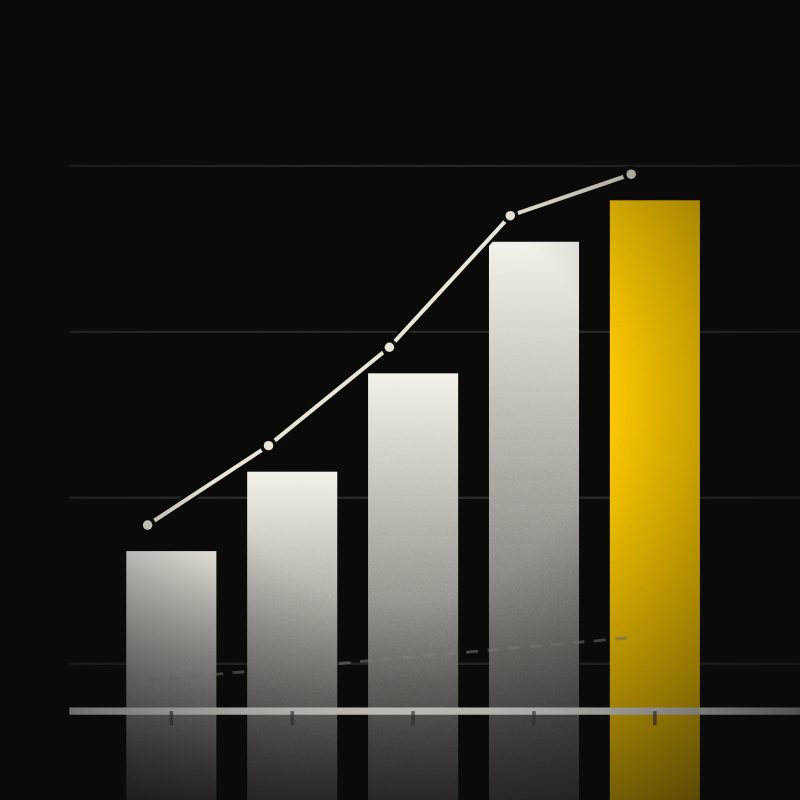
After that, simple arithmetic did the rest. New supply fell five years running: 1.7m sq ft in 2020, 500,000 in 2024, around 705,000 forecast for 2025. Demand grew at the same time — the Dubai Chamber of Commerce recorded a record 70,500 new members during 2024, up 4.6% on 2023. When supply contracts and demand grows, rent does not move by percentage points but by multiples: over the year rents rose in all 22 tracked submarkets, by 45% on average.
New supply, thousand sq ft. Dubai Land Department, Q1 2025
Who occupies these offices
The shape of demand explains why the shortage sits specifically at the top of the market. New enquiries in the first half of 2025 broke down as follows: business services 38%, technology 31%, real estate 12%, banking and finance 10%. These are companies that need an address, a meeting room and a presentable lobby — not the cheapest floor space in the city.
Share of new office enquiries. Dubai Land Department, H1 2025
DIFC is a story of its own. In the first half of 2025 the centre registered 1,081 new companies, its best result since opening in 2004, taking it to 7,700 active businesses. Banks and capital-markets firms number 289, up 17% in a year; wealth managers 440, up 18.9%. There is no free space in the zone, and companies that need a DIFC presence for regulatory reasons have joined a queue.
What happens next
Developers reacted, but with a lag of several years. 15.8m sq ft of new offices are announced in Dubai to 2030 — taking the total stock to roughly 138m sq ft. More than 7m of that falls in DIFC, and mostly on a build-to-rent model: the developer builds and keeps it for the rental flow. In Business Bay the picture is the opposite — more than 1.3m sq ft is being built for sale, which is a direct indicator of investor demand for office blocks.
The practical conclusion is unwelcome for a tenant and the reverse for an investor. A significant share of future supply is contracted before it delivers, and the gap between quality buildings and old stock will widen: companies keep moving into the new, vacating the secondary. On delivery dates, the shortage of quality space looks set to hold until roughly 2027–2028.
One caveat about the numbers. Total quality leasable space is around 108m sq ft, and that is not the same as the city's entire office stock including the free zones: the second figure is markedly larger. That is why every number in this section carries the period it belongs to, and why values from different lines should not be added together.

Further in this section
Rent an office
Rents by grade, what the price includes beyond the rent itself, fitted against shell & core, serviced offices and the tenant protections under RERA rules.
Open →Buy for income
Sale prices, yield against apartments, working out capex and a five-year exit, three modelled scenarios and commercial mortgages.
Open →Pick a district
Twenty-two submarkets with their year-on-year rent growth: DIFC, Downtown, Business Bay, the free zones, old Dubai and what is growing off a low base.
Open →Dubai offices — the channel playlist
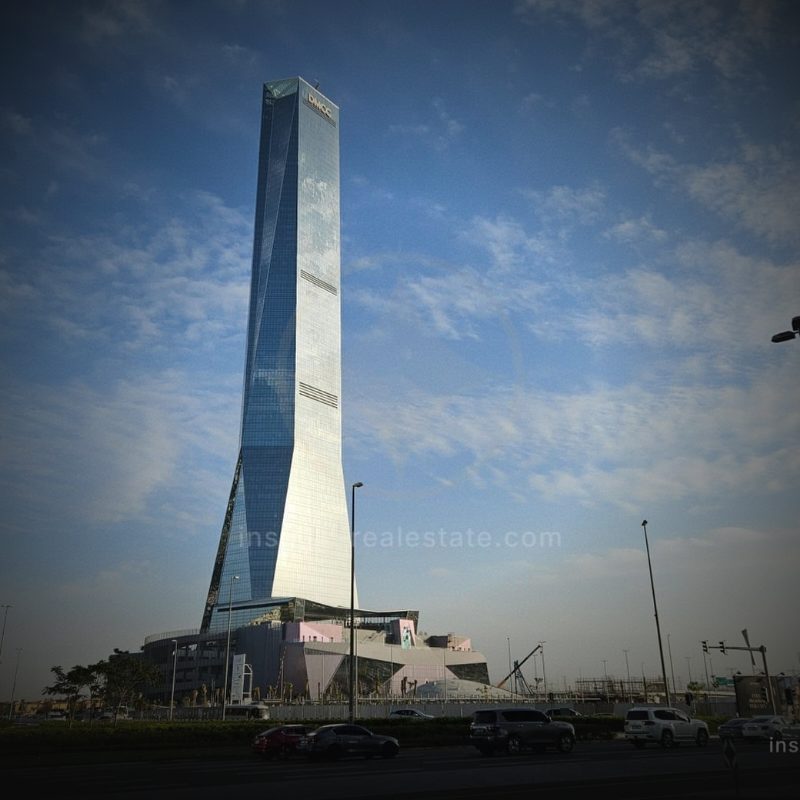
Why offices became the market's main story: DIFC and the AHS Office Tower, Lumena Alta by Omniyat, the furnished Rove HQ offices in Business Bay, and the argument about whether offices in the Emirates stay in demand.
7:59Investing in Dubai offices: why the numbers beat apartments
0:36AHS Office Tower, DIFC: the two-minute version
21:45Furnished offices in Business Bay: Rove HQ and the fitted-office model
10:32Lumena Alta by Omniyat: Dubai’s most luxurious office tower
1:15Binghatti Circle in JVC: retail and offices at the entry levelThe short answers
Why did Dubai offices get more expensive so sharply?
Two things coincided. New supply keeps shrinking — 705,000 sq ft in 2025 against 1.7m in 2020 — while companies keep arriving: the Dubai Chamber of Commerce alone registered 70,500 new members during 2024. Vacancy fell to around 5%, to zero in the prime towers, and the market became a landlord market.
Can a foreigner own an office in Dubai outright?
Yes. In freehold zones an office is bought in full ownership exactly as an apartment is, registered with the Land Department and carrying the 4% fee. Offices inside free zones such as DIFC or DMCC are a separate story: they have their own registration rules, and those need checking before any deposit is paid.
Which yields more — an office or an apartment?
Offices are quoted at 10–12% a year against 4–7% for residential. Do not take those literally: they are computed on specific projects and rest on an assumption about the rent three years out. But the direction is right — commercial in Dubai currently pays more than residential, because the shortage there is sharper.
When does the office shortage end?
15.8m sq ft is under construction to 2030, more than 7m of it in DIFC. But a significant share is contracted before delivery, and two to four years pass between breaking ground and handover. On delivery dates, the shortage of quality space holds until roughly 2027–2028.
Free zone or mainland — which office?
That decision is about the licence, not the property: the type of company determines where it may lease, and the other way round. A free zone gives a clear procedure and a peer environment; the mainland gives direct work with the local market. You pick the jurisdiction first and the space second, not the reverse.
Sources
The data in this section is Dubai Land Department, reporting periods from the first half of 2024 through the fourth quarter of 2025.
Every figure carries the period it was taken from: the market moved a long way in a year, and a Q1 value cannot be read as today's. Rents are quoted excluding VAT and service charge unless stated otherwise alongside.
Find an office for the job
Tell me what you need: size, district, rent or purchase, budget. I will show what is genuinely on the market now and say plainly where the rent has gone past reasonable.