
Dubai Infrastructure 2040
Some things explain a district's price better than a description of the district does. "Fifteen minutes' walk to the station" and "Burj view" are price categories a buyer meets in the very first listing. This section is about what sits behind them — and how much of it is already in the asking price.
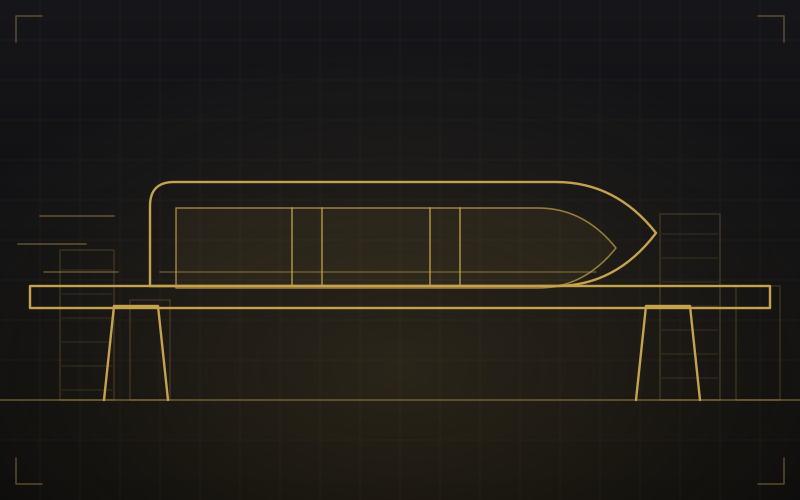
Dubai Metro
TransportA fully driverless network of 55 stations, with half the city's liquid housing strung along it — and the second argument in any district decision.
- Network length
- 90 km
- Stations
- 55
- Daily ridership
- ~755,000
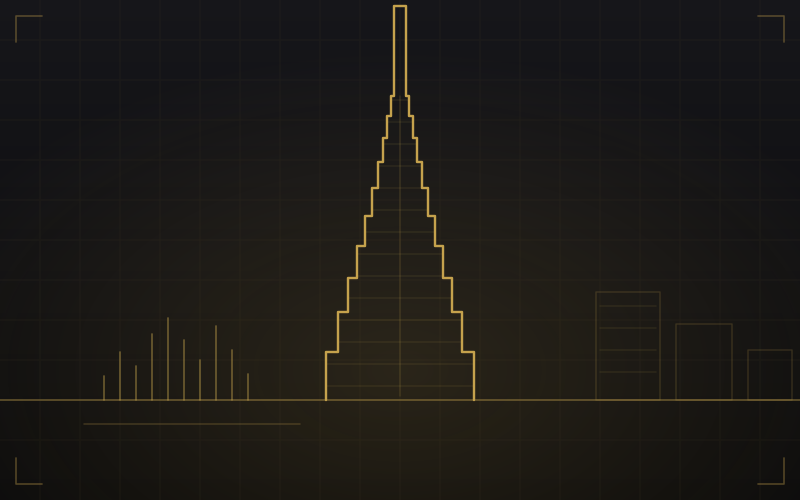
Burj Khalifa
LandmarkThe tallest building in the world for sixteen years running — and the only object in Dubai whose view is a price category in its own right.
- Height
- 828 m
- Floors
- 163
- Residences
- 900+
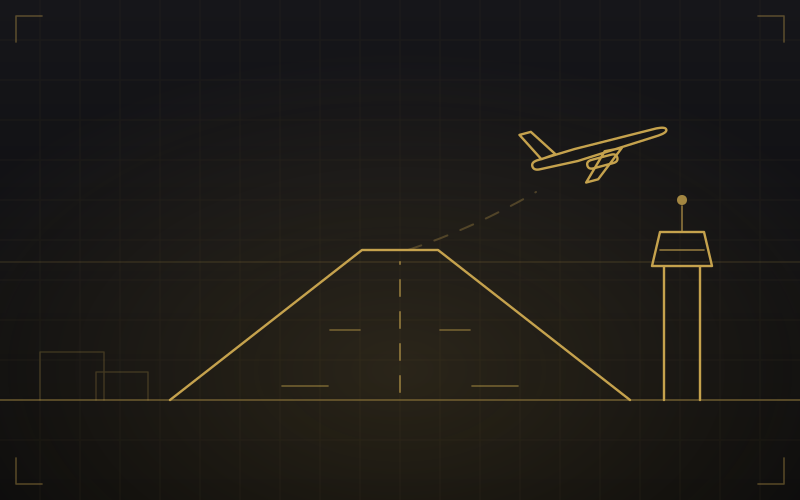
Al Maktoum International
TransportThe airport the city is building its second half around: a design capacity of 260 million passengers a year, against the ninety-odd million DXB handles today.
- Design capacity
- 260 m pax/year
- Runways
- 5
- New terminal budget
- AED 128 bn
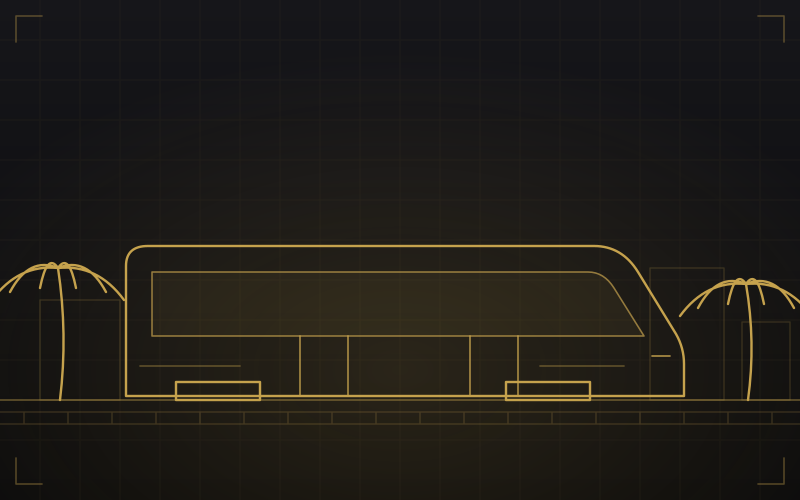
Dubai Tram
TransportEleven stations that close the last mile between the metro on Sheikh Zayed Road and the housing by the sea — and make Marina and JBR a rare walkable pocket of Dubai.
- Route length
- 10.6 km
- Stations
- 11
- Metro interchanges
- 2
Dubai Water Canal
LandmarkThree kilometres of water cut through the middle of the city in 2016 — and six kilometres of new waterfront where physically none existed.
- Length
- 3.2 km
- Bridges
- 3
- New waterfront
- 6.4 km
The Dubai Mall
LandmarkThe largest mall in the world and the city's main generator of foot traffic: around 105 million visits a year, concentrated on a single block.
- Stores
- 1,200+
- Annual visitors
- ~105 m
- Total area
- ~1.1 m m²

Etihad Rail
TransportA railway across all seven emirates: 900 kilometres, freight running since 2023, and a promised 57 minutes from Abu Dhabi to Dubai once passenger services start.
- Network length
- 900 km
- Emirates connected
- 7
- Abu Dhabi to Dubai
- ~57 minutes
Dubai International (DXB)
TransportThe world's busiest airport for international traffic — and the employer that holds up the rental market across half of old Dubai.
- Passengers in 2024
- ~92 m
- Terminals
- 3
- Metro stations
- 2
Jebel Ali Port
TransportThe largest man-made port in the world and the industrial heart of the emirate: not a sight to see, but the thing that pays the rent across an entire belt of districts.
- Capacity
- ~22 m TEU/year
- Container terminals
- 4
- JAFZA free zone since
- 1985
Sheikh Zayed Road
TransportTwelve lanes with the whole of commercial Dubai lined up along them: an address on this road is less about the drive than about which half of the city you ended up in.
- Lanes in the city
- up to 12
- Route
- E11
- Red metro line along it
- yes
Expo City Dubai
LandmarkThe one case in Dubai where an exhibition site was not dismantled but turned into a district with a metro station, a free zone and housing.
- Expo 2020 visits
- 24 m
- Site area
- ~3.5 km²
- Metro station
- Route 2020
Dubai Creek
LandmarkThe inlet the city began on: a trading harbour that became the line between old Dubai and new — and is still a price category of its own.
- Length
- ~14 km
- Abra crossings
- since the 1900s
- Ras Al Khor sanctuary
- 6.2 km²
Museum of the Future
LandmarkThe landmark that gave Sheikh Zayed Road a face: 77 metres of calligraphy with no columns inside — and an honest lesson in what an attraction does not do to prices.
- Height
- 77 m
- Floors
- 7
- Facade panels
- 1,024
Ain Dubai
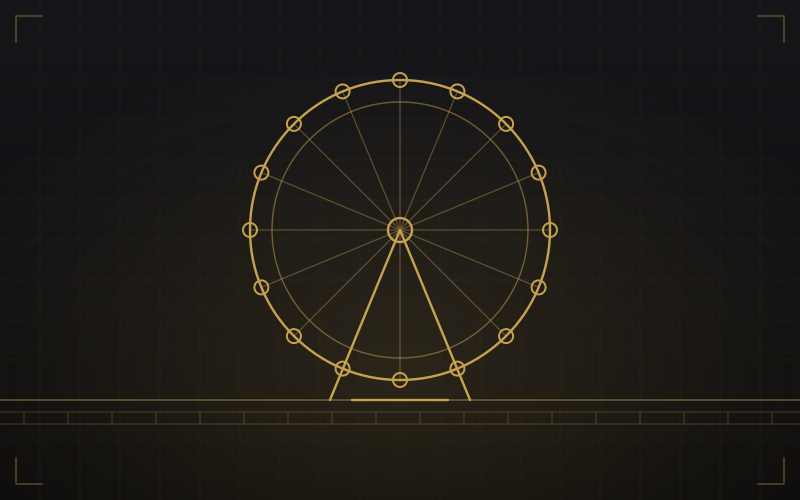
LandmarkThe tallest observation wheel in the world at 250 metres — out of service since March 2022. And the best available lesson in how the market treats promised infrastructure.
- Height
- 250 m
- Capsules
- 48
- Opened
- 21 October 2021
Mall of the Emirates
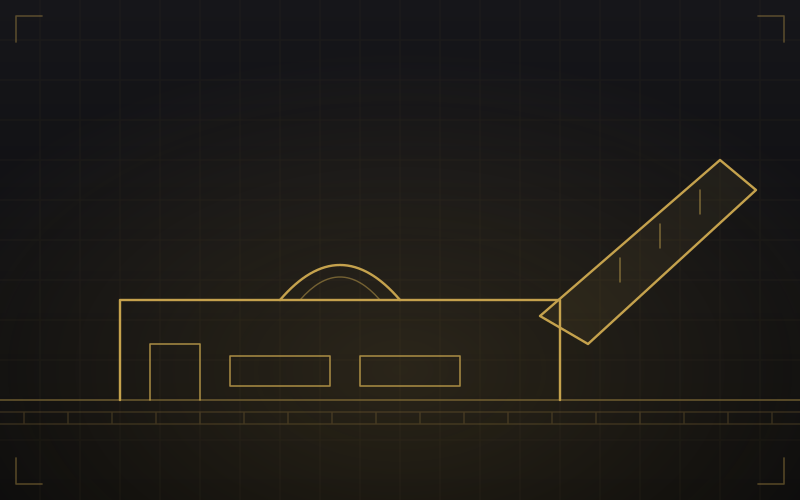
LandmarkA 2005 shopping centre that created an entire residential district single-handedly: before it Al Barsha was an edge of town, after it an address with a metro station, schools and a tenant.
- Stores
- ~630
- Retail area
- ~223,000 m²
- Ski Dubai
- 22,500 m²
Dubai Hills Mall
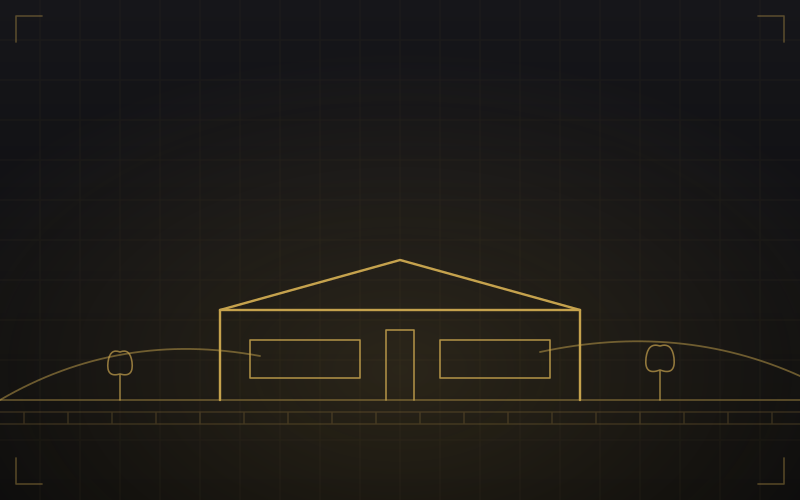
LandmarkThe same script as Mall of the Emirates, twenty years later: the centre that in 2022 finished a residential district into a self-sufficient one.
- Stores
- 650+
- Retail area
- ~186,000 m²
- Developer
- Emaar
Palm Monorail
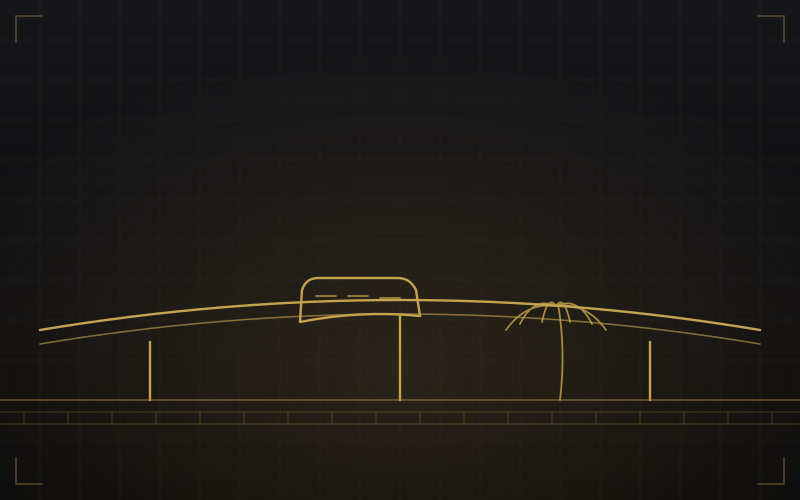
TransportFive kilometres of track along the trunk of the Palm with no link to the metro: transport that was built, but that nobody commutes on.
- Length
- 5.4 km
- Stations
- 4
- Opened
- 30 April 2009
Infinity Bridge
TransportA creek crossing with a 295-metre arch and twelve lanes: an attempt to remove the historic city’s principal price discount — the commute.
- Arch span
- 295 m
- Lanes
- 12
- Opened
- January 2022
Metro Gold Line
TransportDubai’s first fully underground metro line: 42 kilometres and 18 stations through districts that live without rail today. The map of future stations is a map of future prices — on a 2032 horizon.
- Length
- 42 km
- Stations
- 18, all underground
- Budget
- ~$9 bn
Dubai Opera
LandmarkA 2,000-seat theatre at the foot of Burj Khalifa that gave its name to an entire Downtown quarter. A rare case of a cultural object becoming an address rather than just a landmark.
- Capacity
- 2,000 seats
- Floor area
- 60,000 m²
- Opened
- August 2016
The Dubai Fountain
LandmarkA 275-metre fountain on the lake at Burj Khalifa — and the “fountain view” line in Downtown price lists that costs real money. Here is when that line is honest.
- Length
- 275 m
- Jet height
- up to 150 m
- Lights
- 6,600
Cities of the future
Films from the channel on how the city rebuilds itself: the 2040 masterplan, transport, and the projects that move prices around them. Each one has its own written breakdown here.
 Dubai 2040: the masterplan that tells you where demand goes next
 Dubai is learning to walk: the 20-minute city and what it does to rent
 Wellness resorts: why Dubai is putting hundreds of millions into health
 The New Silk Road: what a trade corridor does to the cities on it
 Air taxis in Dubai: what eVTOL would change, and what it would not
 Hatta: the mountain half of Dubai nobody puts in the brochure
 The Jebel Ali coast: Dubai's last big stretch of undeveloped shoreline
 Four cities, four bets on the future: Dubai, New York, London, Tokyo
 The world's largest solar park, and why a property buyer should care
Dubai 2040 — download the plan
The executive summary of the masterplan — the document every "Dubai 2040" article cites: the city's structure, its centres, the transport corridors and the twenty-year targets. No sign-up, no email, no bot — click and the file downloads.
Why this belongs on a property site
Because all of it is sold along with the apartment. The metro arrives as "steps from the station", the tower as "Burj view", the canal as "waterfront", and every one of those lines costs money. The difference is that some can be verified and others are marketing phrases with no legal meaning attached.
They also share the same logic. A city object lifts the prices around it exactly once — at the moment it becomes clear the thing will happen. After that the effect is in the price and the buyer pays for it in full. So in every write-up the central question is not whether it is good to have nearby, but how much is being asked for it compared with the building next door.
No prices or yields in the text: everything that changes quarter to quarter is calculated from our own stock and lives on the area pages.
Dubai 2040: questions and answers
What is the Dubai 2040 master plan?
The Dubai 2040 Urban Master Plan is the city’s seventh master plan, adopted in 2021: where Dubai grows until 2040, where it densifies, where new centres and transport corridors appear. For a buyer it is a map of future demand, and the objects in this section — the metro, the airports, the port, the new lines — are the plan in its physical form. A summary of the document can be downloaded right on this page, no registration and no email.
How much does the metro actually move apartment prices?
More than any other city object. Per CBRE’s The Dubai Metro Report 2023, housing within a fifteen-minute walk of stations had risen 43.8% by 2022 against 2010. But a station lifts prices around it exactly once — when it becomes clear it will exist; after that the effect is already in the asking price. Hence the working rule: a running station is worth paying for in rent, while the money on a purchase is made at the station that does not exist yet.
When does the Blue Line open and what will it change?
The launch is announced for 9 September 2029. Thirty kilometres, two branches, a 1,300-metre bridge across Dubai Creek; the line links Al Jaddaf, Ras Al Khor and Dubai Academic City — districts expected to add up to a million residents by 2040. Projects are already rising next to the future stations, and developers have priced part of that prospect in advance — compare against neighbouring buildings without a station.
What is the Gold Line?
Announced in April 2026: 42 kilometres fully underground, 18 stations, a connection between the Red and Green lines and integration with Etihad Rail. Launch is announced for 9 September 2032. It is the longest horizon of all the lines — and therefore the earliest entry: the districts without metro that it will cover are priced today as districts without metro. The full breakdown is in the card above.
Is it worth buying near the future Al Maktoum airport?
The bet is bigger than it sounds: a new terminal worth AED 128 billion was approved in 2024, with a design capacity of around 260 million passengers a year and a stated plan to move operations out of DXB over roughly a decade. That is relocating the city’s main gateway to its other edge — together with the jobs and rental demand that today hold up Deira and Mirdif. Around it sit Dubai South and Expo City, exactly where the master plan pulls the city. The main risk is timing: horizons of projects this size shift.
A “Burj view” and “next to the mall” — worth paying extra for?
Both are real price categories, but they verify differently. A view is a property of the specific apartment, not the district: it is checked from the floor, and remember that another tower can rise between you and the Burj. “Next to the mall” is verified by the walking route, not the straight-line distance. The general principle of these breakdowns: some listing phrases are verifiable, others are marketing with no legal meaning — and only the first kind is worth paying for.
Where is the city growing under the plan?
Southwest and towards the water. The south is the cluster of Al Maktoum airport, Jebel Ali Port, the free zones and Expo City: that is where the plan places the next cycle’s jobs and housing. The water means the waterfronts: the Canal, the Creek, the coastal strip. Plus densification along transport corridors — the new metro lines are being laid where the city expects a million-person increase. Every object in this list belongs to one of those three stories.
How do I verify “near the metro” in a listing?
By the walking route, not the straight-line distance. In Dubai “five hundred metres to the station” regularly means crossing an eight-lane road and detouring to a footbridge, and in summer nobody walks even a kilometre. Check the walking route on the map to the specific station entrance. And compare the price against the neighbouring building without metro: if the gap is already in double digits, the prospect is priced in and there is no need to pay it twice.
Why are there no prices or yields in these breakdowns?
Because prices change quarter to quarter and the texts do not. Everything that gets computed lives on the district pages: medians and entry prices are recalculated from our stock every night. Here is what moves those numbers: transport, airports, landmarks. The right reading order — first the infrastructure object, then the district it touches, then the lots in that district.
Find something that fits the brief
Send your budget and what the purchase is for — I will show what is available near the stations and with a tower view, and say plainly where it is overpriced.
Ask a question
Telegram is the fastest way — I answer personally.
Message on Telegram