
Como Residences: 71 floors, 76 apartments, and a handover date that moved
Nakheel’s tallest building on Palm Jumeirah — one or two apartments per floor, an elevated private beach, an AED 1.8bn contract. Delivery has slipped from Q3 2027. What that costs a buyer, and how to read a schedule change.
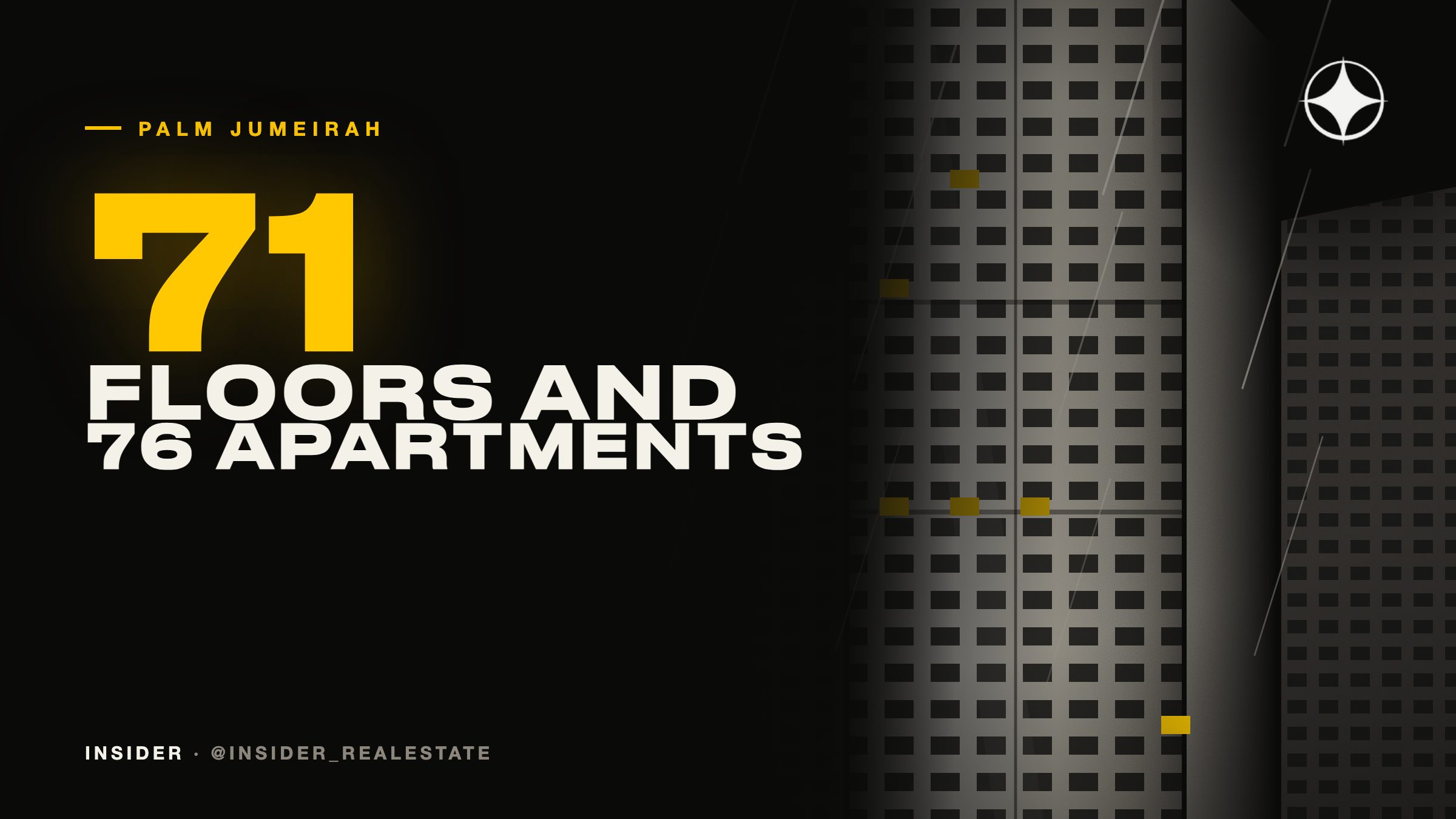
Como Residences is Nakheel's tower on the trunk of Palm Jumeirah and the tallest building on the island: 71 floors and over 300 metres. It launched in spring 2023, construction began that autumn, and the AED 1.8bn main contract was signed in September 2024.
What is in it
Seventy-one floors and just 76 residences — two to seven bedrooms plus a duplex penthouse at the top. The ratio of floors to apartments describes the product better than any brochure copy: on most levels there are one or two homes, each running the full width or half the width of the tower, with panoramic glazing and terraces.
- 71 floors, over 300 metres — the island's tallest building.
- 76 residences, two to seven bedrooms, plus a duplex penthouse.
- 25-metre lap pool and a rooftop infinity pool.
- AED 1.8bn main construction contract.
One detail of the master plan is worth noting: the tower has its own sand beach raised above ground level — a solution arrived at because the density of the Palm's trunk left no free shoreline.
Talk to a licensed broker: 📲 +971 50 120 32 64 on WhatsApp, @dubai_oleg on Telegram
The schedule moved
At launch, handover was quoted for the third quarter of 2027. More recent material points to the second quarter of 2028 — a slip of roughly three quarters against the original plan.
For a tower of this height and configuration that is an ordinary magnitude. For a buyer who ran a return calculation, three quarters is real money. And it is precisely the risk that is most underestimated in Dubai off-plan: the problem is rarely that the building is not built, it is that it is built later.
How to read a date change
Three situations look identical from outside and are not.
- A marketing date moved. The developer updated the date on the website. Legally nothing happened — your contract carries its own date.
- An official extension with the regulator. Project timelines are registered with the Land Department and changes go through the regulator. That is a document.
- Delay beyond the contractual date. Contracts normally include a grace period, most often twelve months. A buyer's rights arise after it expires, not when a website date changes.
Check two sources rather than the site: the date in your own contract, and the construction progress percentage in the Land Department register. The second is updated from inspections and does not editorialise.
What a buyer should do when the date slips
- Pull the contract and find the agreed handover date and the length of the grace period.
- Compare the regulator's inspection percentage against what the sales desk is saying.
- Recompute the model: if the purchase was for letting, every quarter of delay is a quarter without income while instalments continue.
- If resale before handover was the plan, confirm at what percentage paid the developer permits assignment and what it costs.
Why delays cluster in luxury
The reason is technical. A standard tower is assembled from repeating floors and standard components; a scheme with two apartments per floor, bespoke layouts, non-standard glazing and pools inside apartments is a collection of unique solutions. Each one is a separate procurement, a separate approval and a separate risk. The more singular the product, the longer the tail on the schedule — and that is the price of the thing being bought.
Video on this topic
The same subject on the English channel — each clip has a written version of its own.
 24:32Trump Tower Dubai, Jeddah and Oman: what the Trump brand is building in the Gulf2 October 2026
 13:04Seven Palm on Palm Jumeirah: an infinity pool, a rooftop bar and a hotel underneath8 May 2024
 55:13Land plots and joint ventures in Dubai: how investors and developers split the profit9 October 2026
 34:38Interior design in Dubai: neuroarchitecture, longevity design and soulful luxury explained8 October 2026
 1:38Binghatti Hills at Arjan: the volume play, examined10 September 2025
 10:22Australia vs Dubai property investment: 10/90 payment plans, tax and rental yield10 October 2026
In the news
Other write-ups on the site about the same thing.
Armani Beach Residences on Palm Jumeirah: 53 homes, Tadao Ando and a slip to 2027
A project built around three names, with fifty-three apartments in the whole scheme. Why the district’s price per foot tells you nothing about it, and what to check in projects like this.
Resale or rental in Dubai: two investor strategies compared, plus a third — flipping
Selling before handover returns 25% on capital if prices rise 10% and you have paid 40%. Renting pays 5.5–6.5% net every year. Flipping a villa: buy at AED 12.5m, spend 3m, sell from 19m. Three Dubai strategies compared on cash, time and risk.
Dubai Islands villas: Bay Estate by Nakheel — 357 homes on Island E, from about AED 5.9m
Nakheel has released Bay Estate, the first community on Island E of Dubai Islands: 357 townhouses and villas plus 60 plots around two swimmable lagoons. A three-bedroom townhouse averages AED 5.9m; handover is estimated for January 2031.

Dubai Islands: JW Marriott Residences by CG Developers, and Nakheel's AED 527m infrastructure contract
CG Developers is building Dubai's first JW Marriott residence, priced from AED 1.72 million with a Q1 2028 handover. In parallel, Nakheel has awarded a AED 527 million contract for Island B's core infrastructure — roads, water and sewage for a future 49 000 homes.
Nakheel: the master developer of the islands, and what that title means
The state developer behind Palm Jumeirah and the Dubai Islands. The difference between a master developer and a building developer, and why it matters for what you own.

3D-printed buildings in Dubai: Nakheel's first licence at Al Furjan Hills, and the 2030 target for 25% of new buildings
In December 2023, regulator Trakhees issued Nakheel Dubai's first 3D-printing construction licence, for Al Furjan Hills. Printing itself took 20 days — but the structure was a gatehouse, not a home. Dubai's target is 25% of new buildings by 2030. What is actually on the market in 2026.