
Dubai offices against London and New York: rents, yields and what the tax does
Comparing office markets on rent alone is meaningless — ownership form and taxation decide the owner’s outcome. Three global business centres on all three parameters at once.
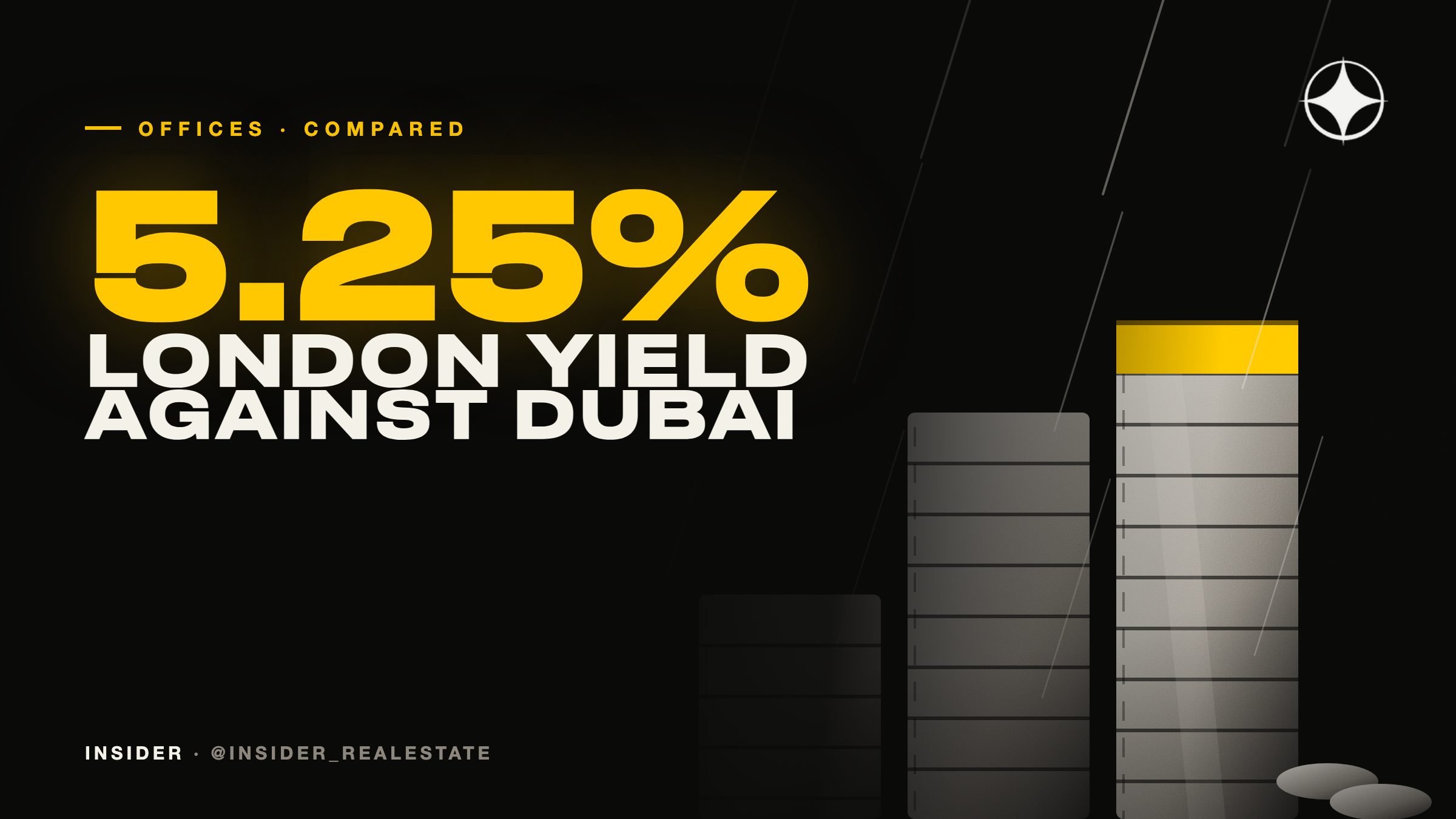
Comparing office markets by headline rent is pointless: what reaches the owner is decided by the form of ownership and by tax. So all three parameters at once, across three global business centres.
London, City of London
Prime office rent of roughly AED 9 000 per square foot a year and an average yield near 5.25%. Ownership is predominantly leasehold — a right for a term rather than ownership. Taxes: income, capital gains, stamp duty, VAT and inheritance.
A high entry threshold against a modest net yield. Leasehold adds a problem of its own: the unexpired term affects resale value more than the condition of the building does.
Talk to a licensed broker: 📲 +971 50 120 32 64 on WhatsApp, @dubai_oleg on Telegram
New York, Manhattan
Class A offices at AED 7 000–8 000 per square foot a year, yields of 3–4%. Ownership is freehold. Taxes: income, property, capital gains, transfer on purchase, and estate tax.
Ownership is complete, but the tax load consumes a substantial share of the gross yield, and annual property tax is paid whether the building is let or standing empty.
Dubai, Business Bay
Average rent around AED 450–490 per square foot a year in that cluster, with class A across the city averaging AED 370 after a 28% annual rise. Ownership is freehold in designated areas. For an individual there is no property tax and no capital gains tax, and ownership above the threshold supports a residence visa.
The rate per foot is a fraction of London's or New York's, and so is the entry price. What survives the comparison is the net figure — the absence of an annual holding tax and of capital gains tax changes the arithmetic more than the rent differential does.
What the comparison is actually for
Not to declare a winner. London and New York are deep, liquid, institutionally traded markets where an owner accepts a lower net yield in exchange for that depth. Dubai offers a higher net figure with a shallower buyer pool and a shorter history to price against.
The useful takeaway is methodological: when comparing any two office markets, compute the number after tax and after the ownership form, not the rent. The ranking changes.
Video on this topic
The same subject on the English channel — each clip has a written version of its own.
 7:59Investing in Dubai offices: why the numbers beat apartments20 October 2025
 21:45Furnished offices in Business Bay: Rove HQ and the fitted-office model16 October 2025
 1:15Binghatti Circle in JVC: retail and offices at the entry level8 September 2025
 10:22Australia vs Dubai property investment: 10/90 payment plans, tax and rental yield10 October 2026
 13:04The best townhouses in Dubai under USD 600 000: Nshama Town Square7 October 2023

In the news
Other write-ups on the site about the same thing.

Thailand or Dubai: five reasons buyers choose Thailand, and three reasons they do not
In Thailand people buy a way of life, not square metres: a studio from AED 200,000, inspection before the final payment, an open contract. Against it: a 4–6% yield, no escrow and a slow resale.
What $209 000 Buys Abroad, Compared to a One-Bedroom in Moscow
A useful benchmark: the price of a new Moscow one-bedroom, about $209 000, buys very different things in Thailand, Spain, Cyprus and the UAE — in size, location and how easily you could sell again.

DIFC Offices at 2% Vacancy: What a Square Foot Costs in Dubai’s Tightest District
In a district with roughly 2% vacancy, offices in a renovated tower were offered at AED 4 000–4 500 per sq ft with a projected yield of 8.75–11.5%. Here’s what makes up the price in Dubai’s tightest office location.

Small business status in Georgia: 1% of turnover, and what it means for a landlord
The construction mentioned most often and understood least. And the most common mistake is registering as an entrepreneur in order to let one apartment.

Owner and landlord taxes in Georgia: rates and thresholds
Georgia belongs on the low-tax lists deservedly, but the reason is not one rate — it is that the system is territorial. And the annual property tax has an unusual trigger.

Letting in Australia: student demand, housing shortage and an owner’s duties
The Australian rental market has lived in persistent shortage: low vacancy in the big cities and demand sustained by migration. For an owner that means a fast let and a watchful regulator.