Emirates Hills: 632 villas, plots sold by the foot, and a market of eleven sales in six months
The only Emaar project where land was sold to buyers to build on themselves. How Dubai’s most expensive villa community works, why prices inside it differ thirtyfold, and what to do with statistics drawn from eleven transactions.
Emirates Hills is a gated Emaar community within Emirates Living, next to The Meadows, The Springs and The Lakes. It is built on a different principle from everything else the developer does, and that principle explains both the prices and the way its statistics behave.
Land, not houses
Emirates Hills is the only Emaar project where land was sold to buyers by the square foot, to build on themselves. The developer laid out the infrastructure and the plan; each owner designed and built their own house within the community's rules. Freehold ownership for foreigners in Dubai effectively began with this project.
Hence the defining feature: there are 632 villas and every one of them is different. No standard layouts, no two identical elevations, no meaningful average price per foot. Plots run from 12 000 to 58 000 square feet — nearly five to one on land alone.
Talk to a licensed broker: 📲 +971 50 120 32 64 on WhatsApp, @dubai_oleg on Telegram
The golf course as the organising axis
Most houses are arranged around the 18-hole Montgomerie championship course, created by Desmond Muirhead with Colin Montgomerie. A fairway view is a pricing characteristic in its own right: two adjacent plots of identical size can differ by an order of magnitude depending on what the living room looks at.
The price range
Listings in the community run from roughly AED 6m — typically plots or houses for demolition and full rebuild — up to AED 190m for finished mansions. A thirtyfold spread inside one address is not a market anomaly; it is the direct consequence of every house being a one-off product.
Eleven transactions in a half
In the first half of 2026 Emirates Hills registered eleven sales, down 35% year on year. Median deal value was AED 60m, up 2%. Median price per square foot fell 8%.
With a sample that size, any percentage is arithmetic rather than market signal. Eleven sales over six months is fewer than two a month; the sale of one large estate on a big plot moves the median further than any change in demand. "Emirates Hills fell 8%" does not follow from this data — and neither does the opposite.
So how is a house here valued
The only method that works is hand-picked comparables matching on several parameters at once: plot size, built area, year of construction and year of last renovation, outlook (course, lake, neighbouring house), quality of finish. Then registered sales of similar houses over the last twelve to eighteen months — not asking prices. In a thin market the gap between asking and achieved runs to tens of percent, and listings are no guide.
What else a buyer should know
- Building and rebuilding are regulated. The community sets requirements on height, footprint and appearance. A rebuild scheme is approved, and not every proposal passes.
- A house over fifteen years old is a capital project. A significant part of the stock needs full replacement of services and finishes; that budget is comparable to a small apartment elsewhere in the city.
- Timelines are long in both directions. A thin market means a buyer waits months for the right house and a seller waits months for the right buyer.
- There is no off-plan. The community is fully built out; new construction as a category does not exist here.
Video on this topic
The same subject on the English channel — each clip has a written version of its own.
 56:22Villa restoration in Dubai: what marble, wood and furniture repair costs in luxury homes4 October 2026
 14:41Home staging in Dubai: how much it adds to the rent and the sale price19 September 2026
 13:04The best townhouses in Dubai under USD 600 000: Nshama Town Square7 October 2023
 34:38Interior design in Dubai: neuroarchitecture, longevity design and soulful luxury explained8 October 2026
 12:00XXII Carat on Palm Jumeirah: 22 Mediterranean villas compared with Raffles and Zabeel Saray20 September 2023
 4:15Lamborghini villas in Meydan: half the price of Ellington, and why26 January 2024
In the news
Other write-ups on the site about the same thing.
Dubai property price index, July 2026 (ValuStrat): villas flat on the year, apartments down 4.2%
The ValuStrat Price Index for Dubai stood at 219.2 points in July 2026: down 0.3% on the month and 1.6% on the year. Villas were flat year on year at AED 2 039 per sq ft; apartments fell 4.2% to AED 1 397. Which districts are rising, which are falling, and what it means.
Jumeirah Islands: 46 clusters of 16 villas, and a market with no off-plan
A gated Nakheel community on man-made islands: 736 villas, exactly 16 homes per cluster, water instead of fences between plots. Why its statistics behave differently from the rest of the Dubai market.
Al Barari: the greenest community in Dubai, and the three separate markets inside it
More than 60% of the site is gardens and water, and one address contains three different products — Ixora, Chorisia and the Estate Villas, with medians from AED 8.55m to AED 41.75m. Why a single average for the community means nothing.
Moscow vs Dubai: where does a square metre cost more than $1 million a hundred over?
By mid-2026, new-build homes above 1 million rubles per square metre are selling in 14 Moscow districts — four more than a year earlier. In Dubai that same price level remains the preserve of just four addresses: Jumeirah Bay Island, Palm Jumeirah, Emirates Hills and Downtown Dubai.
Palm Jumeirah, Jumeirah Islands, Al Barari, Emirates Hills: prime villas in H1 2026
Across four prime communities 124 villas changed hands in the half against roughly 190 a year earlier — down about 35%. Median deal value rose in all four. Both facts are true, and neither means what the headline says.
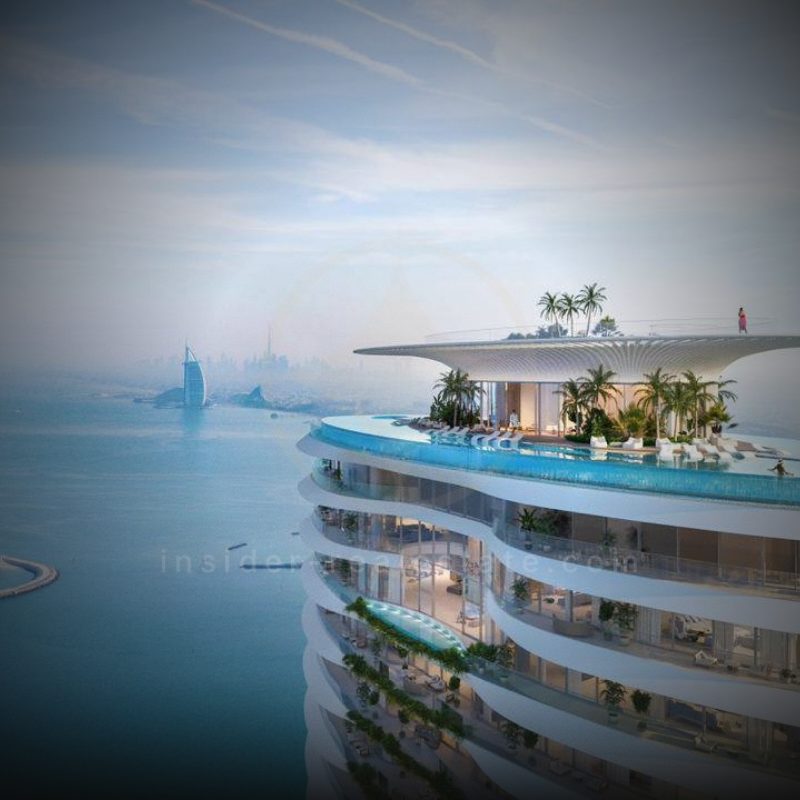
Dubai prime property 2022–2024: how the city became the world’s busiest $10m home market
Knight Frank counted 219 Dubai home sales above $10m in 2022, 434 in 2023 and a record 435 in 2024 (about $7bn). In the first half of 2023 Dubai overtook New York, Hong Kong and London. How a shortage of supply made Palm Jumeirah the core of the market — the background to 2025–2026.
Related services
Below market in Emirates Hills right now
From the daily off-market feed. Availability and price are confirmed on request.
All below-market listings →