
Helsinki: The Comfort of a Smaller Capital
A compact European capital by size, but the centre of Finnish business, culture and daily life: neighbourhoods, prices and the seasonal rhythm that shapes Helsinki living.
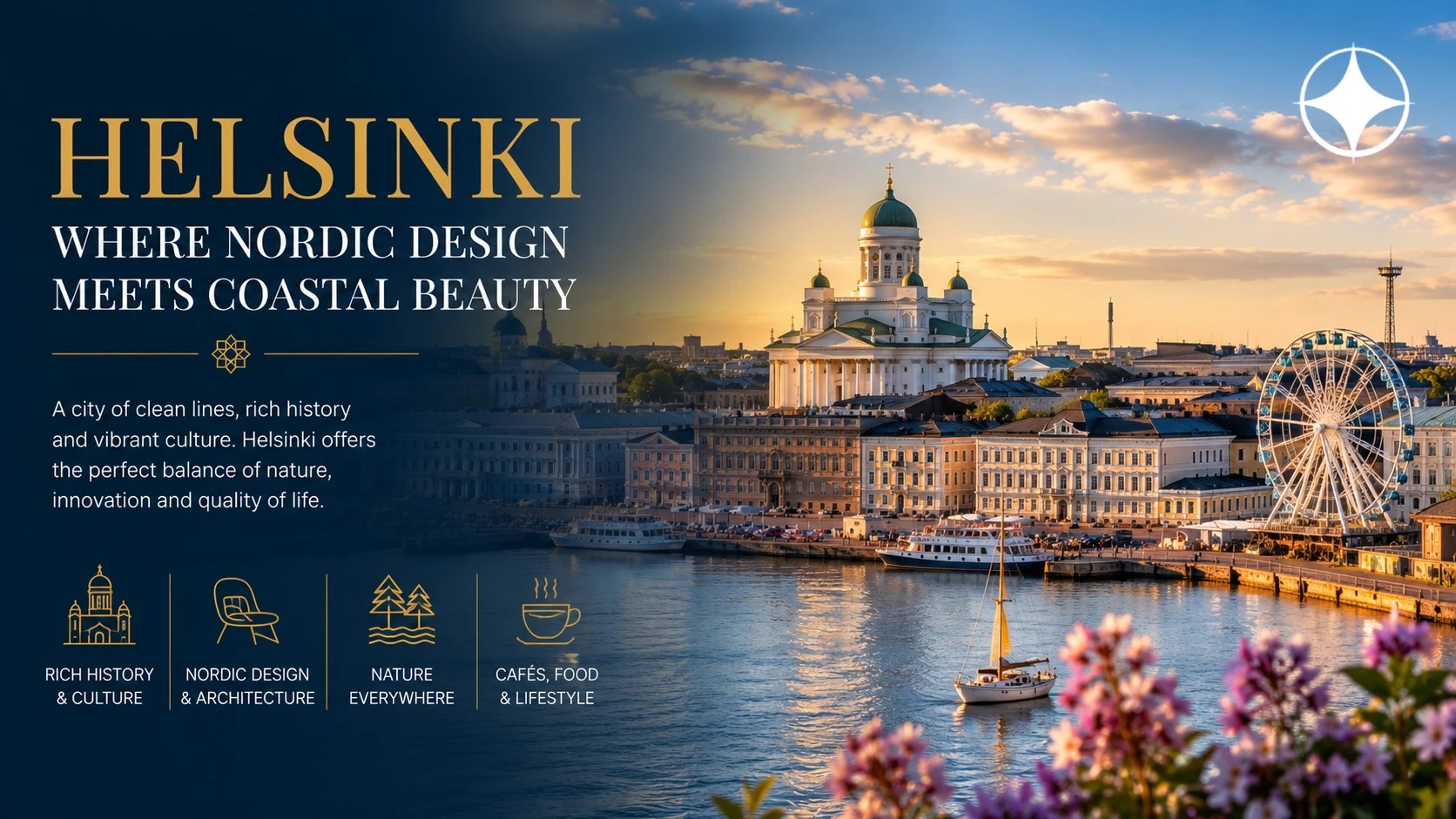
By European standards, Helsinki is relatively compact. Around 700,000 people live within the municipality, while the wider metropolitan region is home to roughly 1.6 million. Despite its modest size, a large share of Finland's business, government, education and cultural life is concentrated here.
Geography and transport
Geography shapes the city. Central Helsinki occupies a peninsula surrounded by an extensive coastline, hundreds of islands, bays and harbours. Trams move through the central districts, the metro connects neighbourhoods farther out, and ferries provide easy access from the mainland to the islands.
A distinctly calm atmosphere
The atmosphere is distinctly calm. Tram bells, seabirds and the Baltic wind form part of the everyday soundtrack. Even during busy commuting hours, public spaces tend to remain quiet. People talk freely in cafés and bars, but strangers generally respect personal space. Queues form naturally, silence is rarely uncomfortable, and what might initially appear reserved often reflects a culture of courtesy and privacy.
Talk to a licensed broker: 📲 +971 50 120 32 64 on WhatsApp, @dubai_oleg on Telegram
The city as an extension of home
Apartment living dominates Helsinki, with a large proportion of residents living alone. Compact homes work partly because the city itself acts as an extension of the living room. Oodi, Helsinki's Central Library, is a good example: millions of people visit not only to read, but also to work, meet friends, create music and use shared facilities. Public saunas serve a similar social role, particularly during the colder months. In summer, much of this communal life shifts outdoors to parks and waterfront areas.
Neighbourhoods
Neighbourhoods offer noticeably different lifestyles. Eira, Ullanlinna and Kaivopuisto combine proximity to the centre with parks, quiet streets and access to the sea. Many properties here occupy historic Jugend-style buildings with granite façades, decorative details and individual layouts.
Töölö offers another version of central living, with restrained early-20th-century architecture, strong tram connections and easy access to cultural venues. Kallio generally provides smaller apartments but compensates with metro access, cafés, bars and a more active nightlife.
Newer waterfront districts such as Jätkäsaari and Kalasatama feature modern homes, balconies and open-water views. Moving farther east can provide buyers with more living space and easier access to nature, although journeys into the centre become longer.
Property prices
Property prices vary considerably by district. In 2025, existing apartments averaged approximately €4,983 per square metre, equivalent to around $5,700/m² using July 2026 exchange rates. At this level, a 70 m² apartment would cost approximately $400,000 before transaction expenses.
In Helsinki's most expensive postcode, average values approached $11,000/m², while eastern neighbourhoods offered substantially lower entry prices. Estimated gross rental yields average around 4.4%, with prime areas generally producing lower percentage returns.
Food and nature
Daily life is closely connected to food and nature. Salmon soup, rye bread, coffee and korvapuusti — the Finnish cinnamon bun — provide an accessible introduction to local cuisine. Restaurant menus frequently feature fish, mushrooms and berries, following Finland's short northern growing season.
Weekends can easily continue with a ferry to Suomenlinna or a boat trip to smaller islands and beaches. Winter brings skiing routes and ice rinks; summer shifts dining, festivals and swimming outdoors. Helsinki recorded a record 4.92 million overnight stays in 2025, yet visitors and residents largely share the same markets, ferries, waterfronts and public spaces.
Outlook
Perhaps Helsinki's greatest advantage is its ability to change with the seasons. Winter concentrates daily life around the warmth of home and indoor public spaces, while summer expands it across parks, islands and the waterfront. It is a capital large enough to carry the ambitions of an entire country, yet compact enough to remain comfortable and manageable.