
Off-plan mortgages arrive in Abu Dhabi: 75% financed from the start of construction
A product the off-plan market did not have: bank financing that accompanies the buyer from the start of construction through to handover. How it works, and why it closes the segment’s structural problem.
Abu Dhabi has introduced a financial product the off-plan market did not previously have: bank financing that accompanies a buyer from the beginning of construction through to the handover of keys.
How it works
- Up to 25% of the price is contributed by the buyer from their own funds during construction.
- Up to 75% is provided by the bank — and the loan can cover both the instalments during the build and the final tranche at handover.
- The programme is limited to projects by a specific developer, including villas in new communities.
Why this is a notable change
The classic problem with off-plan is a cash-flow gap. The buyer pays to a schedule out of their own money and receives the asset only at the end; mortgage financing has historically appeared, at best, at the final payment. That structure is what makes off-plan a capital-intensive purchase rather than a leveraged one, and it is the reason many buyers who could afford a completed property cannot afford a scheme under construction.
Closing that gap changes who can buy off-plan. It also changes the risk profile: the bank underwrites the developer as well as the borrower, which introduces a second party with an interest in the project completing.
Talk to a licensed broker: 📲 +971 50 120 32 64 on WhatsApp, @dubai_oleg on Telegram
The caveats
Limiting the programme to one developer's projects is the significant one. That is a commercial arrangement rather than a market-wide facility, and it means the financing is available where the bank has taken a view on the counterparty, not wherever you want to buy.
The second is that leverage during construction cuts both ways. You are servicing a loan on an asset producing no income for the length of the build, and a delay extends that period. Model it against the contract date plus a realistic slippage, not against the marketing date.
Video on this topic
The same subject on the English channel — each clip has a written version of its own.
 15:37Abu Dhabi property investment: Saadiyat Island and the Aldar launch numbers16 February 2023
 29:32Mortgage for the final payment in Dubai: how to finance the handover instalment17 September 2026
 55:13Land plots and joint ventures in Dubai: how investors and developers split the profit9 October 2026
 10:40DIFC will vs mainland will in Dubai: costs, timelines and what each one covers19 September 2026
 12:53Force majeure in Dubai real estate: can you withdraw from a deal?1 October 2026

In the news
Other write-ups on the site about the same thing.

UAE Golden Visa through property in 2026: mortgages, off-plan and how Dubai, Abu Dhabi and RAK differ
The threshold is AED 2m everywhere, but it is not measured the same way. Since January 2024 Dubai counts a mortgaged home at its full DLD valuation; Abu Dhabi wants AED 2m of your own equity. Mortgages, off-plan, three emirates and what the visa gives beyond residence.

Mortgages for Resale Off-Plan Property in Dubai: An Exit From a Payment Plan You Can No Longer Afford
Dubai banks have started financing the purchase of under-construction units on the resale market. Conditions: building at least 50% complete, a limited developer list, and legal residency status. For an owner, it's a way to stay in the deal.

Abu Dhabi property market 2026: AED 117bn in six months and a run of ADREC records
ADREC data: AED 117bn of transactions in H1 2026 (+112%), AED 86.1bn of sales and AED 13.8bn of foreign direct investment (+309%, more than all of 2025). Full-year 2025 was a record AED 142bn. What sits behind the numbers.

Erling Haaland buys an Abu Dhabi villa: five bedrooms at Manchester City Yas Residences as Phase 2 opens
Manchester City striker Erling Haaland has bought a five-bedroom villa at Manchester City Yas Residences, the first community carrying the club’s brand. Developer Ohana announced the purchase at the Phase 2 launch, where townhouses start at AED 3.59 million on 35/65 and 25/75 payment plans.

The Wadi, Yas Island, Abu Dhabi: 3,950 apartments in a AED 6bn community near Disneyland and Sphere
The Wadi is a 3,950-apartment community along Yas Canal on Yas Island, Abu Dhabi. The project is valued at about AED 6bn and is being built by Cosmo Developments. Phase one, 530 apartments, is due in Q4 2030.
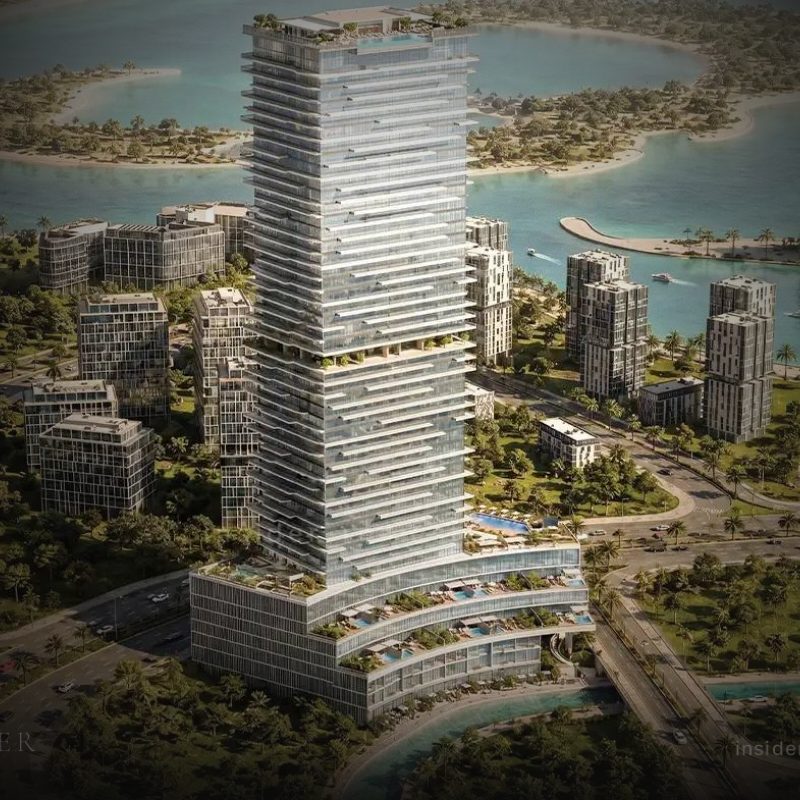
Radiant Terrace on Al Reem Island, Abu Dhabi: a 618-apartment terraced tower with prices from AED 800,000
Radiant Real Estate has launched Radiant Terrace on Al Reem Island: 43 residential floors over a six-level podium, 618 apartments from studios to four-bedroom duplexes, 549–3,179 sq ft. Studios from AED 700,000–800,000, handover in Q3 2029.