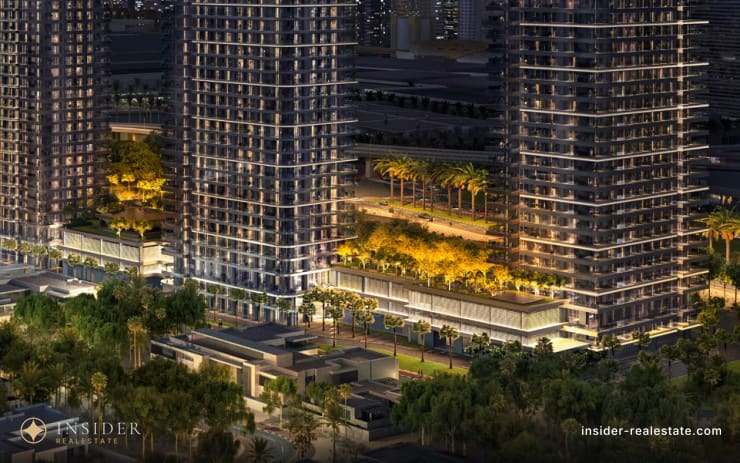
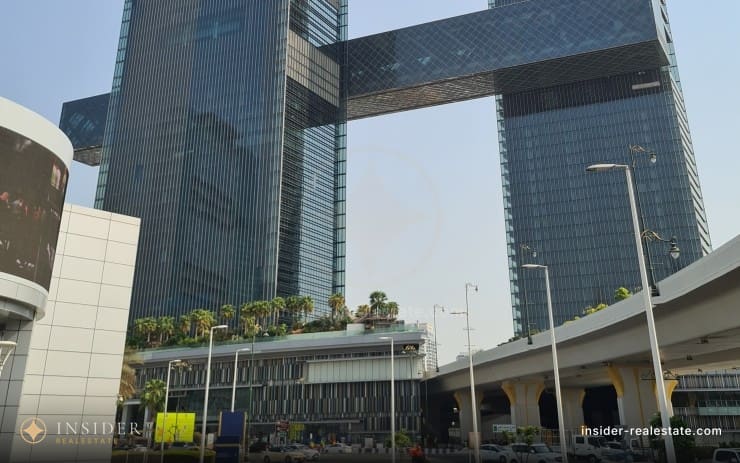
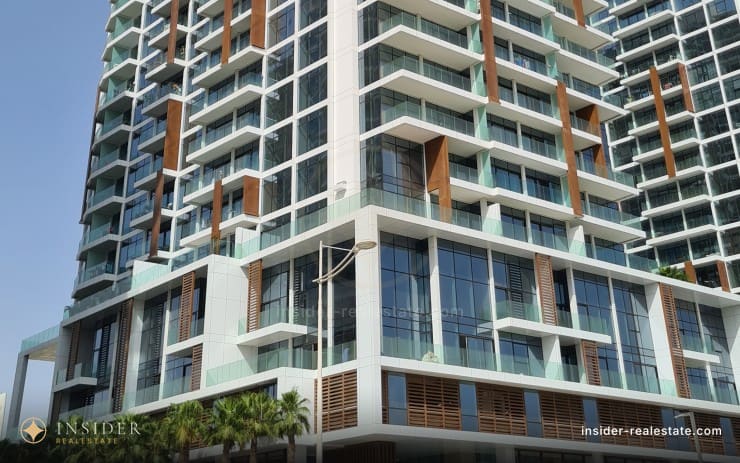
Parshwa Holdings Ltd and Zabeel Investments: buying from a joint venture
A Palm Jumeirah building delivered by two companies together. Joint ventures are common in Dubai development and they change one thing that matters: who exactly owes you what.
The Palm Jumeirah building here was delivered by two companies acting together. Joint ventures are ordinary in Dubai development — one party brings land, the other capital or delivery capability — and they raise a question a single-developer purchase does not.
The question: who is your counterparty
- Read the name on the contract, not on the hoarding. A joint venture usually operates through a project company, and that company is what you are contracting with — not either parent.
- Establish whether either parent guarantees anything. Usually neither does. If a guarantee exists, it must be in writing to be worth anything.
- A dispute between the partners becomes your problem indirectly. Partners who disagree can stall a project even when both are solvent, and that is a distinct failure mode from a developer running out of money.
- After completion the venture may be wound up, which is normal — but it means there is nobody left to chase for defects unless the liability sits somewhere durable. Establish where.
None of this argues against buying from a joint venture. It argues for reading two pages of the contract that most buyers skip.
This one is now a secondary-market purchase
The building completed in 2009, so construction risk and the joint-venture questions above are historical. What remains is a mature Palm building, and the checks shift accordingly:
Talk to a licensed broker: 📲 +971 50 120 32 64 on WhatsApp, @dubai_oleg on Telegram
- A building survey. Beachfront structures work hard, and at this age facade, waterproofing, chillers and lifts are due or already done.
- The reserve fund balance and the annual contribution rate — the number that decides whether a levy is waiting for you.
- Owners' association minutes for the last few years: planned works, quotes, disputes.
- Service charge history over five years, and both charges — the building's own and the Palm's community charge.
- Beach access and what the title actually carries.
- Transaction comparables in the same building, matched by floor and orientation, from the public register.
- Short-let permission, which on the Palm varies building by building.
Who it suits
- Buyers who want a Palm address with fifteen years of real rental and price history behind it.
- Investors who prefer evidence to projection.
- Not a buyer who will skip the reserve fund — at this age that is where the money is.
Based on the Dubai Land Department transaction register and standard joint-venture development practice.
Video on this topic
The same subject on the English channel — each clip has a written version of its own.
 55:13Land plots and joint ventures in Dubai: how investors and developers split the profit9 October 2026
 34:38Interior design in Dubai: neuroarchitecture, longevity design and soulful luxury explained8 October 2026
 56:22Villa restoration in Dubai: what marble, wood and furniture repair costs in luxury homes4 October 2026
 13:04Seven Palm on Palm Jumeirah: an infinity pool, a rooftop bar and a hotel underneath8 May 2024
 12:00XXII Carat on Palm Jumeirah: 22 Mediterranean villas compared with Raffles and Zabeel Saray20 September 2023

In the news
Other write-ups on the site about the same thing.

Seven Tides: hotel apartments on the Palm, and what you actually own
A developer whose Palm Jumeirah buildings are run by hotel operators. The difference between a serviced apartment, a hotel unit and a normal flat — and why it decides everything else.

Taraf Development: a branded villa is not a branded apartment
A developer building branded homes on the Palm and branded villas in MBR City. Putting a fashion name on a house works differently from putting it on a tower, in three specific ways.

Scope Investment: a 2022 tower, and the first wave of resales
A Dubai Marina tower completed a few years ago. Buildings at this age go through a predictable event that shapes their prices — and it is a buying opportunity if you can see it.

Al Fattan Properties: when the developer still owns half the building
A family developer whose JBR towers date from 2006 and who retained a large share of them. A developer that stays as a major owner changes how the building is run — for better and worse.

Artar Real Estate Development: a small building in Downtown, where the landmarks are
A developer with a mid-size Downtown Dubai tower completed in 2018. What an ordinary building in an extraordinary district is worth, and how to price it honestly.

ETA Star: an engineering group that built apartments
The property arm of a large regional engineering and contracting group, with towers in the Marina and on the Palm. What an engineering parent means in a delivered building.
Related services
Below market in Zabeel right now
From the daily off-market feed. Availability and price are confirmed on request.
All below-market listings →