
Payment plans in Dubai: what “1% a month” actually contains
The most-advertised off-plan structure in the city, and the arithmetic behind it. Where the money really falls due, why the schedule matters more than the headline price, and what a post-handover plan costs in practice.

"One per cent a month" is the most advertised phrase on the Dubai primary market. It is not a lie, and it is not the whole schedule either. The arithmetic is worth doing before the reservation rather than after.
What the phrase hides
A 1% monthly instalment almost never runs across the entire price. A typical structure looks like this: a down payment of 10–20% on booking, then 1% a month for a defined number of months, then a substantial balance at handover — often 20–40% in one payment — and sometimes a post-handover tail.
So the monthly figure is comfortable and the completion payment is not. The question to ask the sales desk is not "what is the monthly" but "what percentage falls due at handover, and on what date".
Talk to a licensed broker: 📲 +971 50 120 32 64 on WhatsApp, @dubai_oleg on Telegram
Why the schedule beats the price
Two apartments at the same price and different schedules are different products. Money paid in year four is cheaper than money paid today, and a plan that pushes weight towards completion is worth a premium on the sticker. Conversely, a plan front-loaded into construction is effectively a discount you are giving the developer.
The practical consequence: comparing projects on price per square foot alone is incomplete. Compare the schedules on the same timeline, and a scheme that looked more expensive can turn out cheaper in present-value terms.
Post-handover plans
Some developers spread part of the price over two to five years after keys. That is genuinely useful — the property can be let while you are still paying — but two conditions decide whether it works.
First, whether the rent covers the instalment. On mid-market stock it often does; on premium stock it usually does not. Second, what the title position is during the post-handover period: in some schemes the deed is transferred immediately with a charge registered, in others it is held until the final payment. That difference matters if you want to sell in year two.
What happens if you are late
A missed instalment does not cancel the contract on its own, but it starts a process: notice, a cure period, then the developer's right to terminate with a statutory scale of deductions depending on how far construction has progressed. The amount you get back is not what you paid — it is what remains after the deduction the law permits at that stage of completion.
If a payment is going to be missed, the useful move is to talk to the developer before the date rather than after. Rescheduling is common and is granted far more readily to someone who asked in advance.
Checks before signing
- The full schedule in writing with dates and percentages, not a summary slide.
- The completion payment stated as a figure, and a plan for where it comes from.
- The escrow account number, and confirmation that instalments are paid into it rather than to a company account.
- Assignment terms: from what percentage paid you may sell before handover, and what the developer charges to permit it.
- What happens to the schedule if handover is delayed — instalments tied to construction milestones behave differently from calendar-based ones.
Video on this topic
The same subject on the English channel — each clip has a written version of its own.
 8:01Island Park at Dubai Creek Harbour: an Emaar tower that is almost finished9 August 2024
 6:37Nautica by Select Group: the payment plan, the school and the 2-bedroom question22 September 2023
 12:53Force majeure in Dubai real estate: can you withdraw from a deal?1 October 2026
 10:40DIFC will vs mainland will in Dubai: costs, timelines and what each one covers19 September 2026
 10:22Australia vs Dubai property investment: 10/90 payment plans, tax and rental yield10 October 2026

In the news
Other write-ups on the site about the same thing.

Dubai property investment mistakes: five errors that cost investors money, with the numbers
Five mistakes Dubai property investors repeat: trusting the 8% listing yield when the net is 6.7%, comparing prices instead of payment plans, buying the district not the building, entering with no exit plan, and believing a guaranteed 7%.

You cannot make the next instalment to the developer: what your options are
A payment plan looks convenient at the start and commits you for years. What formally happens when a payment is missed, how much of your money is at risk, and the three routes that are better than default.

Kore by Imtiaz in Dubai Land Residence Complex: studios from AED 679,000, handover in Q4 2028
Imtiaz has launched Kore, a 17-storey residential building in DLRC: 406 sq ft studios from AED 679,000, one-bedrooms from AED 1.1m, 1,406 sq ft two-bedrooms from AED 1.55m. Handover in Q4 2028, on a 50/50 or 60/40 post-handover plan.
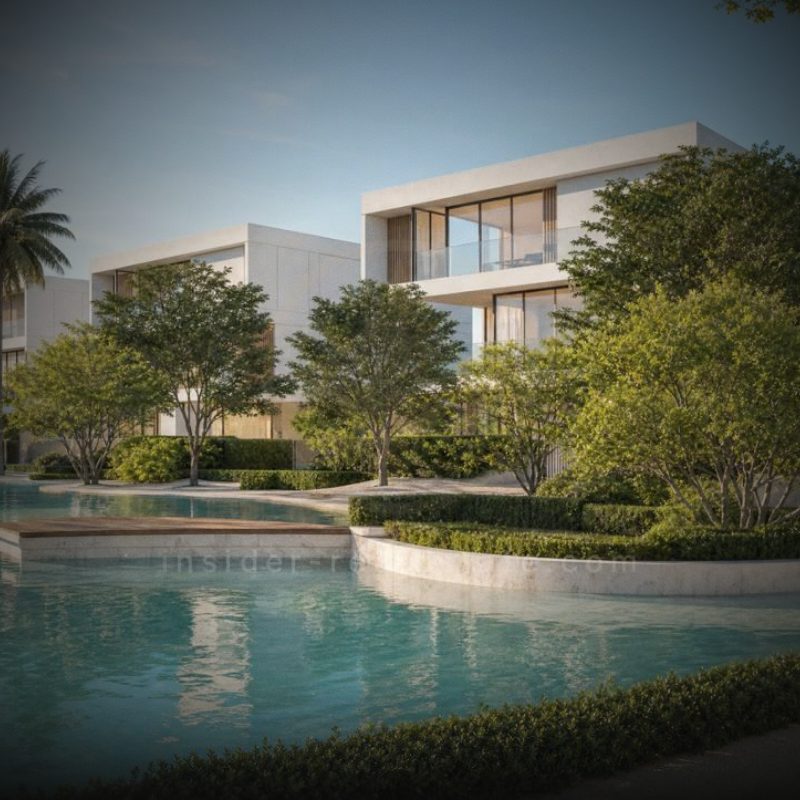
Post-handover payment plans in Dubai in 2026: how they work, and how they differ from paying on completion
Post-handover plans leave 25–50% of the price to be paid after you receive the keys, typically at 1% a month over two to three years. Examples from Tréppan Vision, RAW District and Altair 52, why Lunaya is a different structure, and what to check in the SPA.

How a Dubai launch price list is built, and how to read one
A launch sells out in an afternoon, which is exactly the problem: the buyer has the least time to think at the moment the most is being decided. What the price list is actually telling you, and which columns matter.

Why the payment schedule matters more than the price: 40% against 80% halves the return
Attention goes to renders, location and the headline price. For an investor a different line comes first — and the arithmetic on it is unforgiving.