
Serviced offices and coworking in Dubai: 61% of space is class A, desks from AED 1 200
The flexible segment has moved upmarket: most of it now sits in class A buildings. Where it makes sense against a conventional lease, and the point at which the arithmetic reverses.

The flexible workspace segment in Dubai has quietly moved upmarket. Some 61% of serviced office space now sits in class A buildings, and a desk starts from around AED 1 200 a month.
Why the segment grew
Two forces, pulling the same way. On the demand side, thousands of new companies register in the emirate each year and most of them need an address and a small amount of space immediately, not in eighteen months. On the supply side, conventional class A vacancy of 2–3% means a conventional lease is often simply unavailable.
Flexible operators absorb that mismatch. They take floors on long leases and re-let them in units of one desk upwards.
Talk to a licensed broker: 📲 +971 50 120 32 64 on WhatsApp, @dubai_oleg on Telegram
Where it makes sense
- A new company. A licence requires an address; a flexible desk provides one in days rather than months.
- Teams under about ten people. Below that size the overhead of fitting out and running a conventional office rarely justifies itself.
- Testing a market. A twelve-month commitment against a three- to five-year lease is a different risk when you do not yet know how the business performs here.
- Growing unpredictably. Adding four desks is trivial; enlarging a leased floor plate is not.
Where the arithmetic reverses
The crossover is usually somewhere between fifteen and twenty-five people. Above that, the per-desk premium a flexible operator charges exceeds what the same team would pay on a conventional lease including fit-out amortisation, utilities and management.
Two further costs surface at scale: meeting-room usage billed separately, and the absence of any control over the environment as the operator fills the floor around you. Companies frequently discover both a year in.
What it means for an investor
An office building with a flexible operator as an anchor tenant has a different risk profile from one let to a corporate. The operator's covenant, the length of their lease and whether they are profitable at that location matter more than the fit-out. In a downturn, flexible operators shed floors faster than corporates shed headquarters — which is precisely why the segment expands quickly in good markets and contracts quickly in bad ones.
Video on this topic
The same subject on the English channel — each clip has a written version of its own.
 21:45Furnished offices in Business Bay: Rove HQ and the fitted-office model16 October 2025
 10:32Lumena Alta by Omniyat: Dubai’s most luxurious office tower12 October 2025
 17:28Commercial mortgage in Dubai: offices, retail and warehouses under construction20 September 2026
 7:59Investing in Dubai offices: why the numbers beat apartments20 October 2025
 1:15Binghatti Circle in JVC: retail and offices at the entry level8 September 2025

In the news
Other write-ups on the site about the same thing.

Dubai free zones soften terms: what the DIEZ relief package really signals
The DIEZ authority — covering Dubai Airport Freezone, Dubai Silicon Oasis and Dubai CommerCity — froze rents on renewal, waived part of its fees and penalties and allowed monthly payment. What that says about office occupancy.
New Dubai office towers: Immersive Tower in DIFC, Aldar's Sheikh Zayed Road building and Bureau Lamar in Business Bay
Three major office schemes are rising around DIFC and Business Bay: Immersive Tower ($300m, 58 573 sq m, 2027), Aldar's 88 000 sq m tower by Emirates Towers metro (Q4 2027), and an office park with a theatre on Business Bay's largest plot. Vacancy in central clusters sits at 2–5%.

The tenant comes first, the purchase second: how to assess an office before buying
When buying an office, price is not the first thing to establish. The first thing is whose business moves in and what they pay out of — you are buying a stream of rent, not square feet.

Office rents by Dubai district: from AED 250 in Internet City to 760 in DIFC
Location matters more in offices than in housing — the spread across the city is threefold. The annual rate per square foot in the main business clusters, and what tenants are actually paying for in DIFC.
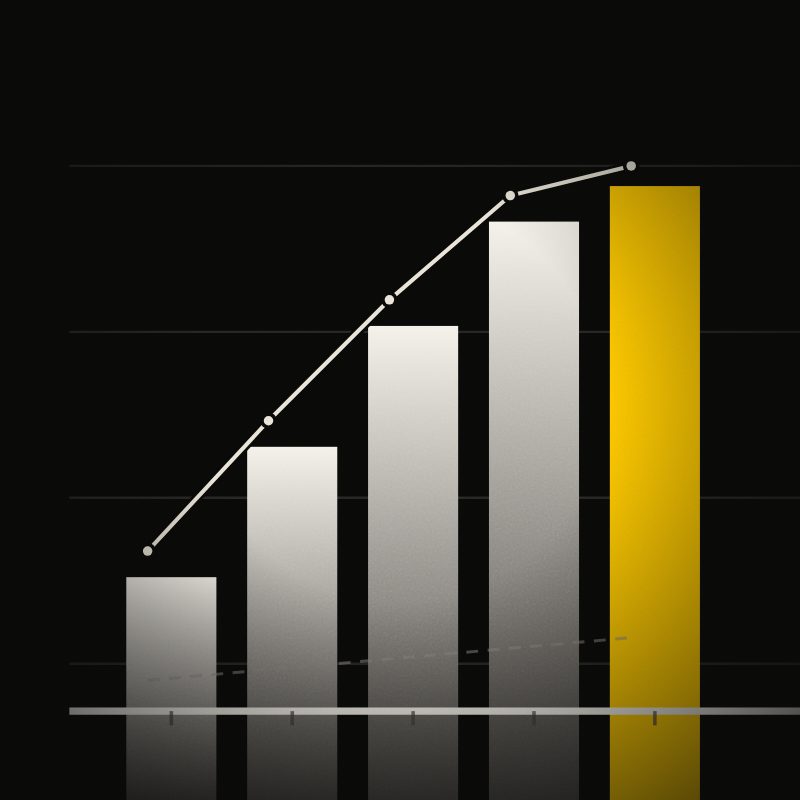
Dubai Commercial Property Hits AED 30.4bn in a Quarter as Offices Surge 93%
Dubai's commercial property sales reached AED 30.38 billion in Q3 2025 — up about 30% year on year. Office deals grew 93% by value to 1 153 units worth AED 3.1bn. Business Bay, JLT and Majan led by deal count.
Dubai Office Vacancy Drops Below 5% in DIFC and on Sheikh Zayed Road
New supply is lagging demand: prime-location Grade A rents rose as much as 25% in six months, and the shortage of quality office space is expected to persist until 2027–2028 — a new project takes up to four years to build.