
Brisbane, Perth and the Gold Coast: Australian property markets beyond Sydney and Melbourne
Brisbane is gearing up for the 2032 Olympics, Perth runs on the resources cycle, and the Gold Coast is a resort and migration market. How each differs from the two big cities — and the risks that come with each.
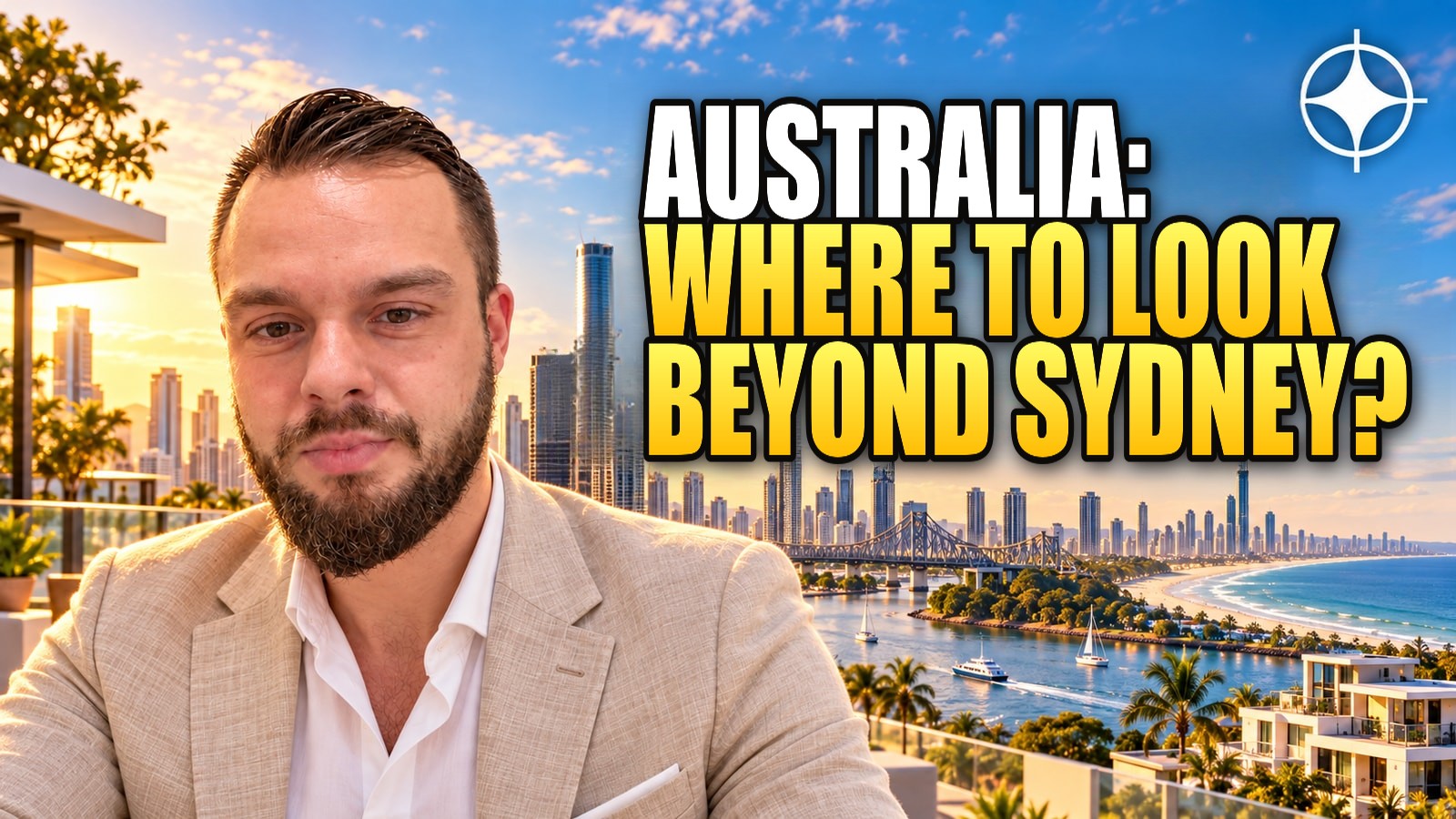
Talk about Australian property usually comes down to Sydney and Melbourne, and for good reason: that is where the people and the money are concentrated. But that is also exactly why those two cities have the highest prices and the lowest rental yields. The second-tier cities play by different rules.
Brisbane: Queensland's capital and the 2032 Olympics
Brisbane has been awarded the 2032 Summer Olympic Games, and an infrastructure programme is being rolled out around them: transport, sports venues, district renewal. At the same time Queensland has been steadily absorbing interstate migration from more expensive states.
- The upside — a clear long-term driver and a growing population.
- The downside — part of the Olympic premium is already in the price, and the event is still years away.
- Climate and lifestyle — a driver of interstate migration in their own right.
Perth: the resources cycle
Perth, on the west coast, lives off mining. That makes its market more cyclical than the others: when commodity prices are high, people move there for work, rents climb and home values rise; when the cycle turns, all of that reverses.
Talk to a licensed broker: 📲 +971 50 120 32 64 on WhatsApp, @dubai_oleg on Telegram
- The upside — historically a lower entry price and higher rental yields than on the east coast.
- The downside — dependence on a single sector, and therefore on global commodity prices.
- Distance — Perth is geographically isolated, and that affects everything, logistics and air links included.
The Gold Coast: resort living and the move to the coast
The Gold Coast, in Queensland, is a resort market with high-rises along the ocean, a steady flow of tourists and a constant stream of people relocating from the colder states.
- The upside — two sources of demand: tourism and migration.
- The downside — resort markets are more cyclical than city markets, and high-rise supply arrives in waves.
- Natural hazards — coastal storms and flooding feed into insurance, and that is a real line in the budget.
What a foreign buyer has to factor in everywhere
- The right to buy. A foreigner can buy a new home with approval from the relevant authority; a temporary ban on buying established homes is in force.
- State surcharges on stamp duty and land tax for foreign owners vary from state to state — and they are a significant part of the calculation.
- Insurance in flood- and storm-prone areas costs substantially more and is sometimes only available on limited terms.
- Currency: the Australian dollar has historically been volatile and tied to the commodity cycle.
Based on Australia's foreign investment framework, public data on interstate migration and reviews of regional housing markets.
In the news
Other write-ups on the site about the same thing.
Business Bay overtakes Palm Jumeirah in prime deals in August 2026, even as Dubai's wider market cools
Business Bay recorded 14 prime transactions in August 2026 against Palm Jumeirah's 10 — while Dubai-wide transaction volume fell 37% year-on-year and value fell 44%. Rental search demand rose 44% over the same period. What these seemingly contradictory numbers actually mean.
Dubai property prices after 2008 and the pandemic: what history actually shows
Dubai prices fell roughly 45% in 2009 and barely dipped in 2020 — then both times the market recovered and pushed past old highs. We walk through both cycles with sourced numbers, and what that means for anyone timing a purchase in 2026.
Abu Dhabi property market 2026: AED 117bn in six months and a run of ADREC records
ADREC data: AED 117bn of transactions in H1 2026 (+112%), AED 86.1bn of sales and AED 13.8bn of foreign direct investment (+309%, more than all of 2025). Full-year 2025 was a record AED 142bn. What sits behind the numbers.

Sharjah and Ras Al Khaimah property market 2023–2025: transactions, prices and what changed
Sharjah: about AED 27bn of transactions in 2023, AED 40bn in 2024 and a record AED 65.6bn in 2025. Ras Al Khaimah: AED 6.9bn in 2023 and over AED 15bn in 2024, then 2025 sales down 25% while apartment prices rose 13.4%. Year-by-year tables and the September 2026 status.
Is there a dead season in Dubai real estate? What actually happens to deals in summer
Dubai's summer market isn't a pause: DLD-based data shows summer 2024 was the year's busiest period for sales, up nearly 38% on the year before. Here's what genuinely changes in June–August — negotiating power, not deal volume — and what it means for timing.

Abu Dhabi property market 2023–2024 review: AED 87bn, then AED 96bn, with Saadiyat in front
Abu Dhabi in 2023 and 2024, from ADREC: 22,751 transactions worth AED 87.1bn with sales value up 2.6 times, then 28,249 worth AED 96.2bn and foreign direct investment up 125% to AED 7.86bn. ValuStrat had Saadiyat villas up 19.9% in a year. Figures and the September 2026 status.