Best Parks in Dubai: Mushrif, Zabeel, Creek Park and Al Mamzar Beach Park Compared
The four best-known parks in Dubai — Mushrif, Zabeel, Dubai Creek Park and Al Mamzar Beach Park: how they differ, which one to pick for a barbecue, a run, the kids or the sea, and why green space in the desert runs on engineering.
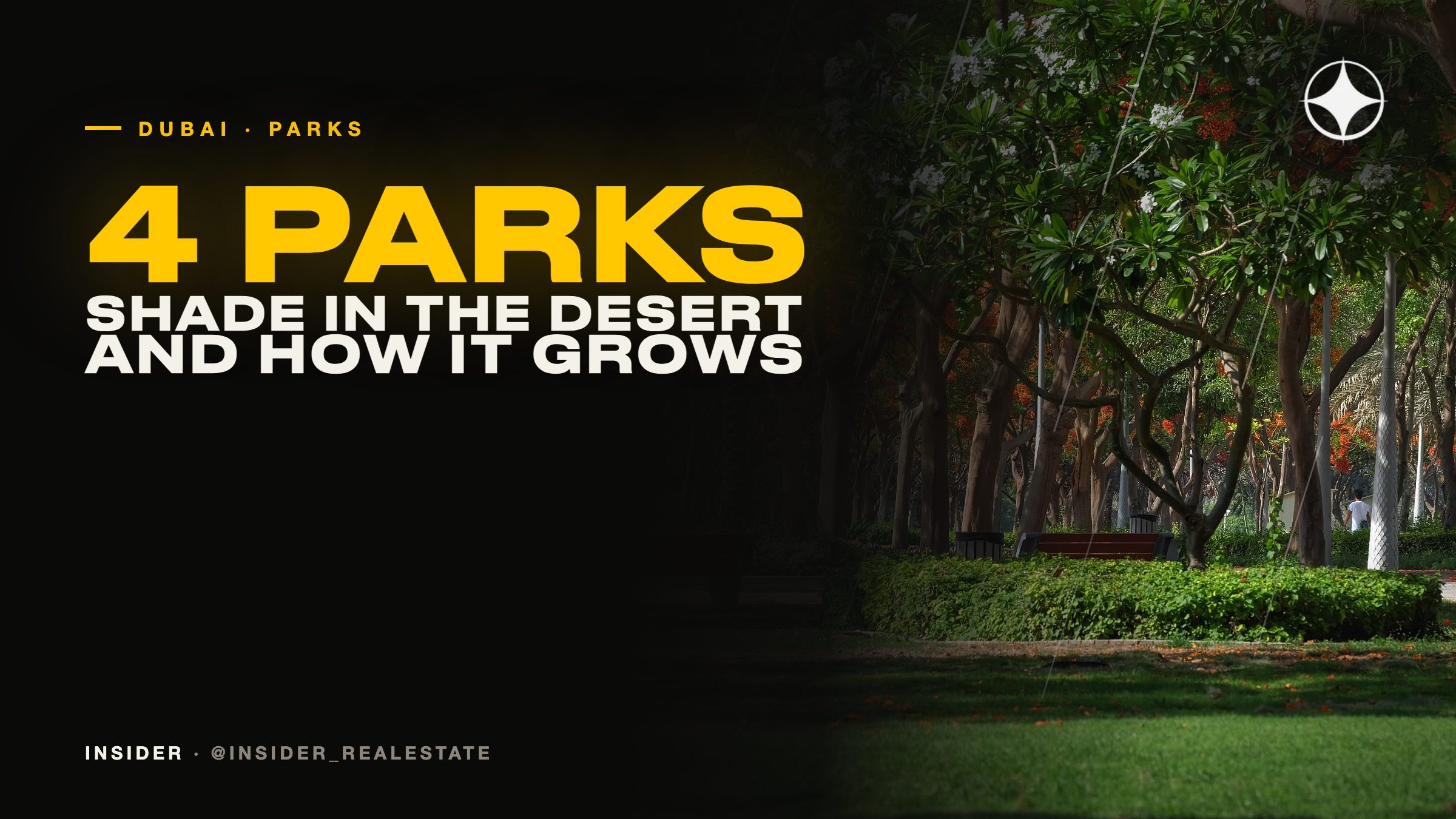
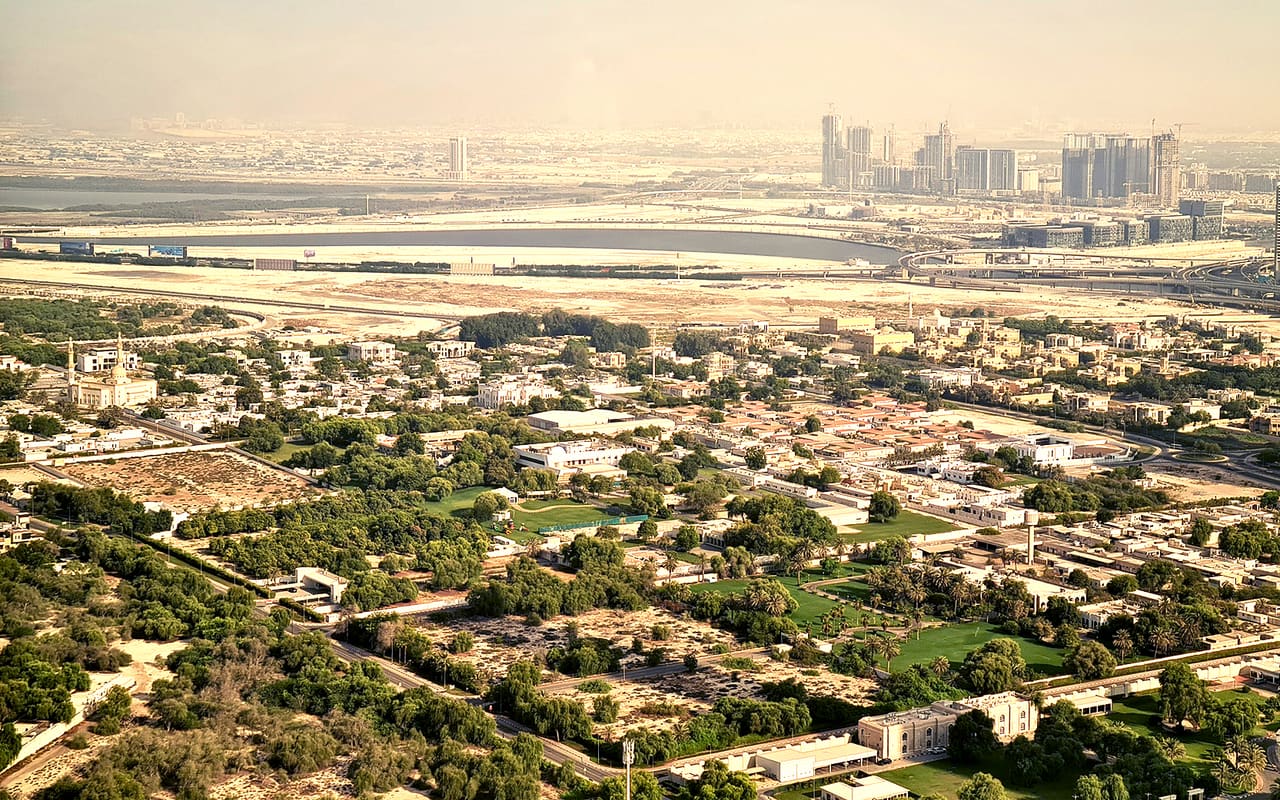
Grass does not grow in Dubai on its own. With desert all around, summer temperatures above 40°C and almost no rain, every park in Dubai is a piece of engineering the city builds and maintains the way it maintains roads or the metro. You don't notice it from the path: you see lawns, palms and shade, not the pipes underneath.
The parks are woven into the city — squeezed between highways, tucked against residential neighbourhoods, opening onto the Gulf and Dubai Creek. For residents they answer a simple question: what to do in Dubai outdoors without a mall or a theme-park ticket. A morning run, a weekend picnic, an afternoon on bikes with the kids.
How greenery survives in the desert
Every lawn sits on drip and sprinkler irrigation that runs on a schedule and delivers just the water each plant needs. Trees are chosen for resilience rather than looks: the native ghaf, date palms and other heat-hardy species grow next to ornamental planting that would not last a week without watering.
Talk to a licensed broker: 📲 +971 50 120 32 64 on WhatsApp, @dubai_oleg on Telegram
Gardeners work in the cooler hours — early morning and evening — replacing scorched shrubs, feeding the soil and keeping growth in check. Planting follows the seasons and a long-term greening plan, and that plan is getting bigger: the city has committed to 120 new parks and 1.5 million trees by 2030.
The daily rhythm is much the same everywhere. Mornings belong to runners and people using the outdoor gyms along the edges. By evening, families arrive and football and running groups gather. It never gets loud: the parks don't try to compete with the towers, they offer a pause between them — shade, grass and open space.
Mushrif Park: ghaf forest, bike trails and barbecues
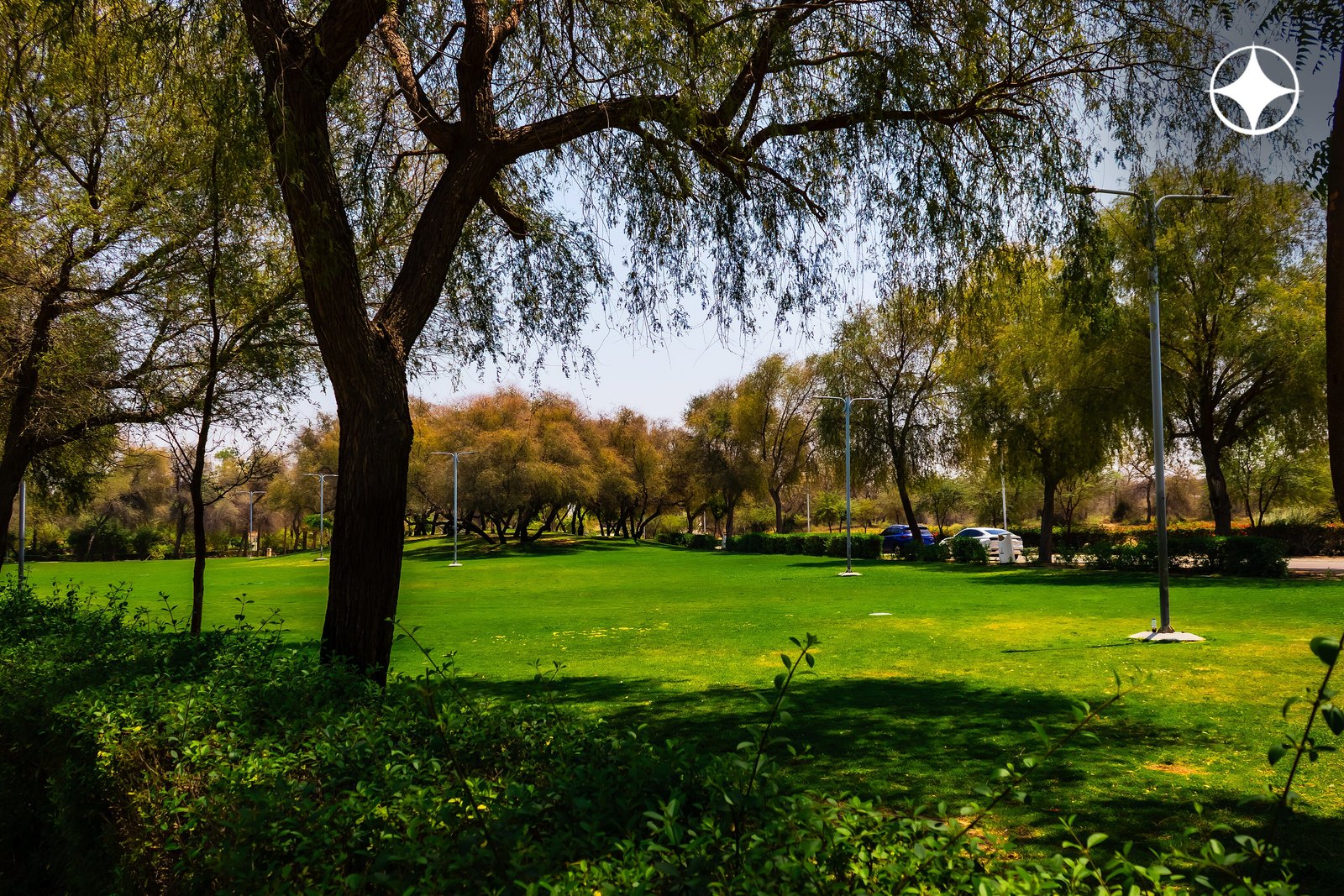
Mushrif is the wildest of Dubai's city parks. Instead of clipped lawns it has groves of ghaf, a tree that has grown in the Emirates for centuries and needs very little water — which is why it feels like woodland rather than landscaping.
The park is large enough that a bike is the best way round: long cycling and mountain-bike routes run through it. The other draw is the barbecue areas. On winter weekends the same groups come back to the same grills — arrive in the morning, spend the day together, clean up, return next week.
Mushrif borders Mirdif, which counts in the district's favour for families; more in our Mirdif area guide.
Al Mamzar Beach Park: a garden by the sea
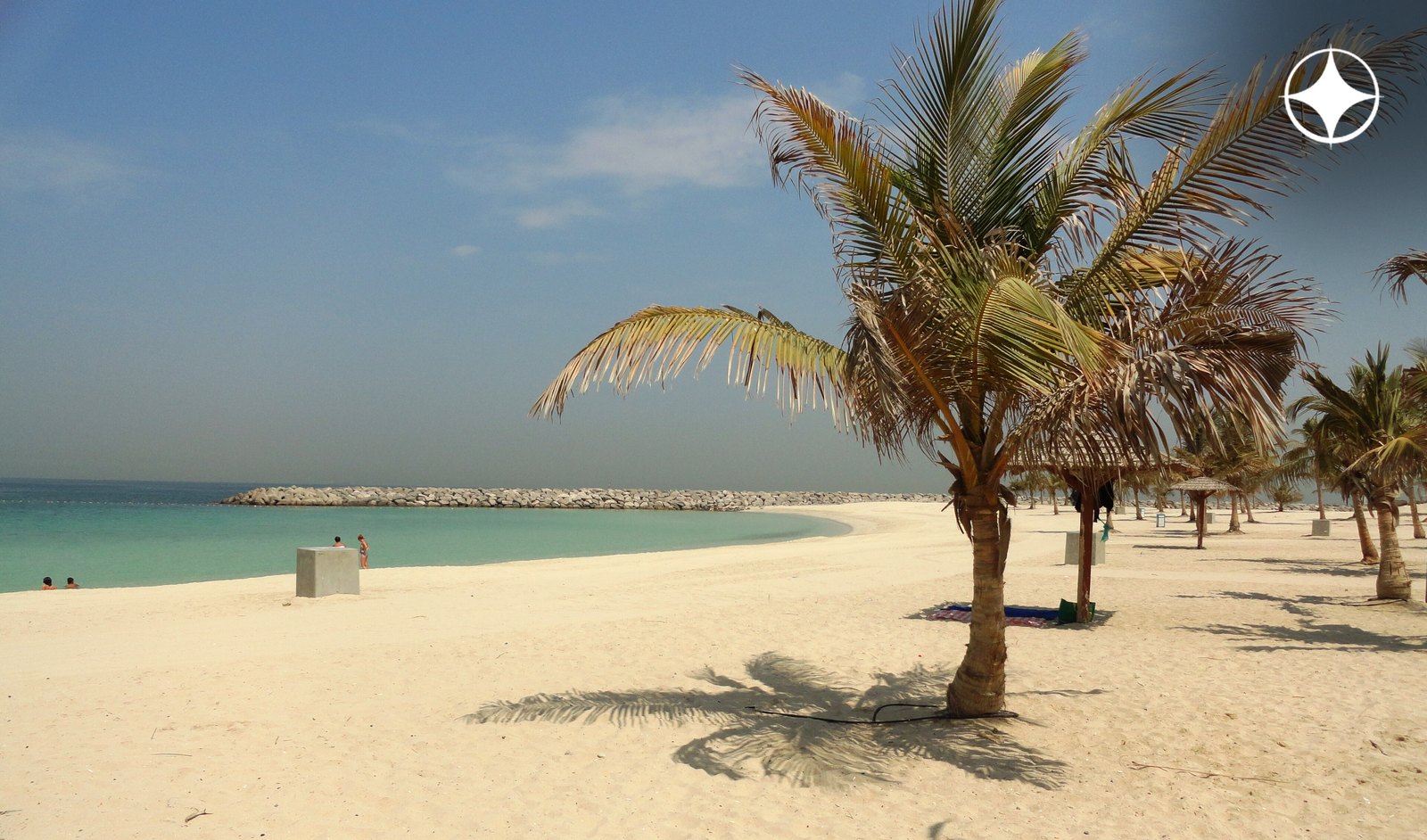
Al Mamzar is the rare place where park and beach are one and the same. Lawns and palms run right down to the Arabian Gulf, and the water in its coves is calm enough for swimming with children.
Everyone has their routine: some fish in the quieter corners, some run along the waterfront, others come for the whole day with a folding table and a cool box and claim a spot under the pergolas. Of the four, it is the one to choose if you want the sea without a hotel beach.
The park sits at the northern tip of Deira, on the border with Sharjah — see our Deira area guide for the district.
Dubai Creek Park: lawns by the old harbour
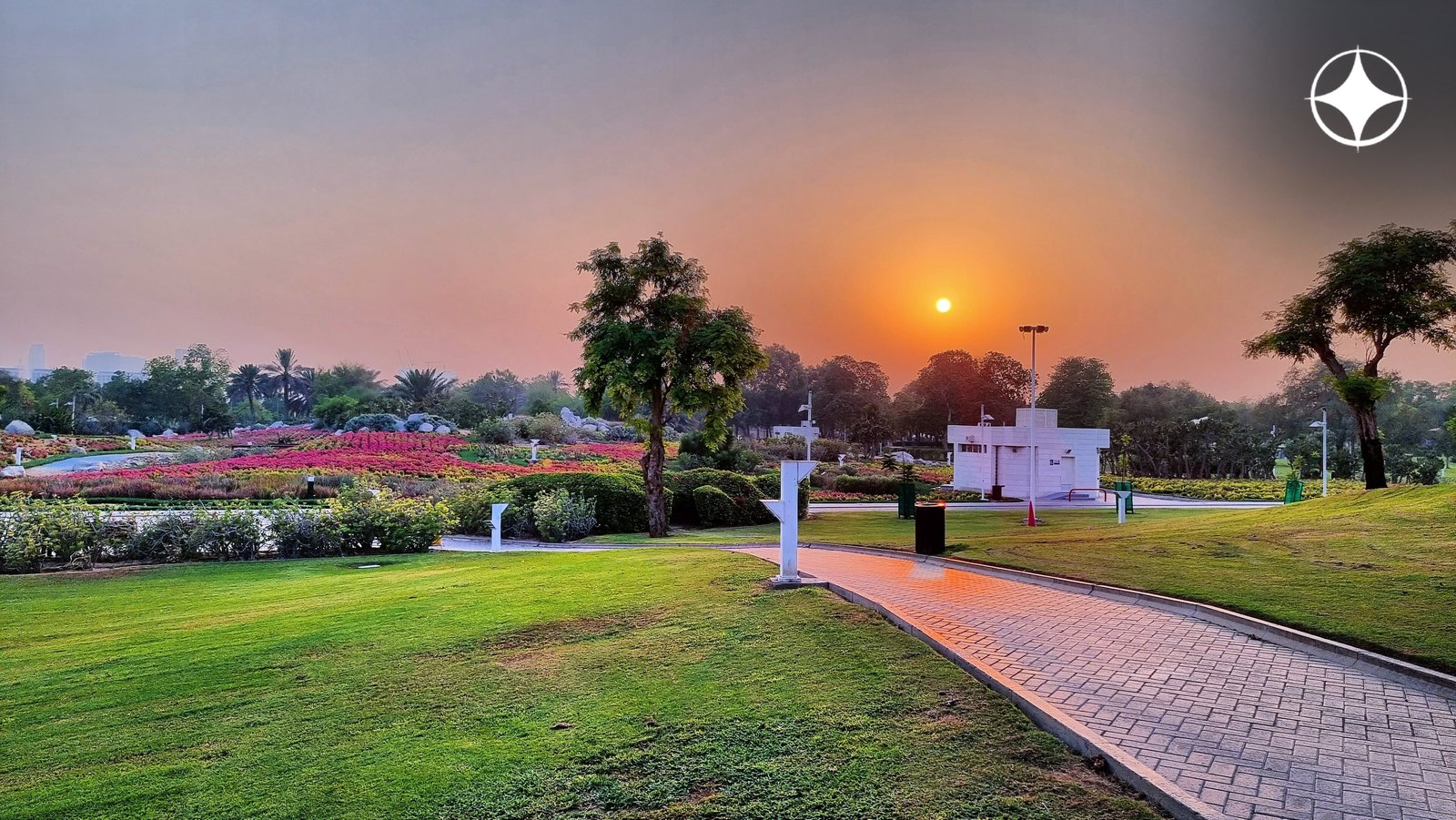
Dubai Creek Park stretches along Dubai Creek, the inlet where the trading city began. From the lawns you can watch the wooden abras cross the water — the same boats that carried merchants between the banks a century ago.
Its size is the point: there is room not just for a family picnic but for big gatherings. In the cool season companies hold daytime events here in the open air — an old habit of meeting outdoors, carried into modern Dubai.
Zabeel Park and the Dubai Frame
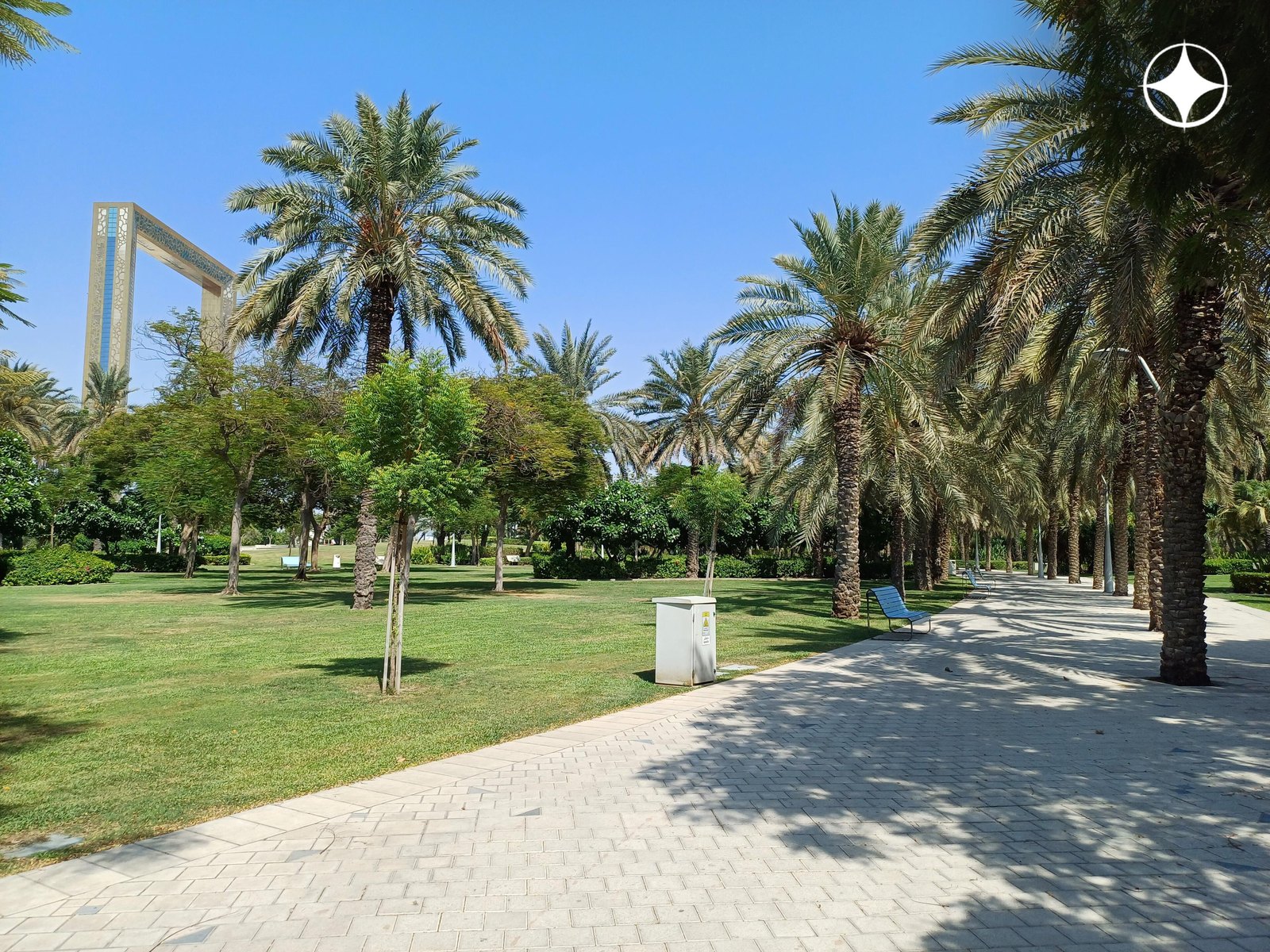
Zabeel Park sits where the old city meets the business district and gives one of the best views of the Sheikh Zayed Road skyline. The Dubai Frame, one of the city's best-known landmarks, stands inside the park, so the two fit easily into one outing.
The layout is deliberately simple: gently curving paths, palms planted in clusters and open lawns between them, arranged to give as much shade as possible. Ponds and fountains act as the focal points.
Weekdays are quiet; at weekends the park fills up with picnic mats, children on bikes and conversations in a dozen languages. For the neighbourhood around it, see our Zabeel area guide.
When to go
The season runs from October–November to March–April, when days are comfortable and barbecues and big gatherings are in full swing. The parks stay open in summer, but life moves to early mornings and late evenings. Entry to municipal parks costs a nominal fee; chalets at Al Mamzar, bike hire and some facilities are paid separately, so check before you go.
A park nearby as part of choosing a district
For anyone relocating to Dubai, a park within walking distance is a real quality-of-life factor: this is not a city for an aimless stroll down the street, and parks take on that role. Shade, room for sport, family time and a break from the pace of the city are not a gift of the climate here — they are infrastructure Dubai has built on purpose.
Cover photo: Zabeel Park by wilhelmtittes, Wikimedia Commons, licensed CC BY 3.0 (cropped, text added).
In the news
Other write-ups on the site about the same thing.
Living in Dubai without a car: the few districts where it actually works
Most of Dubai is built around driving, and in most districts a household without a car is a household with a problem. A handful are genuinely different. Which ones, what makes them different, and why the answer changes in July.
Below market in Zabeel right now
From the daily off-market feed. Availability and price are confirmed on request.
All below-market listings →