Port de la Mer rentals: seasonality of seaside income and how to model it month by month
Income from beachfront property is spread unevenly across the year. It has to be modelled month by month, or the annual figure misleads.
Seaside property earns unevenly. An annual yield calculated as an average hides both the strong months and the ones that do not pay their way. It has to be modelled month by month.
How the year breaks down
- The cooler months are high season. Demand for short stays by the water peaks, and rates are several times higher.
- Summer is the trough. The heat limits the beach holiday, and occupancy falls along with rates.
- The shoulder season is carried by long-term lets and business demand.
- Holidays and events create separate peaks that can be seen in advance.
What follows
- A mixed model often wins: a long-term lease over the summer and short stays in season — if the building rules allow it.
- Costs are not seasonal. The service charge, cooling and maintenance run all twelve months, empty ones included.
- Furnishing only pays off with short-term letting, and its wear is uneven too.
- Plan your market entry for the start of the season, not for when the apartment happens to become free.
How to calculate before buying
- Collect rates by month for comparable apartments — not an annual average, but the monthly picture.
- Assume honest occupancy for each month, not a single figure.
- Deduct all costs over twelve months, including the empty ones.
- Compare the result with the net income from a plain long-term let of the same apartment. Sometimes there is a difference; sometimes management and wear eat it.
What else to check
- Whether short-term letting is allowed in the building — in writing, before the deal.
- Service charge and community charge, with their history.
- Guest rules and parking.
Based on live listings in the district and common short-term rental practice.
Talk to a licensed broker: 📲 +971 50 120 32 64 on WhatsApp, @dubai_oleg on Telegram
Video on this topic
The same subject on the English channel — each clip has a written version of its own.


In the news
Other write-ups on the site about the same thing.

Port de la Mer: low-rise by a marina, and the berth question
Low buildings around a yacht marina on the Jumeirah coast. The marina is part of the price — and it is worth establishing which part of it is yours.

Dubai Studio City rental yield: how to work out who you are really competing with
In districts with lots of similar apartments, your rent is set by the buildings next door, not by yours. You can calculate it before buying, and the figure is concrete.

Bluewaters Island apartments: living where the whole city comes to visit
A small island with an observation wheel, restaurants and a promenade that draws the whole city. For an owner it is both the main asset and the main drawback.
Dubai Silicon Oasis: a free zone people actually live in
A technology park with housing inside it and universities alongside. Ownership is not the standard freehold, and the tenant pool comes with an academic calendar.
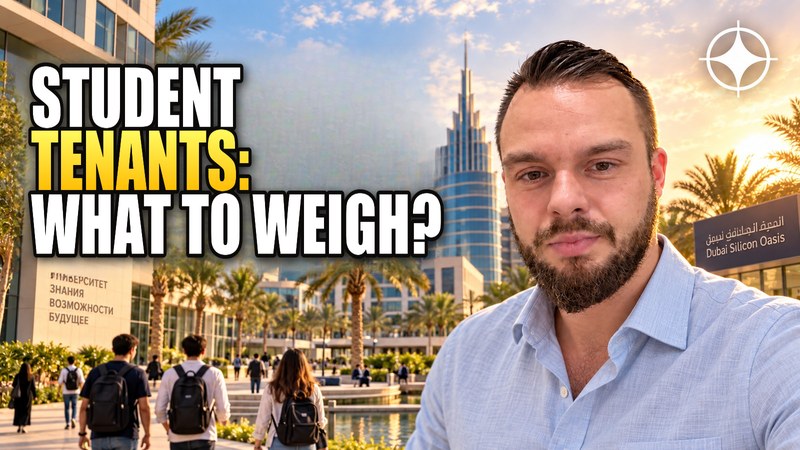
Renting to students in Dubai Silicon Oasis: the academic calendar, lease terms and what landlords should plan for
In a district with universities, a noticeable share of rental demand comes from students and teaching staff. That demand runs on its own calendar and has its own requirements.

Most expensive areas in Dubai: price per square foot and rents in 2026
On sales registered with the Dubai Land Department in the year to July 2026, Jumeirah 2 leads at about AED 7,560 per sq ft, followed by Trade Center 2, DIFC, Dubai Harbour and La Mer. The city median is about AED 1,716. How prices compare with rents, and when a costly square foot pays off.
Below market in Port de la Mer right now
From the daily off-market feed. Availability and price are confirmed on request.
All below-market listings →