
Binghatti Hills at Arjan: the volume play, examined
Binghatti Hills sits in Arjan, next to Dubai Science Park, and it is enormous — one of the highest unit counts of any single residential development in that part of the city. Scale changes an investment in ways that are easy to overlook when you are looking at one apartment on a floor plan, so this is the version of the analysis that takes the whole building into account.
Where Arjan actually is
Arjan sits inland, off Sheikh Mohammed Bin Zayed Road, bordered by Dubai Science Park and Al Barsha South. It is a mid-density residential district that filled in rapidly through the late 2010s and 2020s, built almost entirely of apartment buildings rather than villas.
The practical geography: roughly fifteen to twenty minutes to Dubai Marina and Mall of the Emirates off-peak, about twenty-five to Downtown, and adjacent to Dubai Miracle Garden and Butterfly Garden, which bring seasonal traffic and no residential benefit whatsoever.
There is no metro. That is the defining constraint on this district and it caps the tenant profile: Arjan works for people with cars, and it does not work for people without them. Any rental projection that assumes otherwise is wrong.
Talk to a licensed broker: WhatsApp +971 50 120 32 64 · Telegram
What buying in a very large development means
The first effect is on rent. Several hundred near-identical units handed over at the same moment into the same district means several hundred landlords competing for tenants in the same quarter. Rents in the first year after a mass handover are consistently softer than the projections used to sell the units.
The second effect is on resale. When you sell, you will be competing not against the market but against dozens of literally identical apartments in the same building, listed by owners with the same information you have. That is a transparent, commoditised market and it does not reward sellers.
The third effect is on service charge, and here scale can help: a large building spreads fixed costs across more owners, and per-square-foot charges in high-unit-count mid-market towers are often lower than in boutique ones.
None of this makes a large project a bad buy. It makes it a yield buy rather than an appreciation buy, and you should price it as one.
The Arjan yield case
Arjan competes on entry price. Rent per square foot is lower than in the central districts but the purchase price is much lower, and the ratio between them has generally been favourable — gross yields here run above the Dubai average.
The tenant pool is real and stable: employees at Dubai Science Park and the nearby business parks, families priced out of Al Barsha and Dubai Hills, and a large number of couples and sharers who want a newer building than the older mid-market stock offers.
The honest caveat is that this tenant is price-sensitive by definition. They chose Arjan because it was cheaper. If a comparable building two streets away drops its rent, they will move, and the switching cost for a tenant with no fit-out and a one-year contract is close to zero.
What to check specifically
The handover schedule for the whole development, not just your tower or phase. If three thousand units land in the same six months, plan for a soft first letting season.
The projected service charge, and how the amenity provision compares to the unit count. Extensive amenities spread over many units is efficient; extensive amenities in a phase that hands over first while later phases are still building means early owners subsidise the whole scheme.
The finish specification in writing, item by item. Binghatti competes on price and the delivered specification is mid-market. That is fine if you expected it and disappointing if you did not.
Parking allocation per unit. In a district with no metro, a studio with no parking bay is a materially harder let.
And walk a completed Binghatti building before committing to an unbuilt one. This is the single most useful hour you can spend.
How to make the numbers work here
Buy the unit types with the widest tenant pool rather than the cheapest ticket. One-bedrooms consistently outperform studios on both letting speed and resale in districts like this, and the price gap is usually smaller than the rent gap.
Prefer units with a parking bay, a balcony and a non-facing-the-car-park outlook. In a commoditised building, the small differentiators are what get your unit let first when twenty identical ones are on the market.
Model your return on the second year, not the first. The first letting season after a mass handover is atypical and usually the weakest.
And be realistic about the exit: assume you sell to another investor running the same spreadsheet, not to somebody who fell in love with the building.
Who this is right for, and who it is not
It is right for a yield-focused investor with a five-year-plus horizon who wants a low entry price, is comfortable with a mid-market finish, and understands that the return comes from rent rather than from capital growth.
It is right for a buyer who wants to own Dubai property at a ticket size that does not require a mortgage.
It is wrong for anyone hoping to flip before handover in a district with thousands of competing units, and wrong for a buyer who wants a distinctive asset. If capital appreciation on scarcity is the thesis, buy something scarce.
Frequently asked
Is Arjan a good area to invest in Dubai?
It offers above-average gross yields at a low entry price, with a stable tenant pool from Dubai Science Park and nearby business districts. The main constraints are no metro access and a price-sensitive tenant base that switches buildings easily.
What happens to rents when a large project hands over?
They typically soften in the first letting season, because hundreds of near-identical units come to market simultaneously. Model your return on the second year rather than the first.
Do large developments have lower service charges?
Often yes per square foot, because fixed costs spread across more owners. Watch for phased handovers, though — early owners can end up carrying the cost of amenities serving units that have not completed.
✍️ Message me on WhatsApp for a free consultation — off-market stock, payment plans and honest numbers on any of the projects covered here.
✅ Subscribe on YouTube — investment, property, business and relocation in the UAE and beyond.


Below market in Arjan right now
From the daily off-market feed. Availability and price are confirmed on request.
All below-market listings →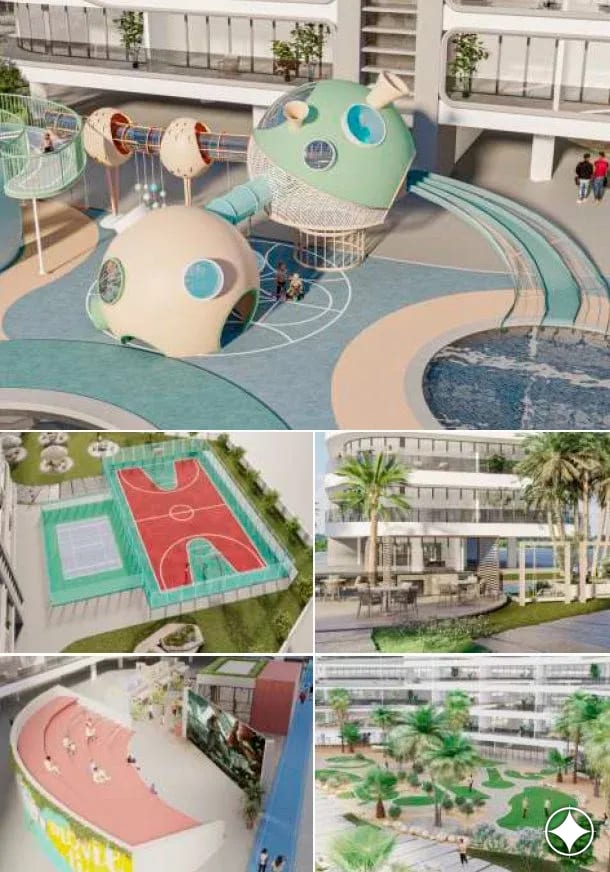
In the news
The same subject in writing — analysis and news related to this video.

Dubai's top developers by 2025 sales, and the 648 projects launched in a single year
Emaar sold about AED 65.8bn in Dubai in 2025, DAMAC AED 35.9bn, Sobha about AED 30bn and Binghatti AED 26bn. Meanwhile 258 developers launched 648 projects with 167,000 units. What that mix of concentration and crowding means for buyers.
ORO24: rapid scaling in the mid-market, and how to price that risk
A developer that built a large pipeline quickly in Arjan and the growth clusters. What to verify when the pipeline is bigger than the delivery record.

Vincitore: ornate architecture in a cluster of identical boxes
A developer competing on decoration in Arjan and the mid-market districts. Where a distinctive facade genuinely helps, where it does not, and what to check underneath it.

Binghatti: a recognisable facade, a short build cycle, and what that costs
A family developer that became the second largest by project count in Dubai. The model behind the architecture — concentration in a few districts, fast delivery, branded collaborations — and what a buyer should check.

Reportage Properties: high volume across two emirates, and what to verify
A developer running a large affordable-segment pipeline in both Abu Dhabi and Dubai. What working across two emirates changes, and the checks that matter in the volume model.
Tiger Properties: volume at the low end, and how to check a delivery record
One of the oldest builders in the affordable segment. What a low entry price is built from, and the specific checks that matter more here than anywhere else in the market.