
Cost of owning a car in Dubai in 2026: import duty, Salik with VAT, parking and speeding fines
What a car really costs in the UAE: 5% duty and 5% VAT on import, toll gates at AED 4 and AED 6.30, a 20 km/h radar buffer in Dubai and zero in Abu Dhabi — and why your choice of district shapes your transport budget.
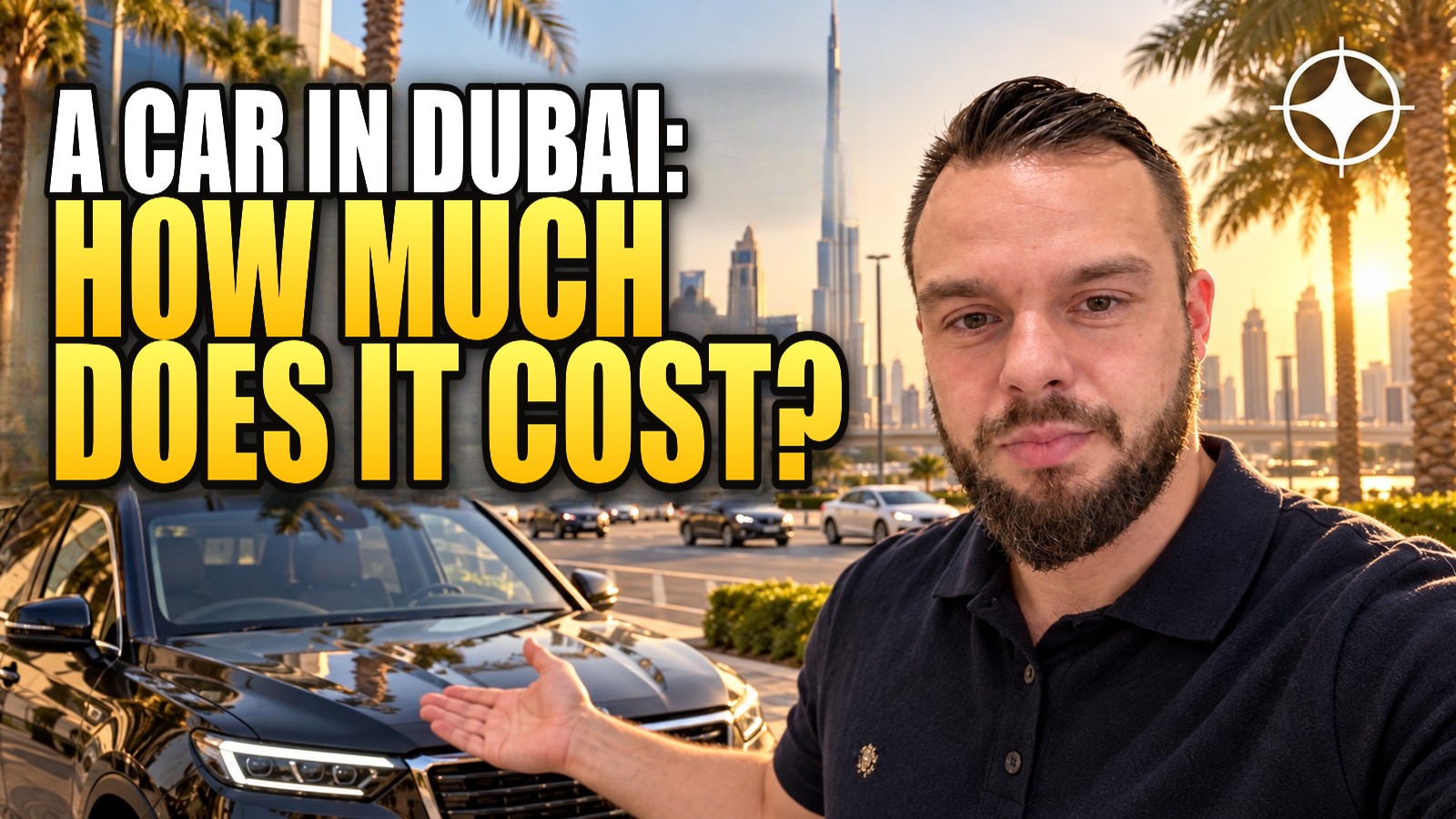
The common line that a car in the UAE costs "next to nothing, there are no taxes" is a simplification. There are taxes — they are simply structured differently from what most people are used to. Below is the actual cost structure for an owner in 2026, and how it ties in with the choice of where to live.
Buying and importing
A car imported into the UAE is subject to 5% customs duty on its value including freight and insurance, plus 5% VAT. Registration fees are fixed, at around AED 350–450. A separate item on import is bringing the car up to Gulf specification and passing inspection; not every model gets through without modifications.
Buying locally is simpler: the showroom price already includes VAT, there is no annual road tax in the country, and what is mandatory every year is insurance and the inspection before re-registration.
Talk to a licensed broker: 📲 +971 50 120 32 64 on WhatsApp, @dubai_oleg on Telegram
Salik: toll gates
Dubai runs the Salik toll-gate system. Since 31 January 2025 the tariff has been variable: AED 6 per crossing at peak hours and AED 4 off-peak, plus free windows at certain hours and on certain days. From 1 June 2026, 5% VAT applies to Salik tolls and to tag activation — a peak-hour crossing now costs AED 6.30 including tax.
The way to think about it is by route, not by crossing. Someone living in Dubai Marina and working in Business Bay passes several gates twice a day — over twenty working days that adds up to a noticeable monthly sum. A Downtown resident working in DIFC pays almost nothing. The transport budget is part of the cost of a district, and it is worth estimating before you buy the apartment, not after.
Speed and fines
Dubai's radars have a buffer: a camera triggers when the posted limit is exceeded by more than 20 km/h. Abu Dhabi scrapped its buffer back in 2018 — zero tolerance applies there, and a fine is issued for any excess. This is one of the most common misunderstandings among newcomers: the habit of relying on Dubai's margin ends in a string of fines on the road towards Abu Dhabi.
Fines in the UAE are tied not only to money but to a black-points system, and some offences lead to the car being impounded. Payment and checks go through the police app of the relevant emirate.
Parking
Street parking in Dubai is paid by zone and by time, via an app or SMS. Valet parking is ubiquitous at malls and business centres: you hand the keys to an attendant. The service is often free if you shop or dine there — but that is the venue's rule, not the city's, and it is worth checking on the spot.
What matters for a home buyer: an apartment in Dubai almost always comes with an assigned space in the building's covered car park, and larger apartments with two or more. The number of spaces is stated in the property documents and is a pricing factor in its own right: a second family car without a second space turns into a monthly cost for renting parking in the same building.
Running costs
A car lasts longer in the UAE than in colder climates: no road salt or de-icing chemicals, no sharp temperature swings, smooth road surfaces. Working against that are heat and sand — the air conditioning, the battery and cabin filters wear faster, and the paintwork suffers from the sun. The practical conclusion is simple: skimping on regular air-conditioning service does not pay off in this climate.
Electric cars
Conditions for electric vehicles in the UAE are favourable — short distances, flat terrain and a growing network of charging stations, including the charging programme of the city's power utility. When buying an apartment or villa, find out in advance whether the car park has a supply line for a charger and what the management company requires to install one: in a completed building this is sometimes harder than it looks.
In short
- 5% + 5% — duty and VAT on importing a car.
- AED 4 / AED 6.30 — a Salik crossing off-peak and at peak, including VAT.
- 20 km/h — the radar buffer in Dubai; Abu Dhabi has none.
- 1 space in the car park — the standard allocation for an apartment; check the number in the documents.
Video on this topic
The same subject on the English channel — each clip has a written version of its own.

Air taxis in Dubai: what eVTOL would change, and what it would not
Electric vertical take-off aircraft, vertiports at the airport, Downtown, the Marina and the Palm, and a 10–15 minute hop replacing an hour in traffic. Which of that is worth pricing into a purchase today.
WatchIn the news
Other write-ups on the site about the same thing.

The True Cost of Owning a Car in Dubai in 2026: Duty, Salik VAT, Parking and Fines
5% customs duty and 5% VAT on import, Salik toll gates at AED 4 and AED 6.30, a 20 km/h radar threshold in Dubai versus zero in Abu Dhabi — and why your choice of neighbourhood shapes your transport budget.

Cost of living in Abu Dhabi in 2026, and how the budget differs from Dubai
A family of four runs AED 12,000–20,000 a month, or 18,000–25,000 with private schooling. Plus the change that reframes the whole calculation: from June 2026 the permitted annual rent increase in the emirate is zero.

Flying taxis hit UAE skies in 2026: DXB to the Palm in 12 minutes, Abu Dhabi to Dubai in under half an hour
Dubai and Abu Dhabi air taxis start commercial flights in 2026: the first vertiport at DXB is finished and the capital has priced its routes. Where the vertiports are, flight times, what an Abu Dhabi to Dubai air taxi will cost and what it means for property.
Dubai in Julius Baer’s most-expensive-cities ranking: 7th in 2025, and what changed in 2026
Dubai climbed five spots to 7th place among the world’s most expensive cities in Julius Baer’s 2025 report. In the 2026 edition it dropped to 14th — not because it got cheaper, but because of the dirham’s dollar peg.

Cost of living in Dubai in 2026: a family budget line by line
Rent, utilities, schooling, groceries, a car and insurance — what a family of four actually spends per month. Three scenarios from AED 22,000 to 60,000, and the finding that the price of Dubai is set by schooling and district, not by food.
Dubai Rolls Out 735 Electric Buses: The UAE’s Largest Fleet Renewal
RTA is switching city buses to electric power: 735 vehicles through 2026, a 370km range, and 32 charging stations at 360kW across five depots. What the shift means for rents in neighbourhoods without a metro line.