
Turkey’s closed neighbourhoods: where a purchased apartment will not get you a residence permit
Turkey closes neighbourhoods to foreigners’ registration once their share passes a set threshold. The apartment is bought legally, yet a residence permit cannot be issued at its address. How to check the address before the deal.
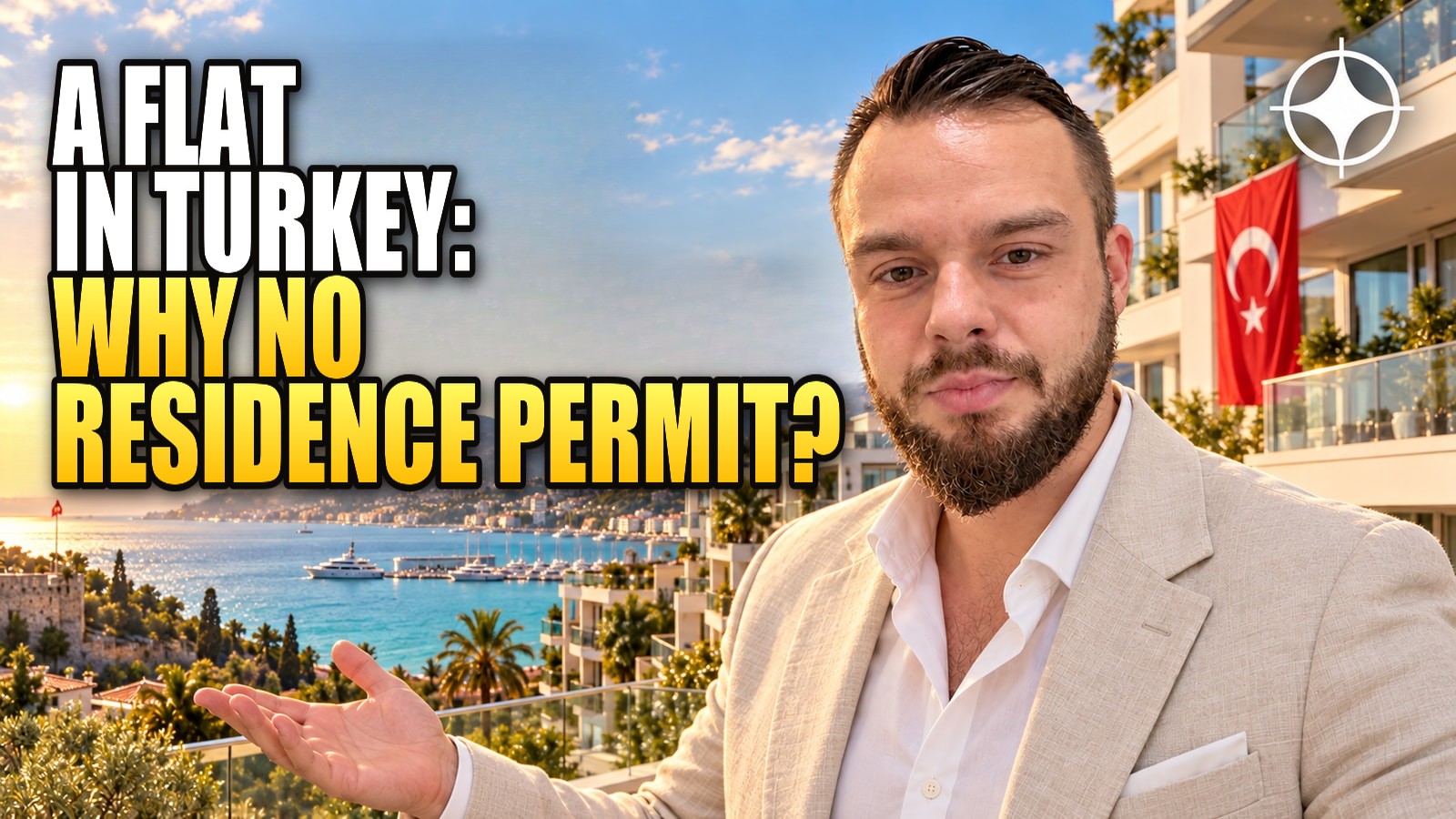
One of the most expensive mistakes in the Turkish market goes like this: someone buys an apartment specifically to get a residence permit, the deal goes through, the TAPU is issued — and the migration office will not accept the application, because the neighbourhood is closed to foreigners' registration. The ownership itself is not affected: what is closed is not the market but registration at that address.
How the restriction works
Turkey limits the share of foreigners in individual localities and neighbourhoods. Once the share passes a set threshold, the area is closed to new residence-permit registrations. The list is reviewed and extended: entire districts of Istanbul, Antalya, Mersin and other cities with a high concentration of newcomers have ended up closed.
- The restriction is address-specific. It applies to the neighbourhood, not the whole city: the next neighbourhood may be open.
- It does not ban the purchase. A foreigner may buy and own the property; only residence-permit registration at that address is restricted.
- The list changes. An area that was open last year may be closed by the time of your deal.
- Permits already issued usually remain valid and are renewed, but it is unwise to rely on that as a rule.
Why sellers do not mention it
A closed neighbourhood does not bother the seller: they are selling ownership, and ownership really does pass to the buyer. The question of status sits outside the transaction. That is why checking the address is the job of the buyer and their lawyer — done before the deposit is paid, not after.
Talk to a licensed broker: 📲 +971 50 120 32 64 on WhatsApp, @dubai_oleg on Telegram
How to check
- Pin down the neighbourhood, not just the district and street: the restriction is imposed at the level of the mahalle.
- Check the address's status with the migration office or through a lawyer as of the date of the deal, not from last year's list.
- Ask directly whether residence permits have been issued at this building in recent months, and ask for confirmation.
- Do not rely on an agency's verbal assurances: this is exactly the case where the cost of a mistake is the whole point of the purchase.
If status is the goal
- Define the requirement first, the property second. If a residence permit is the goal, the list of eligible neighbourhoods narrows the search before any viewings.
- Keep residence and citizenship apart. The citizenship-by-investment programme works on a different basis, with its own value threshold and an obligation not to sell the property for a set period; the territorial restrictions on residence registration do not apply to it.
- Remember the waves of refusals and cancellations: Turkish residence-permit practice has changed sharply and not in applicants' favour, and that is part of the country risk, not of a particular property.
Based on Turkish rules on the registration of foreigners' place of residence and the practice of Turkey's migration authority.
Video on this topic
The same subject on the English channel — each clip has a written version of its own.
 1:38
1:38 Binghatti Hills at Arjan: the volume play, examined
Binghatti Hills is one of the largest residential projects in Arjan. What buying into a very large mid-market development actually means for rent, resale and service charge.
WatchRelated reading
Other write-ups on the site about the same thing.

Istanbul and Antalya: two different property markets in Turkey
The Turkish market is usually discussed as a whole, though inside it splits into two almost unconnected stories — one urban with domestic demand, one coastal and foreign-funded.

Turkey’s Closed Neighbourhoods: Where Buying an Apartment Won’t Get You Residency
Turkey closes neighbourhoods to foreigner registration once their share of foreign residents crosses a set threshold. The apartment purchase is legal, but a residence permit at that address can be refused. How to check an address before a deal.

Mistakes people make buying European property for a residence permit
The purchase is made to satisfy a rule rather than to be a good purchase, and every error follows from that inversion.

Turkish citizenship through property: how the route works
The only large economy offering citizenship for a property purchase, on a short timeline and with no residence requirement. The mechanics are straightforward; the traps are all in the valuation.

Property in Turkey: TAPU, military clearance and a mandatory valuation
One of the most open markets in the region and simultaneously one of the most procedural. Buyers usually learn about the filters at the moment one of them trips.

Visa, residence permit, permanent residence, citizenship: the practical differences
Four words used interchangeably in conversation and meaning four different legal positions. Almost every misunderstanding in this field starts by confusing two of them.