
Zermatt, St. Moritz and Verbier: how Switzerland’s ski-resort property markets differ
The country’s three leading Alpine addresses work differently: the canton’s language, the type of buyer, second-home restrictions and access for non-residents. How they compare, and why supply is tight everywhere.
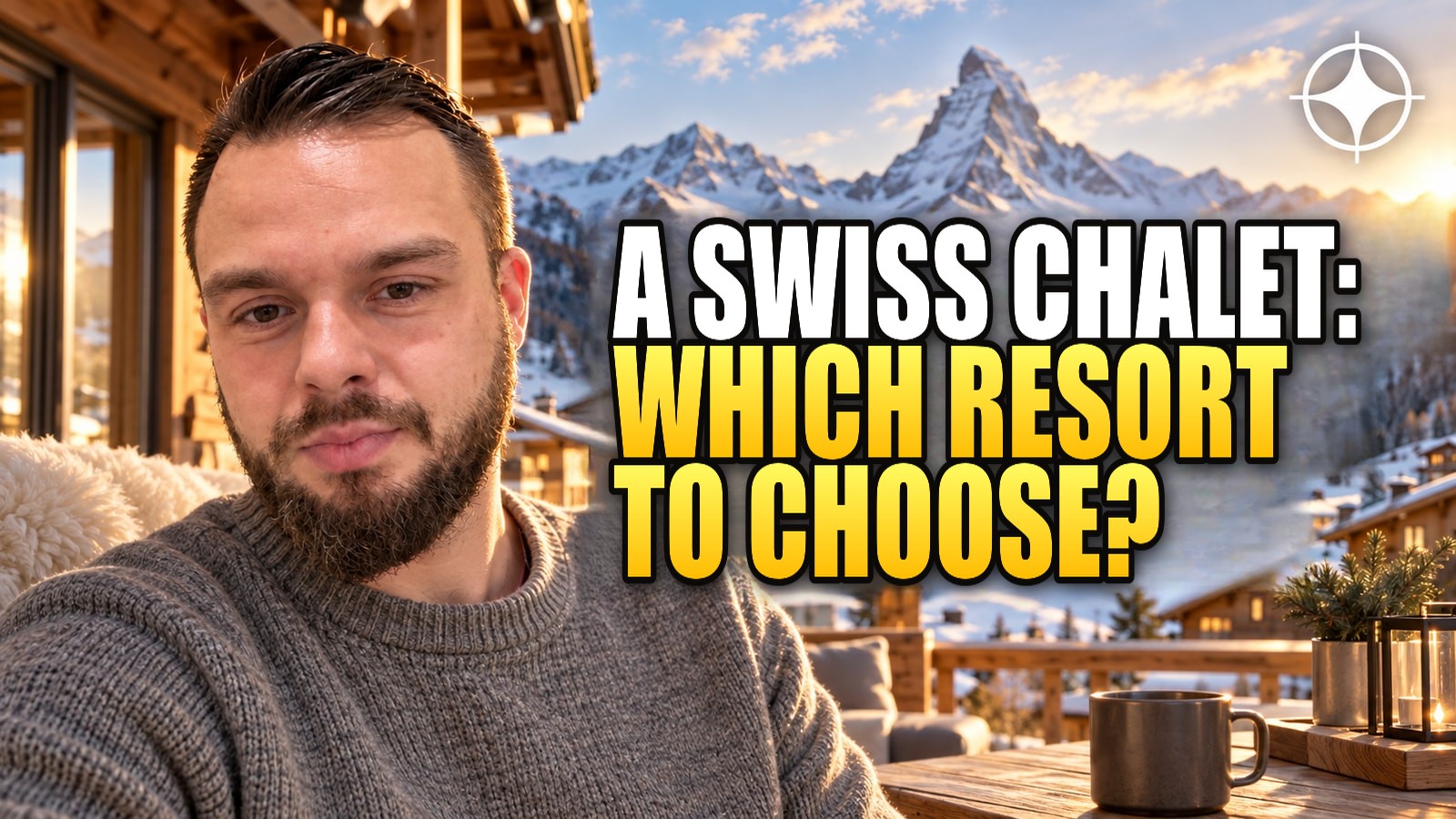
The Swiss resort market is usually summed up in one word: expensive. Inside it, though, there are real differences — in the type of buyer, in the language and culture of the canton, and in whether a property is open to a non-resident at all.
Zermatt: the mountain, and no cars
German-speaking Valais, a village at the foot of the Matterhorn that you cannot drive into — only arrive by train. That shapes everything: compactness, quiet and very limited supply.
- The buyer is a family that cares about skiing and the view, not nightlife.
- Supply is severely limited by the size of the valley.
- The season is long, thanks to summer trekking and the glacier.
St. Moritz: the Engadin and status
The canton of Graubünden, the high Engadin valley. St. Moritz is the resort with the longest reputation in the country, and a buyer to match.
Talk to a licensed broker: 📲 +971 50 120 32 64 on WhatsApp, @dubai_oleg on Telegram
- The segment is the most expensive, with historic hotels and an established circle of owners.
- The setting is social and international, with a busy winter season.
- Supply is limited and turns over slowly: properties are held for decades.
Verbier: the French-speaking side and the ski area
The canton of Valais, its French-speaking part. Verbier is known for the scale of its ski area and a younger crowd, including a long-standing British presence.
- The buyer is younger and more active, more often from the UK and Northern Europe.
- The ski area is one of the arguments that set the price.
- Seasonal letting exists, but is subject to the general second-home restrictions.
What limits supply everywhere
On top of the federal law on foreign purchases, there is a cap on the share of second homes in each municipality: where that share already exceeds the threshold, new second-home construction is banned. In the resort valleys the threshold was passed long ago, which means almost no new properties appear. The cap supports the value of existing stock — and at the same time makes the buyer's choice very narrow.
How to choose
- Law first, property second. Whether the property is open to a non-resident and whether the canton has quota left is established before any viewing.
- The canton's language and setting matter if you are buying for regular living rather than two weeks a year.
- Nobody calculates yield here. Switzerland is bought to preserve value and as a place; letting is restricted by law.
- Exit is not quick. The pool of buyers is narrow — the flip side of limited supply.
Based on Swiss federal regulation of property purchases by foreigners, the cap on second homes in municipalities and published reviews of the Alpine market.
Video on this topic
The same subject on the English channel — each clip has a written version of its own.
 0:15
0:15 Apartments in Switzerland bought with crypto
Fifteen seconds on a Swiss development accepting cryptocurrency, and the two things that actually decide whether a foreign buyer can complete there.
WatchRelated reading
Other write-ups on the site about the same thing.
Zermatt, St. Moritz and Verbier: How Switzerland’s Three Resort Markets Differ
The country’s three flagship Alpine addresses run on different rules — cantonal language, buyer type, second-home restrictions and how accessible each one actually is to a non-resident. Why supply stays tight everywhere.

Residency in Switzerland: the lump-sum arrangement and what it does not include
Switzerland does not sell residence. It negotiates it, canton by canton, through an agreed annual tax on a notional basis — and the agreement is with a specific commune, not with a country.
Swiss boarding schools and property nearby: how they actually connect
A school comes up in almost every conversation about Swiss property. That is not accidental — but Switzerland separates three things that other countries connect.
Owner taxes in Switzerland: Eigenmietwert, wealth tax and the cantonal difference
The Swiss system surprises almost every arriving owner: the state treats living in your own house as income. The mechanism is called imputed rental value.

Property in Switzerland: Lex Koller and cantonal quotas
The only market on this list where a foreigner’s purchase is limited not by tax or by price but by a direct federal prohibition with exceptions.
Swiss mortgage for non-residents: why a low interest rate does not mean an easy loan
Swiss rates are among the lowest in the world, but a bank lends a non-resident less and asks for more. The deposit, amortisation down to two-thirds of value, the affordability rule and the first mortgage nobody repays.