
Abu Dhabi property investment: Saadiyat Island and the Aldar launch numbers
Abu Dhabi gets treated as Dubai's quieter suburb, and it is not. Different emirate, different land regulator, different rules on foreign ownership, and a completely different buyer. This is an introduction to the market through its most internationally legible district — Saadiyat Island — with the Aldar launch pricing that was live at the time.
Abu Dhabi is not Dubai
The most important practical difference is regulatory. Abu Dhabi property sits under the Department of Municipalities and Transport rather than the Dubai Land Department, with its own registration process, its own investment-zone designations and its own rules on what foreign nationals may own where.
The market is also structurally different. Abu Dhabi has a large government and energy-sector employment base, which produces steadier tenant demand and much less speculative activity. Prices move less in both directions.
And it is smaller. Fewer transactions, fewer listings, a thinner resale market. For an investor used to Dubai's liquidity, that is the adjustment that matters most.
Talk to a licensed broker: WhatsApp +971 50 120 32 64 · Telegram
Saadiyat Island
Saadiyat is the cultural district: the Louvre Abu Dhabi is open, the Guggenheim Abu Dhabi is under construction, and a cluster of museums, beaches and premium hotels sits around them. It is the piece of Abu Dhabi that an international buyer understands immediately.
That legibility is the investment argument. A district anchored by institutions of that profile has a demand floor that a purely residential district does not — the cultural infrastructure is permanent, government-backed and not going to be repriced by a soft quarter.
The counterweight is that Saadiyat prices already reflect it. This is not an undiscovered location; it is the most expensive part of a conservative market.
The Aldar launch pricing (March 2023)
Studio: AED 1.5 million, about USD 410,000. One-bedroom: AED 2.5–3.4 million, roughly USD 680,000. Two-bedroom: AED 4–5.7 million, around USD 1 million. Three-bedroom: from AED 6.7 million, about USD 1.8 million — and very few of them.
Aldar is Abu Dhabi's largest listed developer and effectively the emirate's Emaar equivalent, which makes delivery risk on a launch like this low by regional standards.
Note the scarcity of the three-bedroom stock. In a district with this profile, the largest units go first and to end-users, which makes them the least liquid to resell but the most defensible on price.
Who Abu Dhabi suits
It suits a buyer who wants lower volatility, a government-anchored tenant base and a market where prices do not swing 20% on sentiment. It suits somebody who works in Abu Dhabi and is tired of the commute from Dubai.
It does not suit an investor looking for the rapid re-rating that Dubai occasionally delivers, and it does not suit anybody who needs to liquidate quickly. The resale market is thin and the buyer pool is narrower.
The Russian-language side of this site has a full district-by-district Abu Dhabi guide with yields and entry prices for ten areas, if you want to go deeper than Saadiyat.
How Abu Dhabi ownership differs from Dubai
Abu Dhabi opened property to foreign ownership later and more narrowly than Dubai, and it did so by designating specific investment zones rather than by opening the emirate broadly. Saadiyat, Yas, Al Reem, Al Raha and a handful of others are on that list; most of the mainland is not.
Inside a zone a non-GCC national can hold freehold with the same rights as in Dubai. Outside one, the available instruments are long leasehold, usufruct or musataha — rights of use for a defined term rather than ownership in perpetuity.
The regulator is the Department of Municipalities and Transport rather than the Dubai Land Department, and the registration process differs in detail.
This is the first question on any Abu Dhabi purchase and it eliminates a large share of otherwise attractive property for international buyers.
What Saadiyat actually is
Saadiyat Island is Abu Dhabi's cultural district: the Louvre Abu Dhabi is operating, with further museums in progress, alongside NYU Abu Dhabi, a natural beach that is genuinely protected, and a golf course.
The residential component spans Saadiyat Beach villas, apartment districts and branded residences, and the island is a designated investment zone.
The beach is the differentiator. It is a natural coastline with turtle nesting protection rather than a reclaimed one, and there is very little else like it in the UAE.
Development is deliberately low-density by Gulf standards, which supports value but also means the island is quiet and car-dependent.
The market mechanics
Abu Dhabi registers a fraction of Dubai's transaction volume, which means fewer comparable sales, thinner published data and a longer time to sell.
Demand is government, corporate and institution-led — ADNOC, the sovereign funds, the cultural institutions and the universities — which produces a stable, well-paid, long-staying tenant base but a narrower one than Dubai's.
Yields are generally higher than equivalent Dubai stock, and that premium is partly compensation for the illiquidity.
For a buyer who wants the culture, the beach and the calm and is not optimising for a fast exit, Saadiyat is the strongest address in the emirate. For anyone who might need to sell quickly, Dubai does that job better.
Frequently asked
Can foreigners buy property in Abu Dhabi?
Yes, within designated investment zones, where foreign nationals can hold freehold title. The framework sits under the Department of Municipalities and Transport rather than the Dubai Land Department, and the zone designations are more restrictive than Dubai's freehold map — always confirm the status of the specific plot.
Is Abu Dhabi cheaper than Dubai?
On a like-for-like basis in premium districts, broadly comparable — Saadiyat is not cheap. What differs is volatility and liquidity: Abu Dhabi moves less in both directions and has a thinner resale market, which suits a steady holder and frustrates a trader.
What makes Saadiyat Island different?
Permanent, government-backed cultural infrastructure: the Louvre Abu Dhabi is open and the Guggenheim is under construction, alongside beaches and premium hotels. That gives the district a demand floor that a purely residential area does not have.
✍️ Message me on WhatsApp for a free consultation — off-market stock, payment plans and honest numbers on any of the projects covered here.
✅ Subscribe on YouTube — investment, property, business and relocation in the UAE and beyond.


In the news
The same subject in writing — analysis and news related to this video.

Aldar buys 2.3m sqm of land on Yas and Saadiyat: 3,000 homes worth AED 23bn
In February 2026 Aldar added more than 2.3m sqm on Saadiyat, Yas and next to Yas for about 3,000 homes with a GDV near AED 23bn ($6.26bn). That averages AED 7.7m per home — what it says about the launches to come.
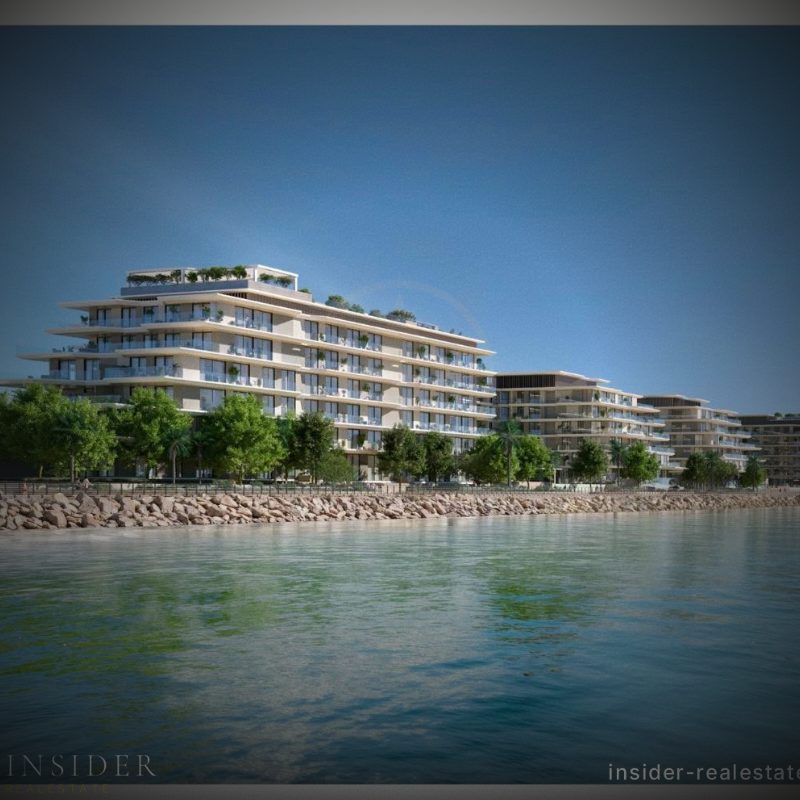
Bashayer on Hudayriyat Island sold out in a day: Modon banked AED 3bn on one launch
Modon's first residential project on Hudayriyat Island — 157 villas and 330 apartments — sold out completely on launch day, bringing in about $820 million. The developer has already followed up with Bashayer Final Phase, the last release in this cluster.
Saadiyat Island apartments: Mandarin Oriental Residences and Henge Residences beside Abu Dhabi’s museums
Two branded launches on Saadiyat six months apart: Aldar’s Mandarin Oriental Residences (about 228 homes, designed by BIG, from AED 6.2m, Q3 2028) and Nord’s Henge Residences (166 homes, from AED 1.1m, 2028). Guggenheim Abu Dhabi opens on 11 December 2026.
Saadiyat Island apartments: Nobu Residences and The Source Terraces by Aldar, two years on
Two premium Aldar launches on Saadiyat: Nobu Residences (88 homes, November 2023, from about AED 7m) and The Source Terraces designed by BIG (June 2024, from about AED 3m). Both are sold out and due in 2027 — so the only way in now is a resale contract.
Riviera Residences on Al Reem Island: a pearl facade by Herzog & de Meuron
Mered has entered Abu Dhabi with a 240,000 sqm waterfront project on Oval Bay, designed by Swiss firm Herzog & de Meuron, complete with a private marina. Handover is set for March 2029; deep-foundation works began in spring 2026.
Lulu Island Abu Dhabi: Eagle Hills takes on 400 hectares off the Corniche — what is known in September 2026
Eagle Hills has confirmed it is developing Lulu Island, a 400-hectare reclaimed island 500 m off the Corniche. No masterplan or prices yet, but machinery is on site. What is known, what is not, and why early "reservations" are not purchases.