
What USD 150,000 actually buys in Bali: Parq, Mirah and Alex Villas
The Bali question people arrive with is "what villa can I get for 150,000 dollars", and the honest answer is: none, usually — that is frequently the cost of the land you would build one on. The exception is small townhouses around 53 square metres, which are more accurately called lofts. What this budget actually buys is a 35–50 square metre apartment in a managed complex, and how it is owned matters more than how it looks.
What the budget really buys
At up to USD 150,000 the realistic product is an apartment of 35 to 50 square metres. It will sit in either a managed complex or a full hotel operation — and in Bali the distinction is thinner than elsewhere, because there is no additional tax on commercial real estate and essentially all managed property is structured as commercial.
Small townhouses at around 53 square metres exist at this level. They are marketed as townhouses; they are lofts. Nothing wrong with that, but know what you are comparing.
What you do not get is a private villa with a pool on its own land. Those start well above this number, and the land component is most of the price.
Talk to a licensed broker: WhatsApp +971 50 120 32 64 · Telegram
The ownership structure is the whole story
Indonesia does not permit foreign freehold ownership of land. What a foreign buyer gets is a leasehold — typically 25 or 30 years with extension options — or a right-to-use title, or a structure involving an Indonesian company. Each of these has a different risk profile, and the difference dwarfs anything about the building itself.
On a leasehold, the number that decides your return is the remaining term at the point you sell. A 30-year lease bought new and sold after eight years is a 22-year lease to the next buyer, and it prices as one. Leasehold assets amortise; freehold assets do not. Model that explicitly.
Nominee structures — where an Indonesian individual holds title on your behalf — are common, cheap and legally fragile. I would not put money into one.
The managed-complex model
Almost everything at this price point is sold with a rental management agreement attached, and the projected yields quoted in Bali are high — high enough that they should prompt questions rather than enthusiasm.
Ask for actual occupancy and average daily rate from the operator's existing units, by month, for at least two years. Bali is seasonal and the annual average conceals it. Ask what the operator deducts before your share, whether income is pooled, and what happens if you want to manage it yourself.
And ask what happens at the end of the lease. In a leasehold structure with a management agreement on top, there are two clocks running, and they rarely end at the same time.
Bali versus Dubai at the same budget
USD 150,000 in Dubai buys a studio in a secondary district, freehold, in your own name, with a regulator, an escrow regime and a resale market that publishes every transaction. The yield is lower than the Bali projection and the yield you actually receive is much closer to it.
USD 150,000 in Bali buys a leasehold interest in a managed apartment in a market with a genuine tourism engine, a high headline yield and a legal structure that requires real diligence.
Neither is wrong. But if the reason for looking at Bali is the yield number in a brochure, compare it against the Dubai figure after you have adjusted for lease amortisation, seasonality and the operator's cut. That comparison changes a lot of minds.
What a foreigner can actually own
Not freehold land. Hak Milik, the Indonesian freehold title, is reserved for Indonesian citizens. A foreigner cannot hold it, and any structure that appears to give you freehold is either a lease dressed up or a nominee arrangement.
What a foreigner can hold is Hak Pakai — a right of use, typically 25 to 30 years with renewal provisions — or Hak Sewa, a leasehold, commonly sold in Bali as a 25 or 30 year term with an option to extend.
The overwhelming majority of Bali villa investments sold to foreigners are leasehold. That is not a scandal, it is the legal framework, but it changes the asset fundamentally: you are buying a depreciating right, not a permanent one.
Nominee structures — where an Indonesian citizen holds title on your behalf under a private agreement — are widely used and legally precarious. Indonesian courts have not reliably upheld them.
What leasehold does to the maths
A 25-year lease is a wasting asset. Every year you hold it, it is worth less, because there is less of it left. That is the opposite of how property investment normally works and it must be in the model.
It also affects the exit. In year one you are selling 25 years; in year fifteen you are selling ten, to a buyer who knows exactly that. Resale values decline as the term runs down, and faster in the final third.
Extension provisions exist but are not guarantees — they typically require negotiation with the landowner at the time and payment of a further sum at then-current rates.
The honest way to underwrite a Bali lease is as an income stream over a fixed term with limited residual value: run it as an IRR over the lease term rather than as a yield-plus-appreciation calculation.
The yields, examined
Bali villa projects routinely market fifteen to twenty percent annual returns. Those figures come from short-let modelling with high occupancy assumptions and typically exclude management fees, maintenance, taxes and lease amortisation.
The short-let market is genuinely strong — Bali is a global destination with year-round demand — but it is intensely competitive and supply has grown very fast. Occupancy assumptions from 2021 do not necessarily hold now.
Operating costs in a tropical climate are higher than buyers expect: pool maintenance, humidity damage, garden upkeep, security, and management fees typically running twenty to thirty percent of gross.
A realistic net return after all of that and after amortising the lease is far lower than the headline. It can still be attractive; it is simply not what the brochure says.
Due diligence that is not optional
Engage an Indonesian property lawyer who is not recommended by the seller. This is cheap relative to the risk and it is the single most important thing on the list.
Verify the underlying land certificate and that the lessor actually has the right to lease it for the full term being sold.
Verify zoning. Building on land not zoned for tourism accommodation is a recurring problem in Bali and has resulted in demolition orders.
Verify the building permit exists and matches what was built, and confirm the Indonesian rental income tax position.
And visit. Photographs of Bali villas are extraordinarily good, and the road, the neighbours, the traffic and the distance to a swimmable beach are all routinely omitted.
Frequently asked
Can foreigners own property in Bali?
Not freehold land. Foreign buyers use leasehold (typically 25–30 years with extension options), a right-to-use title, or an Indonesian company structure. Nominee arrangements, where a local holds title on your behalf, are common and legally fragile — avoid them.
What can you buy in Bali for $150,000?
Realistically a 35–50 m² apartment in a managed complex or hotel operation, or a small ~53 m² townhouse that is closer to a loft. Not a private villa — at that budget you are usually looking at the cost of the land alone.
Are the high yields quoted in Bali real?
The gross figures can be, in a good year in a good location. What erodes them is seasonality, the operator's cut, pooled-income arrangements and — the one most buyers miss — the amortisation of a leasehold interest, which loses value every year you hold it.
✍️ Message me on WhatsApp for a free consultation — off-market stock, payment plans and honest numbers on any of the projects covered here.
✅ Subscribe on YouTube — investment, property, business and relocation in the UAE and beyond.


Related reading
The same subject in writing — analysis and news related to this video.
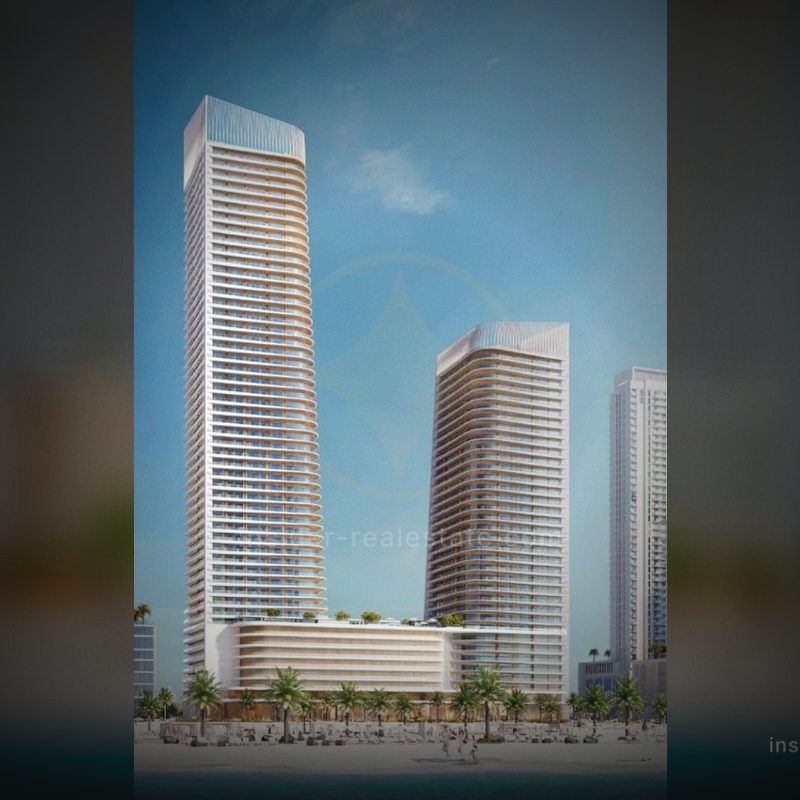
Dubai apartment view premium: how much a sea view actually adds to price
Market commentary puts the premium for a direct sea or marina view at roughly 15–60% over an equivalent unit without one, depending on the building and floor. When that premium pays off in yield, when it only pays off on resale, and how to judge a view from a floor plan before the tower exists.

Dubai Hills Estate: a district where owners actually live in their homes
Most buyers here occupy rather than let. That single fact changes the yield, the tenant pool and how the buildings are run.

Indonesia and Bali: the visas, and what a foreigner may actually hold
A new second-home visa, a golden visa framework and a long tradition of structures that do not survive scrutiny. The ownership question decides everything.

PT PMA in Bali: when a foreigner needs a company and what it actually gives
It is usually described as "the way to buy land in Bali", and that is the first thing to correct. The company does not make a foreigner a landowner — it solves a different problem.

The Dubai average that describes nobody: villas and apartments in one figure
In July 2026 the blended residential index was down 1.6% over the year. Underneath it, villas were flat and apartments were down 4.2%. The blended figure was accurate and told a buyer of either nothing at all.

Renovation as a strategy: buy at 12.5m, spend 3, sell at 19
A niche on the Dubai secondary market that works independently of the cycle — buying dated stock, refurbishing properly and selling to someone who will pay for “move in tomorrow”.