
A casino in Dubai? The Island by Wasl, with Bellagio, MGM and Aria
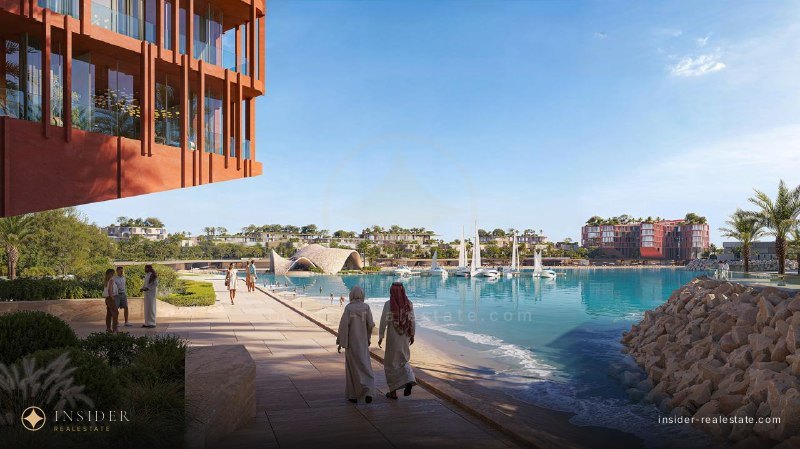
Against the backdrop of the Ras Al Khaimah gaming licence, details started appearing about Dubai. The Island project by Wasl — already under construction — now carries the MGM Grand, Bellagio and Aria brands, with Chinese contractor CSCEC awarded the hotel complex build. MGM's chief executive has confirmed it is officially under way: 1,400 luxury rooms, ten hectares, ten villas and an 800-seat theatre.
What is confirmed and what is not
Confirmed: the project exists, it is under construction, CSCEC won the hotel construction contract, and MGM Resorts has publicly stated that an island carrying the MGM Grand, Bellagio and Aria brands is being built. The scale — around 1,400 luxury hotel rooms across ten hectares, with ten villas and a theatre seating 800 — is on the record.
Not confirmed: gaming. Dubai has not issued a casino licence, and everything in the market that assumes one is inference. The three brands attached are American integrated-resort operators, and that inference is not unreasonable — but inference is not a licence.
The distinction matters because the entire property thesis people build around this project depends on the unconfirmed half.
Talk to a licensed broker: WhatsApp +971 50 120 32 64 · Telegram
What Ras Al Khaimah tells us
RAK moved first and openly: a gaming licence, a Wynn integrated resort on Al Marjan Island, and a wave of branded residential launches behind it. That sequence — licence, anchor resort, residential — is the template.
Dubai, if it follows, would be doing so into a market with far more depth: an established property registry, a mature short-let regime, existing global visitor numbers, and infrastructure that RAK does not have. The effect would be larger and faster.
It would also be more competed. Every developer in Dubai would launch into it, which is what usually turns a step-change into a normal cycle.
What it would mean for property
The mechanism is the same one described in the Al Marjan article. Hospitality demand moves first, short-let rates follow, residential values follow those, and resident population follows last if at all. Each step is slower than the previous one.
The properties positioned to benefit are short-let-capable units within the visitor footprint of the resort. In Dubai that would mean the districts within easy reach of the site rather than the whole city.
What would not benefit meaningfully: family villa communities twenty kilometres away. A casino resort does not change the rental economics of Arabian Ranches.
How I would treat this as an investor
As optionality, not as a thesis. Buy property in Dubai for the reasons that are true today — the tax position, the freehold framework, the tenant demand, the specific building. If a licence follows and your asset happens to be well placed for it, that is upside you did not pay for.
What I would not do is pay a premium today for a unit marketed on proximity to an unconfirmed casino. That is buying a rumour at a price, and Dubai has a long history of rumours that took a decade longer than the marketing suggested.
The market will tell you when it is real: the licence will be public, and the pricing will move within days. There is no informational edge to be had by guessing early.
What is confirmed and what is not
Confirmed: wasl, the Dubai government-linked developer, is delivering a large mixed-use resort district with MGM Resorts operating three hotel brands within it. That is contracted, under construction and public.
Not confirmed for Dubai: gaming. The UAE's first licensed integrated resort with gaming is in Ras Al Khaimah, and a federal regulatory authority for commercial gaming has been established. Whether a licence is issued for a Dubai property is a separate question that has not been answered publicly.
The distinction matters because much of the speculative interest in this project rests on an assumption rather than an announcement.
Investing on the basis of an unannounced regulatory decision is a specific kind of bet and it should be recognised as one.
What integrated resorts do to property markets
The Singapore case is the most instructive. Two integrated resorts opened in 2010; tourist arrivals rose substantially, the hospitality workforce expanded, and property values in the surrounding districts appreciated materially over the following decade.
The mechanism is employment plus tourism plus infrastructure. A resort of this scale employs thousands who need housing nearby, brings visitors who need short-term accommodation, and typically triggers transport and public-realm investment.
Las Vegas is the less applicable comparison — a city built around gaming from nothing rather than gaming added to a diversified economy. Dubai is much closer to the Singapore model.
The effect is also geographically concentrated: property within a short distance benefits substantially, property twenty kilometres away barely at all.
How to position, if at all
The direct route is property near the site bought before the effect is priced in. That requires the effect to materialise and requires you to be early, which by definition means buying on incomplete information.
The indirect route is short-let-capable property in central Dubai generally, on the reasoning that a large new attraction lifts the whole visitor economy. Lower risk, lower concentration, lower upside.
The disciplined route — and the one I would recommend to almost everybody — is to ignore it as a thesis and buy property that works on today's numbers, treating any resort effect as upside you did not pay for.
What I would avoid is paying a premium today for an anticipated effect that depends on a regulatory decision nobody has announced.
Who wasl is
wasl is a Dubai government-linked property group and one of the largest landowners in the emirate, with a portfolio spanning residential, commercial and hospitality across much of the older city.
A government-linked developer delivering a project of this profile carries a different risk assessment from a private one: delivery is more assured, and the alignment with wider city planning is stronger.
It also means the project is likely to be integrated with transport and infrastructure planning rather than dropped onto a site and left to cope, which is not always the case with private mega-projects.
For a buyer positioning around it, that reduces the execution risk considerably — though it does nothing about the regulatory question.
Frequently asked
Is there going to be a casino in Dubai?
No gaming licence has been issued in Dubai. What is confirmed is that The Island project by Wasl is under construction and will carry the MGM Grand, Bellagio and Aria brands — all American integrated-resort operators. The inference is obvious; the licence is not a fact.
What is The Island by Wasl?
A ten-hectare development under construction with around 1,400 luxury hotel rooms across the MGM Grand, Bellagio and Aria brands, plus ten villas and an 800-seat theatre. Chinese contractor CSCEC won the hotel construction contract.
Should I buy property because of the casino story?
No. Buy for the reasons that are true today — the tax position, freehold ownership, tenant demand and the specific building. If a licence follows and your asset is well placed, that is free upside. Paying a premium now for an unconfirmed licence is buying a rumour.
✍️ Message me on WhatsApp for a free consultation — off-market stock, payment plans and honest numbers on any of the projects covered here.
✅ Subscribe on YouTube — investment, property, business and relocation in the UAE and beyond.


In the news
The same subject in writing — analysis and news related to this video.

Wynn Al Marjan Island: opening moves to September 2027 as budget rises to about $5.7bn
Wynn Al Marjan Island now opens in September 2027 instead of Q1, and the budget is up $600m to about $5.7bn. Licence granted by the GCGRA in October 2024, $2.4bn construction loan closed in February 2025. What the delay means for Al Marjan investors.
UAE gaming industry: the first casino opens on Al Marjan Island in 2027
The UAE has built a regulatory framework for commercial gaming: the federal GCGRA regulator, three licence categories and the first legal betting campaign. Wynn Resorts is building a $4bn resort on Al Marjan Island in Ras Al Khaimah.

Zayed International Airport, Abu Dhabi: Terminal A, a record 32.5m passengers, and what it did for Yas Island and Al Raha
Terminal A at Abu Dhabi’s airport opened in November 2023 after years on hold: 742,000 sq m, capacity for 45m passengers a year. Renamed Zayed International in February 2024, it handled a record 32.5m passengers in 2025 (+12.8%). What that means for housing on Yas Island and in Al Raha.
Luxury property on the Jumeirah coast: Aman Dubai, the MGM island and Asora Bay
Dubai's Jumeirah shoreline is becoming the region's priciest resort coast: Aman Dubai with 82 residences, the Wasl–MGM island with Bellagio, Aria and MGM Grand (about 1,400 keys, now due in the second half of 2028), and Meraas's 29-home Asora Bay. What the cluster does to coastal values.
Jumeirah Group: buying onto a resort island that is being built for you
A hotel group creating a new resort destination with residences on it. Purpose-built islands have advantages a normal waterfront does not — and one structural dependency.
Ras Al Khaimah to 2030: 3.5m visitors, 16,000 hotel keys and a new airport terminal
Ras Al Khaimah targets 3.5m visitors a year by 2030 (1.35m in 2025), wants to grow hotel stock from 8,700 to about 16,000 keys with 80% premium, and is building a terminal for 3m passengers by 2028. What it means for property buyers.