
Brookfield, Apollo, Goldman Sachs: how global funds are moving into UAE real estate
Apollo has put $1.9 billion into Aldar’s bonds across four deals, Brookfield owns a DIFC tower and is building in Dubai Hills, and Mapletree plans $2 billion across the Gulf. We look at why the world’s largest funds are choosing Dubai.
While private buyers debate individual apartments and villas, a quieter and arguably more telling process is playing out one floor up: the world's largest institutional funds are moving into UAE real estate and its developers. Their decisions come after months of due diligence, which is exactly why they speak to market maturity louder than any ranking.
Who is buying, and what
Canada's Brookfield, which manages more than $800 billion, already owns the ICD Brookfield Place office tower in DIFC — a 53-storey building with over 83,000 sqm of office space, built jointly with Investment Corporation of Dubai. It is now preparing a mixed-use development in Dubai Hills, extending its footprint beyond the financial district.
Apollo Global Management put $500 million into bonds issued by developer Aldar in one of the region's largest corporate hybrid private placements, and has invested $1.9 billion across four deals with Aldar since 2022. Hong Kong's Hillhouse, through its Rava Partners unit, bought the real estate of Hartland International School in Dubai for $100 million — its first deal in the region. Singapore's Mapletree, controlled by state fund Temasek, opened an office in Abu Dhabi and announced plans to invest around $2 billion across the Gulf, while Goldman Sachs Asset Management has publicly flagged interest in Sunset Hospitality Group.
Talk to a licensed broker: 📲 +971 50 120 32 64 on WhatsApp, @dubai_oleg on Telegram
Why now
The timing is not a coincidence. The same period has seen the UAE hold onto high sovereign ratings (S&P AA, Moody's Aa2, Fitch AA, all stable), growing assets inside DIFC, and a broader trend of family offices and funds relocating to the region. For large institutional capital, that combination — a stable sovereign credit backdrop plus a working legal system built on English common law — lowers the perceived risk of entry far more than any single deal could.
Fund logic differs fundamentally from a private buyer's: institutions are not chasing yield on one asset, they are building a position in a developer or an asset class as a whole — hence Apollo buying Aldar bonds rather than specific apartments, or Hillhouse buying a working school asset rather than a development plot.
What it means for a private buyer
There is no direct way to "co-invest with Brookfield," but the indirect effect matters: institutional capital going into a developer's balance sheet is confirmation of financial staying power for years ahead — particularly relevant when buying off-plan. Apollo's stake in Aldar, for instance, lowers the risk that the developer runs short of capital to finish projects already announced, which is the first question worth asking about any developer before an off-plan purchase.
The second effect is neighbourhood-level: districts where these funds land get high-quality commercial infrastructure that pulls housing demand along with it — exactly how Brookfield's DIFC tower has fed rental demand for apartments nearby.
For more on the developer attracting global fund capital, see our profile of Aldar.
Video on this topic
The same subject on the English channel — each clip has a written version of its own.
 7:59Investing in Dubai offices: why the numbers beat apartments20 October 2025
 15:01DIFC Living: apartments inside Dubai's financial centre17 September 2023
 7:15Christmas in Dubai: Al Habtoor Winter Garden, Madinat Jumeirah, Expo and DIFC22 December 2023
 15:37Abu Dhabi property investment: Saadiyat Island and the Aldar launch numbers16 February 2023

In the news
Other write-ups on the site about the same thing.
New Dubai office towers: Immersive Tower in DIFC, Aldar's Sheikh Zayed Road building and Bureau Lamar in Business Bay
Three major office schemes are rising around DIFC and Business Bay: Immersive Tower ($300m, 58,573 sq m, 2027), Aldar's 88,000 sq m tower by Emirates Towers metro (Q4 2027), and an office park with a theatre on Business Bay's largest plot. Vacancy in central clusters sits at 2–5%.

Most expensive areas in Dubai: price per square foot and rents in 2026
On sales registered with the Dubai Land Department in the year to July 2026, Jumeirah 2 leads at about AED 7,560 per sq ft, followed by Trade Center 2, DIFC, Dubai Harbour and La Mer. The city median is about AED 1,716. How prices compare with rents, and when a costly square foot pays off.
UAE office shortage: prime vacancy at 0.3% in Dubai and 0.1% in Abu Dhabi
JLL puts prime office vacancy at about 0.3% in Dubai and 0.1% in Abu Dhabi. In Q2 2026 Dubai Grade A rents rose 26.2% year on year and Grade B 31.5%; CBRE puts occupancy at 94% in Dubai and 96% in Abu Dhabi. What the squeeze means for office owners and buyers.
Construction Week's Top 100 GCC Developers: UAE firms take more than half the list
Construction Week ranks the 100 largest developers in the Gulf by the value of completed and under-construction projects. UAE developers hold more than half the spots — from Emaar and Aldar to DAMAC and Danube. How to read the ranking, and what it tells a buyer.
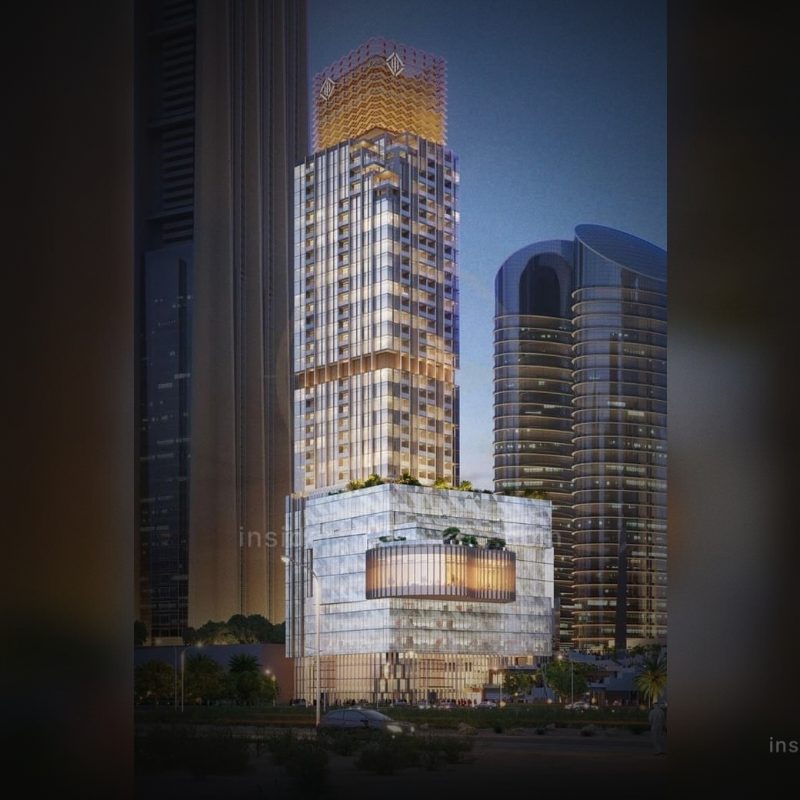
DIFC apartments: DIFC Living, the Waldorf Astoria residences and what is being built next
DIFC Living — 41 floors and 170 homes sold by the DIFC Authority itself — launched in September 2023 with handover scheduled for Q3 2026; our stock shows units at AED 3.85–5.4m. Next up: Four Seasons (Q1 2027), DIFC Heights (2029) and The Residences DIFC (Q4 2029).

DIFC passes 10,000 companies and $1.2 trillion under management — what it means for housing nearby
DIFC crossed 10,000 active companies in H1 2026, up 30% year on year. We look at what is behind the numbers and why it keeps pushing demand for offices and homes in Za’abeel and around the district.