
UAE office shortage: prime vacancy at 0.3% in Dubai and 0.1% in Abu Dhabi
JLL puts prime office vacancy at about 0.3% in Dubai and 0.1% in Abu Dhabi. In Q2 2026 Dubai Grade A rents rose 26.2% year on year and Grade B 31.5%; CBRE puts occupancy at 94% in Dubai and 96% in Abu Dhabi. What the squeeze means for office owners and buyers.
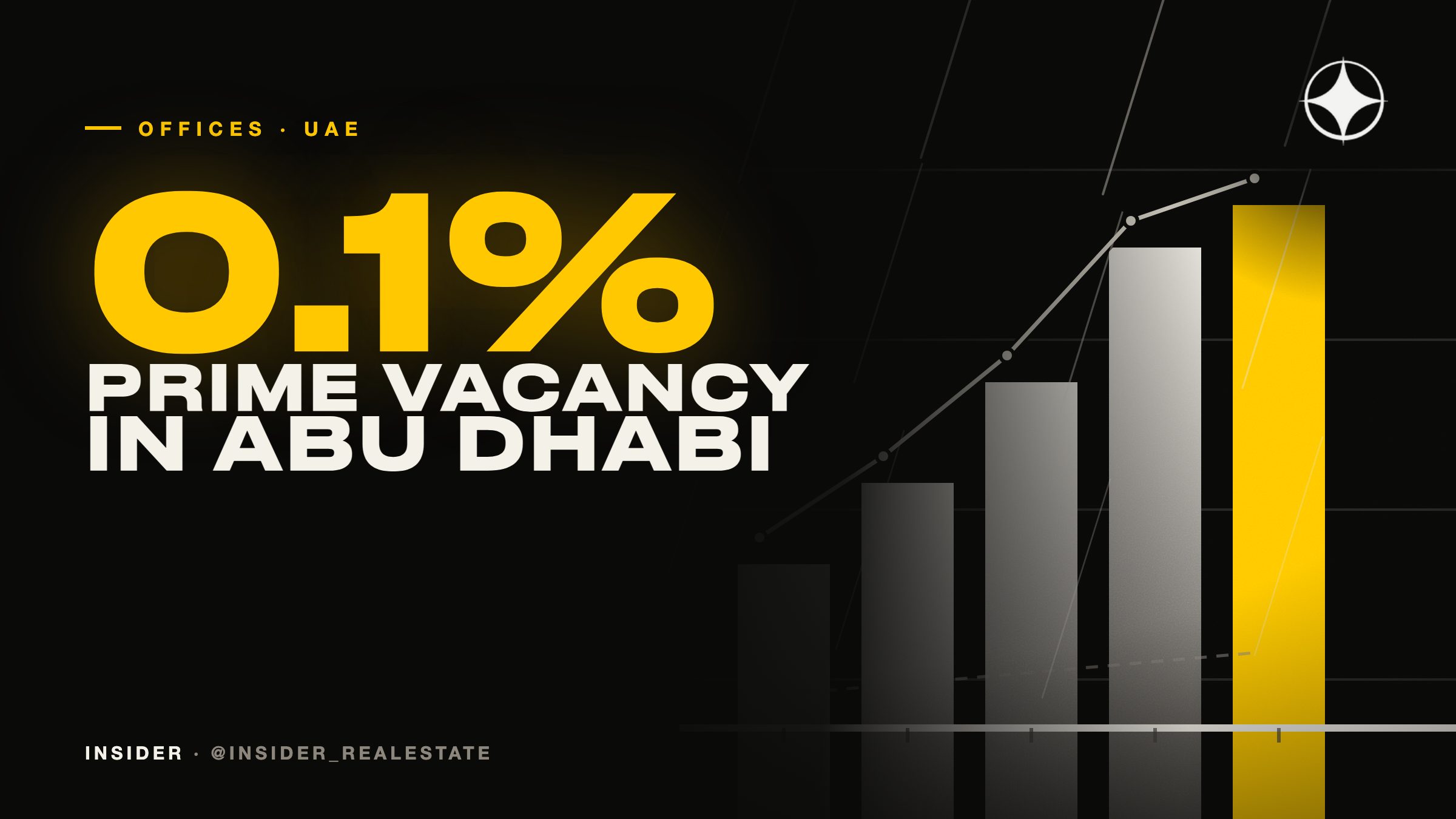
Offices have been the most resilient corner of UAE property in 2026. While Dubai's residential market went through a correction, office occupiers kept competing for space. The headline number is prime vacancy: according to JLL, around 0.3% in Dubai and 0.1% in Abu Dhabi. In practice, there is almost no vacant prime office in either city.
The two emirates side by side
| Q2 2026 | Dubai | Abu Dhabi |
|---|---|---|
| Prime office vacancy (JLL; Dubai per recent reports) | ~0.3% | 0.1% |
| Overall office vacancy (JLL) | 6.1% (7.7% a year earlier) | 1.4% |
| Prime rent growth, year on year (JLL) | +13.6% | +11.7% |
| Office occupancy (CBRE) | ~94% | ~96% |
| Average rent growth, year on year (CBRE) | +13% | almost +16% |
"Prime" is a narrow category
Consultants' "prime" means the thin top layer: the best towers in the best locations — DIFC, Emirates Towers, new buildings on Sheikh Zayed Road, Al Maryah Island in Abu Dhabi. Grade A is broader: modern buildings with good systems, not necessarily at the centre. So 0.3% does not mean every office in Dubai is let; it means the best buildings have essentially nothing free. The gap between the two figures explains the next trend.
Demand is being pushed down the quality ladder. In Dubai, JLL reports Grade A rents up 26.2% and Grade B up 31.5% over the year, with Grade B vacancy falling from 10.9% to 8%. Companies that cannot find prime space accept simpler buildings, and rents rise there too. Registered office leases in Dubai rose 24.6% year on year.
Talk to a licensed broker: 📲 +971 50 120 32 64 on WhatsApp, @dubai_oleg on Telegram
Why the gap will not close quickly
An office tower takes three to four years to build, and for several years developers preferred housing that sells off-plan. New stock such as DMCC's two Uptown Dubai towers will arrive only in 2028. Meanwhile companies keep arriving: DIFC and ADGM register hundreds of new firms a year, and global managers continue to open regional hubs in Abu Dhabi.
What it means for owners and buyers
- Owners hold the negotiating power. Tenants sign longer leases and accept rises on renewal.
- Grade B is where growth is. A good Grade B office in a strong location now earns close to Grade A.
- The shortage is not permanent. New supply lands from 2028, and older buildings with weak systems will lose tenants first. Judge the building, not just today's rent.
- Abu Dhabi is thinner. Vacancy is lower, but so is the choice of units to buy and resale liquidity.
District-by-district rents are in our 2026 office rent update, and the arguments for and against an office as an investment in An office in Dubai as an investment.
Offices and rents in the financial centre are on the DIFC area page.
Video on this topic
The same subject on the English channel — each clip has a written version of its own.
 7:59Investing in Dubai offices: why the numbers beat apartments20 October 2025
 1:15Binghatti Circle in JVC: retail and offices at the entry level8 September 2025
 15:43Nobu in Ras Al Khaimah and Abu Dhabi: why the RAK one is the more interesting asset10 December 2023
 6:43Retail in Maritime City: Danube Oceanz compared with Nautica by Select Group25 September 2023


In the news
Other write-ups on the site about the same thing.

ADGM on Al Reem Island: 190 asset managers, 276 funds and what it means for Abu Dhabi rentals
ADGM has covered Al Reem Island since 2023. By H1 2026 it had 13,974 active licences, 190 asset managers (+23%), 276 funds (+32%), AUM up 54% and 49,027 people working in the district. Why that matters for Al Reem landlords.

Al Maryah Island expansion: Aldar and Mubadala to build out the north side for AED 60bn+
Aldar (60%) and Mubadala (40%) will develop the last major plot on Al Maryah: 1.5m sqm of space, 450,000+ sqm of Grade A offices, 3,000+ homes and three new bridges, with a GDV above AED 60bn. What it means for Al Reem and Saadiyat owners.
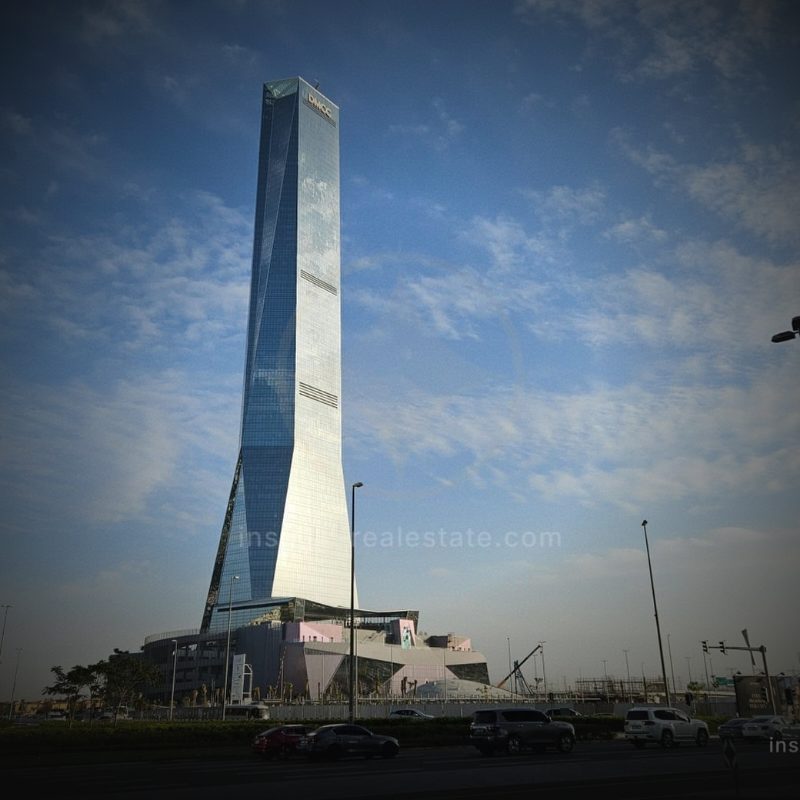
Grade A offices in Dubai: DMCC launches One Uptown Place and Two Uptown Place
DMCC is adding two office towers to Uptown Dubai — 21 and 15 storeys, more than 560,000 sq ft of Grade A space and 82,000 sq ft of retail. Leasing opens in the second half of 2026 and completion is due in Q1 2028, taking the district past 1m sq ft. What it means for nearby owners.
Dubai office rents: Grade B up 31.5% as vacancy falls to 6.1%
Grade B office rents in Dubai jumped 31.5% in a year, with Grade A and prime adding 14–26%. Citywide vacancy has dropped to a record-low 6.1%. What the office squeeze means for commercial property investors — and for residential demand.

Dubai free zones soften terms: what the DIEZ relief package really signals
The DIEZ authority — covering Dubai Airport Freezone, Dubai Silicon Oasis and Dubai CommerCity — froze rents on renewal, waived part of its fees and penalties and allowed monthly payment. What that says about office occupancy.

Abu Dhabi rent freeze: why Al Reem and Al Maryah are outside it
Since 2 June 2026 Abu Dhabi has cut the permitted annual rent rise from 5% to 0% for homes, offices and industrial units, until further notice — still in force in September. ADGM communities on Al Reem and Al Maryah islands are excluded and follow their own rules.