
Russian retail brands in Dubai in 2026: a quarter of them left, and what it tells a mall-space investor
By mid-2026, 78 Russian-owned retail and F&B brands were trading in Dubai, down 27% from 107 in April. No new brand entered the market in the first half of the year, and mall leasing tightened across the board. What one cohort’s retreat says about Dubai’s retail leasing cycle.

Dubai’s mall leasing market carries a lesson worth reading beyond any single nationality of tenant: a fast-growing cohort of brands can contract just as fast when a handful of cost and geopolitical pressures line up at once. Through 2025, Russian-owned retail and F&B brands were among the more visible new entrants to Dubai malls. A year on, the trend has reversed, and the reversal says more about how mall landlords are pricing risk in 2026 than about any one country of origin.
From 107 to 78 brands in one quarter
According to consultancy Nikoliers, 107 Russian-owned retail and F&B brands were trading in Dubai in April 2026; by the end of the first half of the year that had fallen to 78 — a 27% drop in three months. Some of the closures were temporary rather than permanent exits, concentrated among smaller projects in segments sensitive to shifts in tourist traffic. Of the 78 remaining brands, a notable share sit in F&B (34 outlets) and fashion retail (13 outlets), with the rest spread across other categories.
The slowdown in new entries predates the drop. Only 10 new Russian brands entered the Dubai market in 2025, half the pace of the year before, and in the first half of 2026, according to the same Nikoliers research, none entered at all — the first such stretch in several years.
Talk to a licensed broker: 📲 +971 50 120 32 64 on WhatsApp, @dubai_oleg on Telegram
What changed on the landlord side
Leasing conditions tightened across the board over the same period: new mall lease signings in Dubai fell 36% year-on-year, and lease renewals fell 42%. Consultants surveyed (Nikoliers, CMWP, Zemskiy Group) and operators such as the Drinkit chain point to a mix of causes — rising operating costs, more expensive freight and cargo insurance, a shortage of available space in top-tier malls, and noticeably less favourable terms in new leases. The escalation of the Middle East conflict in early 2026 added a sharper shock: some estimates put Dubai restaurant revenue down 60–80% in March alone. Inbound relocation and tourism from Russia also slowed over the same period, hitting demand for brands built around that customer base specifically.
Who still opened in 2026
Despite the overall retreat, expansion did not stop entirely — it just shifted from new market entrants to existing operators adding locations:
- Lichi, a women's fashion chain, opened its fourth Dubai store at Palm Jumeirah Mall.
- Tigrus, a restaurant group, opened its fifth Georgian restaurant, Shvili, at Circle Mall in JVC.
- Dodo Pizza and Drinkit both added outlets to their existing Dubai footprint.
Nikoliers consultants expect a fresh wave of expansion no earlier than 2027–2028, framing the current pause as tied to a specific 2026 mix of geopolitics, space scarcity and cost — not a permanent retreat. For anyone underwriting mall or F&B retail space in Dubai, the takeaway is less about one tenant nationality than about how quickly lease economics can move when several pressures land in the same year.
For a broader read on household and business costs in the emirate, see cost of living in Dubai in 2026.
Video on this topic
The same subject on the English channel — each clip has a written version of its own.
 6:43
6:43 Retail in Maritime City: Danube Oceanz compared with Nautica by Select Group
How to buy commercial property in Dubai and where the difficulties actually are, plus a side-by-side of the remaining stock in Danube Oceanz and Select Group Nautica — and why pre-launch pricing is almost always the better entry.
WatchIn the news
Other write-ups on the site about the same thing.

UAE warehouses in 2026: a Grade A shortage, rising rents and who owns the market
Grade A warehouses in Dubai are close to full: JLL put occupancy in Jafza and Dubai Investments Park at 97–100% at the end of 2025, and industrial rents rose 6.8% year on year in Q2 2026 (5% in Abu Dhabi). Leases now run 7–9 years, not 3–5. Who owns the stock and what to check.

UAE office shortage: prime vacancy at 0.3% in Dubai and 0.1% in Abu Dhabi
JLL puts prime office vacancy at about 0.3% in Dubai and 0.1% in Abu Dhabi. In Q2 2026 Dubai Grade A rents rose 26.2% year on year and Grade B 31.5%; CBRE puts occupancy at 94% in Dubai and 96% in Abu Dhabi. What the squeeze means for office owners and buyers.
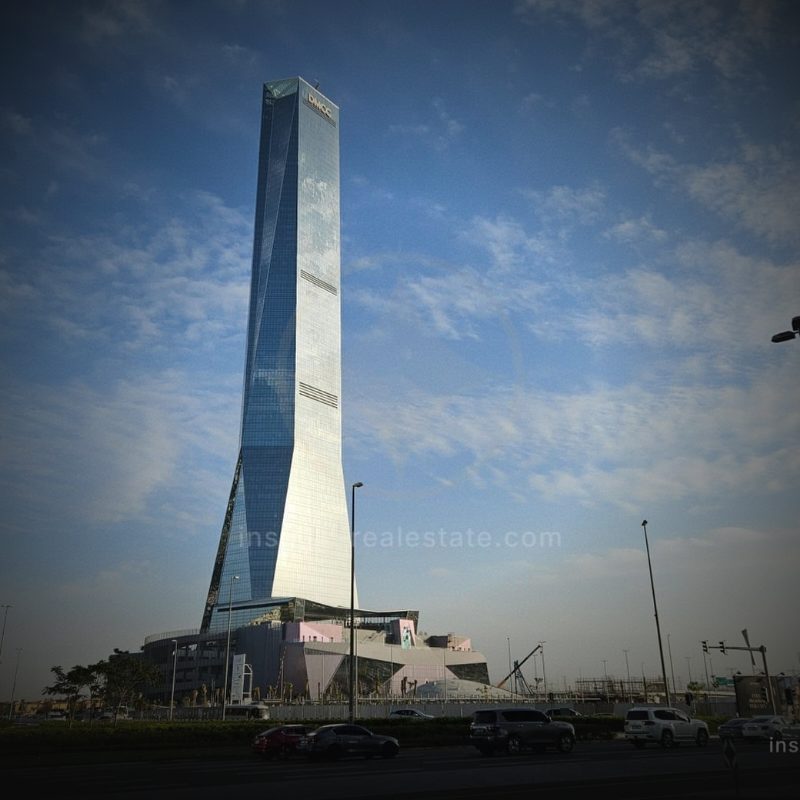
Grade A offices in Dubai: DMCC launches One Uptown Place and Two Uptown Place
DMCC is adding two office towers to Uptown Dubai — 21 and 15 storeys, more than 560,000 sq ft of Grade A space and 82,000 sq ft of retail. Leasing opens in the second half of 2026 and completion is due in Q1 2028, taking the district past 1m sq ft. What it means for nearby owners.

Dubai Auto Market: DP World's 22-million-sq-ft car trading hub, and what it means for warehouses and housing
DP World was mandated in 2024 to expand Dubai's car market eightfold; in November 2025 the project was unveiled at 22 million sq ft — 1,500 showrooms, capacity for 800,000 vehicles a year, an auction house and a hotel. Current turnover of AED 6.8bn is expected to double.

Three things a chain tenant checks in a retail unit
A buyer of retail space looks at price per foot, location and stated yield. The tenant the unit is bought for looks at something else entirely — and their list is shorter.

Retail is growing where nobody expected: International City, JVC, Majan and Arjan
Transaction statistics on Dubai retail units give an unexpected picture: activity leads not at prestige addresses but in mass residential districts.