
Dubai Auto Market: DP World's 22-million-sq-ft car trading hub, and what it means for warehouses and housing
DP World was mandated in 2024 to expand Dubai's car market eightfold; in November 2025 the project was unveiled at 22 million sq ft — 1,500 showrooms, capacity for 800,000 vehicles a year, an auction house and a hotel. Current turnover of AED 6.8bn is expected to double.

Dubai has long traded cars for half the region: low duty, the port at Jebel Ali, and a well-worn re-export route into Africa, Central Asia and the Gulf. In summer 2024 the emirate decided to formalise that into a mega-project, handing port operator DP World a mandate to expand the city's car market eightfold, from 2.8 million to 20 million sq ft. In November 2025, the plan was unveiled again, and larger. Here is what it contains and where property fits in.
What was announced
On 24 November 2025, Dubai's Deputy Ruler Sheikh Maktoum bin Mohammed broke ground on Dubai Auto Market. The parameters given by DP World and the municipality:
| Metric | Figure |
|---|---|
| Size | 22 million sq ft (about 2 million sq m) |
| Throughput | more than 800,000 vehicles a year |
| Showrooms | more than 1,500 |
| Also included | workshop clusters, warehouses, multi-level parking, a conference centre, a hotel, an auction house, test tracks, EV charging, food and retail |
| Current market turnover | AED 6.8bn, expected to double |
DP World's role makes sense on paper: the operator runs 77 ports and 15 vehicle-handling hubs worldwide, moving roughly 10% of global car trade. Bringing purchase, registration, banking and logistics under one roof is what turns a used-car market into an export platform. Leasing and payments will run through the Dubai Trade portal.
Talk to a licensed broker: 📲 +971 50 120 32 64 on WhatsApp, @dubai_oleg on Telegram
What is missing: a public opening date and a phased schedule. A multi-billion-dollar cost estimate that circulated in 2024 does not appear in official sources, so we have not repeated it here.
Where property comes in
There is no residential component in the project. But a car market of this scale means a lot of jobs — sales staff, mechanics, logistics workers, inspectors, auction and bank employees — and they need housing within a reasonable commute. That demand should land on affordable eastern districts such as International City, Dubai Silicon Oasis, Warsan and neighbouring pockets. For an investor in budget apartments, that is one more argument for the east: tenants here work nearby rather than commuting across the city.
The second effect is warehousing and light industry. Car re-export pulls parts, tyres and service equipment behind it, and all of it needs storage. UAE Grade A warehouse stock is already tight, as we covered in UAE warehouses in 2026. For owners of small warehouse and service units in the east and south of Dubai, the new auto market is more likely to support rates than to compete with them.
What not to expect
The project will not turn surrounding districts premium: this is an industrial-commercial zone with truck traffic, noise and shift work. Living right next to it is a hard sell for a family with children. And with no published schedule, it should not yet be factored into a yield forecast as a done deal — the same caution applies to any infrastructure project without a delivery date.
For how the UAE's car market works today — dealers, used-car showrooms, auctions, and why buyers travel here from neighbouring countries — see our explainer the UAE car market.
Video on this topic
The same subject on the English channel — each clip has a written version of its own.

 ShortDubai 2040: the masterplan that tells you where demand goes next28 August 2025
 ShortFour cities, four bets on the future: Dubai, New York, London, Tokyo4 September 2025
 ShortThe Jebel Ali coast: Dubai's last big stretch of undeveloped shoreline2 September 2025
 ShortAir taxis in Dubai: what eVTOL would change, and what it would not1 September 2025
 ShortDubai is learning to walk: the 20-minute city and what it does to rent27 August 2025
In the news
Other write-ups on the site about the same thing.
UAE warehouses in 2026: a Grade A shortage, rising rents and who owns the market
Grade A warehouses in Dubai are close to full: JLL put occupancy in Jafza and Dubai Investments Park at 97–100% at the end of 2025, and industrial rents rose 6.8% year on year in Q2 2026 (5% in Abu Dhabi). Leases now run 7–9 years, not 3–5. Who owns the stock and what to check.
Ras Al Khor warehouses and workshops: how the industrial rental market works
The industrial part of Ras Al Khor is a separate rental market with its own logic. It is more stable than residential, and it calls for a different approach.
Dubai Investment Park: how letting commercial property differs from letting a home
In a mixed-use zone, apartments are not the only thing for sale. Offices and warehouses come with a different tenant, a different lease and different economics.
Russian retail brands in Dubai in 2026: a quarter of them left, and what it tells a mall-space investor
By mid-2026, 78 Russian-owned retail and F&B brands were trading in Dubai, down 27% from 107 in April. No new brand entered the market in the first half of the year, and mall leasing tightened across the board. What one cohort’s retreat says about Dubai’s retail leasing cycle.
UAE office shortage: prime vacancy at 0.3% in Dubai and 0.1% in Abu Dhabi
JLL puts prime office vacancy at about 0.3% in Dubai and 0.1% in Abu Dhabi. In Q2 2026 Dubai Grade A rents rose 26.2% year on year and Grade B 31.5%; CBRE puts occupancy at 94% in Dubai and 96% in Abu Dhabi. What the squeeze means for office owners and buyers.
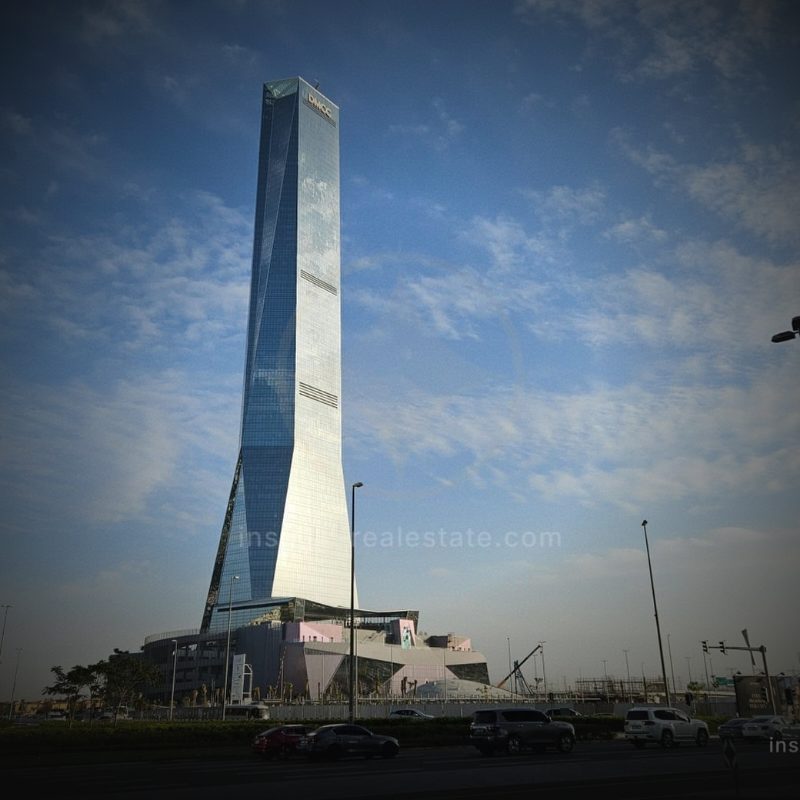
Grade A offices in Dubai: DMCC launches One Uptown Place and Two Uptown Place
DMCC is adding two office towers to Uptown Dubai — 21 and 15 storeys, more than 560,000 sq ft of Grade A space and 82,000 sq ft of retail. Leasing opens in the second half of 2026 and completion is due in Q1 2028, taking the district past 1m sq ft. What it means for nearby owners.