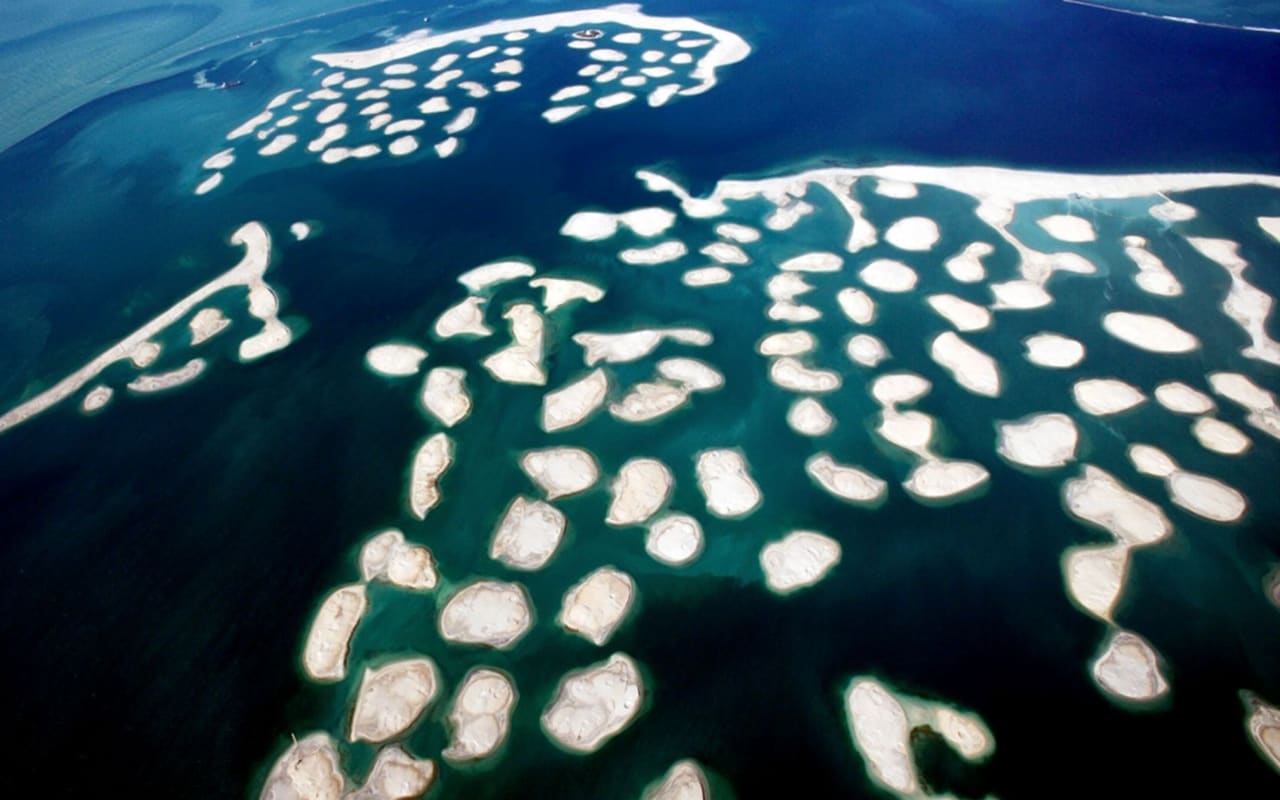
The World Islands: what it costs to run a property with no city infrastructure
A standalone island has no city utilities, waste collection or emergency services in the usual sense. All of it is someone’s daily work and someone’s budget.
Buying on a standalone island means buying not just a house but its life support. What happens automatically and invisibly in the city is, here, someone’s daily work with a specific price tag.
What has to be provided
- Electricity. A connected supply line, or on-site generation with fuel, maintenance and backup.
- Fresh water — delivered or desalinated, and both involve equipment and consumables.
- Wastewater. A local treatment plant needs regular servicing and removal.
- Rubbish. Collected by water, on a schedule, for a fee.
- Telecoms and internet — a separate solution, not a connection by address.
- Transport. A boat, a jetty, a crew or a transport contract — for residents, staff and supplies.
- Security and emergency help. Response times are measured differently from the city, and it is worth understanding that in advance.
What to ask
- Who provides all this today, and under what contract: the owner, the island operator or the master developer.
- What it costs per year — in figures, not “included”.
- What happens if the contract ends.
- Who is responsible for the shoreline: replenishment and reinforcement on a reclaimed island are an ongoing expense.
- Insurance: what is covered, and on what terms, for a property outside city infrastructure.
Why this is part of the price
The annual running cost of such a property is comparable to that of a large house in the city, and sometimes higher — and it is not optional: you cannot stop paying, the property would simply become unusable. Calculate this sum over your whole planned holding period and add it to the purchase price. Only that figure is comparable with the alternatives.
Based on the Dubai Land Department register. Check the title rights, utilities and transport links for the specific island separately.
Talk to a licensed broker: 📲 +971 50 120 32 64 on WhatsApp, @dubai_oleg on Telegram
In the news
Other write-ups on the site about the same thing.

The World Islands: pricing an asset with no comparables
Almost every property decision rests on what similar things sold for. Here there is no "similar" — so the method has to change, and so does the price.

Al Khawaneej: what a large plot costs after you buy it
Plots here are on a scale the city no longer subdivides. Space has a running cost, it scales with area, and it is the part buyers reliably underestimate.
Madinat Jumeirah Living running costs: what a year of owning a seaside apartment costs
Seafront neighbourhoods cost more to run than city ones, and the difference is made up of several lines. Here they are, one by one.

What a villa in Dubai costs to run, and why it is not a large apartment
The service charge on a villa is usually levied on plot area rather than built area, and running one often works out three to four times cheaper than an apartment of comparable size. What it does not cover is the part that surprises people.

The Springs: what comes due in a villa community at twenty years
One of Dubai’s first villa communities, traded entirely second-hand. The list of works is predictable — and no service charge is saving up for it.

Arabian Ranches: a villa community at twenty years old
One of Dubai’s first villa communities, long settled and traded entirely second-hand. A mature district is assessed differently — and that is its advantage.
Below market in The World Islands right now
From the daily off-market feed. Availability and price are confirmed on request.
All below-market listings →