
Dubai Investment Park: your tenant works here, and that is the whole analysis
Most Dubai districts are sold on what they are like to live in. This one is sold on who works nearby, and the difference matters: demand here is employment-driven, which makes it stable and also caps it. Nobody moves to Dubai Investment Park for the district.
What DIP is
Dubai Investment Park is a large mixed-use development in the southern part of the emirate, near Jebel Ali and Dubai South, combining light industrial, commercial, warehousing and residential inside one master-planned zone.
It is divided into sectors by use, with the residential component — apartment buildings, some villas, and a substantial amount of staff accommodation — separated from the industrial areas.
It has been established for a long time and functions fully, with its own schools, clinics, supermarkets and community retail rather than a promise of them.
Talk to a licensed broker: WhatsApp +971 50 120 32 64 · Telegram
The residential product is predominantly mid-rise apartments at affordable price points, with quality varying by developer and by age in the usual way.
How the sectors differ, and why it is the first question
The zoning is the most important thing to establish about any address here. Industrial sectors carry warehousing, light manufacturing and food production; commercial sectors carry offices and showrooms; residential sectors carry apartments, villas and staff accommodation.
Those sectors are physically separated, which is what makes the zone liveable in a way a mixed industrial district would not be. But the separation is measured in a few hundred metres, and a residential building on a boundary has a different experience from one in the middle of the residential zone.
Ask specifically what borders the plot and what operates there. Food production and logistics run around the clock; a showroom does not. That shows up in noise, in truck movements on the access roads, and in what a prospective tenant thinks when they arrive to view.
The residential sectors themselves are pleasant enough — low to mid-rise, landscaped, with everyday services — and they were planned as a community rather than added afterwards.
The employment base
DIP hosts a very large number of companies across manufacturing, logistics, food production and services, employing a substantial local workforce.
That workforce is the tenant base, together with people working in neighbouring Jebel Ali, Dubai South and the Expo City corridor.
Demand is therefore local and employment-driven. It is stable, because those employers are not relocating, and it is capped, because the district does not attract tenants from elsewhere in the city.
Which means the underwriting question is not "is this a good area" but "which employer does my tenant work for, and does this unit suit them".
The Expo and Dubai South effect
DIP sits on the corridor that Expo 2020 and its aftermath reshaped. The Route 2020 metro extension, the road upgrades and the growth of the logistics and aviation employment base all landed within a short drive.
That widened the tenant pool. An apartment here now serves not only DIP employers but Dubai South, Expo City, Jebel Ali Free Zone and the businesses that followed them — a materially deeper base than the district had a decade ago.
It also raised the competition. Dubai South and Al Furjan both added a great deal of newer residential stock in the same period, and in Al Furjan’s case with metro at the door.
The net effect has been positive but undramatic: better demand, capped rents, and a district that has held its position rather than repriced.
The location, honestly
Southern Dubai off Sheikh Zayed Road and Emirates Road, roughly thirty-five to forty-five minutes to Downtown depending on traffic, and much closer to Jebel Ali and Dubai South.
Metro access exists on the Route 2020 corridor nearby, though not throughout the zone, so walk the distance to the nearest station rather than measuring it on a map.
For a household working in the southern corridor, the location is an advantage and the commute is short.
For anyone whose tenant would drive to central or coastal Dubai, it is a considerable disadvantage and no rent discount reliably fixes it.
The honest investment case
Strong gross yields at a low entry price, in an established zone with real infrastructure and an employment base that is not going anywhere. That is a legitimate cash-flow proposition and it has been for years.
Against it: no scarcity of land in this corridor, so any price rise brings supply; a tenant pool defined by local employment rather than by the district’s appeal; and a resale market of yield buyers who negotiate hard.
Building selection matters as much as anywhere in mid-market Dubai. Ask for the charge history, walk the common areas, and check achieved rents for that specific building rather than a zone-wide figure that blends staff accommodation with family apartments.
And confirm the plot is designated freehold before anything else. In a mixed-use zone that is not a formality.
Frequently asked
What is Dubai Investment Park?
A large master-planned mixed-use zone in southern Dubai combining light industrial, commercial, warehousing and residential in separated sectors, with its own schools, clinics and retail, built around a substantial local employment base.
Is DIP a good place to buy an apartment?
For a yield investor with a clear view of who the tenant is, and for owner-occupiers working in DIP, Jebel Ali or Dubai South. It suits poorly anyone whose tenant would commute to central or coastal Dubai, and anyone expecting capital appreciation — there is abundant land in this corridor.
Does the industrial activity affect the residential areas?
The sectors are physically separated, which is what makes the zone liveable, but the separation is measured in a few hundred metres. Check what borders your specific building and what operates there — logistics and food production run around the clock.
✍️ Message me on WhatsApp for a free consultation — off-market stock, payment plans and honest numbers on any of the projects covered here.
✅ Subscribe on YouTube — investment, property, business and relocation in the UAE and beyond.


Below market in Dubai Investment Park right now
From the daily off-market feed. Availability and price are confirmed on request.
All below-market listings →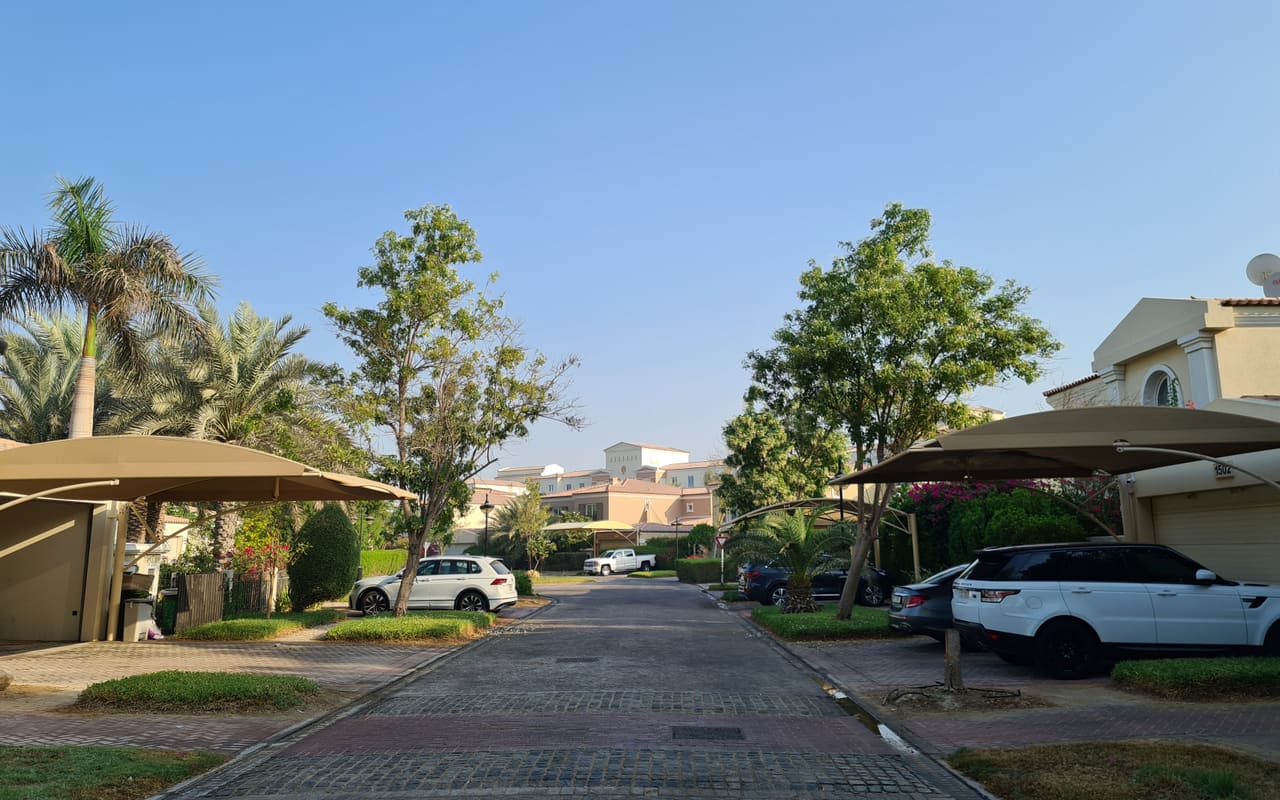
Related reading
The same subject in writing — analysis and news related to this video.

Dubai Investment Park: what stands next to your home matters more here
A zone where housing, offices, warehouses and light industry sit side by side by design. The neighbouring plot affects daily life more than the apartment does.
Dubai Industrial City: who rents housing in an industrial zone
A manufacturing and logistics zone with its own residential stock. Demand here is not city demand — it is employment demand, and it is counted differently.

4.4 people per home: the arithmetic behind Dubai housing demand
“Who needs all these apartments?” has a simple numerical answer. Dubai has 4.4 residents per residential unit against 2.3 in the EU — and the honest limits of that comparison.

Demand for second citizenship: who is buying, and why now
The buyer base has changed twice in a decade. Understanding who is in the market explains both the pricing and the political response to it.

What a second passport does not give you
The list of what it does is short and genuine. The list of what people expect it to do is longer, and the gap between them is the source of most disappointment.

How the second passport market actually works
A small industry with a specific structure: five or six selling states, a licensed agent tier, a promoter layer, and a marketing budget aimed at people in difficulty.