
 −10%
−10% Dubai Investment Park
Dubai Investment Park: a large mixed industrial, commercial and residential zone in the south, built around local employment.
16 units in stock. 15 with a confirmed status: 9 ready, 6 under construction. 41st most expensive of 91 districts by median price.
- southern-corridor employment demand
- affordable yields
- established mixed-use zone
Median price $1.50M AED 5,500,000
Entry price $118K AED 433,500 — cheapest unit
Per square foot $434 AED 1,593 / sq ft, median
Ready stock 60% 10 units discounted, up to −10%
What is nearby, and what it does to the price
What this area is actually like
What DIP is
Dubai Investment Park is a large mixed-use development in the southern part of the emirate, near Jebel Ali and Dubai South, combining light industrial, commercial, warehousing and residential in one master-planned zone.
It is divided into sectors by use, with the residential component — apartment buildings, some villas and a substantial amount of staff accommodation — separated from the industrial areas.
It has been established for a long time and is fully functioning, with schools, clinics, supermarkets and community retail.
The employment base
DIP hosts a very large number of companies across manufacturing, logistics, food production and services, employing a substantial local workforce.
That workforce is the tenant base, along with people working in neighbouring Jebel Ali, Dubai South and the Expo City corridor.
Demand is therefore local and employment-driven, which makes it stable but also caps it — DIP does not attract tenants from elsewhere in the city.
The residential product
Predominantly mid-rise apartment buildings at affordable price points, plus a limited amount of villa and townhouse stock in the residential sectors.
Quality varies by developer and by age, following the usual pattern.
Gross yields are strong, reflecting low purchase prices against rents supported by consistent local employment demand.
The location
Southern Dubai off Sheikh Zayed Road and Emirates Road, roughly thirty-five to forty-five minutes to Downtown depending on traffic, and closer to Jebel Ali and Dubai South.
Metro access exists on the Route 2020 corridor nearby, though not throughout the zone.
For a household working in the southern corridor the location is an advantage; for anyone commuting to the centre or the coast it is a considerable disadvantage.
What to check
Which sector the property is in and what surrounds it — the distance from industrial activity matters for both amenity and air quality.
The building, its developer and its service charge history.
The realistic tenant profile and achieved rents.
Distance to the nearest metro station, walked rather than measured.
Whether the specific plot is designated freehold.
Who it suits
A yield investor targeting the southern employment corridor with a clear view of who the tenant is.
Owner-occupiers working in DIP, Jebel Ali or Dubai South.
It suits poorly anyone whose tenant would commute to central or coastal Dubai, and anyone expecting capital appreciation — there is abundant land in this corridor.
How the sectors differ
DIP is zoned by use and the zoning is the most important thing to establish about any address here. The industrial sectors carry warehousing, light manufacturing and food production; the commercial sectors carry offices and showrooms; the residential sectors carry apartments, some villas and a substantial amount of staff accommodation.
Those sectors are physically separated, which is what makes DIP liveable in a way that a mixed industrial district would not be. But the separation is measured in a few hundred metres, and a residential building on the boundary has a different experience from one in the middle of the residential zone.
Ask specifically what borders the plot and what operates there. Food production and logistics run around the clock; a showroom does not. That difference shows up in noise, in truck movements on the access roads and in what a prospective tenant thinks when they visit.
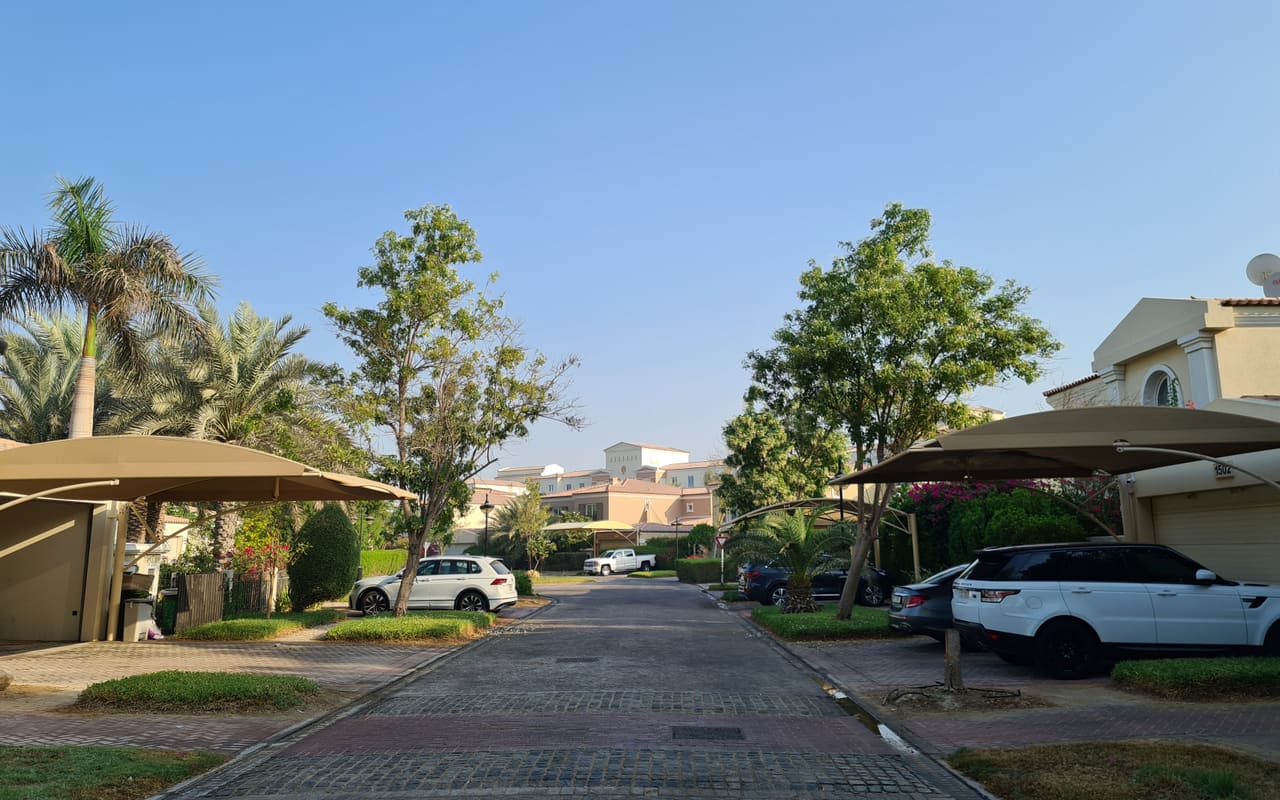
The residential sectors themselves are pleasant enough — low to mid-rise, landscaped, with schools, clinics and supermarkets — and they were planned as a community rather than added as an afterthought.
The Expo and Dubai South effect
DIP sits between Jebel Ali and Dubai South, on the corridor that Expo 2020 and its aftermath reshaped. The Route 2020 metro extension, the road upgrades and the growth of the logistics and aviation employment base all landed within a short drive of this district.
That has widened the tenant pool. A DIP apartment now serves not only DIP employers but Dubai South, Expo City, Jebel Ali Free Zone and the businesses that followed them, which is a materially deeper base than the district had a decade ago.
It has also raised the competition. Dubai South and Al Furjan both added a great deal of new residential stock in the same period, newer than DIP and in Al Furjan’s case with metro at the door.
The net effect has been positive but undramatic: better demand, capped rents, and a district that has held its position rather than repriced.
The honest investment case
Strong gross yields at a low entry price, in an established zone with real infrastructure and an employment base that is not going anywhere. That is a legitimate cash-flow proposition and it has been for years.
Against it: no scarcity of land in this corridor, so any price rise brings supply; a tenant pool defined by local employment rather than by the district’s appeal; and a resale market of yield buyers who negotiate.
Building selection matters as much as anywhere in mid-market Dubai. Ask for the charge history, walk the common areas, and check the achieved rents for that specific building rather than a DIP-wide figure that blends staff accommodation with family apartments.
And be clear about who your tenant is before you buy. In a district that exists because of its employers, an apartment that does not suit any of them is a hard letting problem regardless of price.
More on Dubai Investment Park
Written breakdowns of subjects the English channel has not filmed.
- Dubai Investment Park: your tenant works here, and that is the whole analysis
An established mixed-use zone in the south with strong gross yields at a low entry price. The district exists because of its employers, so an apartment that suits none of them is a letting problem at any price.
The market, per the Land Department
Residential price index 167.33 Q4 2025
Quarter on quarter +3.32% QoQ
Year on year +8.9% YoY
Full year 2025 +9.81% index 162.51
This is the official index for the whole emirate, not for Dubai Investment Park: the Dubai Land Department does not publish a district breakdown publicly. Treat it as background — it tells you whether the market is rising or flat while you read the prices above. Transaction data for a specific building I pull separately, on request. Source: Dubai Land Department, read 15/08/2026.
The latest read: July 2026
The Land Department index above is quarterly and emirate-wide. The monthly price index splits villas from apartments — and in 2026 that matters: a single blended figure hides the fact that the two markets have pulled apart.
Villas and townhouses 292.5 flat YoY
Apartments 168.7 −4.2% YoY
All residential 219.2 −0.3% MoM
Price per sqft 2,039 villas · apartments 1,397 AED
The month split by completion status: 72.8% of deals were off-plan, 27.2% ready homes. Ready-home volume rose 11.4% on the month, while off-plan was the only segment down both on the month and on the year (−45.3%). The practical read: there is room to negotiate on apartments and on off-plan, far less on finished villas in established communities. Index base is January 2021 = 100 — a villa reading of 292.5 means growth of 192.5% from that mark, not a premium over a 2021 peak. Monthly ValuStrat market review for July 2026, checked 24/08/2026.
Questions about Dubai Investment Park
What is Dubai Investment Park?
A large master-planned mixed-use zone in southern Dubai combining light industrial, commercial, warehousing and residential in separated sectors, with its own schools, clinics and retail, built around a substantial local employment base.
Other districts
All districts →Projects in Dubai Investment Park
All projects in Dubai Investment Park →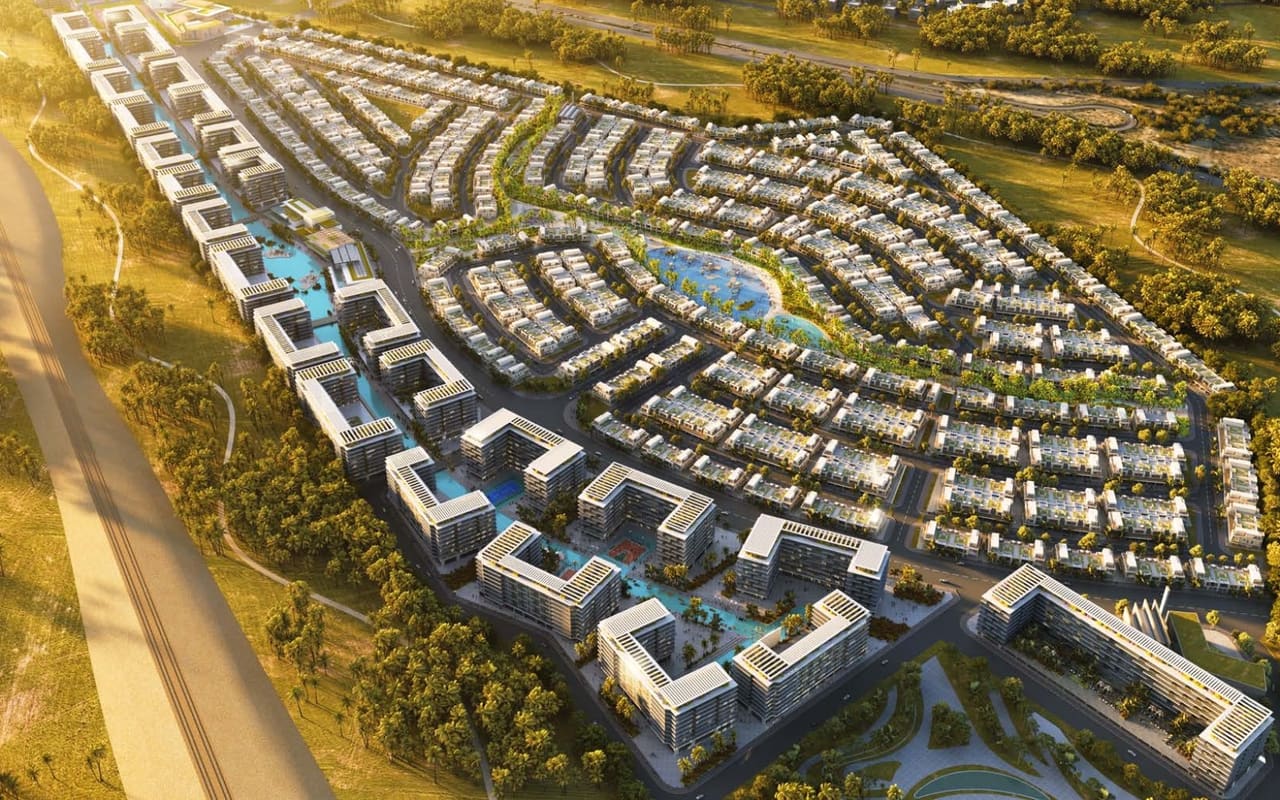
Dubai Investment Park in the news
UAE warehouses in 2026: a Grade A shortage, rising rents and who owns the market
Grade A warehouses in Dubai are close to full: JLL put occupancy in Jafza and Dubai Investments Park at 97–100% at the end of 2025, and industrial rents rose 6.8% year on year in Q2 2026 (5% in Abu Dhabi). Leases now run 7–9 years, not 3–5. Who owns the stock and what to check.

Dubai Investment Park: what stands next to your home matters more here
A zone where housing, offices, warehouses and light industry sit side by side by design. The neighbouring plot affects daily life more than the apartment does.
Dubai Investment Park: how letting commercial property differs from letting a home
In a mixed-use zone, apartments are not the only thing for sale. Offices and warehouses come with a different tenant, a different lease and different economics.
Looking at Dubai Investment Park specifically?
Send me the building or the unit and I will pull the registered transaction history, the current service charge and what comparable units actually let for — before you make an offer, not after.
Ask on WhatsAppAsk a question
Telegram is the fastest way — I answer personally.
Message on Telegram