
Peninsula Five review: buying a ready unit instead of waiting three years
Almost every conversation I have with a first-time Dubai buyer starts with off-plan, because off-plan is what the market advertises. Peninsula Five is the counter-argument: a finished building in the same masterplan, where you can walk the corridor, stand on the balcony, read the actual service charge invoice, and start collecting rent the month after you transfer. This article is about what that certainty is worth, and what you give up to get it.
What "ready" actually buys you
The first thing it buys is the removal of construction risk. On an off-plan purchase you are underwriting a developer, a contractor, a payment plan and a handover date. On a ready unit all three of those unknowns have already resolved. In a market where handover dates routinely slip by six to twelve months, that is not a small thing.
The second thing is immediate cash flow. An off-plan purchase is a capital commitment that pays nothing until handover; a ready unit starts producing rent as soon as it is tenanted. If your money has an opportunity cost — and it does — three years of zero yield is a real number that rarely makes it into the comparison table an agent shows you.
The third is financeability. Banks lend against ready property far more comfortably than against off-plan. A resident can typically reach eighty percent loan-to-value on a ready unit under five million dirhams; on off-plan the developer plan is the financing, and bank money only arrives after handover.
Talk to a licensed broker: WhatsApp +971 50 120 32 64 · Telegram
The trade-off: price and payment structure
You pay for all of that up front. A ready unit demands the full purchase price at transfer — deposit, then the balance, then roughly four percent Dubai Land Department fees plus agency commission and, if you are mortgaging, mortgage registration. There is no two-year drip-feed.
Off-plan payment plans exist precisely because they lower the entry barrier. A ten percent deposit and a schedule spread to handover lets a buyer control an asset with a fraction of its value in cash. If your thesis is leverage on capital growth in a rising market, that structure is genuinely powerful.
The honest version of the comparison is this: off-plan wins when the market rises during construction and the developer delivers on time. Ready wins when you want income now, when you distrust the delivery timeline, or when you want to see the building before you own it. Neither is universally correct, and any broker who tells you one always beats the other is selling inventory, not advice.
What Peninsula Five is specifically
Five is the hotel-branded element of the Peninsula masterplan, sitting on the same canal-wrapped tip of Business Bay as the other four towers. Its unit mix leans towards compact, serviced-style apartments with a hospitality operator involved in the running of the building.
Practically, that means the amenity level and the front-of-house standard are higher than a conventional residential tower, and the operating model is built around short stays. If your plan is holiday-let income, the infrastructure for it already exists in the building rather than having to be improvised by you.
It also means the service charge is higher than a plain residential stack. Hotel-standard service costs hotel-standard money. Model it as a line item, not as an afterthought — on compact units the charge can eat a full percentage point of gross yield.
How to underwrite a ready unit properly
Get the actual service charge invoices for the last two years rather than the developer estimate. On a handed-over building these exist, and asking for them is normal — a seller who will not produce them is telling you something.
Get the real rental history of the unit or of directly comparable units in the same stack. Dubai has a published rental index, but the index is a range and the range is wide. What the unit actually achieved, with what void period, is the number that matters.
Inspect. A ready unit means you can hire a snagging company for a few hundred dirhams and find out about the air conditioning, the water pressure and the balcony waterproofing before you buy rather than after. Almost nobody does this on a resale and almost everybody should.
Check the building, not just the apartment: lift waiting times at 8am, the state of the corridors on a non-showcase floor, whether the pool is actually usable in the afternoon, and how many units in the tower are running as holiday lets if you plan to live there yourself.
Yield expectations, stated honestly
Business Bay gross yields on long lets typically land in the mid single digits, and Peninsula sits at the upper end of the district because the location commands a premium rent. Short-let can beat that meaningfully in a good year, but the comparison is not apples to apples: short-let carries a permit, a management fee of fifteen to twenty-five percent, cleaning, utilities and vacancy risk that a landlord on an annual contract simply does not have.
The number I ask clients to compute is net yield after service charge, after management, and after an honest allowance for vacancy. Do that on both scenarios and the choice usually becomes obvious for your specific temperament — some people want a cheque once a year and no phone calls; some people want to run a small hospitality business.
Capital growth on a ready unit in an established, view-protected location tends to be steadier and less spectacular than a well-timed off-plan entry. That is the shape of the trade: less upside, far less variance.
Who should buy ready here
Anyone who needs income from month one. Anyone financing with a bank rather than a payment plan. Anyone who has been burned by a delayed handover before, or who simply does not want to spend three years hoping. And anyone buying for their own use — you cannot walk a floor plan.
Off-plan remains the better structure for a buyer with a long horizon, a tolerance for delivery risk, and a preference for staging payments out of income rather than writing one large cheque.
If you want, send me the specific unit you are looking at and I will pull the transaction history for the tower and the current service charge before you make an offer. That takes an afternoon and it is the cheapest due diligence available in this market.
Frequently asked
Can I get a mortgage on a ready apartment in Business Bay as a non-resident?
Yes. Most UAE banks lend to non-residents on ready property at 50–60% loan-to-value, terms up to 25 years, at rates roughly 0.3–0.8 percentage points above resident pricing. You will need a passport, six months of bank statements and proof of income from your home country.
What are the total purchase costs on a ready unit in Dubai?
Budget 7–8% on top of the price: 4% Dubai Land Department transfer fee, roughly 2% agency commission, trustee office fees, and — if mortgaged — 0.25% mortgage registration plus bank arrangement fees. These cannot be added to the loan.
Is short-term letting allowed in Peninsula Five?
The building is configured for it, but you still need a holiday-home permit from Dubai Department of Economy and Tourism, and the owners association rules apply. Confirm both in writing before you underwrite short-let numbers.
✍️ Message me on WhatsApp for a free consultation — off-market stock, payment plans and honest numbers on any of the projects covered here.
✅ Subscribe on YouTube — investment, property, business and relocation in the UAE and beyond.


Below market in Business Bay right now
From the daily off-market feed. Availability and price are confirmed on request.
All below-market listings →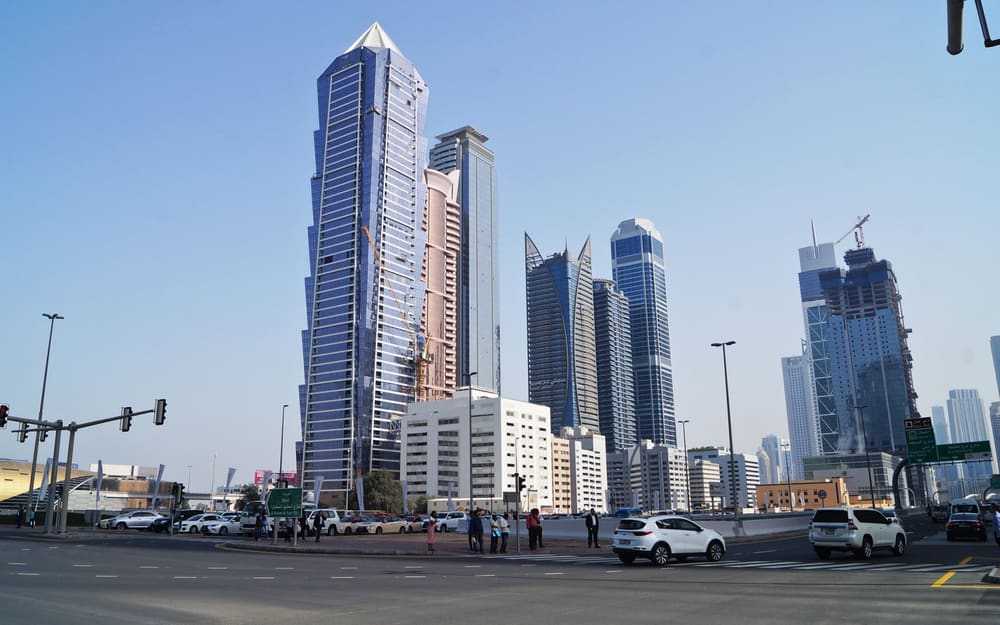


In the news
The same subject in writing — analysis and news related to this video.

Business Bay apartments: Deyaar’s DWTN Residences — 445-metre twin towers planned around Maslow’s pyramid
Deyaar is building DWTN (Downtown) Residences in Business Bay: twin 445 m, 111-storey towers with 522 homes — 432 apartments, 76 duplexes, 13 penthouses and a “Royal Palace”. From AED 1.86m with half due at keys. Construction began in January 2026; completion is quoted for 2029–2030.

Business Bay overtakes Palm Jumeirah in prime deals in August 2026, even as Dubai's wider market cools
Business Bay recorded 14 prime transactions in August 2026 against Palm Jumeirah's 10 — while Dubai-wide transaction volume fell 37% year-on-year and value fell 44%. Rental search demand rose 44% over the same period. What these seemingly contradictory numbers actually mean.
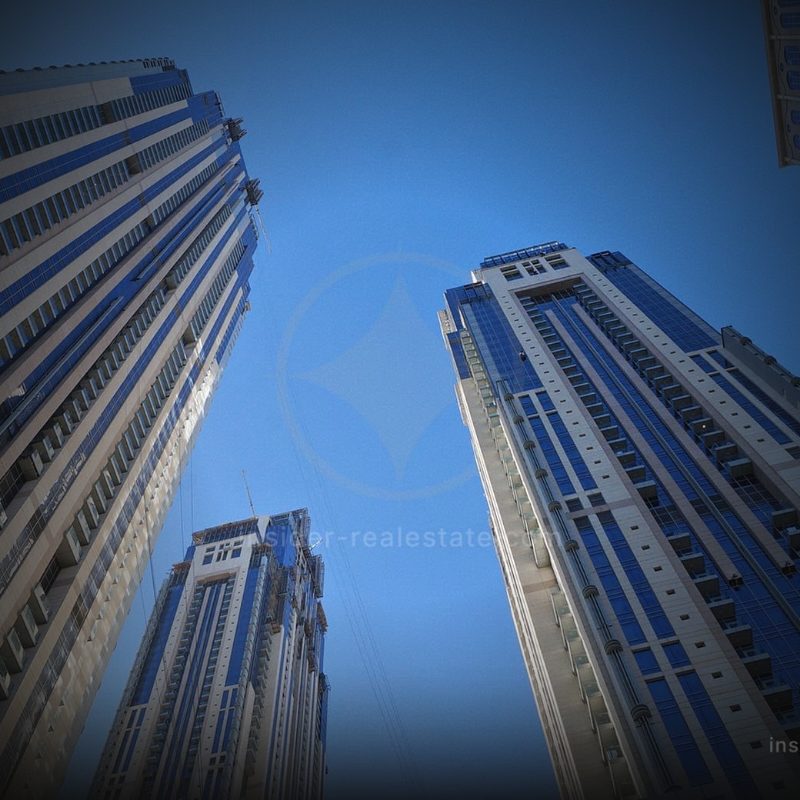
Dubai skyscrapers: Corinthia Dubai above 500 metres and Al Habtoor’s AED 5bn tower in Al Habtoor City
Corinthia Dubai, twin towers above 500 m on Sheikh Zayed Road with a rooftop pool and a Corinthia hotel, is due by 2030. Al Habtoor Group has announced an AED 5bn ($1.36bn) office tower in Al Habtoor City. What the two projects say about the market and who should care.
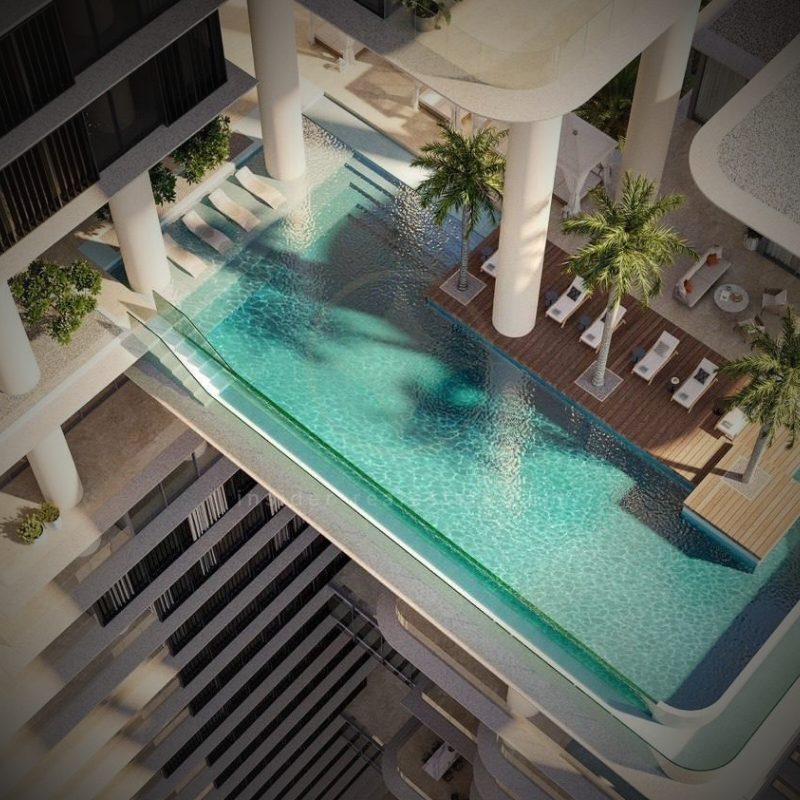
Omniyat's Marasi Bay island: a beach club by the Burj Khalifa and a fully funded $11.7bn portfolio
Omniyat bought a reclaimed island in Marasi Bay to build the Burj Khalifa district's only urban beach club and Sunset Park, a private floating island for VELA Viento residents. In March 2026 it priced a $600m sukuk at 7.25% and said its $11.7bn launched portfolio is fully funded to completion.
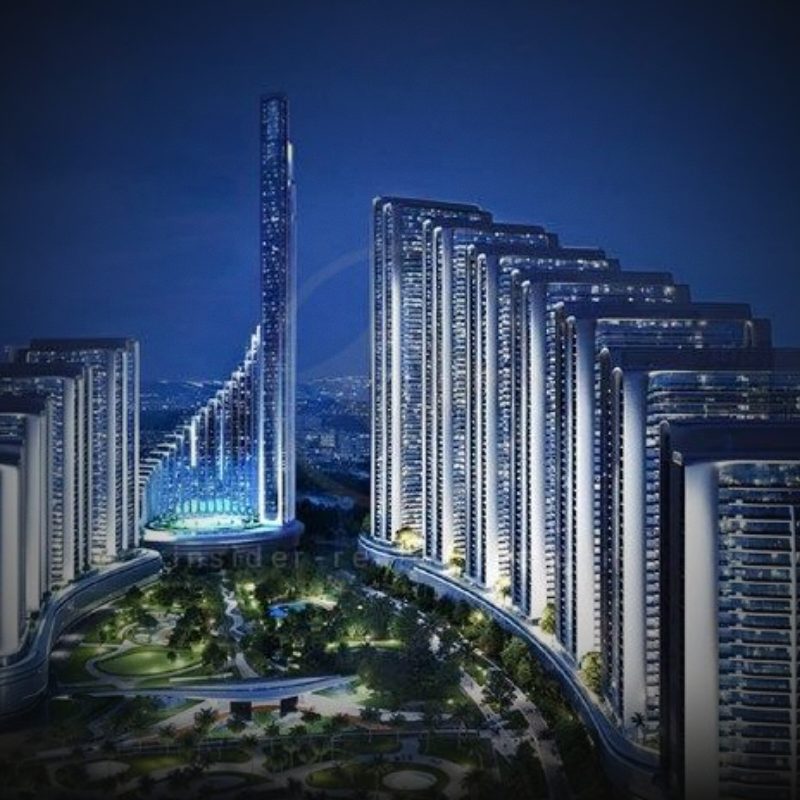
Binghatti developer: an AED 100bn portfolio, Bugatti, Mercedes-Benz and Binghatti City — two years of growth
In October 2024 Binghatti said it would lift its portfolio from about AED 40bn to AED 100bn ($27.2bn) in 18 months. In 2025 revenue reached AED 12.43bn, more than 17,000 units were sold, and the AED 30bn Binghatti City launched in Nad Al Sheba. What the growth means for buyers.

Downtown Dubai vs Business Bay: where to live and where to buy to let
Downtown is Dubai's tourist and status core, around AED 2,433/sqft on our own data. Business Bay is the business district next door, home to 17,000+ companies, around AED 1,871/sqft. We compare lifestyle, rental economics and who should pick which.