
Dubai Science Park: the walk-to-work tenant, and the towers being built on top of him
Almost every mid-market district in Dubai sells a commute. This one sells the absence of a commute, which is a genuinely different proposition — and a fragile one, because it depends on a ratio between offices and flats that several thousand apartments under construction are actively changing.
What the district is
Dubai Science Park is a business district operated by Tecom, built around companies in life sciences, pharmaceuticals, healthcare and laboratory work. It sits in Al Barsha South, with Arjan on one side, Motor City and Al Barsha within a few minutes.
The order in which it was built is the whole point. The offices, the laboratories and the headquarters came first; the apartment buildings arrived afterwards, around employment that already existed. Almost everywhere else in this corridor the sequence is the other way round.
The residential stock is comparatively new and mostly mid-rise, and it is still expanding. Villa Lantana, recorded as a TECOM Group development completed in 2017, sits inside the boundary as the exception — a villa community in a district otherwise made of apartments.
Talk to a licensed broker: WhatsApp +971 50 120 32 64 · Telegram
Everything interesting about this address follows from that sequence, and so does everything worth worrying about.
What the employment actually does for an owner
A dormitory district depends on how tolerable the commute is in a given year. When roads get worse or a rival district opens closer to the office park, the tenant leaves and the rent follows.
Here a meaningful share of tenants works inside the district or a few minutes from it. That shortens their decision and shortens your vacancy, and it produces renewals rather than moves: somebody who walks to work does not relocate to save a few per cent.
The tenant profile is narrow and unglamorous in exactly the way a landlord wants — laboratory and healthcare staff, corporate employees of the resident companies, salaried and stable.
It is also the single sentence in which the investment case can be stated, which is rare at this price level and is most of why the district is worth a look at all.
The trap: the thesis is a ratio, not a fact
The district is different from Arjan next door for exactly one reason — the employment inside it. Every new apartment tower dilutes that difference slightly, and enough of them dilute it away entirely.
That is not a prediction, it is a definition. If the flats outnumber the jobs by a wide enough margin, most tenants here commute like everybody else in the corridor, and the district becomes a newer, dearer Arjan with the same demand drivers.
So the signal to watch is not residential launches. It is commercial occupancy: new laboratory and office space, and whether the resident companies are expanding. Those keep the thesis alive; apartment towers spend it.
The same concentration cuts the other way as a risk. A district whose tenants come from one employment cluster feels a contraction in that cluster faster than a neighbour with a mixed tenant base. An asset like this belongs in a portfolio next to something whose tenants come from somewhere else entirely.
What is actually going up
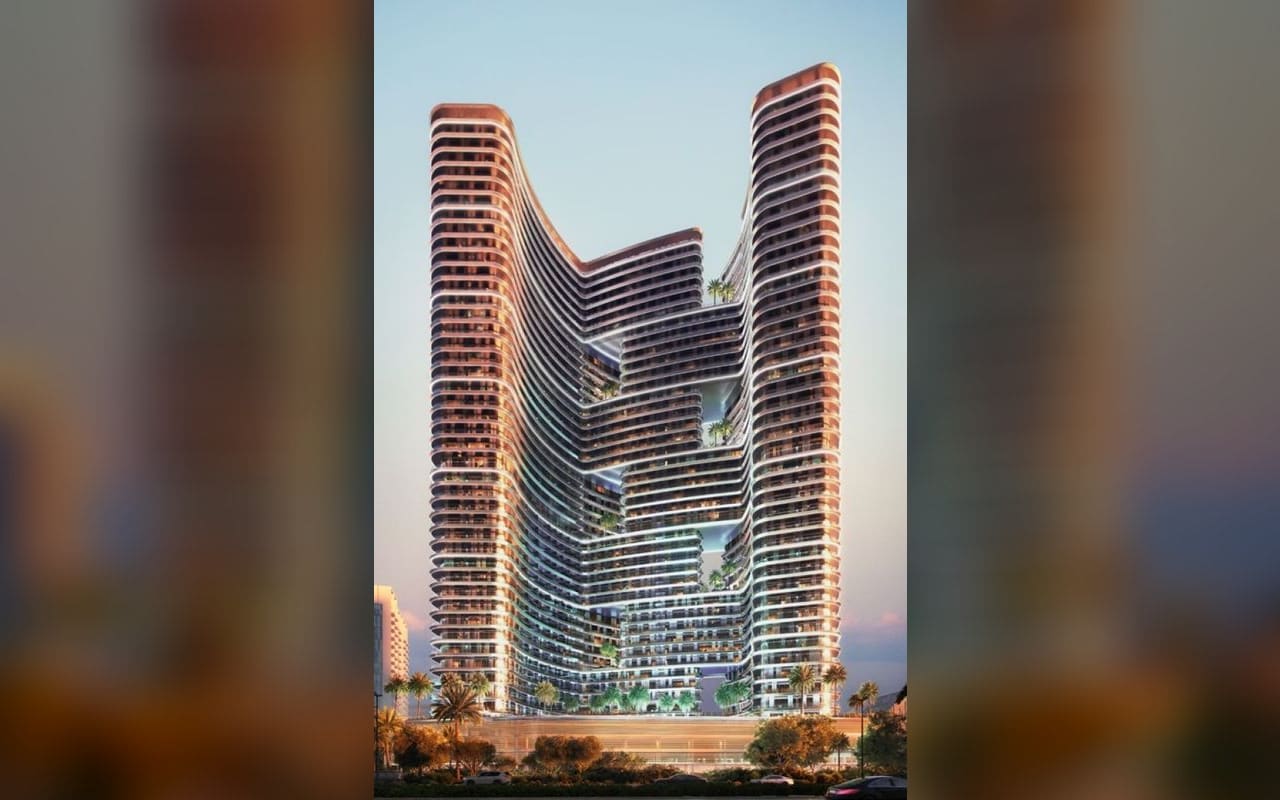
The passports of the buildings recorded in the district describe a scale of construction that surprises people who know it as a quiet office park. Binghatti Hills is recorded as a 46-storey residential skyscraper of 1,666 units, Binghatti Hillviews as 45 storeys and 772 units, Binghatti Hillside as 24 storeys and 411 units — all three by Binghatti Developers with Silver Stone Engineering Consultants as architect, all under development.
Alongside them Skyhills Residences is recorded as a 45-storey multi-building complex of 1,135 units by Hijazi Real Estate Development, with EDMAC Engineering Consultant as architect and a completed status. Vincitore Real Estate Development has Aqua Dimore, a 23-storey residential building, and Aqua Flora under development on the same side of the district.
Two things follow. The first is that a single developer accounts for a very large share of what is arriving, which means one company’s delivery record, one company’s specification and one company’s management standard sit behind much of the future supply.
The second is arithmetic. Add those unit counts together and the residential population of this district is being multiplied, while nothing in these records adds an employer.
Walkability is a building fact, not a district fact
The whole case rests on being able to walk to work, and a building at the far edge of the district does not deliver that in this climate. The distance that matters is from the specific lobby to the working part of the district, measured on foot.
Ask what is permitted on the plots immediately around the building as well. This is an actively developing area, and a construction site next door affects both the rent and the quality of life for years rather than months.
There is no metro and none planned nearby. Tenants either walk to work or drive, and that binary is what defines the demand pool — there is no third category of tenant to fall back on.
Road access runs through Sheikh Mohammed Bin Zayed Road and Umm Suqeim Road, which puts Marina, Media City and Al Barsha within a manageable drive off-peak. Arjan is immediately adjacent with its own retail; larger malls are a drive.
What to check, and what to compare it against
The developer and the service charge together. In newer mid-market stock the charge is frequently set optimistically at launch and rises once the building is fully occupied, so the launch figure is a marketing number rather than a running cost.
Occupancy in the neighbouring buildings, and how quickly units let. In a district this specific, the honest measure of demand is how long the flat next door sits empty, not what the brochure says about the cluster.
Because the buildings are recent the mechanical plant is young, and the first heavy maintenance cycle on chillers and lifts is ahead rather than behind. That is a real advantage over the older mid-market districts and it is temporary by nature.
Compare against Arjan — cheaper entry, denser, no employment anchor of its own; Motor City — more mature, greener, priced accordingly; and Barsha Heights, which is the older version of this same idea and has a metro station.
Frequently asked
Is there a metro station at Dubai Science Park?
No, and none is planned nearby. Tenants either walk to work inside the district or drive, which is precisely why the walking distance from a specific building to the working part of the district is the first thing to measure.
Why do so many towers here carry the same developer’s name?
Binghatti Developers is recorded on three of the largest residential projects in the district — Binghatti Hills at 46 storeys and 1,666 units, Binghatti Hillviews at 45 storeys and 772 units, and Binghatti Hillside at 24 storeys and 411 units. One company therefore sits behind much of the future supply, which concentrates delivery, specification and management risk in a way a district with several developers does not.
What actually makes Dubai Science Park different from Arjan?
The employment inside it. Arjan is a residential district whose tenants commute; here a meaningful share of tenants work in the cluster the housing was built around. That difference is a ratio rather than a permanent feature, so watch commercial occupancy and new laboratory and office space, not the number of apartment launches.
✍️ Message me on WhatsApp for a free consultation — off-market stock, payment plans and honest numbers on any of the projects covered here.
✅ Subscribe on YouTube — investment, property, business and relocation in the UAE and beyond.


Below market in Dubai Science Park right now
From the daily off-market feed. Availability and price are confirmed on request.
All below-market listings →

In the news
The same subject in writing — analysis and news related to this video.

Hijazi Real Estate Development: one product name across two districts
A developer running a single branded residential series in Dubai Science Park and JVC. Why the same product name in two districts means two different investments.

TownX: when a developer builds four similar towers in one district
A developer with a numbered series of buildings in Jumeirah Village Circle. A series in one cluster has a specific consequence that is rarely mentioned at the sales table.

Iman Developers: one tower in a district full of towers
A developer building in Jumeirah Village Circle, the most competitive rental cluster in Dubai. What decides a single building’s performance when everything around it is comparable.
Select Group: waterfront towers and what a marina address really costs
A developer built around Dubai Marina and the harbour districts. Why the water is the whole thesis, what a waterfront service charge looks like, and where the resale market for these units sits.

The tenant comes first, the purchase second: how to assess an office before buying
When buying an office, price is not the first thing to establish. The first thing is whose business moves in and what they pay out of — you are buying a stream of rent, not square feet.

Retail with a chain tenant in Dubai: how the numbers are actually built
A unit let to a recognisable brand looks like the safest income in property. What decides whether it is: lease length, the covenant behind the name, the rent against turnover, and what happens at the break.