
Retail with a chain tenant in Dubai: how the numbers are actually built
A unit let to a recognisable brand looks like the safest income in property. What decides whether it is: lease length, the covenant behind the name, the rent against turnover, and what happens at the break.

A retail unit let to a well-known chain is the most reassuring-looking income in property: a familiar logo on the shopfront and a signed lease. Whether it is actually good income depends on four things, none of which is the logo.
Who signed the lease
A brand and the entity on the contract are frequently different. In this region an international name is often operated by a local franchise holder, and the covenant is theirs, not the brand's. Ask which legal entity signed, whether there is a parent guarantee, and how long that entity has traded. A famous facia over a thinly capitalised operator is an ordinary credit risk wearing a costume.
How long, and what breaks it
The unexpired term is the asset. A ten-year lease with a tenant break at year three is a three-year lease for valuation purposes, and it should be modelled that way. Read the break provisions, the notice period and any penalty — and then ask what the rent looks like against market at the break date, because that is when the tenant decides.
Talk to a licensed broker: 📲 +971 50 120 32 64 on WhatsApp, @dubai_oleg on Telegram
Rent against turnover
The most useful sanity check in retail. Rent as a percentage of the tenant's turnover tells you whether the lease is sustainable: too high a ratio and the tenant leaves or renegotiates at the first opportunity, regardless of what the contract says. Turnover-linked rents, common in malls, make this explicit — and if the tenant will not discuss the ratio at all, that silence is informative.
Location inside the location
Retail is decided at a resolution finer than a district. Footfall past the door, visibility from the main circulation route, proximity to an anchor, whether customers pass on the way in or on the way out, parking, and servicing access. Two units fifty metres apart in the same development can differ twofold in trade. This is why retail cannot be valued from a spreadsheet without the site visit.
What the buyer should ask for
- The lease in full, not a summary: term, breaks, review mechanism, service charge liability, reinstatement.
- Payment history on the current tenancy.
- Service charge in dirhams per year, and who bears increases.
- Comparable rents for units in the same scheme, achieved rather than asking.
- What happens to the pitch if the anchor nearby leaves — the question most retail buyers do not ask until it happens.
The summary
Retail let to a chain is not a bond. It is income backed by a business, in a location whose trade can change, on a lease with a date on it. Priced with that understood it can be the best risk-adjusted return in commercial property; priced off the logo it is the most disappointing.
Video on this topic
The same subject on the English channel — each clip has a written version of its own.
 1:15Binghatti Circle in JVC: retail and offices at the entry level8 September 2025
 6:43Retail in Maritime City: Danube Oceanz compared with Nautica by Select Group25 September 2023
 17:28Commercial mortgage in Dubai: offices, retail and warehouses under construction20 September 2026
 7:59Investing in Dubai offices: why the numbers beat apartments20 October 2025
 21:45Furnished offices in Business Bay: Rove HQ and the fitted-office model16 October 2025

In the news
Other write-ups on the site about the same thing.

Three things a chain tenant checks in a retail unit
A buyer of retail space looks at price per foot, location and stated yield. The tenant the unit is bought for looks at something else entirely — and their list is shorter.

Retail is growing where nobody expected: International City, JVC, Majan and Arjan
Transaction statistics on Dubai retail units give an unexpected picture: activity leads not at prestige addresses but in mass residential districts.

Russian retail brands in Dubai in 2026: a quarter of them left, and what it tells a mall-space investor
By mid-2026, 78 Russian-owned retail and F&B brands were trading in Dubai, down 27% from 107 in April. No new brand entered the market in the first half of the year, and mall leasing tightened across the board. What one cohort’s retreat says about Dubai’s retail leasing cycle.

Choosing an office in Dubai: the floor, the plate and the things that are hard to change later
Rate per square foot is the least useful number when comparing offices. What actually determines whether a floor works: efficiency, lift ratios, parking allocation, cooling and the fit-out you inherit.
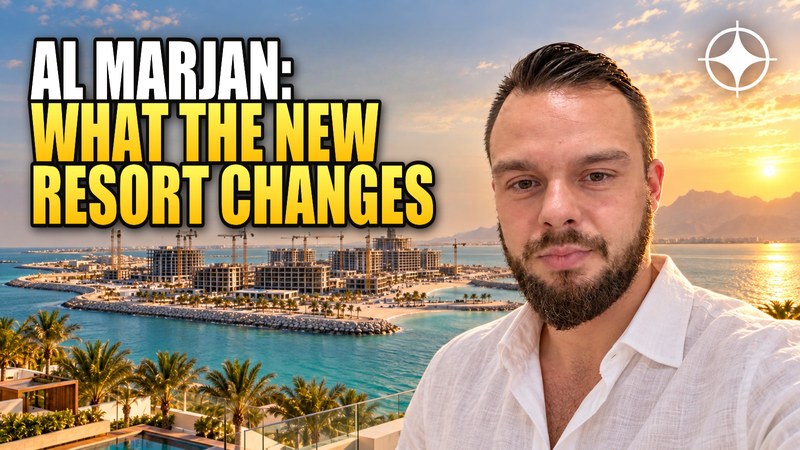
Al Marjan Island: Retail Runs Short Around the UAE’s First Casino Resort
Ras Al Khaimah is building the country’s first integrated casino resort, and Al Marjan Island is being reshaped around it. Ready-to-buy commercial units are almost nowhere to be found — and that’s its own investment story.
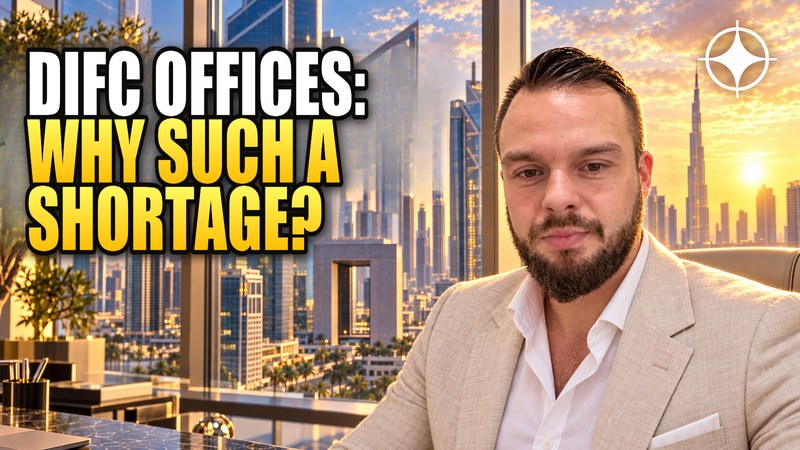
DIFC Offices at 2% Vacancy: What a Square Foot Costs in Dubai’s Tightest District
In a district with roughly 2% vacancy, offices in a renovated tower were offered at AED 4 000–4 500 per sq ft with a projected yield of 8.75–11.5%. Here’s what makes up the price in Dubai’s tightest office location.