
Reem: an Emaar community that converts an apartment budget into a house
Start with the name, because it costs people money: this Reem is an Emaar townhouse community on the eastern edge of Dubailand, made up of Mira and Mira Oasis. It is not Al Reem Island in Abu Dhabi, which is a different emirate, a different market and a different asset class entirely.
What the community is
Reem is a designed community rather than an assembly of separate projects, and it shows in the street layout, the planting and the consistency of the housing. Rows of three and four-bedroom townhouses sit around parks and shared pools.
At its centre is Reem Community Centre — supermarket, clinics, cafés, a nursery — with a large central park running through the middle of the scheme.
The Mira and Mira Oasis phases were delivered over several years and are now essentially complete, with landscaping mature enough to shade the streets.
Talk to a licensed broker: WhatsApp +971 50 120 32 64 · Telegram
It is finished, which is a real attribute. What you see on the viewing is what you get; there is no phase two arriving next to your garden.
Why people move here
Because it converts an apartment budget into a house. Three bedrooms, a small garden and a garage, for roughly what a two-bedroom flat costs in the middle of the city.
The community is genuinely built for families — pools, parks, a nursery, streets where children can be outside — and that combination does not normally come at this price point in Dubai.
It is an Emaar product, which matters to this segment more than buyers expect. Build quality and community management are predictable in a way that smaller developers’ schemes are not, and tenants know it.
The result is a community that reads as settled rather than transitional, which is unusual this far out.
The price of the distance
Reem sits well out along the eastern edge of the city. Downtown and the Marina are both a real drive, and at peak that drive is long.
There is no metro here and none planned. Every household needs a car and most need two, which is a cost that rarely appears in anybody’s spreadsheet.
Global Village and the Arabian Ranches communities are the nearest anchors. Day-to-day shopping happens inside the community; anything larger is a drive into the city.
So the tenant base is families for whom space matters more than the commute. That is a real pool and a durable one, but it is specific, and being specific narrows the exit.
The economics for a landlord
A house-sized rent against an apartment-sized purchase is what produces the percentages here, and for the townhouse segment they are respectable.
Tenancies are long. Families who choose a community like this for the schools and the space do not relocate for marginal savings, so turnover and void periods are low.
The costs are house costs, not apartment costs: garden upkeep, cooling two floors, and a service charge that pays for parks and pools rather than for a lobby.
Liquidity is moderate. The buyer pool is families and yield investors — real but not deep — and a sale takes longer than in the central apartment districts.
Living here day to day
The community runs on its own centre: a supermarket, a pharmacy, a couple of clinics, a nursery and a handful of cafés, which covers the ordinary week without leaving.
The central park is the piece residents actually use. Where private gardens are small, shared green space is not decoration — it is where the community happens, and it is why park-adjacent rows let faster.
Schools are the standing question. There are options within a reasonable drive rather than inside the boundary, and for most households here the morning school run is the fixed point everything else is arranged around.
Weekends tend to be spent elsewhere. Global Village and the Arabian Ranches retail are the nearest draws; anything larger means a proper drive.
What to check, and what to compare against
The phase. Mira and Mira Oasis were delivered at different times and the maturity of the landscaping differs noticeably between them.
The position in the row: end units, park-facing units and units backing onto a road are three different products at three different rents, and the listing photographs will not tell you which you are looking at.
The service charge history and what it covers. With this much shared landscaping it is not a trivial line.
For alternatives, the honest comparison set is Mudon and Town Square at a similar price, Arabian Ranches as the established benchmark well above it, and The Valley or Damac Hills 2 cheaper and further out. Each is covered with current stock in the areas section.
Frequently asked
Is Reem in Dubai the same as Al Reem Island?
No, and the confusion is common. Reem here is an Emaar townhouse community on the eastern edge of Dubailand, comprising the Mira and Mira Oasis phases. Al Reem Island is a high-rise waterfront district in Abu Dhabi — a different emirate and a different market.
What is the difference between Mira and Mira Oasis?
They are the two delivery phases of the same community, built at different times. The practical difference for a buyer is the maturity of the landscaping and the detail of the layouts, so confirm which phase a listing belongs to before comparing.
Who does Reem suit badly?
Anyone commuting daily to Downtown or DIFC, anyone without a car, and anyone counting on rapid capital growth — this is a rental-income community. It also suits poorly a buyer who wants a recognisable address: Reem trades on product, not on name.
✍️ Message me on WhatsApp for a free consultation — off-market stock, payment plans and honest numbers on any of the projects covered here.
✅ Subscribe on YouTube — investment, property, business and relocation in the UAE and beyond.


Below market in Reem right now
From the daily off-market feed. Availability and price are confirmed on request.
All below-market listings →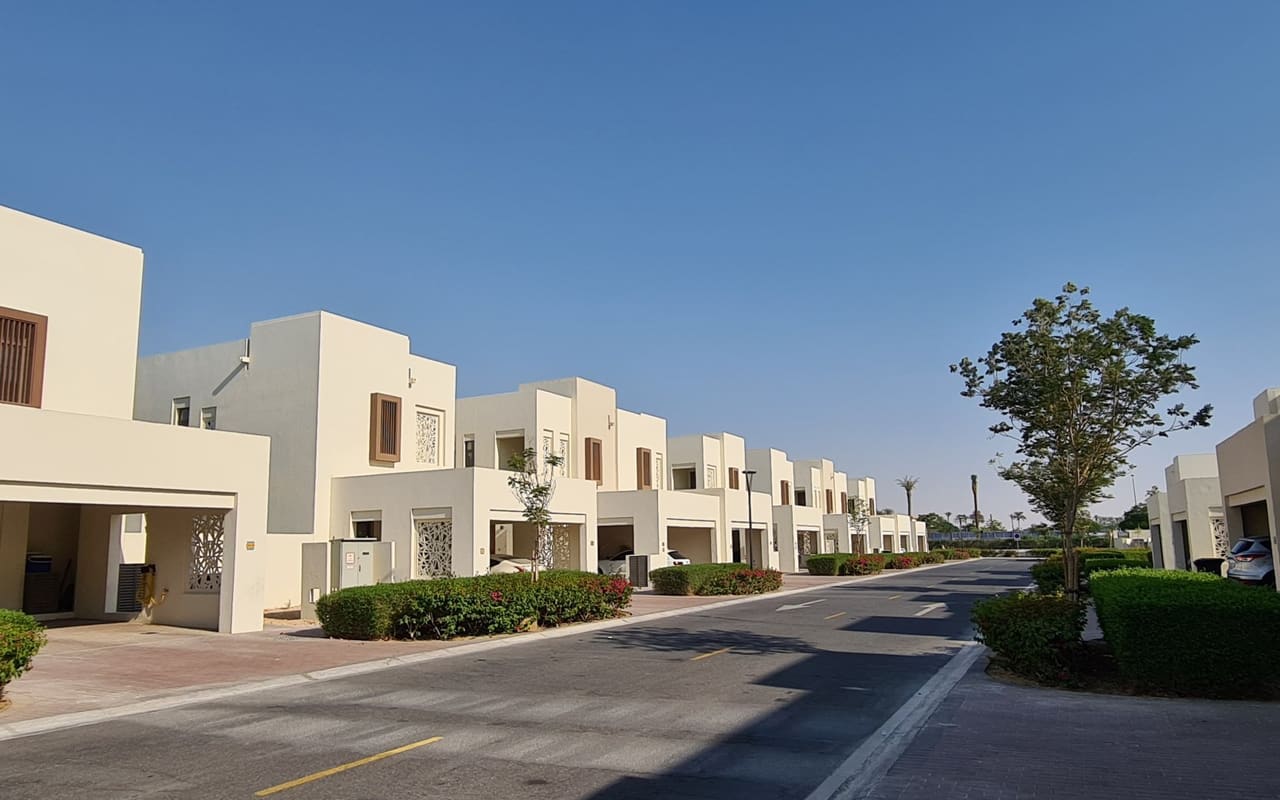
Related reading
The same subject in writing — analysis and news related to this video.

Reem: where a townhouse and a villa actually differ
A family townhouse community. The shared wall is the obvious difference; the four that matter are financial.

Damac Lagoons: what a lagoon costs to keep
A community built around man-made lagoons with Mediterranean-themed clusters. Water is a genuine differentiator with a permanent operating cost attached.

What a second passport really costs: the full budget
The advertised figure is the contribution. The total is a family-sized sum that includes several categories nobody puts in the headline.

What it costs to maintain a second status, year after year
Acquisition is quoted; maintenance is not. Over a decade the maintenance is frequently the larger number, and it is entirely predictable in advance.

The budget for residence, by type of basis
What obtaining a status actually costs varies by an order of magnitude depending on the route, and the cheapest routes are the ones nobody advertises.

The annual cost of maintaining residency, listed honestly
The application fee is quoted and is the smallest line. What the status actually costs is an annual figure, and it is the one that decides whether holding it is rational.