
The best townhouses in Dubai under USD 600,000: Nshama Town Square
Under USD 600,000 the Dubai townhouse conversation usually ends at Maple or Sidra in Dubai Hills. Nshama's Town Square is the alternative: better built, a little further out, and with community infrastructure that is genuinely more varied — cafés and restaurants, two schools, nurseries, wake surfing, and events in a very large central park.
The two clusters
Naseem Town Square is the completed cluster — built, occupied, and the one you can walk through today to see how the community actually functions rather than how it renders.
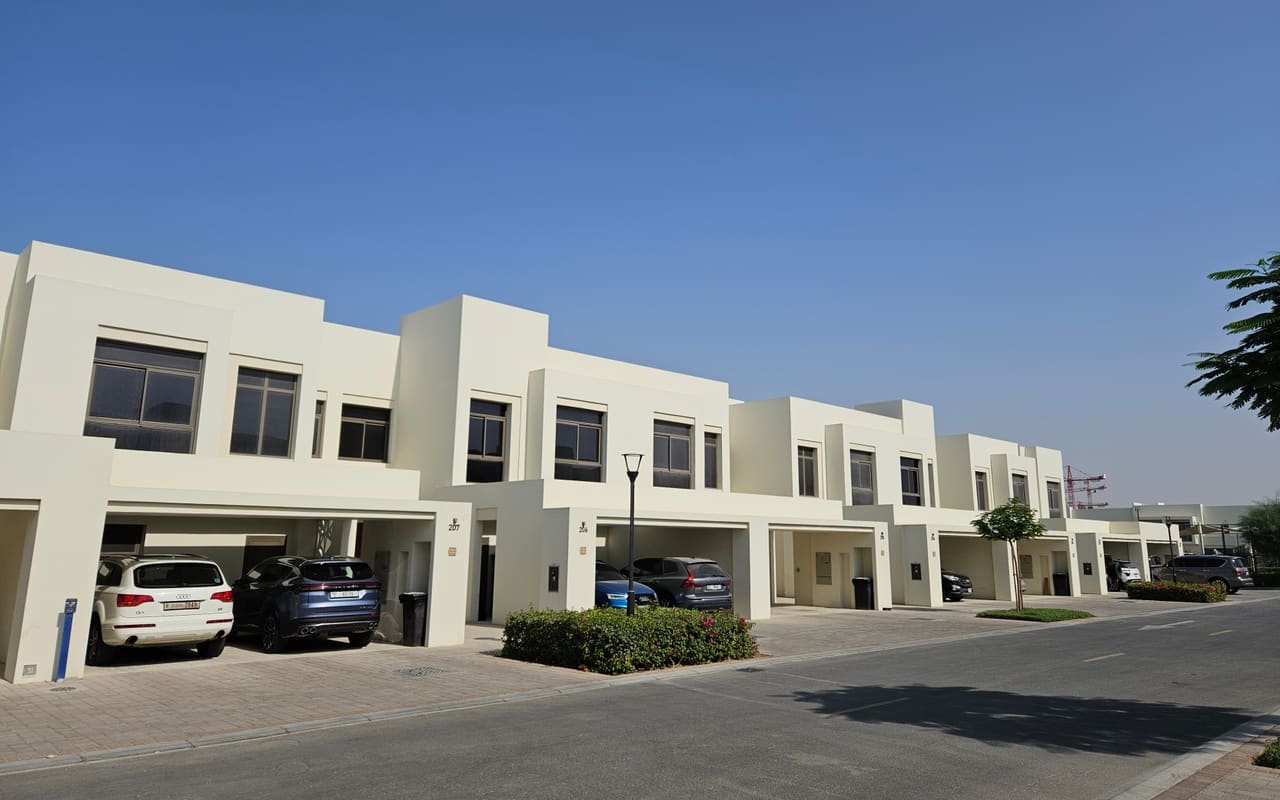
TownSquare Reem was the cluster being completed at the time of filming, with official delivery in October 2023. Buying into a cluster at that stage gives you newer stock at a lower entry, with the community around it already established.
Walking both is the exercise I would recommend to anyone considering the community. The difference between a delivered Dubai townhouse cluster and a rendered one is instructive, and Town Square lets you see both at once.
Talk to a licensed broker: WhatsApp +971 50 120 32 64 · Telegram
Versus Dubai Hills
Dubai Hills is closer to the centre, more established, and priced accordingly. Its townhouse clusters — Maple, Sidra — are the default comparison at this budget and they are perfectly good.
Town Square trades that proximity for two things: build quality that I rate higher in the price band, and community infrastructure with genuine variety. The central park is not a landscaped strip; it is a park with events in it. There is wake surfing. There are cafés people actually sit in.
The cost is the drive. Town Square is further out along Al Qudra Road, and that is a real daily difference. If your household commutes into DIFC every day, Dubai Hills wins. If you work from home or your commute is flexible, the extra fifteen minutes buys a materially better community for the same money.
The investment view
Townhouses in this bracket rent to families, on annual leases, with low turnover. That is a boring, reliable income stream and it is the point.
Capital growth in outer Dubai communities tracks infrastructure and school provision more than it tracks sentiment. Two schools and nurseries inside the community is exactly the kind of thing that supports value over a decade.
What limits the upside is supply. Nshama has a lot of land, and outer communities can keep delivering. Price growth here is steady rather than sharp, which is the correct expectation to hold.
What to check
The specific cluster and its position relative to the park and the schools. Within Town Square the variation between plots is significant.
The service charge, and how it compares against Dubai Hills for a similar unit — outer communities are generally cheaper to run, and that difference compounds.
Rental evidence from Naseem, which has been occupied long enough to produce real numbers.
And drive the commute you would actually do, at the time you would do it. On paper it is fifteen minutes. On a Tuesday morning it is not.
Why a single developer changes the risk
In JVC, Arjan and Sports City the main risk is the building lottery: dozens of independent developers built to their own standards on adjacent plots, and the district average conceals both the good and the bad.
Town Square avoids that entirely. Nshama built the whole community to one plan, so the architecture is consistent, the service charges are set community-wide, and there is one owners association rather than fifty.
For a buyer that removes the largest single source of variance in affordable Dubai property, and it is worth more than a slightly better kitchen.
It also means the community feels designed rather than accumulated, with a coherent public realm and a genuine centre.
The central park
Community parks in affordable Dubai districts are frequently a strip of grass and a set of swings that degrade within five years. Town Square's is a proper one: sports pitches, skate park, splash pads, walking and cycling routes, and enough space to absorb the whole community.
It is maintained, which is the harder part, and the single-developer structure is why: one association making one funding decision.
Proximity to it is the main internal price variable, and park-facing units let faster and resell better.
It is also the community's only genuine differentiator against Villanova, Mudon and the other corridor communities at similar prices — if it is maintained the premium holds, if not this becomes an ordinary townhouse district a long way out.
Apartments versus townhouses here
Town Square contains both and they behave differently. The apartment buildings — Zahra, Safi, Hayat, Rawda and the rest — are the accessible entry and the better percentage yield, letting to couples, small families and professionals.
The townhouses let to families who stay for the school cycle: long tenancies, low churn, and a tenant who looks after the property, at a lower headline return.
For a landlord who wants minimal involvement the townhouse is usually the better asset despite the weaker yield. For maximum cash return per dirham, the apartment.
Either way the constraint is the same: Al Qudra Road, thirty to thirty-five minutes to Downtown off-peak, and no metro in any current plan.
Frequently asked
Is Town Square better than Dubai Hills?
Better build quality in the same price band and more varied community infrastructure — two schools, nurseries, cafés, wake surfing and a genuinely large central park. Dubai Hills is closer to the centre and more established. The choice comes down to whether you need the shorter commute.
How much are Town Square townhouses?
The community sits in the sub-USD 600,000 townhouse bracket, which is what puts it in direct comparison with Maple and Sidra in Dubai Hills. Exact pricing varies by cluster, plot position and whether you are buying new or resale.
Do townhouses rent well in Dubai?
Yes, to families on annual leases with low turnover — a reliable, unspectacular income. Capital growth in outer communities tracks school provision and infrastructure rather than market sentiment, so it is steady rather than sharp.
✍️ Message me on WhatsApp for a free consultation — off-market stock, payment plans and honest numbers on any of the projects covered here.
✅ Subscribe on YouTube — investment, property, business and relocation in the UAE and beyond.


Below market right now
From the daily off-market feed. Availability and price are confirmed on request.
All below-market listings →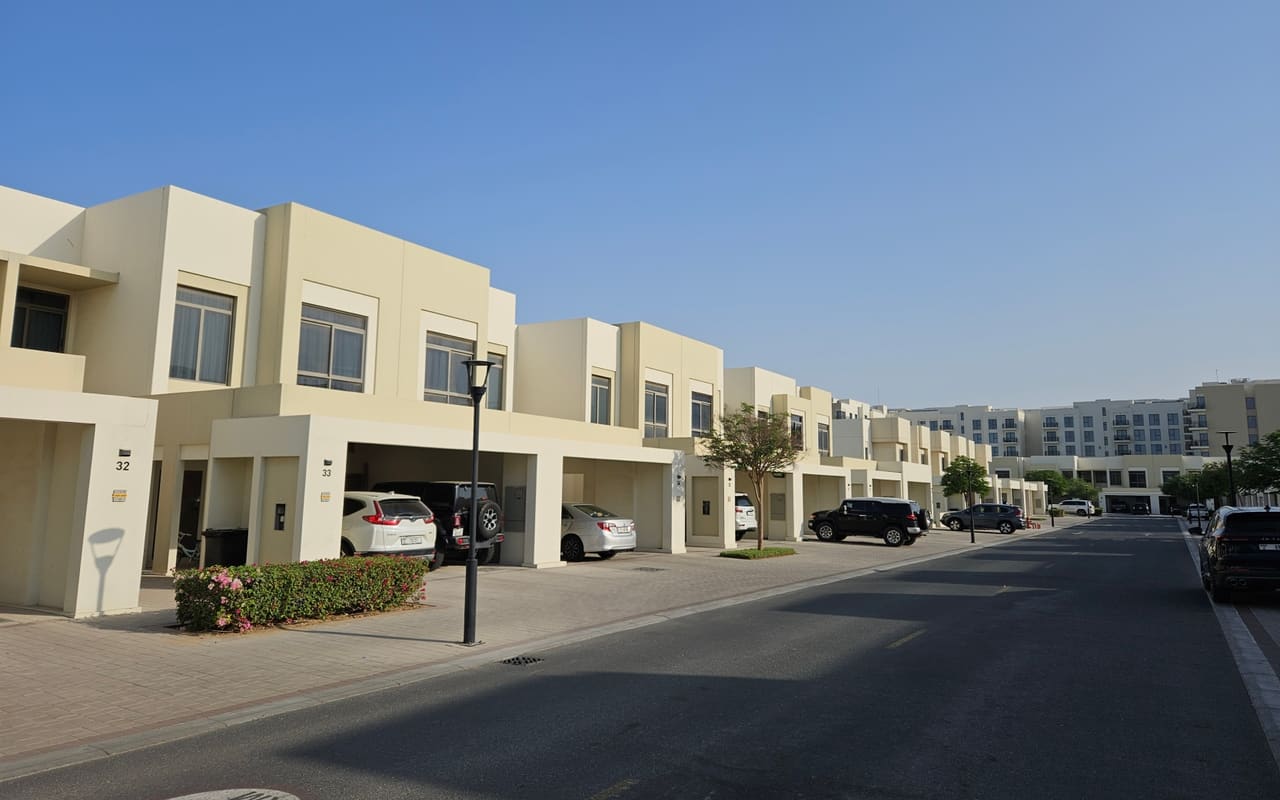
In the news
The same subject in writing — analysis and news related to this video.
Nshama: one community, built to be lived in
A developer that put nearly everything into a single town — Town Square. What a single-project company means for a buyer, and how to judge a community that is still filling up.
Town Square service charge: who pays for the park and public spaces
The central park, paths and plazas are the community’s main selling point. They come with an annual budget, and it is split among the owners.
Town Square area profile: how to judge a Dubai community that is still filling up
A self-contained town with a park, schools and its own retail street. There is a simple way to tell whether a place like this is lived in, or so far only built.

Nad Al Sheba villas: H&H’s Sunrise Valley — townhouses from AED 7.5m, architecture by Studio MK27
Sunrise Valley is H&H’s villa community in Nad Al Sheba 1: about 1,500 homes in five clusters over 10m sq ft, designed by Brazil’s Studio MK27. Three-bed townhouses from AED 7.5m, four-bed villas from AED 13.2m, half the price due at handover in Q4 2029.

What a house in Dubai costs: villa and townhouse prices by district, from our own stock
Median townhouse AED 3.6m, median villa AED 8.1m, entry from about AED 1.45m. Tables by bedroom count and by district from 1,884 live listings — plus the finding that price per foot barely moves between three bedrooms and seven.
Dubai villas and townhouses in H1 2026: why two datasets give opposite answers
One reading of the Land Department register shows villa and townhouse deals down 37.5% for the half. Another shows villas up 1.2%. Both are honest. Here is what separates them, and what the market-wide numbers actually say.