Scale and economy
The emirate covers 67,340 square kilometres — the overwhelming majority of the country's land. Population at the 2024 census was about 3.79 million. Dubai is roughly ninety minutes away by car.
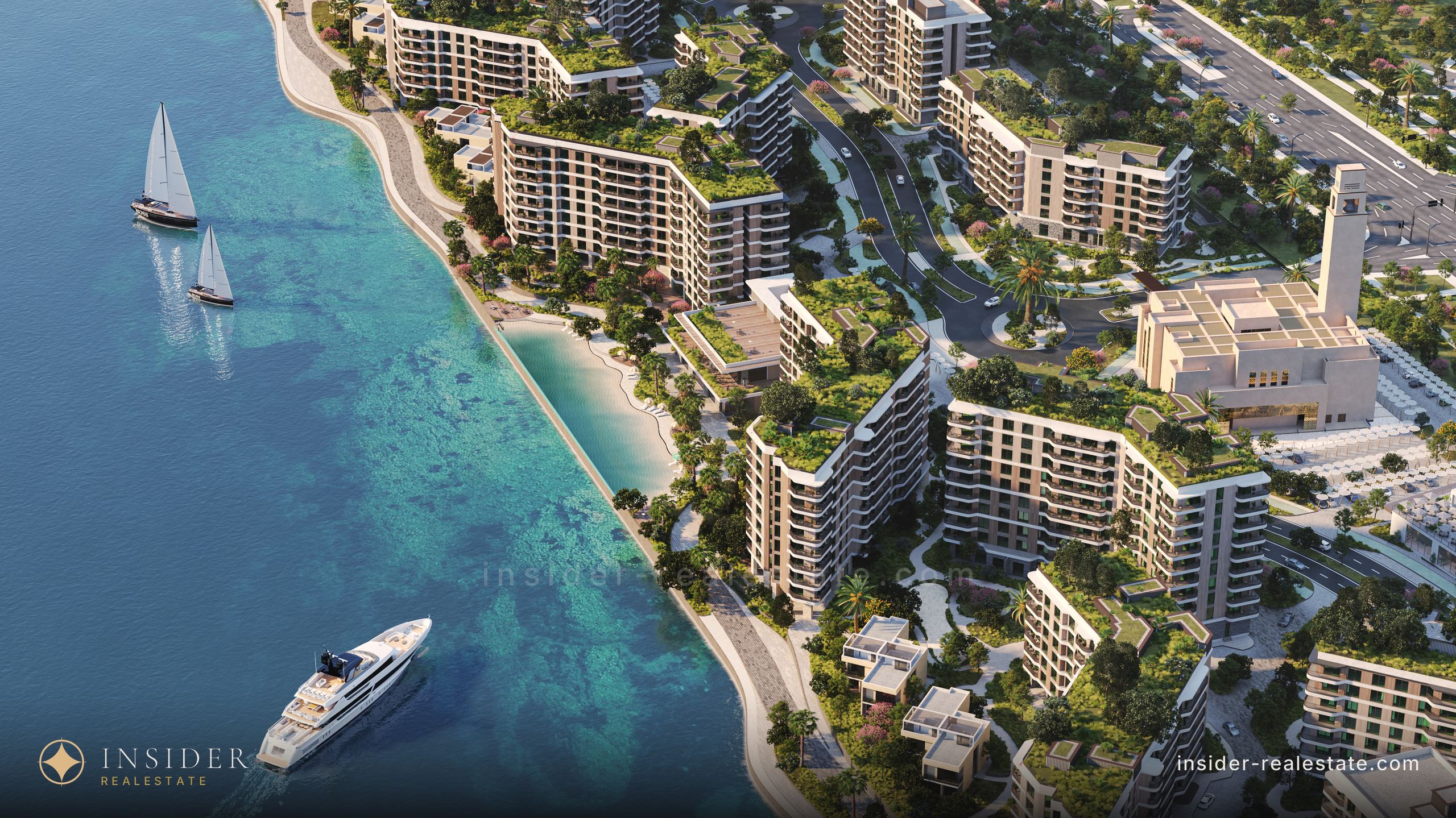
It includes an archipelago of more than two hundred islands, and it is on those islands that the property an international buyer would consider is concentrated.
Oil and gas still carry the economy — more than half of GDP. The Abu Dhabi Economic Vision 2030 plan is about shifting weight into non-oil sectors, and the cultural, education and tourism clusters are part of that pivot.
Tourist arrivals reached 24 million in 2023, and the Saadiyat beach has been named the best in the Middle East for thirteen years running.
The key difference from Dubai: zones
Abu Dhabi opened to foreign ownership later and far more narrowly. Freehold exists only inside designated investment zones: Al Reem, Yas, Saadiyat, Al Raha, Al Ghadeer, Masdar and a handful more.
Outside those zones there is no outright ownership for non-nationals. What exists instead is long leasehold and usufruct — rights to use for a term, not to own in perpetuity.
Transactions are registered by the Department of Municipalities and Transport, not by the Dubai Land Department, and the procedure differs in the details. A lawyer who has only ever closed Dubai deals is not a substitute for local counsel.
This is the first question to ask about any Abu Dhabi property, and it removes a large share of the market from consideration straight away.
How the market behaves
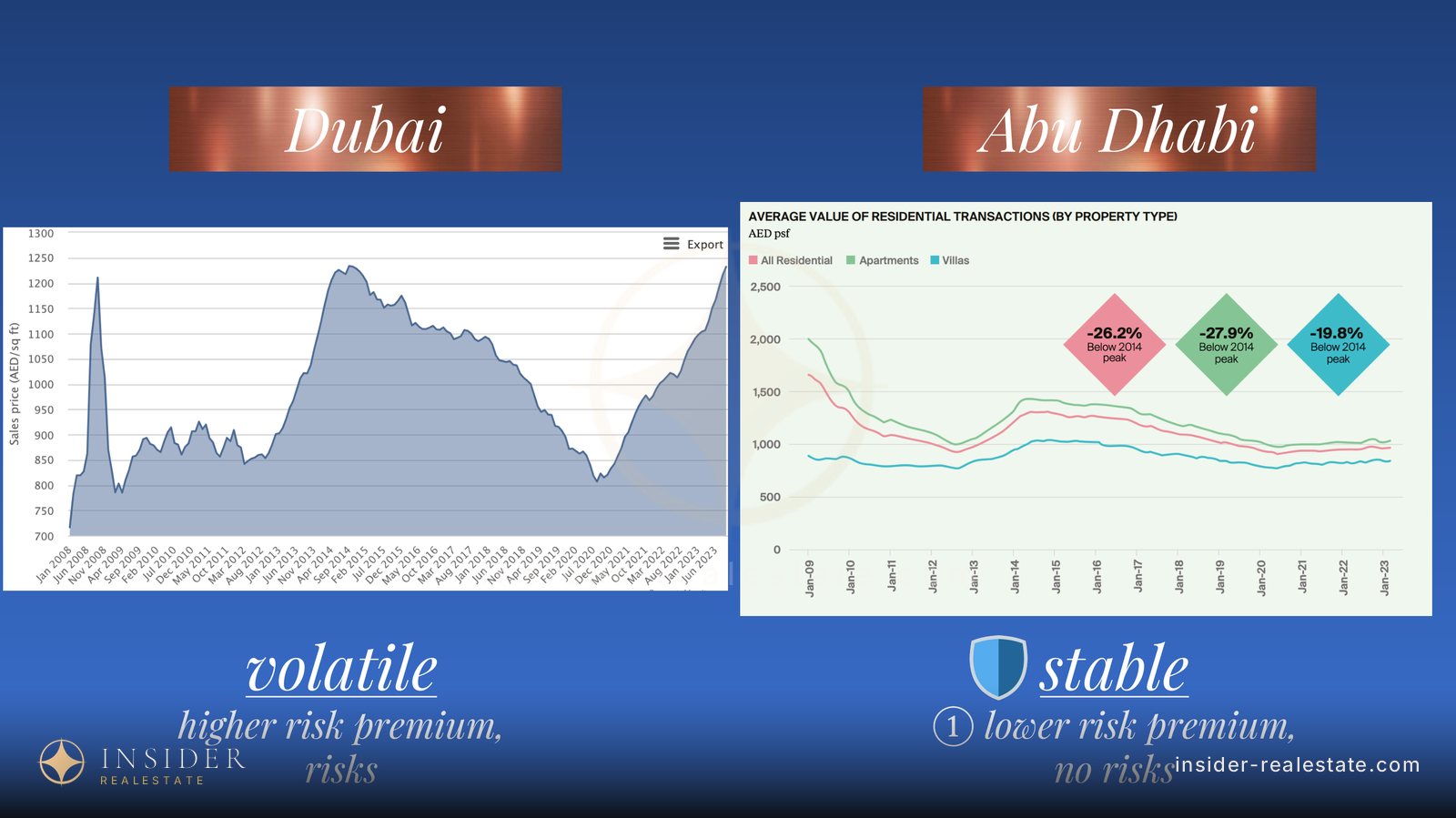
Transaction volume is a fraction of Dubai's, and two things follow: there are fewer comparable sales to value against, and time-to-sell is longer. Higher headline yields here are partly compensation for exactly that illiquidity.
Demand comes from government, ADNOC, the sovereign funds and the institutions around them. That is a stable, well-paid, long-staying tenant base — but a narrower one than Dubai's.
Cost of living is lower: monthly expenses per person excluding rent run roughly 12% below Dubai, and average rent nearly a quarter below.
The market is growing — total transaction value multiplied in 2023 — though in absolute terms it remains an order of magnitude smaller than Dubai's.
What to look at here
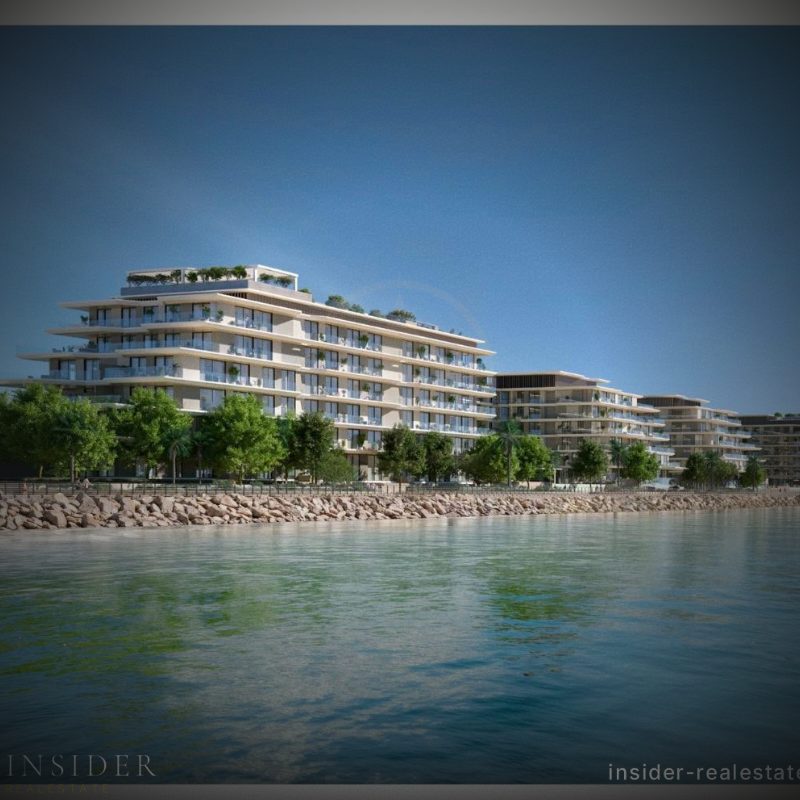
Saadiyat is the cultural island: the Louvre, an NYU campus, a protected natural beach and the strongest villa market in the emirate.
Yas is the entertainment island: Ferrari World, the Formula 1 circuit, golf and the emirate's largest mall.
Al Reem is the most liquid apartment market in Abu Dhabi and the usual entry point for an international buyer.
Al Maryah is the business core, home to the ADGM financial free zone and Cleveland Clinic.
Each of these gets a full write-up, with entry price and yield reference points, in our Abu Dhabi section.
Who it suits
Anyone working in Abu Dhabi: a daily commute to Dubai is not realistic from here, and that single fact defines who lives in the emirate.
Anyone who wants a calmer, less dense environment than Dubai at a comparable level of infrastructure.
Anyone prepared to hold for a long time and not counting on a quick exit.
It suits poorly anyone who needs liquidity, and anyone hoping to buy outside the investment zones — where freehold simply does not exist for a foreign buyer.
What has changed here
A decade ago Abu Dhabi was a market of civil servants and energy staff, and international buyers barely reached it. The islands changed that: Saadiyat, Yas and Al Reem became investment zones, and with them came a reason to look at the emirate at all.
The cultural cluster has done more than any marketing could. The Louvre, the NYU campus and the museums still under construction fix the island's identity for decades — a rare thing in a region where districts are renamed and repositioned regularly.
The ADGM financial free zone on Al Maryah added a private-sector tenant alongside the government one: lawyers, funds, asset managers. Different budgets, different housing requirements, and a demand base that no longer rests on a single employer.
The net effect for a buyer: the emirate is no longer closed, but it has not become Dubai in depth. More opportunity than there was, still less data than you would like.
What to check before the deposit
The status of the plot, before anything else. Investment zone or not, freehold or usufruct — that determines what you are actually buying, and no brochure settles the question.
Registration. Transactions run through the Department of Municipalities and Transport, and both procedure and timelines differ from Dubai's. Local counsel is not a formality here.
The service charge. Island communities carry promenades, landscaping and protected beaches, and the owners pay for all of it. A yield calculated without that line is fiction.
And a realistic selling horizon. The market is thin: comparable sales are harder to assemble and buyers are found in months rather than weeks.