
Dubai off-plan registration: the Land Department launches Oqood 2.0 — what changes for buyers
On 3 September 2026 the Dubai Land Department launched Oqood 2.0, the new version of the interim register for off-plan sales: a pre-submission questionnaire, auto-filled data, live status tracking. The 4% fee is unchanged. What Oqood is and why a buyer should care.
On 3 September 2026 the Dubai Land Department launched Oqood 2.0, a rebuilt version of the system through which off-plan sales are registered. It reads like an IT update, but it matters to anyone buying before completion: it is the Oqood entry, not the contract with the developer, that makes you the recognised owner of an unbuilt unit until the title deed is issued.
What Oqood is
Oqood is the Land Department's interim register for property under construction. When a buyer signs a sale and purchase agreement with a developer, the sale is registered in Oqood and the buyer receives an interim registration certificate. That certificate:
- confirms the specific unit is assigned to you and cannot be sold twice;
- is required for an assignment — a unit can only be resold before handover by re-registering it in Oqood;
- is required by a bank financing the purchase during construction;
- converts into a full title deed once the building is completed.
A contract without an Oqood registration is a developer's promise, not a registered right. The first thing to check after signing is that the sale appears on the register. What exactly you own at each stage is covered in our explainer on Oqood and the title deed.
Talk to a licensed broker: 📲 +971 50 120 32 64 on WhatsApp, @dubai_oleg on Telegram
What version 2.0 adds
Oqood 2.0 brings requirements, documents, submission, review and approval into one digital journey:
- a pre-submission questionnaire that works out which documents and conditions apply to the specific transaction before it goes for review;
- auto-fill of details the system already holds, including passport data;
- status tracking — under review, more information needed, or approved;
- an action trail recording each step, so it is visible where an application is held up.
The registration fee is unchanged: 4% of the price plus fixed administrative charges. The update is about speed and predictability, not cost.
What it means in practice
The chronic problem of the old process was rework: a file went in, a missing document surfaced days later, and the clock restarted. The questionnaire is meant to catch that up front. For buyers it speeds up two operations — the first registration after purchase, and re-registration on an assignment, where delay costs real money because a resale buyer will not wait.
It is one step in a broader rebuild of Dubai's primary market, in which project management, sale registration and escrow accounts are moving onto shared digital infrastructure — so the regulator can see units sold, money in escrow and construction progress in one place.
One caveat: faster registration does not make an off-plan resale liquid. Demand depends on the project, the price and the completion stage, not on the portal. Why most assignments fail to find a buyer is explained in our piece on selling before handover.
At completion the Oqood entry becomes a title deed, and before that comes the handover inspection. What to check is in our guide to snagging and handover in Dubai.
Video on this topic
The same subject on the English channel — each clip has a written version of its own.
 1:38Binghatti Hills at Arjan: the volume play, examined10 September 2025
 1:31Binghatti Haven in Dubai Sports City: cheap for a reason, or cheap for a good reason?9 September 2025
 28:23Peninsula Four The Plaza by Select Group: what you are actually buying2 March 2025
 8:01Island Park at Dubai Creek Harbour: an Emaar tower that is almost finished9 August 2024


In the news
Other write-ups on the site about the same thing.

Oqood and the title deed: what you actually own before handover
Buy off-plan and you do not own an apartment — you own a registered position in a contract. What Oqood registration is, why the 4% is paid at the start rather than at the keys, and what changes on the day the title deed is issued.

UAE Golden Visa through property in 2026: mortgages, off-plan and how Dubai, Abu Dhabi and RAK differ
The threshold is AED 2m everywhere, but it is not measured the same way. Since January 2024 Dubai counts a mortgaged home at its full DLD valuation; Abu Dhabi wants AED 2m of your own equity. Mortgages, off-plan, three emirates and what the visa gives beyond residence.

Richmond District, Al Furjan: The Area's First Integrated Master-Planned Community, a Minute from the Metro
Richmond District is the first fully integrated master-planned community in Al Furjan: John Richmond design, a shared podium with a lagoon, pools and fitness, hotel-style services and Discovery Gardens metro station a minute away. What it means for residents and investors.

Dubai housing supply: the 210,000-home forecast for 2025–2026 against about 54,000 delivered
The market was warned of 210,000 new Dubai homes over 2025–2026. ValuStrat counts about 36,000 units delivered in 2025, 59% of plan, and CBRE about 18,000 in H1 2026. Rents fell 6.2% quarter on quarter in Q2. Where oversupply risk is real and where it is not.
Dubai and Sharjah new builds: AED 3.7bn of construction contracts for La Tilia, Burj Azizi and Sukoon
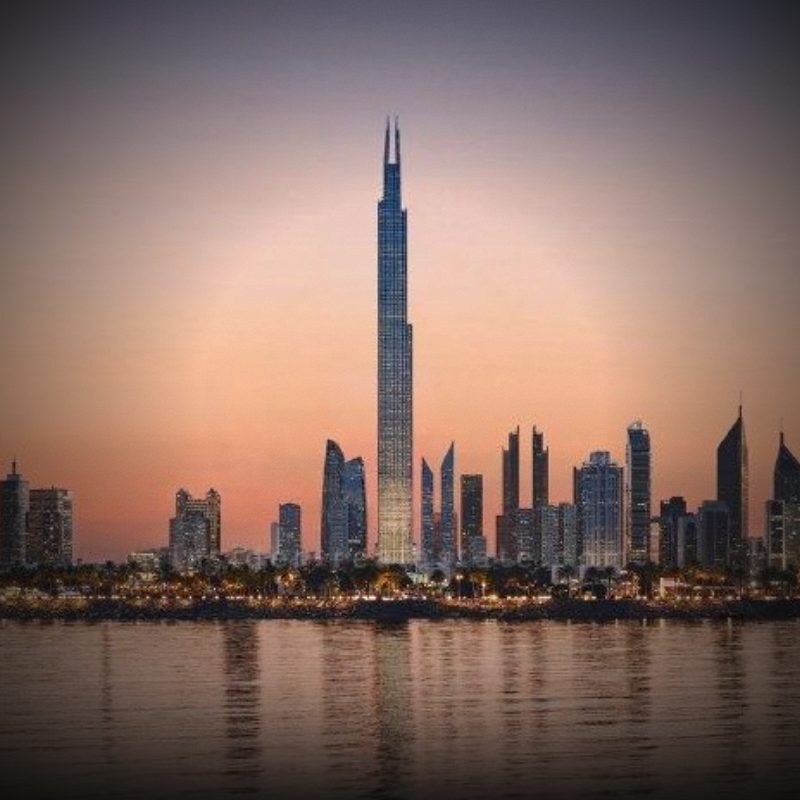
In April 2026 three developers signed AED 3.7bn of construction contracts: AED 1.1bn for 850 La Tilia townhouses in Villanova, AED 1.1bn for Burj Azizi's steel frame and AED 1.5bn for 859 Sukoon villas in Sharjah. What a signed main contract tells an off-plan buyer.

Dubai off-plan launches of 2024 revisited: Altus, One Residence, V1V1D, Pristine, The Watercrest and Lagoon Views
Six 2024 Dubai launches two years on: Emaar’s Altus and Ellington’s The Watercrest are sold out and on schedule, DAMAC’s Lagoon Views phases complete in 2027, while One Residence (Ginco), Pristine (Zoya) and V1V1D (Object 1) need their 2026–27 dates checked against site progress.