
Non-Oil Sector Now 74.6% of UAE GDP; Dubai Draws $14bn in Foreign Investment
The UAE’s non-oil economy has grown to 74.6% of GDP, up 4.5%. Dubai alone attracted $14bn in foreign direct investment — up 33% year on year — and a record 1,117 new greenfield projects.
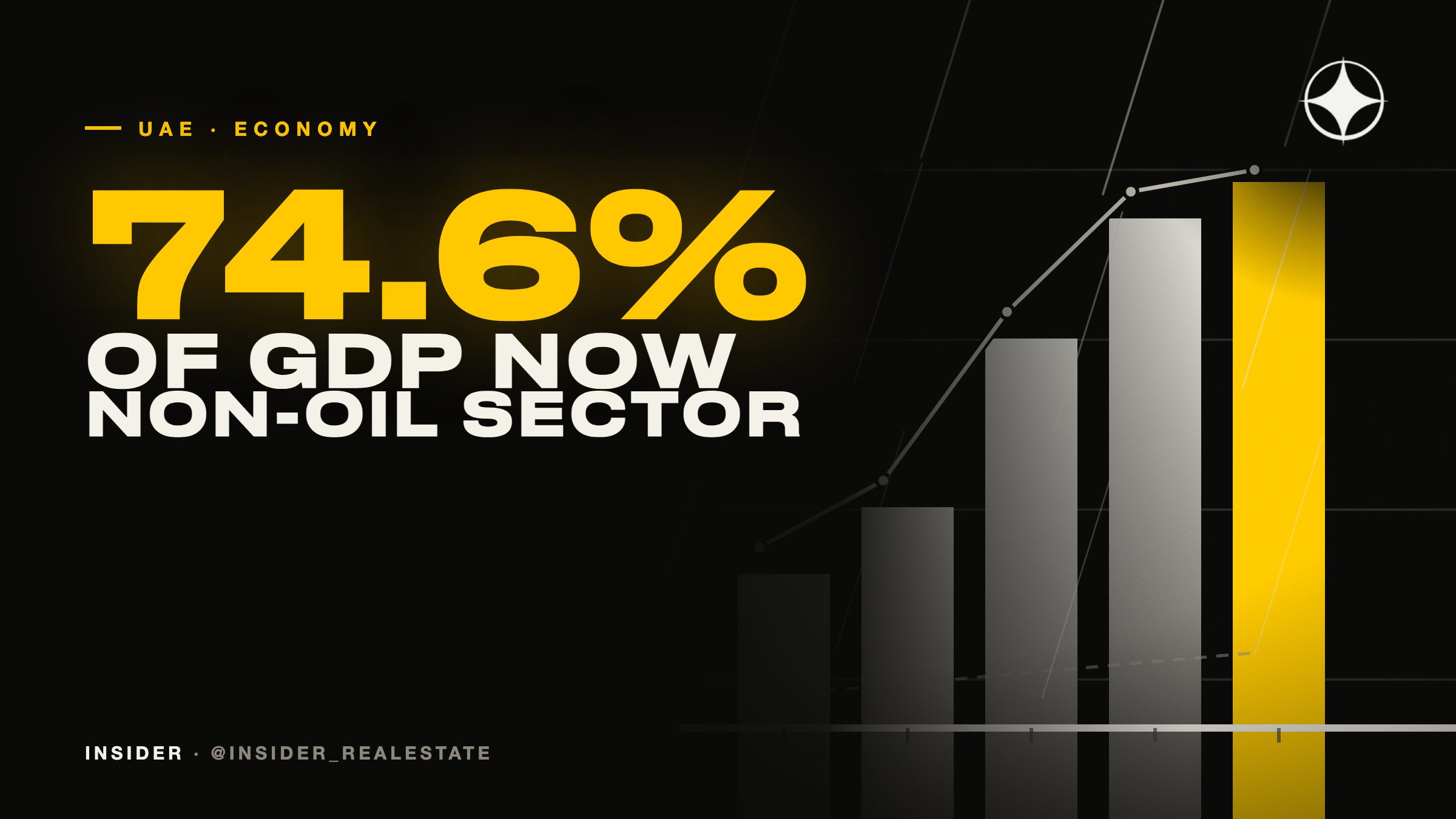
Diversifying the UAE economy has stopped being a slogan and become a statistic. According to the Ministry of Economy, the non-oil sector now accounts for 74.6% of the country's GDP.
Key figures
- Non-oil GDP: +4.5% in the first nine months of the reporting period, reaching $269 billion.
- Real GDP: +3.8%, reaching $354 billion.
- The main drivers of non-oil growth are trade and financial services.
- Forecast: national GDP around $817 billion by 2031.
Dubai and foreign direct investment
- $14 billion in foreign direct investment drawn by the emirate over the year — up 33% on the year before.
- 1,117 new greenfield projects — a record for Dubai.
Greenfield investment means building a business from scratch rather than buying an existing one. The distinction matters: these projects build offices, hire staff and lease space — they create demand rather than just redistribute ownership.
How this connects to real estate
The link runs both ways. Over a thousand new projects means thousands of employees who need housing and companies that need offices. That's exactly the mechanism behind office vacancy sitting at a few percentage points in the emirate, and why rental demand for housing recovers faster than sale prices.
Talk to a licensed broker: 📲 +971 50 120 32 64 on WhatsApp, @dubai_oleg on Telegram
The reverse also holds: the property market's stability rests on a real economy, not an inflow of speculative capital. With the non-oil sector at three-quarters of GDP, the oil-price cycle stops being the deciding factor for the housing market.
Based on data from the UAE Ministry of Economy and Dubai foreign direct investment statistics.
In the news
Other write-ups on the site about the same thing.
UAE Economic Stability: Second in the World, Behind Only Switzerland
An international stability study ranks the UAE second worldwide, ahead of Canada, Germany and Japan. GDP per capita rivals Western Europe, and the country’s sovereign wealth funds hold trillions of dirhams in assets.

Dubai's Big-Ticket Office Deals Triple as DIFC Registers 1,081 New Companies
Deals on offices over AED 10 million tripled in six months to 83. DIFC set a record for new company registrations. Why the gap between prime and secondary buildings is set to widen.
Dubai Cracks the Top 7 Global Financial Centres: What It Means for Housing
Dubai climbed four places to rank 7th on the Global Financial Centres Index, its best result ever. At the same time, the UAE posted a record AED 177.3bn in foreign direct investment. How both feed through to apartment prices.

Dubai property prices after 2008 and the pandemic: what history actually shows
Dubai prices fell roughly 45% in 2009 and barely dipped in 2020 — then both times the market recovered and pushed past old highs. We walk through both cycles with sourced numbers, and what that means for anyone timing a purchase in 2026.
UAE economy in 2026: PMI at 55.3 in August, GDP up 3% and Dubai private schools in the PISA global top ten
The UAE non-oil PMI rose to 55.3 in August 2026, its highest since December 2024. Real GDP grew 3% in Q1, with the non-oil share at 79.4%. Dubai private schools ranked 6th in the world for reading and 8th for maths in PISA 2025. Why the economy looks stronger than the housing mood.
D33: Dubai’s plan to double its economy by 2033, and what it means for property
D33 targets AED 32 trillion in economic activity over ten years and AED 650 billion in foreign direct investment by 2033. We unpack the numbers and why they already translate into rental demand.