
Lumena Alta by Omniyat: Dubai’s most luxurious office tower
Omniyat built its reputation on residential buildings that look like sculpture — One Palm, The Opus, Lana. Lumena Alta is the same design ambition applied to an office tower, which is unusual in a market where offices are typically built to a budget and let on square metres. The question worth answering is whether prime office in Dubai commands a premium the way prime residential does.
What a prime office building means
In mature office markets there is a clear hierarchy: Grade A prime, Grade A, Grade B, and everything else. The distinctions are not marketing — they map to floor plate efficiency, ceiling height, power and cooling capacity, lift performance, sustainability certification, amenity provision and address.
Dubai historically had very little genuine Grade A prime. It had DIFC, a handful of towers on Sheikh Zayed Road, and a great deal of Grade B stock built in the 2000s that was already dated by 2015.
That scarcity is the commercial logic for Lumena Alta. Demand from firms that want a genuinely prime environment — family offices, funds, law firms, regional headquarters — has consistently exceeded the supply of buildings that qualify.
Talk to a licensed broker: WhatsApp +971 50 120 32 64 · Telegram
What Omniyat brings to it
Design quality that is unusual in the office segment: architectural ambition, material specification, and lobby and common-area treatment closer to a luxury hotel than a business tower.
Amenity thinking imported from residential — food and beverage, wellness facilities, meeting and event space — which in the post-pandemic office market has become a real leasing differentiator rather than a decoration. Firms use the building as a recruitment argument.
And a track record of delivering what is drawn, which in the ultra-prime segment is not universal.
Who leases prime office space in Dubai
Financial services firms that cannot fit inside DIFC or do not need the regulatory wrapper. Family offices, which have proliferated in Dubai over the last five years and are typically small headcount with a very high willingness to pay per desk.
Regional headquarters of international companies, particularly since the UAE introduced incentives for firms relocating regional HQ functions.
Law, consulting and advisory firms whose client-facing space is part of their pitch.
What these tenants have in common is low sensitivity to rent per square foot and high sensitivity to quality, address and speed of occupation. That is the ideal tenant profile for a landlord.
Does the premium convert into returns?
Rent per square foot in genuinely prime buildings runs well above the market average, and the tenant covenants are stronger, which means lower default risk and longer leases. Those are real advantages.
The entry price is also higher, which compresses the yield relative to secondary stock. Prime assets in every world market trade at lower yields than secondary ones, because the income is more secure and the buyer pool is deeper.
The genuine argument for prime is total return rather than running yield: better rental growth over a cycle, lower vacancy, less capital expenditure required to stay competitive, and a much easier exit. If you are optimising purely for current income, secondary stock in a good location will beat it on paper.
The risks specific to this segment
Prime is more cyclical at the top. When corporate budgets tighten, the first thing cut is the expensive floor, and prime rents can fall faster in a downturn than mid-market ones — though they typically recover faster too.
Competition is arriving. Dubai now has a pipeline of new premium office towers responding to exactly the shortage that made this segment attractive. Buying at the peak of a supply shortage that is about to be addressed is a real risk.
And the capital requirement is large. A floor in a building like this is not a starter commercial investment; the ticket size limits your ability to diversify.
How I would approach it
Verify the leasing status honestly: what is committed, at what rent, on what term, to what covenant. A prime building with a strong pre-let profile is a very different proposition from one hoping to find tenants after completion.
Compare against the DIFC-adjacent alternatives at the same budget. Sometimes two floors in an excellent but unbranded building beat one floor in a trophy tower on every metric that matters.
And take a view on the supply pipeline. The scarcity argument that underpins prime Dubai office pricing depends on the pipeline staying modest, and that is a checkable fact rather than an assumption.
What tenants at this level actually pay for
Not square metres. A family office or a fund taking a floor in a prime tower is buying the arrival sequence, the lobby, the lift performance, the quality of the meeting space and what it says to a client who visits.
That is why prime office rents per square foot run so far above the market average while the tenants show almost no price sensitivity — the rent is a small line in their cost base and the space is part of how they present themselves.
It is also why amenity has become a leasing differentiator since the pandemic. Food and beverage, wellness facilities and event space are used as recruitment arguments by the firms that lease here.
For a landlord that produces the ideal tenant profile: low sensitivity to rent, high sensitivity to quality, and long leases with strong covenants.
Frequently asked
What makes an office building Grade A prime?
Floor plate efficiency, ceiling height, power and cooling capacity, lift performance, sustainability certification, amenity provision and address. These are measurable criteria, not marketing terms.
Do prime offices give lower yields than secondary ones?
Usually yes. Prime assets trade at compressed yields because income is more secure and the buyer pool deeper. The case for prime rests on total return — stronger rental growth, lower vacancy, less capex and an easier exit.
Who is Omniyat?
A Dubai developer known for design-led luxury projects including One at Palm Jumeirah, The Opus and Lana. Lumena Alta applies the same approach to commercial space.
✍️ Message me on WhatsApp for a free consultation — off-market stock, payment plans and honest numbers on any of the projects covered here.
✅ Subscribe on YouTube — investment, property, business and relocation in the UAE and beyond.


Below market right now
From the daily off-market feed. Availability and price are confirmed on request.
All below-market listings →

In the news
The same subject in writing — analysis and news related to this video.

New Dubai office towers: Immersive Tower in DIFC, Aldar's Sheikh Zayed Road building and Bureau Lamar in Business Bay
Three major office schemes are rising around DIFC and Business Bay: Immersive Tower ($300m, 58,573 sq m, 2027), Aldar's 88,000 sq m tower by Emirates Towers metro (Q4 2027), and an office park with a theatre on Business Bay's largest plot. Vacancy in central clusters sits at 2–5%.
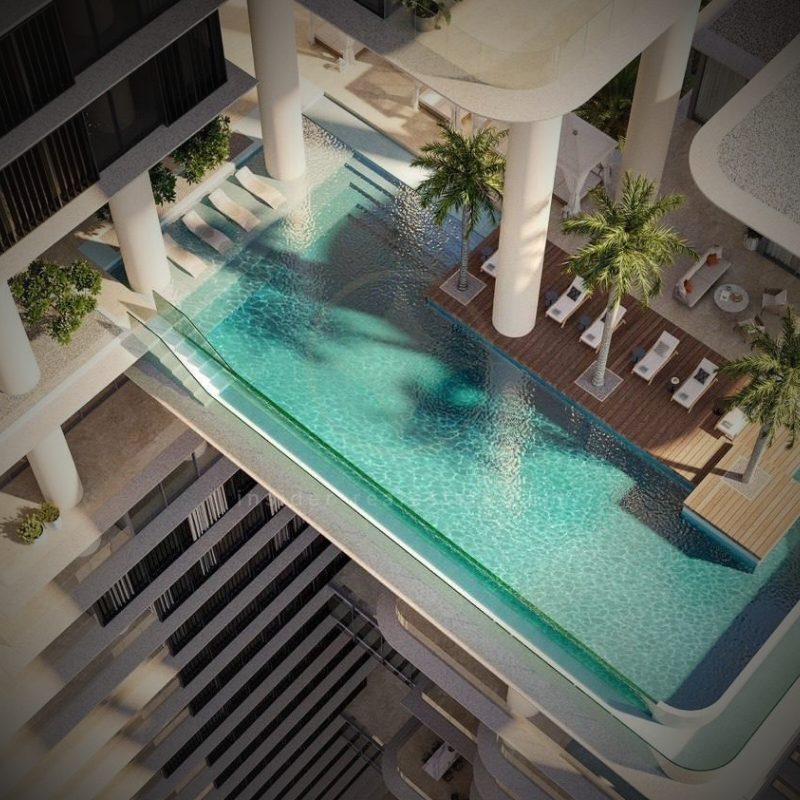
Omniyat's Marasi Bay island: a beach club by the Burj Khalifa and a fully funded $11.7bn portfolio
Omniyat bought a reclaimed island in Marasi Bay to build the Burj Khalifa district's only urban beach club and Sunset Park, a private floating island for VELA Viento residents. In March 2026 it priced a $600m sukuk at 7.25% and said its $11.7bn launched portfolio is fully funded to completion.

From 9% to 18.7%: how one assumption doubles an office yield
Office project decks often show a yield range. It looks like a range of outcomes. It is not — it is three different rent forecasts laid out in a table.

Business Bay commercial rents rose about 25% a year for three years running
Extrapolate that and you get payback in eight years and double-digit dollar returns. Four reasons the extrapolation does not hold.

Dubai Commercial Property Hits AED 30.4bn in a Quarter as Offices Surge 93%
Dubai's commercial property sales reached AED 30.38 billion in Q3 2025 — up about 30% year on year. Office deals grew 93% by value to 1,153 units worth AED 3.1bn. Business Bay, JLT and Majan led by deal count.
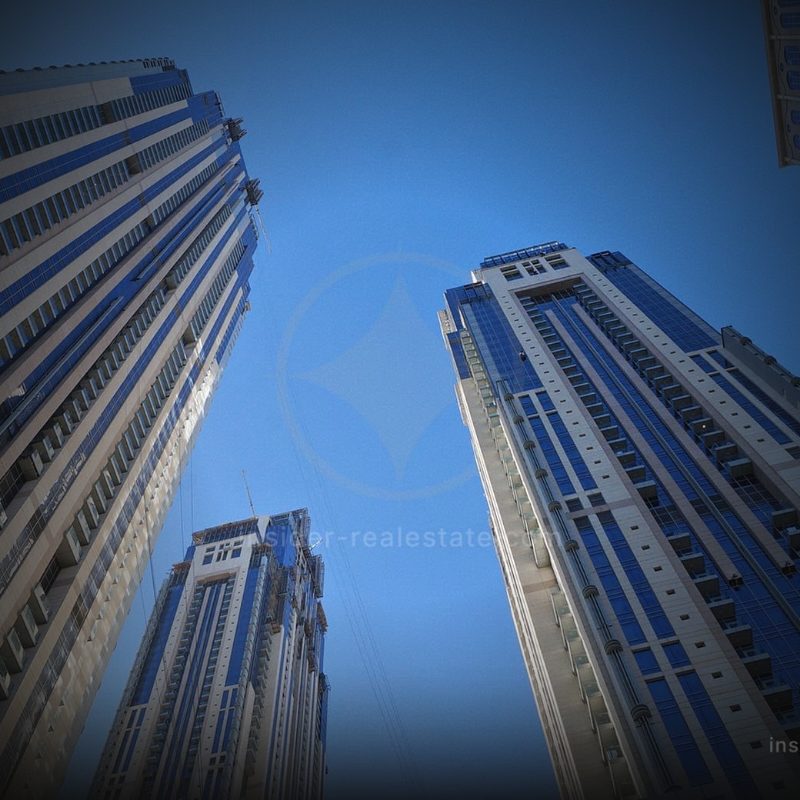
Dubai skyscrapers: Corinthia Dubai above 500 metres and Al Habtoor’s AED 5bn tower in Al Habtoor City
Corinthia Dubai, twin towers above 500 m on Sheikh Zayed Road with a rooftop pool and a Corinthia hotel, is due by 2030. Al Habtoor Group has announced an AED 5bn ($1.36bn) office tower in Al Habtoor City. What the two projects say about the market and who should care.