
Baccarat Dubai: the branded residence next to the Burj
Baccarat is a French crystal house founded in 1764 that now puts its name on hotels and residences. Its Dubai project, developed by H&H on the edge of Downtown, is one of the most expensive residential addresses in the emirate. This article is about what branded ultra-luxury actually delivers, and how to tell the substantial versions from the licensing exercises.
The project
Baccarat Dubai occupies a plot on Sheikh Zayed Road at the edge of the Downtown district, close enough to the Burj Khalifa for the view to be the primary asset and far enough from the boulevard to avoid the tourist crush.
The scheme combines a Baccarat hotel with branded residences above and alongside it, with the hospitality operator running the service layer for both. Unit sizes are large, the unit count is low, and the specification is at the top of what is built in Dubai.
H&H is a UAE developer with a portfolio at the premium end of the market and a reputation for delivering what it draws — which is not universal in this segment.
Talk to a licensed broker: WhatsApp +971 50 120 32 64 · Telegram
What a luxury brand actually contributes
There is a spectrum. At one end, a brand licences its name, approves the interior mood board and collects a royalty; the building is otherwise ordinary. At the other, the brand operates the property, sets and enforces service standards, trains the staff and takes reputational responsibility for the result.
The difference is enormous and it is almost never explained in marketing. The question to ask is simple: is the brand the operator, or just the label? An operating agreement means service standards are contractually enforceable; a licensing agreement means they are aspirational.
Where the brand does operate, what you are paying for is a service level rather than a logo: staffing ratios, response times, concierge capability, and the maintenance standard of the common areas over a twenty-year horizon. That is genuinely valuable and it does show up in resale.
The service charge at this level
It is very high in absolute terms, and it should be. A building with hotel-standard staffing, extensive amenity and a low unit count spreads a large fixed cost across few owners.
Compare it per square foot against other branded residences rather than against ordinary apartments, and then decide whether the service level justifies the delta. In some Dubai branded projects it clearly does; in others you are paying hotel rates for apartment service.
Ask specifically what is included. In the better-run schemes, a meaningful part of the charge covers services you would otherwise buy separately — housekeeping allowances, valet, guest suites. In the weaker ones, it covers the same things any building covers, at a higher price.
My advice for this segment
Buy the location first and the brand second. A weak location does not become prime because a luxury house put its name on the door.
Read the operating agreement, or have a lawyer read it. Term, renewal, standards, and what happens on termination.
Get the service charge in writing with the scope itemised, and compare per square foot against two other branded schemes.
And view at least three competing branded residences before committing. In this segment the marketing is exceptionally good and the only reliable calibration is physical comparison.
How branded residences perform on resale
Internationally, the best-operated branded residences trade at a persistent premium to unbranded stock in the same location, typically in the range of twenty to forty percent. The premium survives resale when the operator remains and the service standard holds.
Where it does not survive is when the brand exits, when the operating agreement lapses, or when the building was never operated by the brand in the first place. Then you own an ordinary apartment with an unusually high service charge, which is the worst combination available.
So the due diligence question that matters most is the term of the operating agreement and what happens at its expiry. Ask for it in writing. Very few buyers do.
Dubai’s branded-residence market, honestly assessed
Dubai now has more branded residence schemes than any other city in the world by a wide margin. Some are excellent. A significant number are licensing arrangements attached to conventional buildings, sold at a premium the product does not support.
The concentration also means the segment is no longer scarce. Fifteen years ago a branded residence in Dubai was rare and the premium reflected that; today the buyer has choice, and choice erodes premiums.
The projects that will hold value are the ones where the location is genuinely prime, the unit count is genuinely low, and the operator is genuinely operating. Those three tests eliminate most of the field.
Dubai's branded-residence market, in context
Dubai now has more branded residence schemes than any other city in the world by a wide margin. Some are excellent. A significant number are licensing arrangements attached to conventional buildings, sold at a premium the product does not support.
The concentration also means the segment is no longer scarce. Fifteen years ago a branded residence here was rare and the premium reflected that; today the buyer has choice, and choice erodes premiums.
The schemes that will hold value are the ones where the location is genuinely prime, the unit count is genuinely low, and the operator is genuinely operating. Those three tests eliminate most of the field.
Apply them before paying anything for a name, and view at least three competing branded schemes before committing — in this segment the marketing is exceptionally good and physical comparison is the only reliable calibration.
Frequently asked
What is the difference between a licensed and an operated branded residence?
In a licensing deal the brand lends its name and design input and collects a royalty. In an operating agreement the brand runs the property and is contractually responsible for service standards. The second commands and retains a resale premium; the first often does not.
Do branded residences hold their value in Dubai?
The best-operated ones in prime locations do, typically at a premium to unbranded stock. Schemes where the brand is only licensed, or where the operating agreement can lapse, are far less reliable — check the agreement term before buying.
Why are branded residence service charges so high?
Hotel-standard staffing, extensive amenities and low unit counts mean a large fixed cost spread across few owners. Ask what the charge actually includes — in well-run schemes it covers services you would otherwise pay for separately.
✍️ Message me on WhatsApp for a free consultation — off-market stock, payment plans and honest numbers on any of the projects covered here.
✅ Subscribe on YouTube — investment, property, business and relocation in the UAE and beyond.


Below market in Downtown Dubai right now
From the daily off-market feed. Availability and price are confirmed on request.
All below-market listings →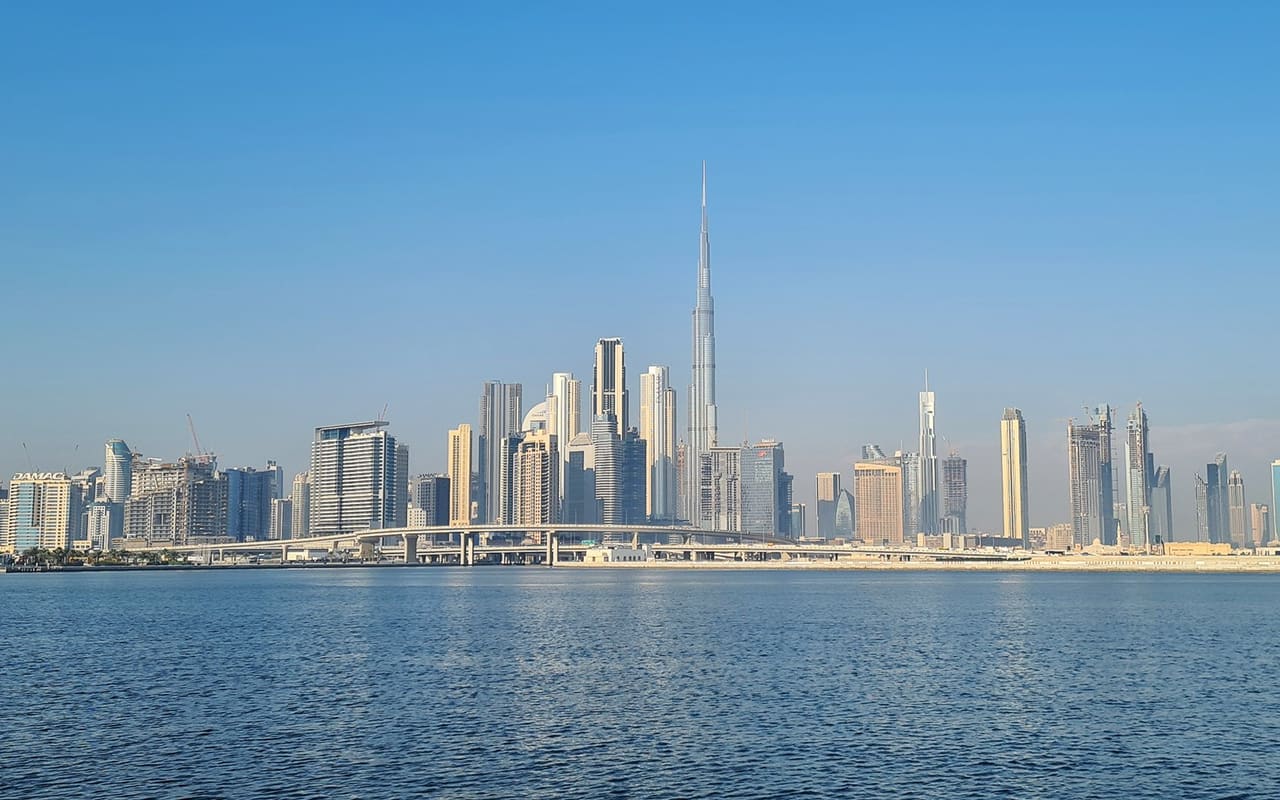
In the news
The same subject in writing — analysis and news related to this video.

Omniyat: the ultra-prime end, where the rules are different
A developer that builds few buildings at the very top of the market. How the ultra-prime segment behaves differently on pricing, liquidity and comparables — and what due diligence looks like there.

Al Maryah Island apartments: W Residences Abu Dhabi, the capital’s first W-branded homes, due in 2027
W Residences Abu Dhabi is the first W-branded residential project in the UAE capital, on the financial district of Al Maryah Island. Developer Taraf (Yas Holding) broke ground in January 2025 with Marriott; 1–4 bed apartments, duplexes and penthouses launched from AED 2.2m, with handover in Q4 2027.

Al Reem Island apartments: Radisson Residences and Rixos Al Reem, branded homes next to Abu Dhabi’s financial centre
Al Reem now has two branded schemes: the world’s first standalone Radisson Residences (phase one, AED 1.2bn, sold within a day; phase two with 437 furnished units in September 2026) and 386 Rixos residences by East & West, one-bedrooms from about AED 2.1m, completing Q1 2029.

Saadiyat Island apartments: Mandarin Oriental Residences and Henge Residences beside Abu Dhabi’s museums
Two branded launches on Saadiyat six months apart: Aldar’s Mandarin Oriental Residences (about 228 homes, designed by BIG, from AED 6.2m, Q3 2028) and Nord’s Henge Residences (166 homes, from AED 1.1m, 2028). Guggenheim Abu Dhabi opens on 11 December 2026.

Saadiyat Island apartments: Nobu Residences and The Source Terraces by Aldar, two years on
Two premium Aldar launches on Saadiyat: Nobu Residences (88 homes, November 2023, from about AED 7m) and The Source Terraces designed by BIG (June 2024, from about AED 3m). Both are sold out and due in 2027 — so the only way in now is a resale contract.

Palm Jumeirah branded residences: ELA by Omniyat, run by Dorchester Collection, from AED 43m
ELA Residences is Omniyat’s ultra-prime scheme on the Palm Jumeirah crescent: Zaha Hadid Architects design, Dorchester Collection service, three- and four-bedroom homes and duplexes. Launched June 2024, under construction since May 2024, entry around AED 43m, handover still Q1 2028.