
Eywa, Business Bay: the location behind the most unusual building on the canal
Eywa is the building people photograph and then ask what it is. Biophilic design, hanging gardens, a rock-and-root facade — architecturally it is unlike anything else on the canal. But the reason it works as an asset is far more boring than the architecture, and it is the plot.
The plot, which is the actual story
Eywa sits directly on the Dubai Water Canal in Business Bay, on the stretch where the canal has a genuine promenade and where the water frontage is uninterrupted. In a district assembled plot by plot over twenty years, the canal-edge sites are finite and most are now built.
What that means for a buyer is that the defining feature of the property — the water frontage and the view corridor along the canal — is not something a future development can take away. In Business Bay, where residents have repeatedly watched their outlook disappear behind a new tower, that is worth real money.
It also means walkability to the canal promenade, which has become one of the genuinely pleasant public spaces in central Dubai, and a short crossing to Downtown.
Talk to a licensed broker: WhatsApp +971 50 120 32 64 · Telegram
What the architecture actually delivers
The biophilic design is not purely decorative. Heavy planting on the facade and terraces produces meaningful shading, which in a Dubai summer translates into lower cooling load in the units behind it. Whether that offsets the cost of maintaining the planting is a question for the service charge.
The unit count is deliberately low for a building of this footprint, which means large apartments, low density and few neighbours. That is a different product from the studio-heavy towers a few hundred metres away, and it attracts a different buyer entirely.
The flip side of low density and heavy landscaping is a high service charge. Vertical gardens require irrigation, horticultural maintenance and replacement. Ask for the specific figure and the specific scope of what it covers before you model any return.
Who buys here
End users, mostly. This is not a yield play and it is not configured as one: large units in a low-density building on a premium plot rent to a narrow tenant pool at a rent that will not justify the purchase price on a spreadsheet.
The buyer is someone who wants a genuinely distinctive home in central Dubai and is willing to pay a design premium for it, in the same way that people pay a design premium for a specific address in any world city.
As an investment it is a scarcity bet rather than a cash-flow one: a unique building on an unrepeatable plot in a district that is otherwise full of interchangeable towers.
What I would check
The service charge, in writing, with the landscaping maintenance scope specified. This is the single largest variable in a building like this.
The exact unit outlook, because even on a canal plot, orientation determines whether you see water or the neighbouring building.
The resale comparables, which on a low-unit-count building will be thin. Thin comparables mean wide pricing uncertainty in both directions.
The canal plot and why it cannot be repeated
Eywa sits directly on the Dubai Water Canal in Business Bay, on the stretch with a genuine promenade and uninterrupted water frontage. In a district assembled plot by plot over twenty years, the canal-edge sites are finite and most are now built.
That means the defining feature of the property — the water frontage and the view corridor along the canal — cannot be taken away by a future development.
In Business Bay, where residents have repeatedly watched their outlook disappear behind a new tower, that protection is worth real money and it is the strongest part of the investment case.
It also means walkability to the canal promenade, which has become one of the genuinely pleasant public spaces in central Dubai, and a short crossing to Downtown.
What the biophilic design actually does
The heavy planting on the facade and terraces is not purely decorative. Dense vegetation shades the glazing behind it, which in a Dubai summer translates into a measurably lower cooling load in the apartments.
The low unit count for the footprint is the more consequential decision: large apartments, low density and few neighbours, which is a different product from the studio-heavy towers a few hundred metres away.
Whether the underlying design philosophy appeals to you is a personal question. The physical consequences — shade, space, privacy — are real regardless of what you think of the framework.
The flip side is the service charge. Vertical gardens require irrigation, horticultural maintenance and periodic replanting, and that is a permanent cost that does not exist in a conventional tower.
Who buys here and what to check
End users, mostly. Large units in a low-density building on a premium plot rent to a narrow tenant pool at a rent that will not justify the purchase price on a spreadsheet.
The buyer is somebody who wants a genuinely distinctive home in central Dubai and is willing to pay a design premium for it — as a scarcity hold rather than a cash-flow asset.
Get the service charge in writing with the landscaping maintenance scope specified. This is the single largest variable in a building like this and it recurs forever.
Verify the exact outlook from the actual unit, because even on a canal plot orientation determines whether you see water or the neighbouring building.
And note that resale comparables on a low-unit-count building will be thin, which means wide pricing uncertainty in both directions.
Frequently asked
Is Eywa a good rental investment?
It is primarily an end-user building. Large, low-density units on a premium canal plot with a high service charge do not produce competitive rental yields compared with standard Business Bay stock. Buy it to live in or as a scarcity hold, not for cash flow.
Why is the service charge high in heavily landscaped buildings?
Vertical gardens and planted terraces need irrigation systems, ongoing horticultural maintenance and periodic replanting, all billed back to owners. Always request the charge in writing with the maintenance scope specified.
✍️ Message me on WhatsApp for a free consultation — off-market stock, payment plans and honest numbers on any of the projects covered here.
✅ Subscribe on YouTube — investment, property, business and relocation in the UAE and beyond.


Below market in Business Bay right now
From the daily off-market feed. Availability and price are confirmed on request.
All below-market listings →
In the news
The same subject in writing — analysis and news related to this video.
Dubai skyscrapers: Corinthia Dubai above 500 metres and Al Habtoor’s AED 5bn tower in Al Habtoor City
Corinthia Dubai, twin towers above 500 m on Sheikh Zayed Road with a rooftop pool and a Corinthia hotel, is due by 2030. Al Habtoor Group has announced an AED 5bn ($1.36bn) office tower in Al Habtoor City. What the two projects say about the market and who should care.
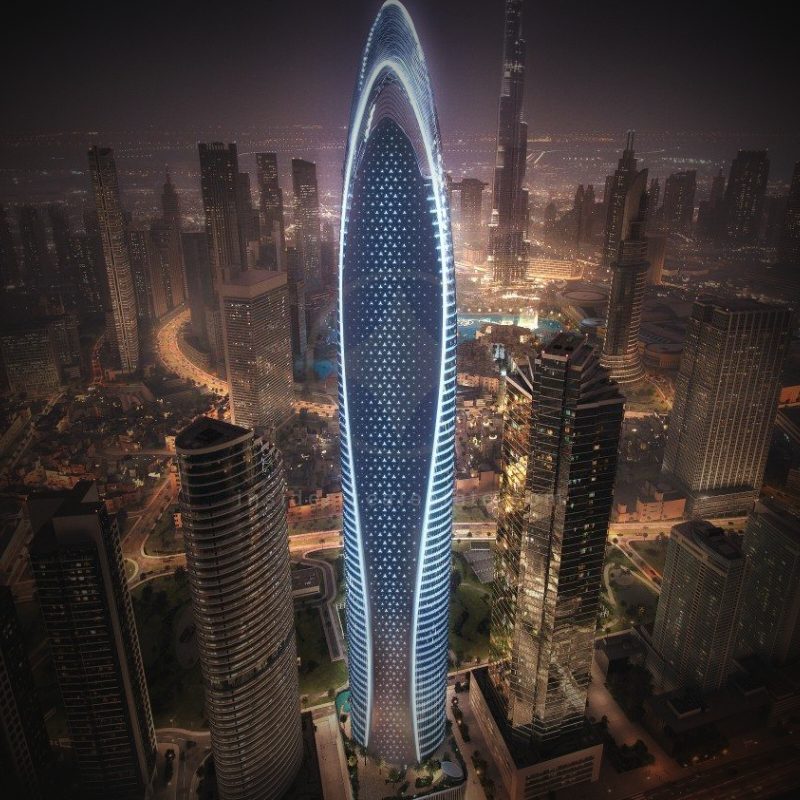
Car-brand residences in Dubai: Bugatti, Mercedes-Benz, Aston Martin, Pagani and Bentley compared
Five car makers now put their names on Dubai homes: 182 Bugatti Residences in Business Bay, the 341-metre Mercedes-Benz Places, Aston Martin interiors at Viewz, a 19-storey Pagani tower on the canal and Bentley Home villas from AED 20m. What the badge actually buys.
New Dubai office towers: Immersive Tower in DIFC, Aldar's Sheikh Zayed Road building and Bureau Lamar in Business Bay
Three major office schemes are rising around DIFC and Business Bay: Immersive Tower ($300m, 58,573 sq m, 2027), Aldar's 88,000 sq m tower by Emirates Towers metro (Q4 2027), and an office park with a theatre on Business Bay's largest plot. Vacancy in central clusters sits at 2–5%.
AMBS Real Estate Development: what a studio-heavy building is like to own
A developer building a mid-size tower in Business Bay. The unit mix decides who your neighbours are, how the building is run, and how your service charge gets set.

Ginco Properties: building in Business Bay, where supply is the whole question
A developer with a tower under construction in Business Bay. The district has plenty of demand and even more supply — and that ratio, not the building, decides the outcome.
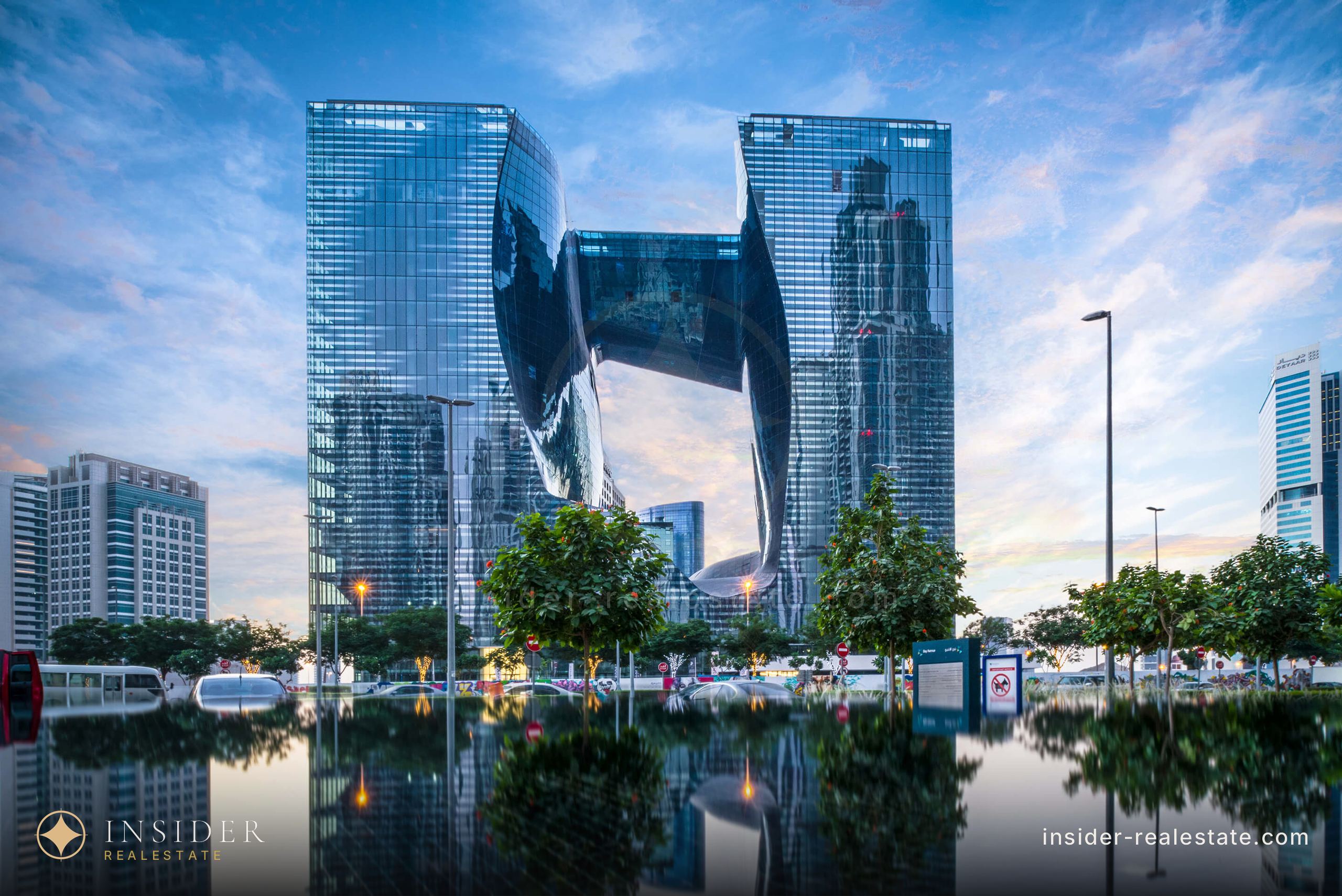
The Opus: how a Zaha Hadid building became a price anchor in Business Bay
A cube with a living form carved out of its centre — Zaha Hadid’s last Dubai project, where her practice designed both the exterior and the interiors of the ME Dubai hotel. How an architectural statement works on the value of the district around it.