
Buying inside the Burj Khalifa: what the address buys, and what it does not
There is no other apartment in Dubai that a buyer anywhere in the world can picture before seeing a photograph. That is the whole of the premium and most of the risk: when the address does the selling, it is easy to stop asking the questions you would ask about any other fourteen-year-old tower.
What the passport records
The Burj Khalifa is a mixed-use building of one hundred and sixty-seven storeys by Emaar Properties, with Skidmore, Owings & Merrill as architect, recorded as complete with a completion year of 2012. The passport lists pool, gym, spa, dining and garden amenity.
Mixed-use is the important word. The tower contains offices, a hotel and residential floors, and the residential component occupies specific bands rather than the whole height. Which band a unit sits in determines almost everything about it.
A 2012 completion means the building has been through its first full maintenance cycle. In Downtown that is the normal state of the stock — most residential towers there were completed between 2008 and 2016 — but in a building of this height the mechanical systems are of a different order.
Talk to a licensed broker: WhatsApp +971 50 120 32 64 · Telegram
It stands at the centre of Downtown Dubai, a district of roughly two square kilometres developed by Emaar to a single plan, with the fountain lake wrapped around the tower and Dubai Mall to the east.
The floor is the asset
In most towers the building is the unit of analysis and the floor is a modifier. Here it is the other way round. The residential bands differ in ceiling height, layout, outlook, lift zoning and the length of the journey to the ground, and two apartments in the same tower can have very little in common.
The lift journey is not a detail at this height. Lifts are zoned, and reaching an upper residential floor can involve a transfer. Ask how the zoning works for the specific unit and, if you can, make the journey at a busy hour.
The view is priced explicitly across Downtown and more so here. Sea, creek, city or across the boulevard are four different products, and within each of them the floor decides how much of it you get. Look from the actual unit at the actual floor — never from a show apartment two floors up, which is the oldest habit in this district.
Layouts in Downtown generally run tighter than in Marina or JLT for the same money, because expensive land pushes the developer to extract units per storey. The tower’s residential floors are not exempt from that arithmetic, and it is worth measuring rather than assuming.
What the address does for liquidity
Downtown is among the most expensive districts in the emirate per square foot and simultaneously one of the most liquid: a unit there finds a buyer faster than almost anywhere in Dubai. Inside this particular building, the buyer pool is international in a way that no other Dubai address matches.
That matters more than most buyers account for. The difference between selling in three weeks and selling in eight months routinely outweighs the difference in entry price, and it is the clearest argument for paying a premium here rather than in a cheaper tower one district over.
The corresponding weakness is percentage yield. Long-let returns in Downtown are below the Dubai average, which is correct rather than disappointing — you are paying for liquidity and price stability, and the rent does not price the address the way the sale does.
Short-let is the higher-income route and Downtown is the tourism magnet of the emirate. It demands a holiday-home permit from Dubai Department of Economy and Tourism, a management company, turnover cleaning and guest handling, and it requires that the owners association permits it — which must be confirmed in writing for the specific building.
The service charge question
Downtown carries some of the highest service charges in Dubai, and in the older towers they have risen faster than achievable rent. Over a five-year hold the gap between a well-run building and one where the charge has escaped control runs into hundreds of thousands of dirhams.
A one-hundred-and-sixty-seven-storey mixed-use tower has an operating cost unlike anything else in the emirate: facade access, water pressure across the height, lift banks, life-safety systems, and plant that has to serve offices, a hotel and residences at once.
Ask for three years of charge history before making an offer. It tells you more about a building than a refurbished lobby does, and in this building it is the number that decides what the investment actually returns.
Read the apportionment as well as the level. In a mixed-use tower, how cost is divided between the commercial, hotel and residential components is a structural feature of the ownership, not a line item.
Living in the middle of Downtown
Downtown was conceived to be walked, which is rare in a city designed around the car. From most of the district you can reach the mall, the metro and the lake promenade on foot, with air-conditioned links through much of it — and by July that stops being a luxury.
Metro is Burj Khalifa / Dubai Mall on the red line, fifteen minutes to DIFC and twenty-five to Marina. Driving is the weaker option: access funnels through a handful of interchanges off Sheikh Zayed Road and the district congeals at peak and on event nights.
What the district does not have is schools. There are none inside Downtown; the nearest are in Al Wasl, Business Bay and Jumeirah, all of which mean a drive. For a family with school-age children the density and the tourist flow wear thin quickly.
And it is loud year-round. Around New Year the district is effectively closed to traffic, which is either the reason you bought here or the reason you will not renew.
Who this suits
A buyer for whom the address is part of what is being purchased, and who understands that it is priced in. That is not irrational — the address genuinely works at resale and at letting, and it works internationally.
A short-let operator willing to run the unit properly and to confirm permission first. Downtown is the strongest city-centre short-let location in the emirate.
An investor who values certainty of exit over maximum cash yield, which is the trade the whole district represents and this building represents most sharply.
It suits poorly a family needing schools, an investor chasing the highest percentage return, and anyone who has not read the charge history. If the skyline is what you want without the price or the crowd, Business Bay one district over has the same view at a materially lower entry and an easier parking situation.
Frequently asked
Can you buy an apartment in the Burj Khalifa?
Yes. The tower is mixed-use — offices, a hotel and residential floors — and the residential units are freehold. The project passport records one hundred and sixty-seven storeys, completion in 2012, Emaar Properties as developer and Skidmore, Owings & Merrill as architect.
Are Burj Khalifa apartments a good investment?
The argument is liquidity and an internationally recognised address rather than percentage yield, which in Downtown sits below the Dubai average. Service charges are among the highest in the emirate, so calculate the return after the charge and ask for three years of history before offering.
Are there schools in Downtown Dubai?
No schools sit inside the district. The nearest are in Al Wasl, Business Bay and Jumeirah, all of which mean a drive — which is why Downtown suits investors, short-let operators and central-working professionals better than families with school-age children.
✍️ Message me on WhatsApp for a free consultation — off-market stock, payment plans and honest numbers on any of the projects covered here.
✅ Subscribe on YouTube — investment, property, business and relocation in the UAE and beyond.


Below market in Downtown Dubai right now
From the daily off-market feed. Availability and price are confirmed on request.
All below-market listings →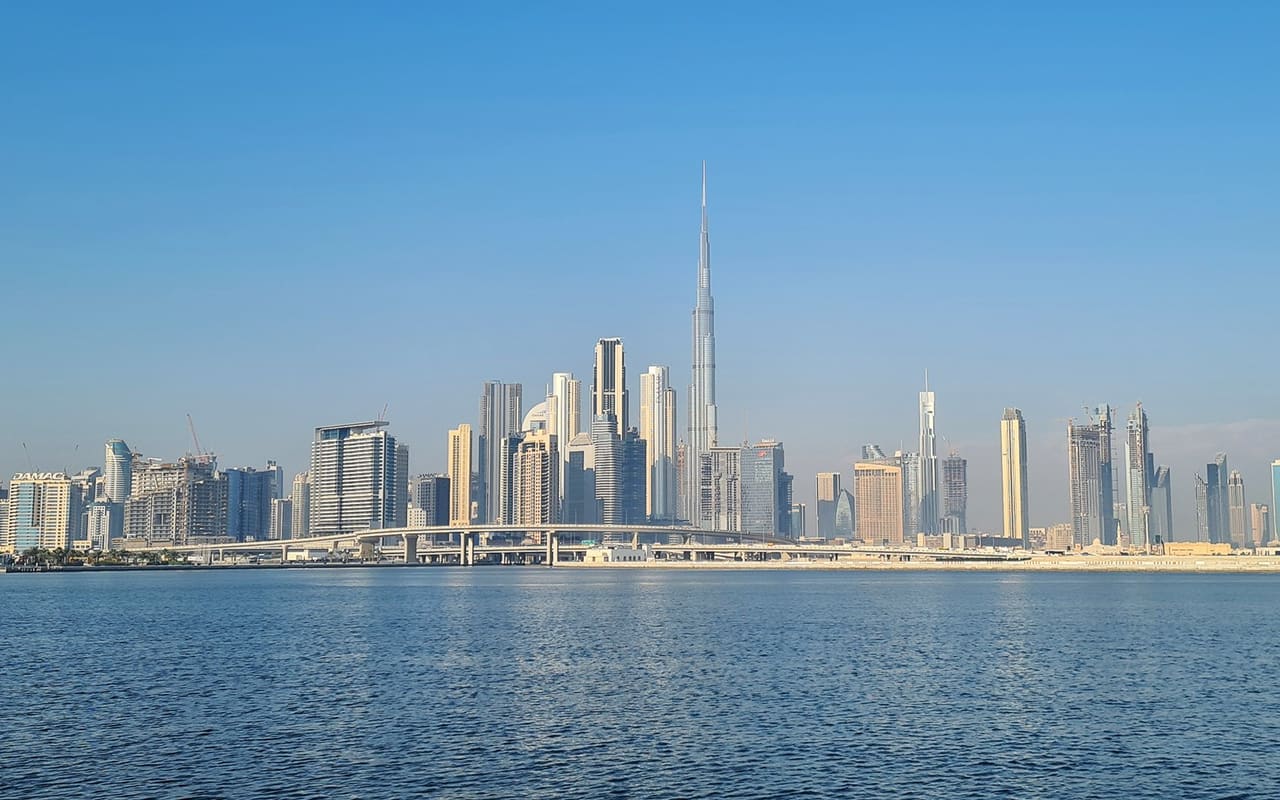
In the news
The same subject in writing — analysis and news related to this video.

Dubai Opera and the floating opera in Dubai South: culture as district infrastructure
It is easy to fall into two extremes about a cultural landmark next door — that it automatically lifts prices, or that it means nothing. Neither is right.

Triplanet Range Group: a small flat in a prime district, or a big one in a cheap district
A developer with buildings in both Downtown Dubai and Dubai Sports City. The oldest question in property investment, answered with the numbers that actually decide it.

Artar Real Estate Development: a small building in Downtown, where the landmarks are
A developer with a mid-size Downtown Dubai tower completed in 2018. What an ordinary building in an extraordinary district is worth, and how to price it honestly.

Shapoorji Pallonji International: when the builder becomes the developer
The Dubai arm of a construction group with a very long history. What a contractor’s lineage genuinely tells you about a building, and what it does not tell you about the sale.

Credo Investments: what a view is worth, and how to keep it
A developer with a small Downtown Dubai building from 2017. View premiums are large, real and frequently temporary — and whether yours survives is a matter of public record.

Althuraya Real Estate Development Ltd: buying in your name, or through a company
A developer with a Downtown Dubai tower completed in 2015. How you hold the title changes succession, transfer costs and privacy — and the default outcome surprises most foreign owners.