
The Jebel Ali coast: Dubai's last big stretch of undeveloped shoreline
Say "Dubai beach" and most people picture Jumeirah, JBR or the Palm. But the emirate's real coastal reserve lies south, at Jebel Ali — for decades a name that meant only the port and the industrial zone. The 2040 masterplan gives that shoreline a completely different job: a new recreational coast, anchored by the revival of the Palm Jebel Ali archipelago and a large increase in public beach.
Why the city is going south
Because the north is finished. Free frontage in the established coastal districts is essentially gone, and what remains changes hands at prices that reflect scarcity rather than construction cost.
Meanwhile demand for living near water keeps rising with the population, which the masterplan expects to grow substantially by 2040. A city that intends to add millions of residents and multiply its public beach has to find that beach somewhere.
South is the only direction with a long, largely unbuilt shoreline still in reach of the city. Everything else is either developed, industrial or too far.
Talk to a licensed broker: WhatsApp +971 50 120 32 64 · Telegram
Palm Jebel Ali, restarted
The second palm island was begun, then frozen for well over a decade after the financial crisis. Its revival is the single biggest signal in this part of the coast: it commits enormous reclamation and infrastructure spending to an area that had none.
It is also, straightforwardly, a very long project. Islands are built slowly, and the first residents of a new frond arrive years after the sales launch.
For a buyer that means the horizon is the whole investment thesis. This is a hold, not a trade, and the exit depends on a district existing that does not exist yet.
What else is happening along that stretch
Public beach expansion is the quiet part that matters most. Beaches are what turn a coastline into a place people want to live, and unlike towers they benefit everyone nearby rather than only the front row.
Behind the shoreline sit Dubai South, Jebel Ali Village, Al Furjan and Dubai Investment Park — existing districts with existing tenants, currently priced for being far from everything.
And underneath it all: the port, the free zone, the new airport. This is the same belt that carries the emirate's industrial employment, which is why rental demand there is real today rather than promised.
The case for buying early, stated honestly
The upside is genuine. Watching a coastal district form from the beginning is rare, and the difference between land priced as "far south" and land priced as "beachfront" is not a few percent.
The costs of being early are equally real: years without amenities, construction on every side, and a resale market with almost no comparable transactions, which makes both valuation and exit slow.
The compromise I usually suggest is to split the difference — take the exposure through an existing district in the same belt that already lets, rather than through a plot on an island that will complete in a decade.
The version of this I would buy
A ready unit in the southern belt that lets today, with the coastal development as the free option on top. The yield pays you to wait, which is the only comfortable way to hold a ten-year thesis.
If you want the island itself, size the position so that a five-year slip is survivable, and expect the exit to take months rather than weeks.
And keep the comparison honest: the alternative is not cash, it is an established district that produces rent from day one.
What to verify before committing
The delivery record of the specific developer in this area, not their record elsewhere. Reclamation and island infrastructure are a different discipline from building a tower on serviced land.
What is contractually committed versus illustrated. Renders of a completed coastline are marketing; the schedule in the sale and purchase agreement is the commitment.
And the payment plan against your own liquidity. Long projects mean long payment schedules, and the risk that hurts buyers here is being unable to meet an instalment three years in, not the district failing to develop.
What this does to the rest of the coast
Not much, in the medium term. New supply of beachfront eventually competes with existing beachfront, but the volumes here arrive over a decade and the north keeps its established advantages: the metro, the tram, the restaurants, the fact that everything is already there.
Where it does bite is at the margin of the mid-market. A buyer choosing between a smaller unit near an established beach and a larger one on a new coast now has a real choice, and that pressures pricing in the middle rather than at the top.
For owners on the north coast this is a reason to keep an eye on completion schedules rather than a reason to sell.
Frequently asked
Is Palm Jebel Ali a good buy now?
It is a long hold rather than a trade. Island infrastructure takes years, there are few comparable resales to price against, and the exit depends on a district that does not exist yet. If you buy, size it so that a multi-year delay is survivable.
Will the southern coast pull value away from Jumeirah and the Marina?
Not meaningfully in the medium term. New supply arrives over a decade, while the north keeps the metro, the tram and the amenities that already exist. The pressure shows up in the mid-market, where buyers now choose between a smaller unit on an established beach and a larger one on a new coast.
✍️ Message me on WhatsApp for a free consultation — off-market stock, payment plans and honest numbers on any of the projects covered here.
✅ Subscribe on YouTube — investment, property, business and relocation in the UAE and beyond.


Below market right now
From the daily off-market feed. Availability and price are confirmed on request.
All below-market listings →
In the news
The same subject in writing — analysis and news related to this video.
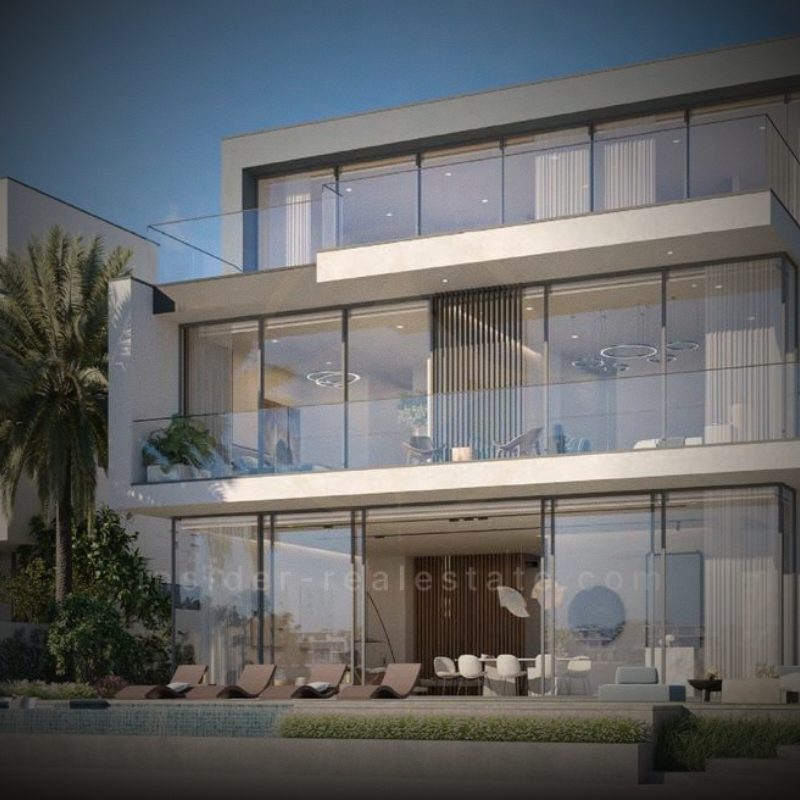
Palm Jebel Ali villas: the Beach and Coral Collections on Frond F — 44 homes by four architects
Nakheel has released 44 beachfront villas on Palm Jebel Ali’s Frond F: Beach Collection (5–6 beds, 7,500–8,500 sq ft) and Coral Collection (6–7 beds, up to 12,500 sq ft), ten designs by NAGA, SAOTA, LW Design and LOCI. 544 villas are under construction; the first mall, The Yard, opens in 2027.
Al Mamzar floating bridge and Jebel Ali Beach: what Dubai has actually built on its coastline by 2026
Khor Al Mamzar Beach reopened in May 2026 after a AED 500m upgrade: the region's first floating pedestrian bridge, a 3.6km swimming line, a 300-metre night beach and 5.5km of trails. The Al Mamzar corniche is still finishing, while the 6.6km Jebel Ali Beach is being delivered in phases.
Palm Jebel Ali: 5,200 hectares and 90 kilometres of coastline
Dubai’s second palm archipelago, restarted after a long pause. Its dimensions are worth stating in full, because they are what explains its effect on the market — including on the mainland behind it.
Waterfront villas in Dubai: from AED 21m on Palm Jebel Ali to 39.5m on Pearl Jumeirah
A five-bedroom villa is the most sought-after coastal format, which makes it a convenient way to compare locations. Four reference points, and the three factors behind the near-twofold gap.
UAE warehouses in 2026: a Grade A shortage, rising rents and who owns the market
Grade A warehouses in Dubai are close to full: JLL put occupancy in Jafza and Dubai Investments Park at 97–100% at the end of 2025, and industrial rents rose 6.8% year on year in Q2 2026 (5% in Abu Dhabi). Leases now run 7–9 years, not 3–5. Who owns the stock and what to check.
Dubai homes over $10 million: 500 sales in 2025 and a record 296 in the first half of 2026
Knight Frank counted 500 Dubai home sales above US$10m in 2025, worth US$9.05bn, against 30 in 2020. The first half of 2026 added 296 more worth US$5.1bn, a half-year record. Where the money went and why the top of the market held up.