
Resale in Peninsula: how to buy the best apartment in central Dubai second-hand
The best-priced units in a hot project are almost never the ones on the developer price list. They are the ones being resold by somebody who bought early, needs liquidity, and is willing to trade their position for cash today. This video walks the Peninsula masterplan from that angle, and this article explains how the resale and assignment mechanics actually work in Dubai — because they are where most of the money is won or lost.
Why resale beats the price list more often than people expect
A developer never discounts publicly. Doing so would repriceance every unsold unit in the tower and anger every buyer who paid full price last month. What developers do instead is hold the list price and sweeten terms. So the list is a ceiling, not a market.
A private seller has no such constraint. Somebody who committed to a four-year payment plan and has had a change of circumstances — a job move, a currency problem at home, a better opportunity elsewhere — will take a real discount to get out. In a masterplan with several hundred units under payment plan at any moment, there is always a handful of those sellers.
The catch is that finding them requires access rather than a website. The genuinely motivated sellers rarely list on the portals at their real price, because a public listing at a discount invites lowballing. This is the part of the job that is worth paying a broker for.
Talk to a licensed broker: WhatsApp +971 50 120 32 64 · Telegram
How an assignment sale actually works
If a unit is still under construction and the original buyer has not completed their payment plan, you are not buying a title deed — you are taking over their contract with the developer. This is an assignment, sometimes called a novation, and it has its own mechanics.
The developer must consent. Most require a minimum percentage of the price to have been paid before they will allow a transfer — commonly thirty to forty percent — and they charge an administrative fee for processing it, frequently a few percent of the original price. Both facts change your maths and both are non-negotiable.
The Dubai Land Department registers the change on the Oqood (off-plan register) rather than issuing a title deed. You pay the four percent DLD fee on the transaction. Read the assignment agreement carefully: you inherit the original SPA including its handover date, its penalty terms and its specification, not a fresh contract.
And confirm what has actually been paid. The premium the seller is asking for sits on top of the payments already made, and you are funding both. A deal that looks like a discount on the list price can turn out to be a premium once the paid-in amount is added correctly.
When resale is the wrong route
If the project is early and the developer is still offering a genuinely long payment plan with a low deposit, buying direct can beat a resale simply because the terms are better even at a higher headline number. Cash flow structure is part of the price.
If you need a mortgage from day one, an off-plan assignment complicates the picture considerably — bank financing generally arrives at handover, not before.
And if the seller cannot produce clean documentation quickly, walk. There is always another unit. The discount is never worth a title problem.
Which stacks to target and which to avoid
In the Peninsula masterplan the canal-facing and skyline-facing stacks carry the premium and hold it. The internal-facing stacks — those looking back into Business Bay at other towers — are where the discounts live, and they are a legitimate buy if you are honest with yourself about the exit.
The logic is straightforward: a view-facing unit sells to an end user who is buying emotionally and will pay for it. An internal unit sells to an investor who is buying a spreadsheet. Investors negotiate. So you buy the internal stack cheaply and you accept that you will sell it cheaply too, and your return comes from the rental yield rather than the resale spread.
Low floors deserve specific attention. On the Peninsula tip, the podium and the surrounding development mean the outlook from the lower levels can be materially worse than the floor plan implies. Go and stand in the unit, or at least on the same floor of an adjacent stack.
What to verify before you commit
Confirm the seller is the registered buyer on the Oqood, not somebody who has themselves taken an unregistered assignment. Chains of unregistered assignments exist in this market and they are exactly as dangerous as they sound.
Get the developer’s written statement of account showing the amount paid and the schedule remaining. Do not rely on the seller’s summary of it.
Get the developer’s NOC and the assignment fee quoted in writing before you agree a price, because that fee comes out of your pocket and can be five figures.
Check for a mortgage or any charge registered against the unit. If the seller financed the payment plan, that has to be discharged as part of the transfer and the mechanics need to be built into the deal.
Confirm the Trakheesi permit on any advertisement you responded to. It is a two-minute check, it is legally required, and its absence tells you what kind of operator you are dealing with.
The negotiation itself
The number that matters to a motivated seller is usually not the headline price but the date. Someone who needs to be out by the end of the quarter will trade meaningful value for certainty and speed. If you can be genuinely fast — funds ready, no financing contingency, paperwork prepared — you can buy better than a higher offer that comes with conditions.
Ask why they are selling, and listen to the answer rather than the words. "Portfolio rebalancing" from someone who bought fourteen months ago usually means something else.
Do not anchor on the developer list price. Anchor on recent registered transactions in the same tower and the same stack, which are public data. The gap between what the developer is asking and what units are actually changing hands for is frequently instructive.
Frequently asked
What is an assignment sale in Dubai off-plan property?
It is the transfer of an existing off-plan purchase contract from the original buyer to you before handover. The developer must consent, usually requires a minimum percentage of the price to have been paid, and charges an administration fee. The change is recorded on the Oqood register rather than by issuing a title deed.
How much does the developer charge to approve an assignment?
It varies by developer and is typically a few percent of the original purchase price, sometimes a flat fee. Get it quoted in writing before agreeing a price, because it is a real cost that lands on the buyer in most negotiations.
Do I pay the 4% DLD fee on a resale?
Yes. The Dubai Land Department transfer fee of 4% applies to the transaction value on both ready resales and off-plan assignments, alongside trustee fees and agency commission.
✍️ Message me on WhatsApp for a free consultation — off-market stock, payment plans and honest numbers on any of the projects covered here.
✅ Subscribe on YouTube — investment, property, business and relocation in the UAE and beyond.


Below market in Business Bay right now
From the daily off-market feed. Availability and price are confirmed on request.
All below-market listings →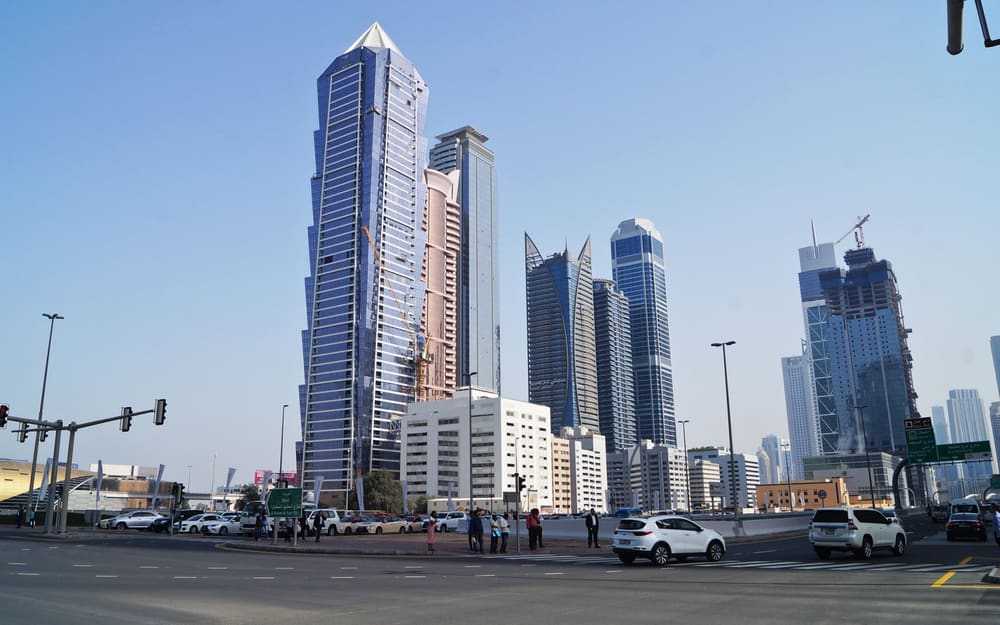


In the news
The same subject in writing — analysis and news related to this video.
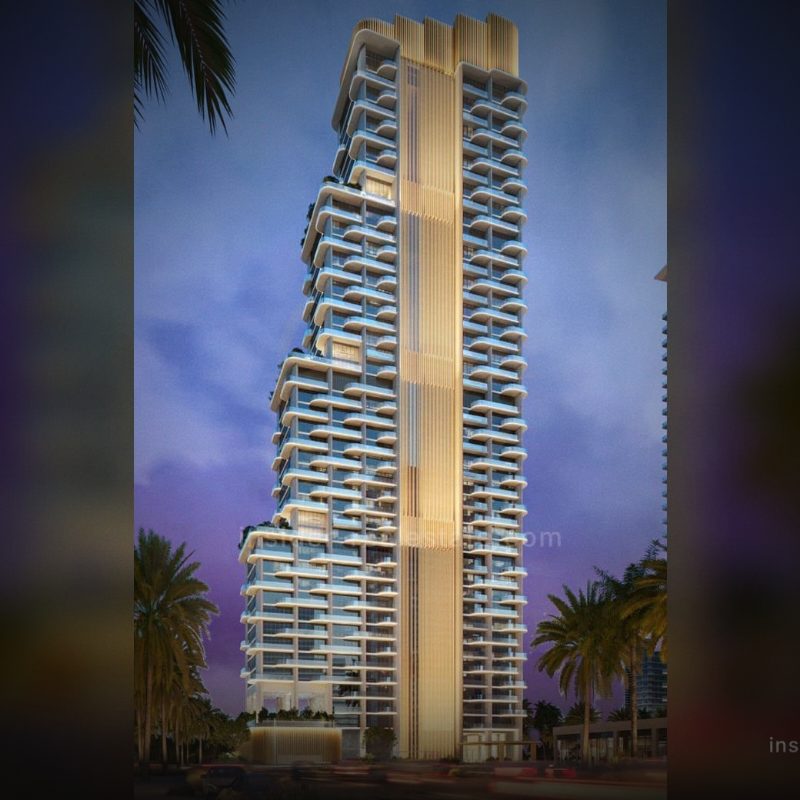
Star architecture in Dubai: Zaha Hadid, SOM, Squire & Partners — and what an architect's name actually adds to resale value
SOM designed Burj Khalifa and a 74-metre metro station in Creek Harbour that will be the tallest in the world. Zaha Hadid Architects built The Opus and is now building Oystra in Ras Al Khaimah. What separates a real premium from a marketing line.

Dubai Properties: the districts you already know, built by a state developer
JBR, Business Bay, Dubailand and Mudon came from one company inside the state holding structure. What a mature district offers that an off-plan launch cannot, and where the risks move to.

Business Bay apartments: Deyaar’s DWTN Residences — 445-metre twin towers planned around Maslow’s pyramid
Deyaar is building DWTN (Downtown) Residences in Business Bay: twin 445 m, 111-storey towers with 522 homes — 432 apartments, 76 duplexes, 13 penthouses and a “Royal Palace”. From AED 1.86m with half due at keys. Construction began in January 2026; completion is quoted for 2029–2030.

New Dubai office towers: Immersive Tower in DIFC, Aldar's Sheikh Zayed Road building and Bureau Lamar in Business Bay
Three major office schemes are rising around DIFC and Business Bay: Immersive Tower ($300m, 58,573 sq m, 2027), Aldar's 88,000 sq m tower by Emirates Towers metro (Q4 2027), and an office park with a theatre on Business Bay's largest plot. Vacancy in central clusters sits at 2–5%.

Dubai Loop: Elon Musk’s tunnel between DIFC and Dubai Mall — what is really being built
The Boring Company’s Dubai Loop: a 6.4 km pilot with 4 stations between DIFC and Dubai Mall for about $154m, a full 22.5 km, 19-station network for about $545m. The RTA contract was signed in February 2026 and tunnelling is due in the second half of the year. What it means for buyers downtown.

Deyaar: a listed developer that also manages what it builds
A public company with a long delivery record and an in-house property management arm. Why the second part changes the ownership experience, and what to check in the buildings it runs.