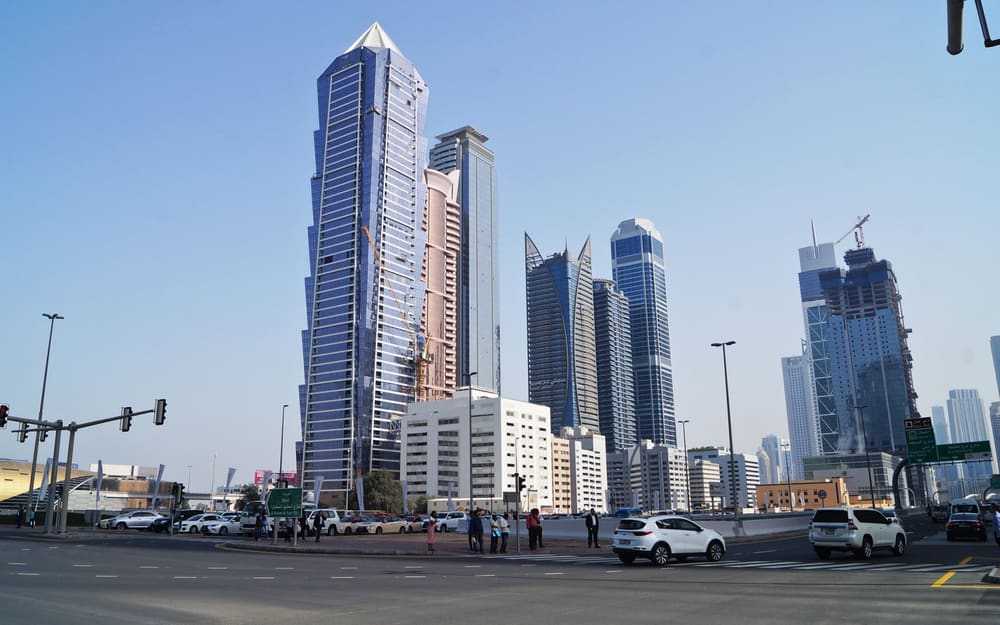
Downtown Dubai vs Business Bay: where to live and where to buy to let
Downtown is Dubai's tourist and status core, around AED 2,433/sqft on our own data. Business Bay is the business district next door, home to 17,000+ companies, around AED 1,871/sqft. We compare lifestyle, rental economics and who should pick which.
Downtown Dubai and Business Bay sit across a single canal from each other — five minutes by taxi, or a walk over one of the bridges. That closeness is exactly why international buyers lump them together as "central Dubai" without noticing how differently each one actually works as a rental asset. One is the city's tourist and status core; the other is a business district that happens to have a lot of apartments in it. The gap between them shows up in price, in who rents from you, and in how much competition you face from identical units next door.
Two different neighbourhoods, two different tenants
Downtown is the postcard version of Dubai: Burj Khalifa, Dubai Mall, Dubai Opera, the fountain show every evening. Branded residences cluster here — Armani, Address, St. Regis — which is a large part of why the area commands some of the highest prices per square foot in the city. The upside is a year-round flow of tourists and business visitors that keeps short-term demand strong regardless of season. The downside is the same crowd: queues into the mall car park on Thursday and Friday evenings, café prices set for tourists rather than residents, and a district that never really feels quiet.
Business Bay is a working district. It hosts more than 17,000 registered companies across roughly 60 office towers, with over 16 million square feet of office space — effectively Dubai's second-largest business cluster after DIFC. Residential stock is thinner relative to the office space, and the buildings skew toward compact, rental-oriented apartments rather than the branded-residence concentration you find in Downtown. One notable exception is The Opus, designed by Zaha Hadid, which became a price driver in its own right for the surrounding towers. Evenings and weekends are quieter here — office staff commute out, and there is no equivalent of the Downtown fountain crowd.
Talk to a licensed broker: 📲 +971 50 120 32 64 on WhatsApp, @dubai_oleg on Telegram
The price gap, in our own numbers
| Area | Price per sqft | What it buys |
|---|---|---|
| Downtown | ≈ AED 2,433 | One of Dubai's most expensive districts, on par with prime Palm addresses |
| Business Bay | ≈ AED 1,871 | Above the city average, but meaningfully cheaper than its famous neighbour |
That is roughly a 30% gap. In Downtown, the premium buys a Burj Khalifa or fountain view, address prestige, and typically a higher finish and service standard in the building. In Business Bay, you get almost the same location — Dubai Mall is a 10–15 minute walk from much of the district — for noticeably less per square foot, which either buys an extra bedroom on the same budget or leaves more cash for the down payment on a second unit.
Short lets versus long leases
Both areas work for short-term and long-term rentals, but for different reasons. In Downtown, short-let demand is carried by tourism: arrivals run year-round rather than in one high season, and units with a fountain or Burj Khalifa view command a consistent premium over comparable apartments elsewhere in the city. Long-term demand holds up too — part of the tenant pool is senior executives and families willing to pay for the address — but competition among near-identical units in new towers is intense.
Business Bay runs the opposite way. There are fewer residential units relative to the size of the district, while demand from staff at the thousands of companies based there is steady. That makes long-term letting easier: less competition from look-alike units, and a tenant pool that values proximity to the office over proximity to a shopping mall. Short lets work here too, particularly along the canal, but tourist footfall is lighter than in Downtown — visitors who choose Business Bay are usually trading some buzz for a quieter, cheaper stay.
Who should pick which
- Maximum short-let income and address prestige — Downtown. Higher entry price, but a rental premium per square foot, especially for view units.
- Stable long-term rental with less competition — Business Bay. Lower entry price, steady demand from the local office workforce, fewer identical units competing for the same tenant.
- Living there yourself, infrastructure-first — Downtown, budget permitting: schools, clinics and the mall are all within walking distance.
- Living there yourself without paying the tourist premium — Business Bay: the same 10–15 minutes to Dubai Mall, without the weekend crowds.
For the full district-by-district picture rather than just these two neighbours, see our guides to how much a Dubai apartment costs in 2026 and the most expensive areas by price per square foot. Both confirm the same pattern: Downtown and Business Bay rank among the city's priciest districts, with a consistent gap between them.
If central Dubai appeals mainly for the address and the Burj Khalifa view, browse current listings on our Downtown page; if location-to-price ratio matters more, start with Business Bay.
Video on this topic
The same subject on the English channel — each clip has a written version of its own.
 21:45Furnished offices in Business Bay: Rove HQ and the fitted-office model16 October 2025
 10:32Lumena Alta by Omniyat: Dubai’s most luxurious office tower12 October 2025
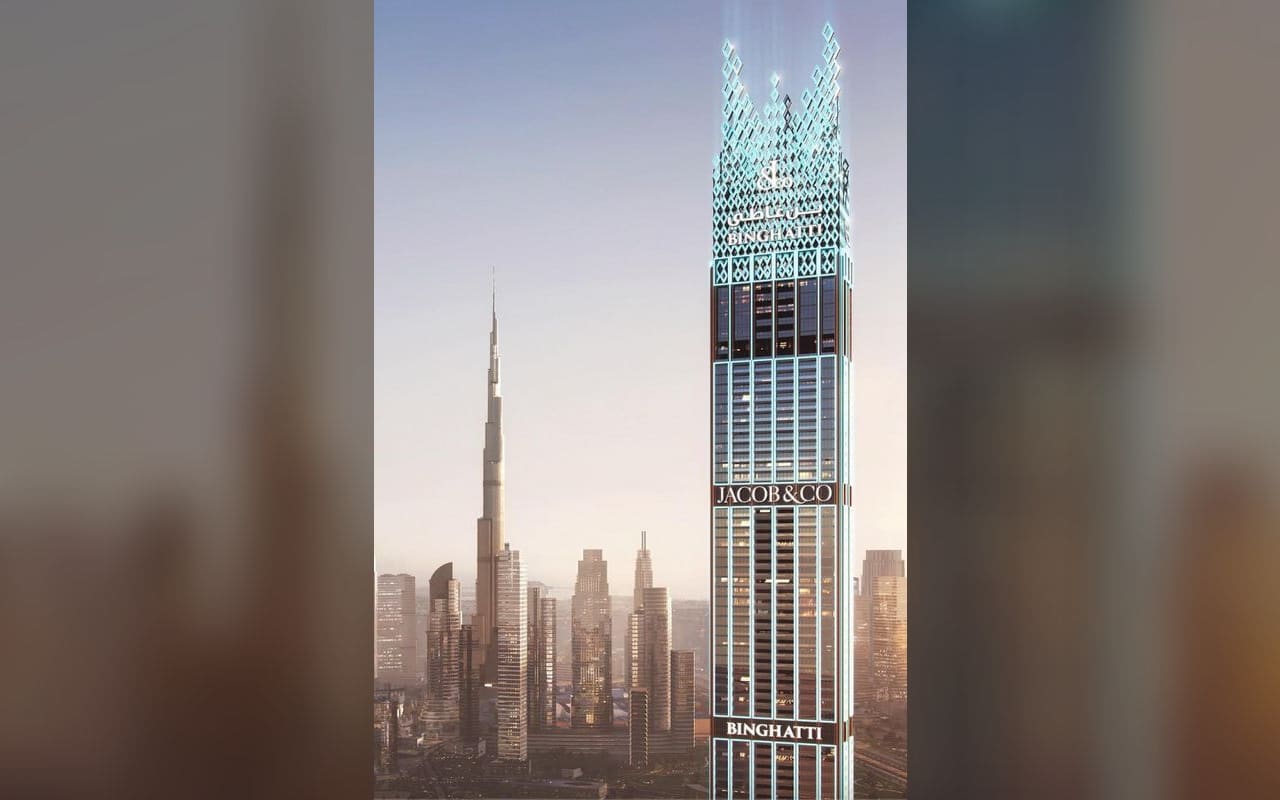
 1:17Skyrise by Binghatti: a landmark tower at mid-market pricing11 September 2025
 28:23Peninsula Four The Plaza by Select Group: what you are actually buying2 March 2025
 22:22Peninsula Five review: buying a ready unit instead of waiting three years14 February 2025

In the news
Other write-ups on the site about the same thing.
Dubai Loop: Elon Musk’s tunnel between DIFC and Dubai Mall — what is really being built
The Boring Company’s Dubai Loop: a 6.4 km pilot with 4 stations between DIFC and Dubai Mall for about $154m, a full 22.5 km, 19-station network for about $545m. The RTA contract was signed in February 2026 and tunnelling is due in the second half of the year. What it means for buyers downtown.

Dubai or Bali: ownership, taxes and rental yield for an investor in 2026
A foreigner cannot hold freehold on Bali at all — only a right-to-use, a lease, or a stake in a PT PMA company. In Dubai, freehold with a title deed is registered directly to an individual. We compare ownership structure, taxes and real, rather than advertised, yield.

Dubai or London: which is the better property investment in 2026?
Dubai's economy is forecast to grow 4.5% in 2026, Britain's just 1–1.2%. Dubai home prices are projected up 5–10% for the year; London's forecasts range from minus 4% to plus 1%. We compare taxes, yield and price growth across two markets that draw the same investors.

D33: Dubai’s plan to double its economy by 2033, and what it means for property
D33 targets AED 32 trillion in economic activity over ten years and AED 650 billion in foreign direct investment by 2033. We unpack the numbers and why they already translate into rental demand.

Credo Investments: what a view is worth, and how to keep it
A developer with a small Downtown Dubai building from 2017. View premiums are large, real and frequently temporary — and whether yours survives is a matter of public record.
Triplanet Range Group: a small flat in a prime district, or a big one in a cheap district
A developer with buildings in both Downtown Dubai and Dubai Sports City. The oldest question in property investment, answered with the numbers that actually decide it.
Below market in Business Bay right now
From the daily off-market feed. Availability and price are confirmed on request.
All below-market listings →