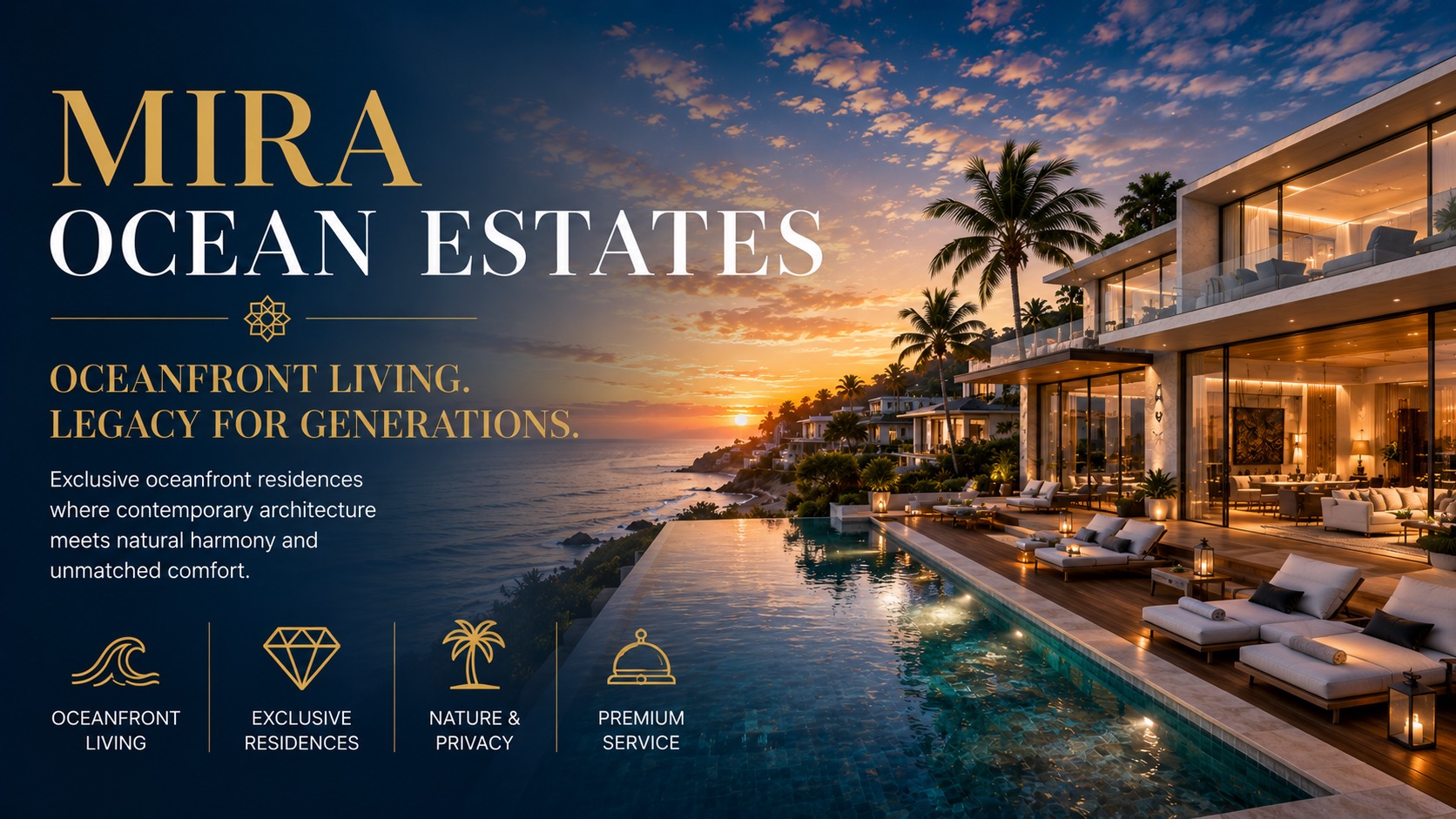
Mira Ocean Estates: Oman’s pioneering multi-brand coastal community
Mira Developments unveils a waterfront destination within Hawana Salalah, combining branded residences, villas, five-star hospitality and resort services.
 INSIDERrealestate — Home
Rates are indicative. Contracts and DLD fees are always in dirhams.
Hawana Salalah, the Arabian Sea coast
Nine hectares on the Arabian Sea shore in Salalah: 263 homes and a 130-key hotel around a shared beach, with entry from AED 550,000.
Payment plan — 50/50, entry from AED 550,000. The exact tranche breakdown is read off the contract: the name of the plan and the payment schedule are different things.
The project occupies 9.3 hectares in Hawana Salalah — a resort zone on the Arabian Sea coast in southern Oman, twenty-five minutes from Salalah international airport. It is about an hour and a half from Muscat by air, roughly two from Dubai.
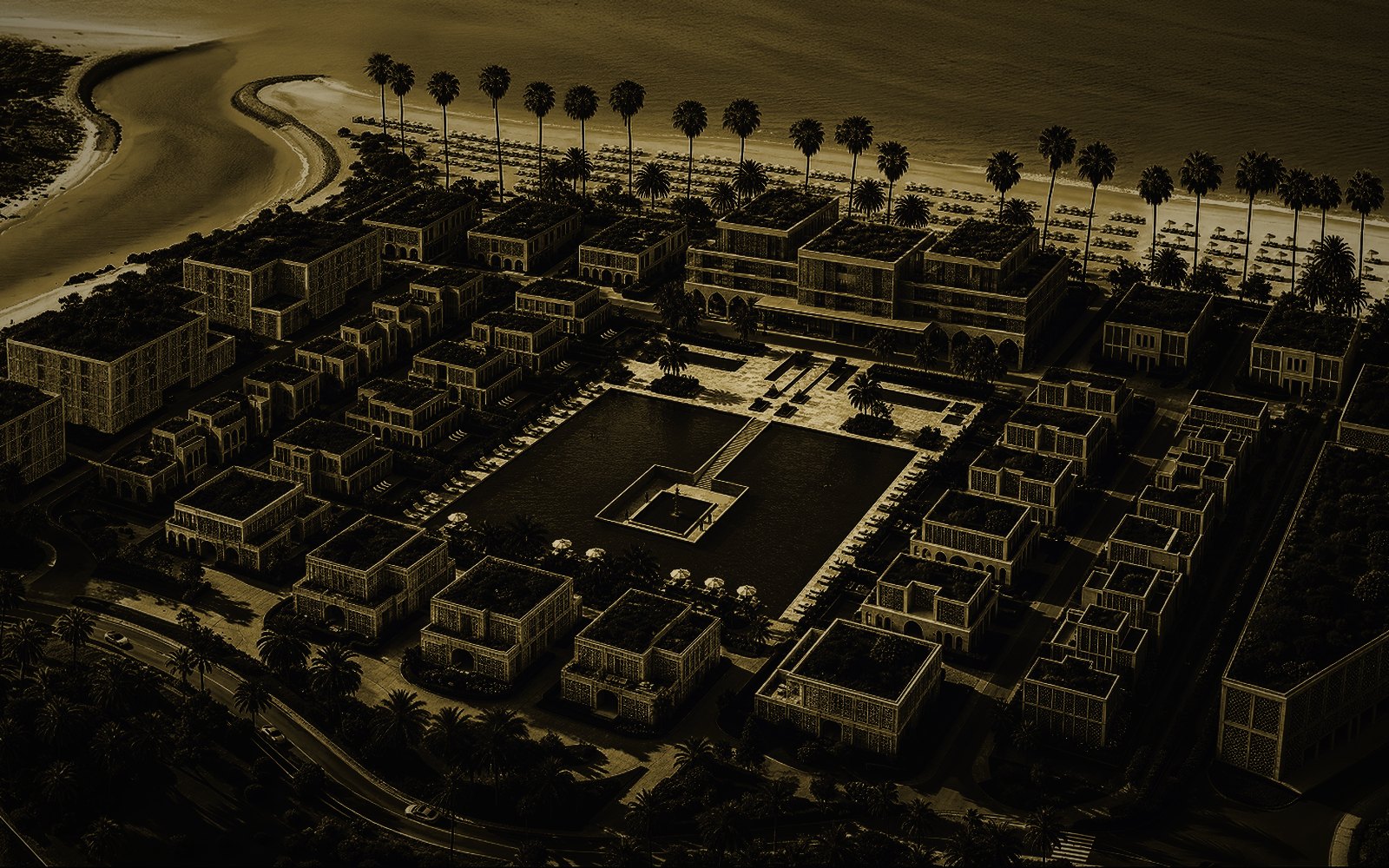
The developer describes the mix as 222 apartments, 21 private villas, 20 townhouses and a 130-key hotel. Housing and hotel are therefore built inside one masterplan and share the infrastructure — which matters for the economics, see below.
The public realm: a five-star hotel with restaurants and conference space, a medical wellness centre with a spa, a central pool and a premium gym, a beach club and private beach access, concierge and housekeeping, play areas. Units are handed over furnished, with designer interiors.
The brands announced so far are Trussardi Casa and John Richmond; the developer states that some partners are not yet disclosed. Entry price is AED 550,000 on a 50/50 payment plan.
Oman is not "a cheaper Dubai" but a different market with different logic. A foreigner may own freehold only inside approved Integrated Tourism Complexes, and Hawana Salalah is one of them. Buying inside such a zone carries a renewable residency — up to ten years, per the developer.
Salalah offers something nowhere else in the region does: the khareef. From June to September the monsoon brings rain and mist to the coast, and the burnt hills turn green. In those months the whole Gulf travels there — from the UAE, Saudi Arabia, Kuwait — escaping forty-degree heat. The developer cites more than a million visitors a year.
For an owner that means seasonality you can see plainly: a few months of high demand and a noticeably quieter rest of the year. The economics of this kind of property are worked out by the season, not by an average annual occupancy — and any model that spreads the rate evenly across twelve months needs rechecking.
The second feature is the size of the market. Transactions with foreigners in Oman are an order of magnitude fewer than in the UAE, and the secondary market inside tourism zones is thin. That affects the exit rather than the yield: selling will take longer and, most likely, to another foreign buyer just like you.
Entry at AED 550,000 is, by Dubai standards, the price of a studio in a mid-range district. In Salalah that buys a unit in a scheme with a hotel, a spa and its own beach: the difference is not in quality but in what land costs on that coast.
A 50/50 payment plan means half during construction and half at handover. That is gentler on the front end than the classic Dubai 60/40 and 70/30, but the exact tranche schedule belongs in the contract: "50/50" is a headline, not a timetable.
The hotel inside the scheme is both an advantage and a cost. Advantage: it sustains service, restaurants and occupancy through the low season and makes the housing interesting to a tenant. Cost: the residential and hotel parts share the infrastructure and the expense of running it, so establish the service charge before signing rather than after.
The currency question resolves itself: the Omani rial is pegged to the dollar, as the dirham is. For a CIS buyer that means effectively no exchange risk between the purchase currency and the UAE.
The zone status and the form of title. Freehold for a foreigner in Oman works only inside an approved ITC — ask for the documents on the specific plot, not a general note about the country.
Residency terms. The duration and the renewal process are tied to the amount and the status of the property; "up to ten years" is an upper bound, not what everyone receives.
The service charge. A hotel, spa and beach club sharing a masterplan with housing means high running costs. You need a figure per square metre per year and what it covers.
The letting arrangement. Who lets it, whether the management pool is compulsory, how income is counted during khareef and in the other months.
The remaining brands. Some partners are unannounced — establish whether your unit is tied to a specific one or whether that is decided later.
Source of the figures — the project page at the developer.
Mira Developments unveils a waterfront destination within Hawana Salalah, combining branded residences, villas, five-star hospitality and resort services.
 Al Marjan Island UAE Al Marjan Island — four reclaimed islands reaching 4.5 km out to sea, and the only address in the UAE with a casino under construction. Wynn opens in September 2027, and the entire Ras Al Khaimah market is priced against that date.
  Mina Al Arab UAE RAK Properties’ coastal master development around a mangrove lagoon: 18 kilometres of shoreline, Anantara and InterContinental, overwater villas — with Hayat Island as the residential core.
  Al Hamra Village UAE The emirate’s oldest resort community: golf, a marina, a mall and the Waldorf Astoria in one village — and the liveliest resale market in Ras Al Khaimah per our stock.
  Aljada UAE The largest project in Sharjah’s history and its downtown under construction: 25,000 homes, half a million square metres of offices, three schools and a four-kilometre retail boulevard in one master plan.
  Masaar UAE Three thousand villas and townhouses among fifty thousand trees: seven gated districts linked by a green spine, and Sharjah’s flagship villa community.
  Sobha Siniya Island UAE A Sobha master development across an entire island: four- to six-bedroom villas, apartments, an 18-hole golf course and a yacht club — the first and so far only entry into Umm Al Quwain for an international buyer.
 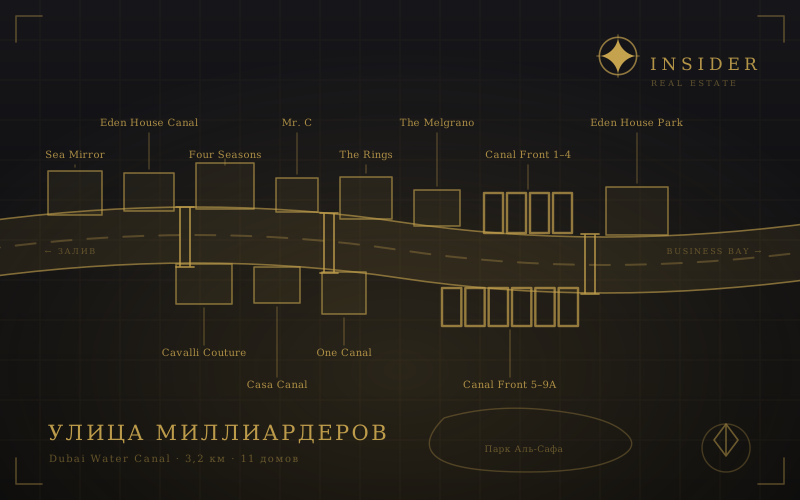 Billionaire Row UAE Billionaire Row — three kilometres of Dubai Water Canal frontage where the towers give way to buildings of 13 to 100 homes: Foster + Partners, Cavalli, Four Seasons, Mr. C. One penthouse here changed hands for AED 183 million.
 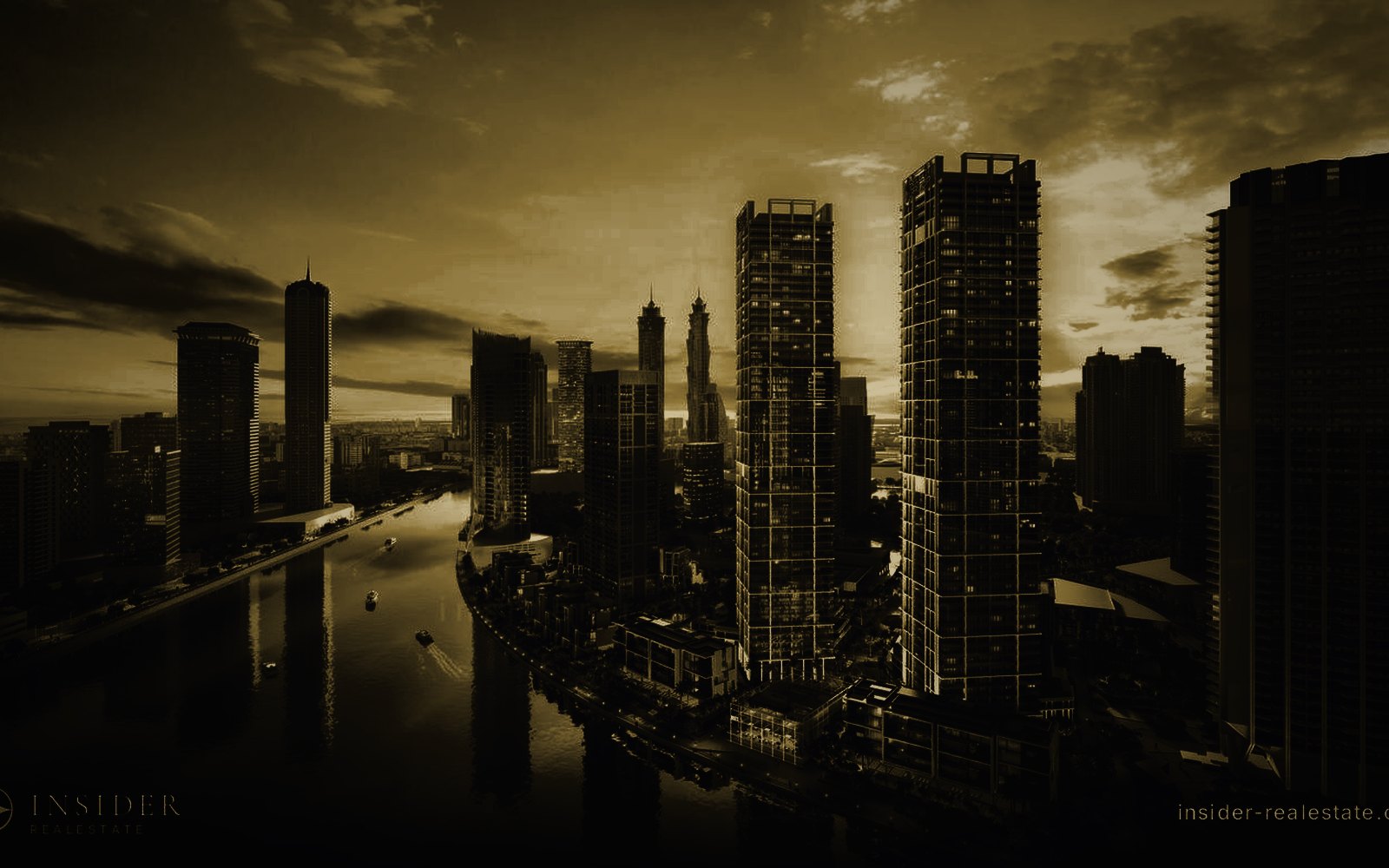 Peninsula UAE Seven towers on the Dubai Canal promenade sharing one podium with pools and a gym, its own waterfront and retail at street level. Handed over — a rare case where a community can be seen in full rather than in renders.
 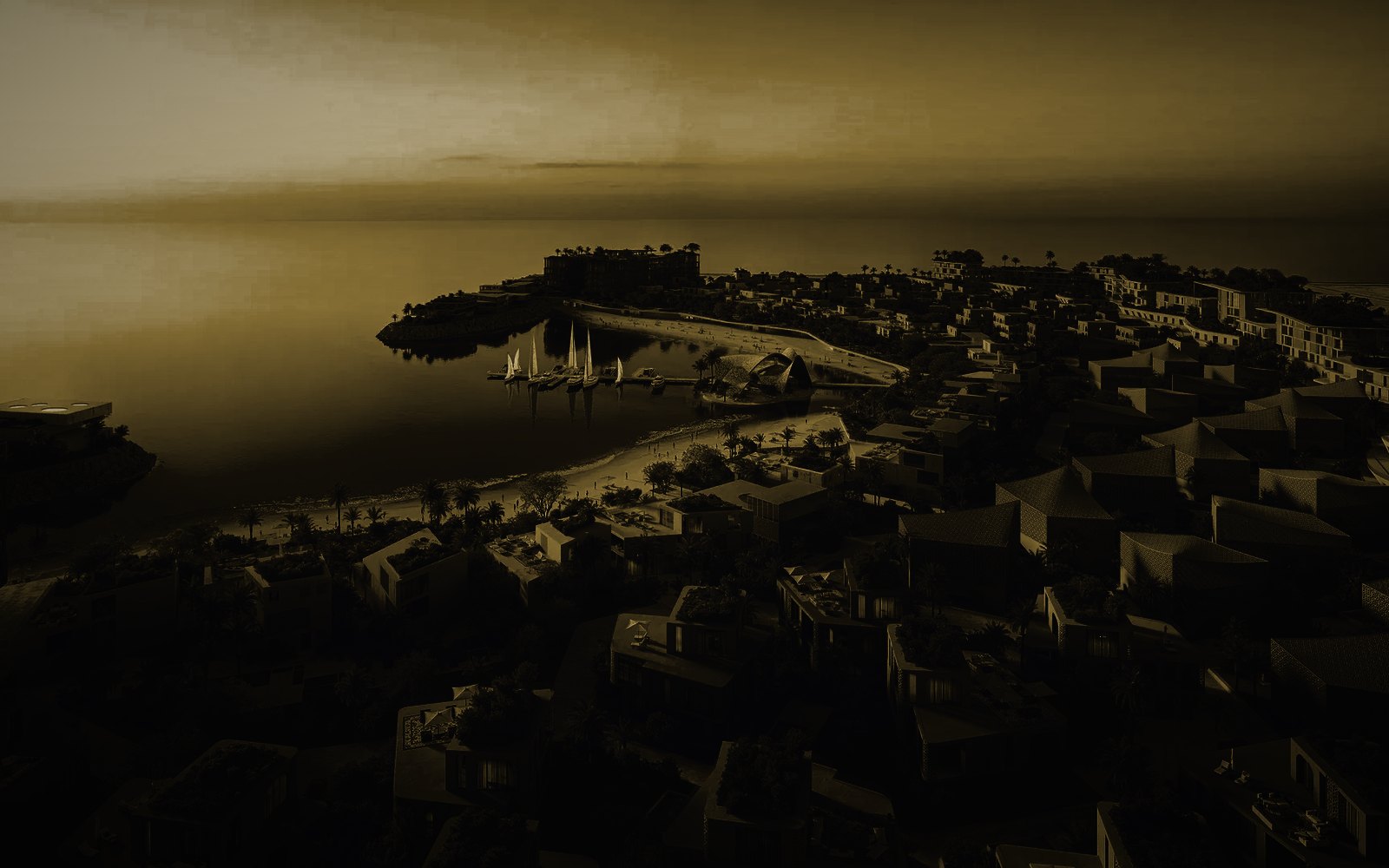 Mira Coral Bay UAE A beachfront resort community in Ras Al Khaimah: fourteen partner brands, two beach clubs and several five-star hotels inside one masterplan.
 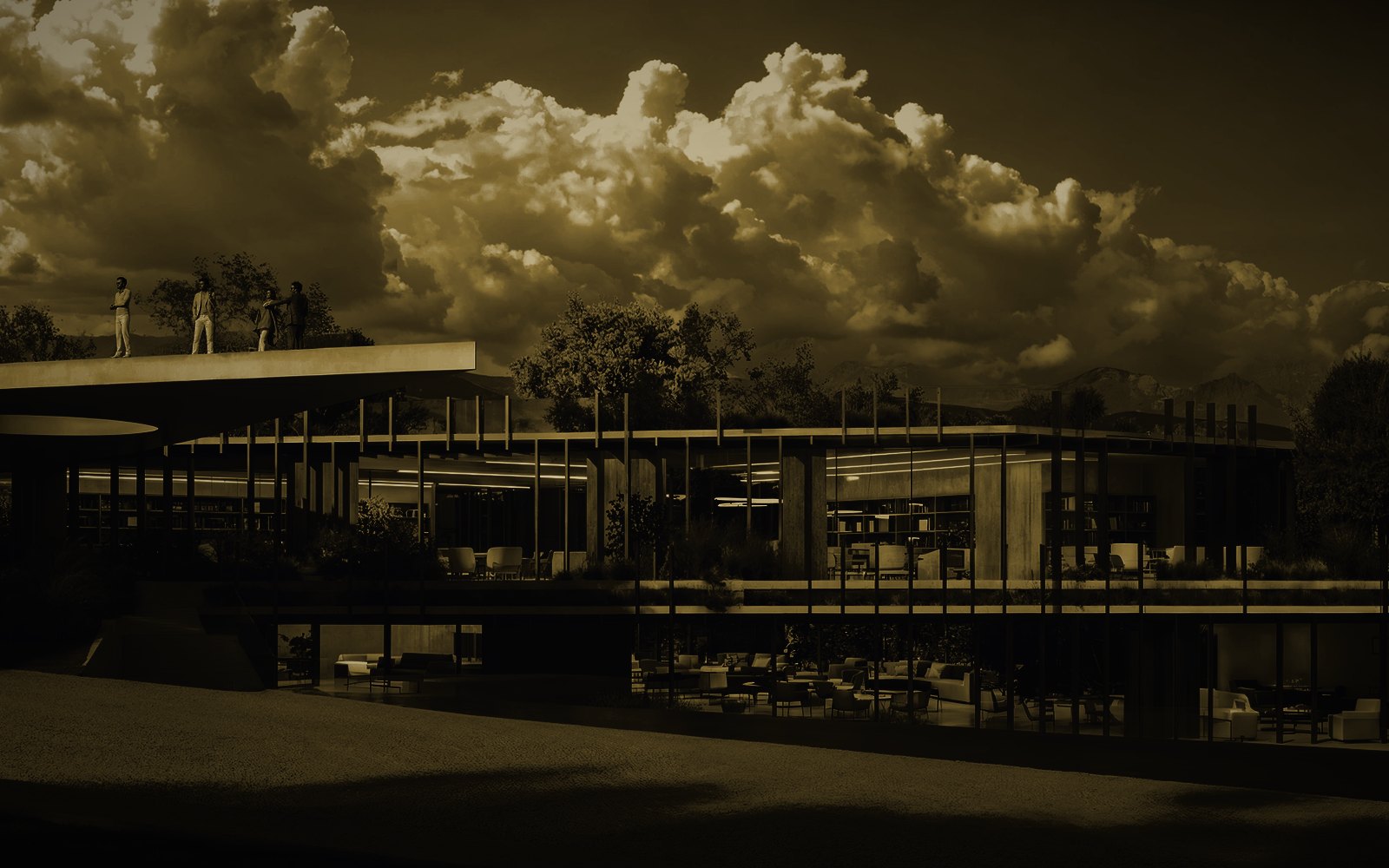 Mira Verde Georgia Georgia's first branded master community: an 18-hole golf course, a European school and homes from 38 m² at an entry price well below Dubai's.
 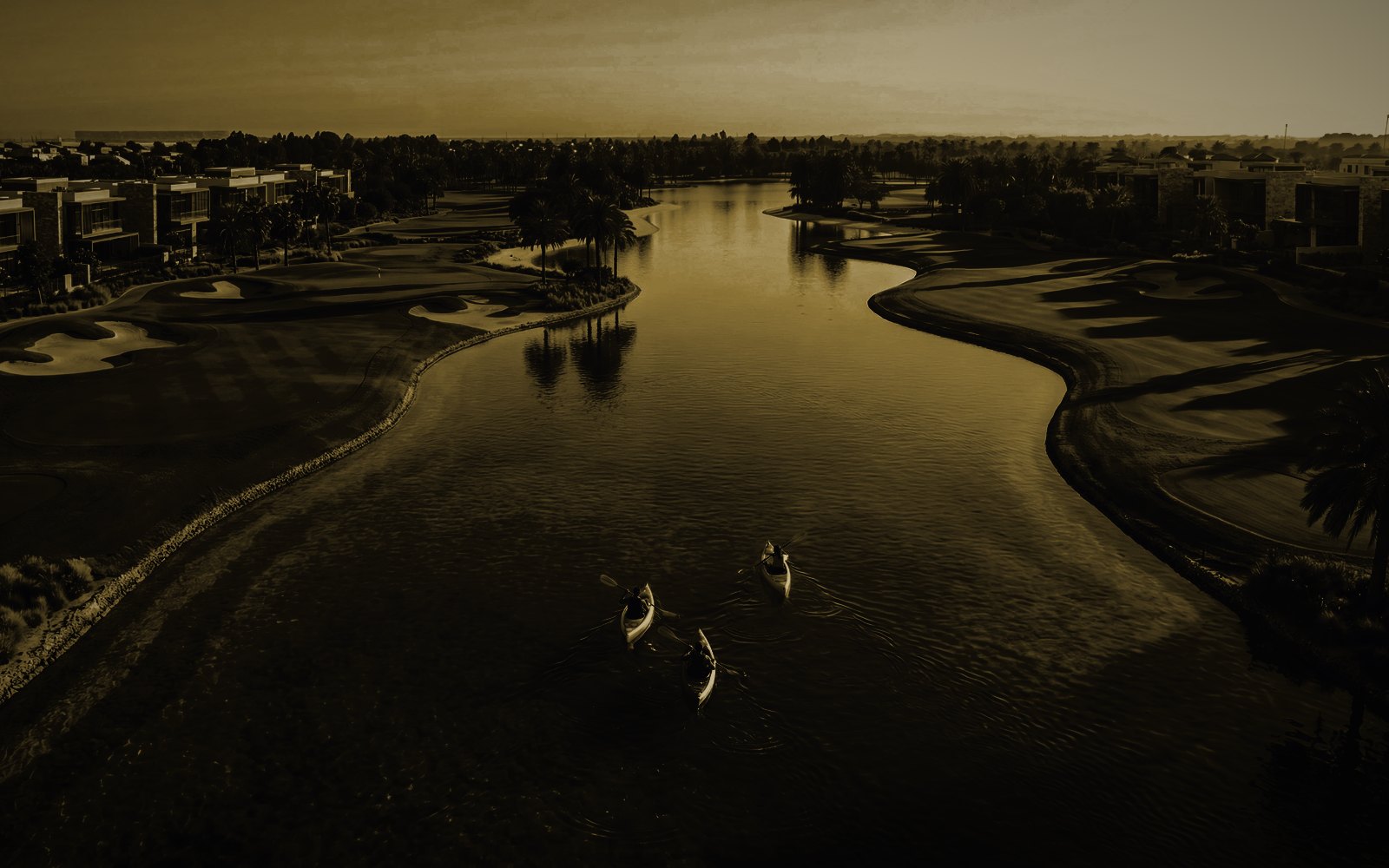 Mira Hills UAE An AED 55bn master community between Dubai and Abu Dhabi where the first phase sells land: AED 325 per square foot, smallest plot AED 22m.
  Al Layan Oasis UAE A one-million-square-metre nature destination around a man-made lake: camping, dunes, 14 km of trails and a link to the Al Marmoom routes. No housing — it is an anchor for Dubai’s southern suburbs.
  Kalba UAE Sharjah on the other coast: the Hajar Mountains, the Khor Kalba mangroves and Gulf of Oman beaches. The emirate is turning Kalba into an eco-destination — retreats, a beach cluster and a rock art centre.
 Nine hectares on the Arabian Sea shore in Salalah: 263 homes and a 130-key hotel around a shared beach, with entry from AED 550,000. The developer is Mira Developments, the location is Salalah. The mix of the project, its economics and how people enter it are broken down above on this page.
In short: Low entry price, Seasonal resort letting, Omani residency. At length — in the write-up above. The project is worth looking at against a specific job: living in it, letting it and reselling it point to different formats inside the same community.
Every figure comes from the developer's page; we hold no independent statistics on the Salalah market. The main risk here is not the quality of the project but seasonality: demand concentrates in the khareef months, and an annual yield computed off the peak rate will be several times too high. The second is liquidity: the secondary market in Oman's tourism zones is thin and an exit takes months. Foreign ownership and residency work only inside an approved ITC — verify that against the documents for the specific plot.
The form of ownership is checked on the specific project rather than on the country or the district as a whole: in the UAE freehold zones a foreigner takes full ownership, while some jurisdictions offer only a long leasehold. A remote purchase by power of attorney is ordinary practice. What exactly is being sold here and on what title I will confirm on request, together with current prices and the payment plan.
Send me your budget and what the purchase is for — I will come back with the current price list, the available units, and which of the stated figures need checking against the contract.
Telegram is the fastest way — I answer personally.
Message on Telegram