
Flipping villas in Dubai: buying, renovating and reselling at a premium
Buy a villa in a strong district, upgrade the interior, pool and landscaping, resell — the strategy rides on real demand for finished, high-end homes. We break down the actual cost lines, from renovation to entry and exit fees, and what genuinely moves resale value.

"Buy a villa in a good district, refresh the interior, the façade and the pool area, sell it on for more" is not a new strategy, but it has a supported backdrop right now. Knight Frank recorded 296 transactions above $10 million in Dubai in the first half of 2026, worth $5.1 billion — 16% more deals than the same period in 2025, and nearly 50% more than in 2024. Knight Frank describes Dubai as an increasingly "two-speed market," where prime locations and finished homes are outpacing the broader market, whose growth normalised in 2026. That is not a guarantee of profit on any single deal — it is a backdrop: demand for well-presented, high-end finished homes, from mature villa communities like Dubai Hills to large master-developer projects like Emaar, is genuinely firmer than the market average.
What actually goes into a flip budget
The beginner's mistake is counting only the purchase price and the renovation quote. The real budget is wider:
- Purchase. A 4% Dubai Land Department transfer fee plus roughly 2% agent commission — both cash, neither financed by a bank.
- Renovation. The budget depends heavily on the house's starting condition and the project's ambition: a targeted refresh of the kitchen, bathrooms and landscaping is one order of magnitude; a full strip-out with new mechanical and electrical systems is another. The safer planning heuristic early on is a percentage of the purchase price rather than a fixed number — the more expensive the house, the higher the absolute renovation bill tends to run, though not always proportionally.
- Holding costs during works. A villa's service charge (usually lower than an apartment's, but not zero), DEWA, security and insurance add up over the four to nine months a serious renovation typically takes.
- Resale. Another roughly 2% agent commission on the sale price, plus marketing and staging costs for the listing photos — an expense that gets skipped more often than it should, even though the gap in time-on-market between an empty house and a properly staged one is real.
Villa and townhouse prices by district and bedroom count, which set the entry point for any such deal, are covered in our guide to Dubai house prices.
Talk to a licensed broker: 📲 +971 50 120 32 64 on WhatsApp, @dubai_oleg on Telegram
What genuinely moves the resale price
Not every renovation dollar comes back. Practice in the prime villa resale market points to a handful of patterns:
- Kitchens and bathrooms. These are the first thing a buyer assesses on a viewing, and the gap between "renovated five years ago" and "renovated now" is the most physically obvious thing in the house.
- Pool and landscaping. In Dubai the garden and pool are not decoration — they are a third of how the house gets lived in for most of the year. A refreshed pool deck and a thought-out landscape design sell faster than an extra square metre of living room.
- Smart-home and building systems. Modern climate control, lighting and security are now a baseline expectation in the prime segment, not a bonus feature.
- Restrained, not personal, finishes. A house renovated to one owner's taste — bold colour choices, an unusual layout — is harder to sell on: the next buyer has different taste, and undoing someone else's renovation costs more than building on a neutral base. Good-quality, neutral materials tend to sell faster and with less price negotiation than a bold designer statement.
A worked example of one such renovation deal, purchase price to renovation spend to final sale, is set out in our case study on renovation as a Dubai investment strategy — read it as an illustration of one house's economics, not a promise of the same outcome on a different property in a different district.
Risks that rarely make it into the plan
Villa flipping is a real-risk strategy, not a guaranteed markup:
- Market timing risk. Renovation and resale take months; if the market cools in that window, the margin built into the plan may not fully materialise.
- Contractor risk. Schedule slippage and budget overruns are common on a full villa renovation, not just cosmetic work. Every extra month of works is an extra month of holding costs with no income against it.
- The risk of overestimating your own taste. An owner who renovates the house "for themselves" risks a mismatch with the eventual buyer's preferences. Renovating to resell and renovating to live in are different jobs with different answers.
None of these cost lines guarantees a profit: the gap between purchase price, renovation spend and sale price can come in below plan, or negative, if the market and the contractor both go wrong at once.
Villa and townhouse prices by district, which set the entry point for a flip in the first place, are broken down in what a house in Dubai costs.
Video on this topic
The same subject on the English channel — each clip has a written version of its own.
 19:59Imperial Avenue: a profitable resale in Downtown Dubai13 January 2024
 1:30An under-market two-bedroom in Peninsula: what a real discount looks like11 January 2024
 30:56Resale in Peninsula: how to buy the best apartment in central Dubai second-hand16 October 2023
 13:08Two-bedroom apartments in Mina Rashid: reading the layouts properly10 October 2023


In the news
Other write-ups on the site about the same thing.

Renovating a ready apartment in Dubai: permission first, contractor second
Work inside your own walls still needs approval — from the building’s management and from the authority that regulates your community. Unapproved alterations do not stay hidden: they surface at resale, in someone else’s survey, at the worst possible moment.
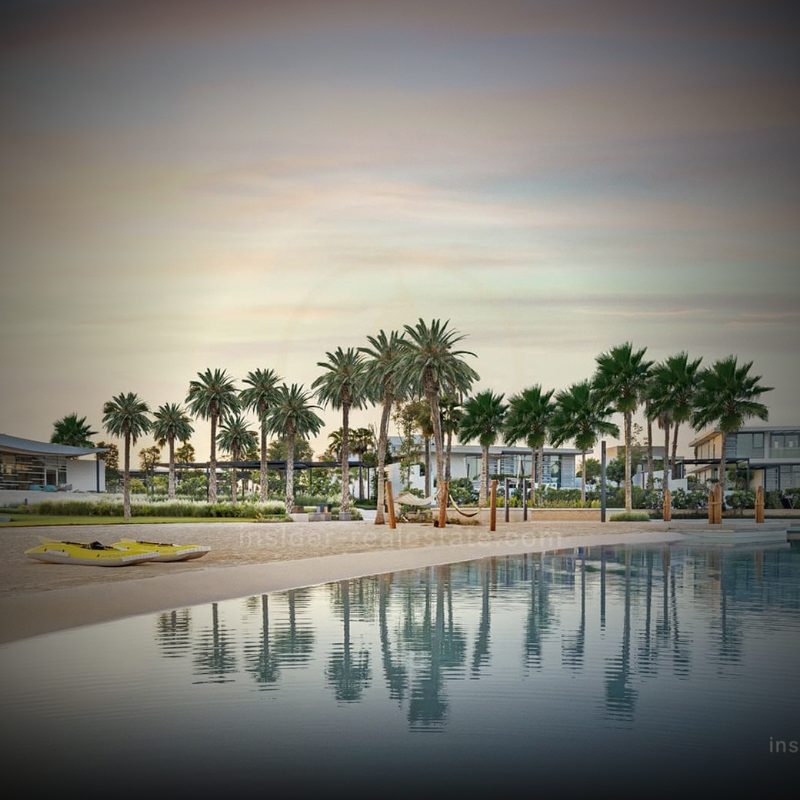
Elysian Mansions, Tilal Al Ghaf: Dubai lagoon mansions three years after launch
Elysian Mansions is a gated enclave of 94 five- and six-bedroom mansions on the Tilal Al Ghaf lagoon by Majid Al Futtaim. Launched in 2023 from about AED 18.5m, resale listings now run from AED 22m to 55m, and handover has slipped from late 2025 to late 2026.

Dubai property prices after 2008 and the pandemic: what history actually shows
Dubai prices fell roughly 45% in 2009 and barely dipped in 2020 — then both times the market recovered and pushed past old highs. We walk through both cycles with sourced numbers, and what that means for anyone timing a purchase in 2026.

Is there a dead season in Dubai real estate? What actually happens to deals in summer
Dubai's summer market isn't a pause: DLD-based data shows summer 2024 was the year's busiest period for sales, up nearly 38% on the year before. Here's what genuinely changes in June–August — negotiating power, not deal volume — and what it means for timing.

Downtown Dubai vs Business Bay: where to live and where to buy to let
Downtown is Dubai's tourist and status core, around AED 2,433/sqft on our own data. Business Bay is the business district next door, home to 17,000+ companies, around AED 1,871/sqft. We compare lifestyle, rental economics and who should pick which.

Master-planned vs piecemeal development in Dubai: how it shapes district prices
A district built by one master developer and a district built by dozens of unrelated companies carry very different price predictability. We break down how to tell them apart from a project brochure, and the trade-off between the two.