Dubai Loop: Elon Musk’s tunnel between DIFC and Dubai Mall — what is really being built
The Boring Company’s Dubai Loop: a 6.4 km pilot with 4 stations between DIFC and Dubai Mall for about $154m, a full 22.5 km, 19-station network for about $545m. The RTA contract was signed in February 2026 and tunnelling is due in the second half of the year. What it means for buyers downtown.
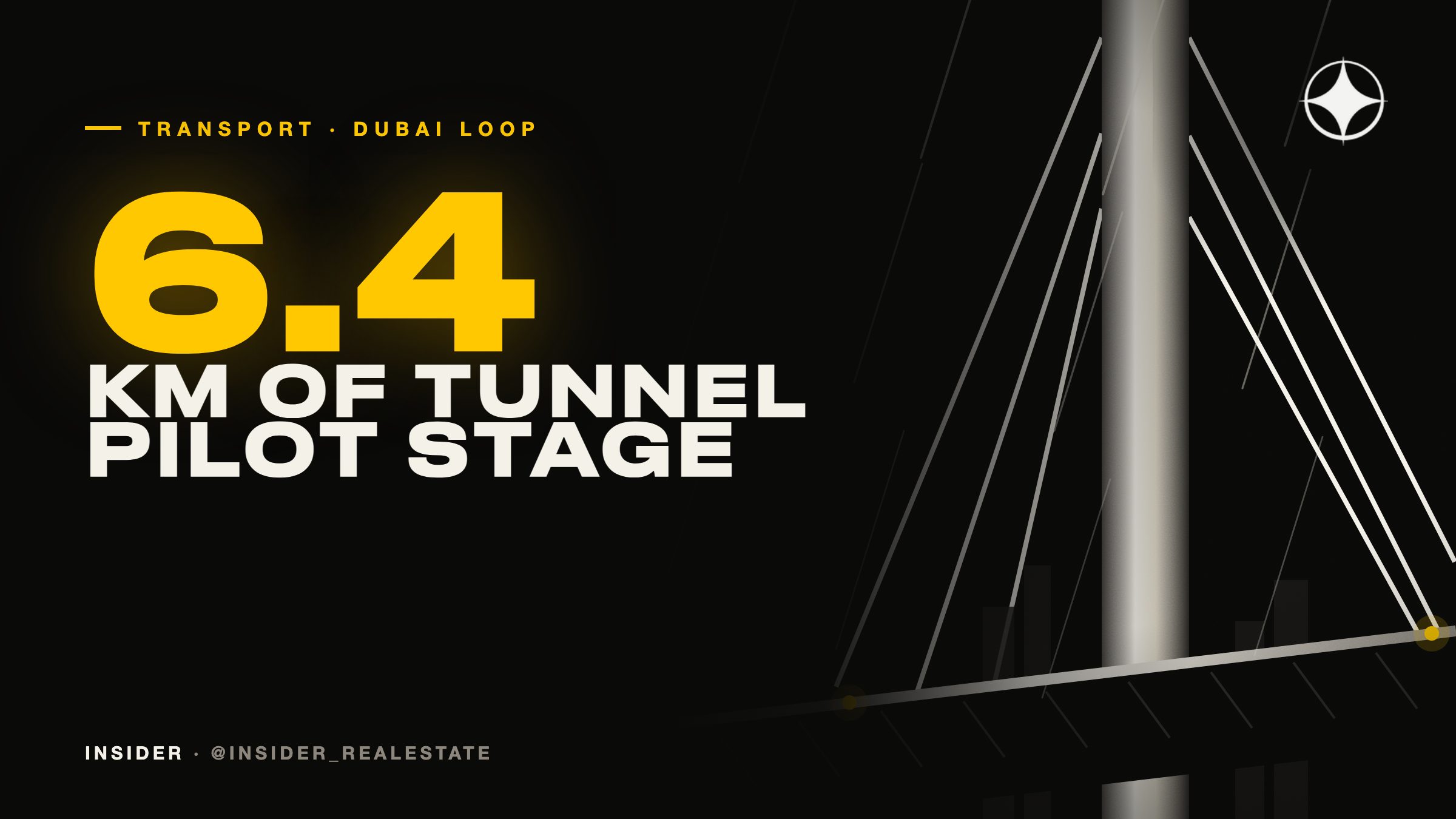
Dubai Loop, the underground transit system from Elon Musk’s The Boring Company, has moved from headline to site mobilisation. It was first announced in February 2025, and later that year officials talked about the first line running by mid-2026. The reality in September 2026 is more measured. The definitive agreement with Dubai’s Roads and Transport Authority (RTA) was signed at the World Governments Summit in February 2026, the company has started producing precast tunnel segments, and boring is scheduled for the second half of the year. Current estimates put the first passengers in 2027 at the earliest.
The numbers behind the project
A Loop is not a metro. It is a narrow tunnel, roughly 3.6 metres across, in which Tesla electric cars carry passengers point to point between stations. The project comes in two stages:
| Pilot | Full network | |
|---|---|---|
| Length | 6.4 km | about 22.5 km |
| Stations | 4 | 19 |
| Route | DIFC to Dubai Mall | Dubai World Trade Centre, the financial district, Business Bay |
| Capacity | about 13,000 passengers a day | about 30,000 passengers a day |
| Cost | about $154m | about $545m |
The pilot stations are DIFC, ICD Brookfield Place, the Zaabeel car park at Dubai Mall and Burj Khalifa / Dubai Mall, with a promised three-minute ride where the same trip by car takes twenty. Before any boring starts, the company needs around 48 permits and no-objection certificates from about ten authorities. That is the stage where timelines usually slip.
Talk to a licensed broker: 📲 +971 50 120 32 64 on WhatsApp, @dubai_oleg on Telegram
Why it should not be in the price you pay yet
Buyers in Downtown Dubai and DIFC will hear that a unit is “next to the Musk tunnel”. Treat that like any infrastructure still on paper: note it, do not pay for it. At 13,000 passengers a day the pilot moves fewer people than a single busy metro station. It solves the last mile inside the business district, from office to mall, hotel to tower. It does not bring commuters in from the suburbs.
Where transport really moves values is walking distance to a station that links homes to jobs, which is what we unpack in our note on the metro and apartment prices. For homes outside the core, the metro Blue Line due in 2029 matters far more than the Loop.
Who could benefit
- Office and serviced-apartment owners in DIFC and along Mohammed bin Rashid Boulevard. A car-free office, Dubai Mall and Burj Khalifa link would be a real selling point to tenants.
- Short-let investors downtown. Easier access to the business district widens the pool of guests.
- Business Bay buyers. Their stations belong to the second stage, planned over about three years after the pilot. It is too early to build that into a yield model.
Checks before buying “by the tunnel”
Look at the exact station site, not the district name, because 500 metres on foot in a Dubai summer is a real difference. Check which stage the station belongs to, since the two are years apart. And check the status of works: until boring starts, every opening date is guidance. We will update this as the RTA reports progress.
If you are looking at a home in the business district, start with our Downtown Dubai area guide: prices, rents and which towers will sit closest to the future Dubai Loop stations.
Video on this topic
The same subject on the English channel — each clip has a written version of its own.
 21:45Furnished offices in Business Bay: Rove HQ and the fitted-office model16 October 2025
 10:32Lumena Alta by Omniyat: Dubai’s most luxurious office tower12 October 2025
 28:23Peninsula Four The Plaza by Select Group: what you are actually buying2 March 2025
 22:22Peninsula Five review: buying a ready unit instead of waiting three years14 February 2025


In the news
Other write-ups on the site about the same thing.
Therme Dubai in Zabeel Park: a 100-metre, AED 2bn wellness resort due in 2028
Therme Dubai, a 100 m tall wellness resort of about 500,000 sq ft, is planned for Zabeel Park at a cost of AED 2bn (about $545m). It expects 1.7 million visitors a year and is due to open in 2028. What it means for Zabeel, Downtown and the neighbouring districts.
JVC traffic fix: RTA and Dubai Holding’s AED 6bn road programme and four new access points
The RTA and Dubai Holding signed an AED 6bn (about $1.6bn) road programme: four new JVC access points with interchanges, double the capacity and 70% shorter journeys. Hessa Street phase two adds a 780 m bridge and a 480 m tunnel out of JVC. What it means for owners and buyers.

Dubai Opera and the floating opera in Dubai South: culture as district infrastructure
It is easy to fall into two extremes about a cultural landmark next door — that it automatically lifts prices, or that it means nothing. Neither is right.
Flying taxis hit UAE skies in 2026: DXB to the Palm in 12 minutes, Abu Dhabi to Dubai in under half an hour
Dubai and Abu Dhabi air taxis start commercial flights in 2026: the first vertiport at DXB is finished and the capital has priced its routes. Where the vertiports are, flight times, what an Abu Dhabi to Dubai air taxi will cost and what it means for property.
Dubai Airport Express Line via JVC and the Abu Dhabi high-speed train: what changes for property
The RTA is planning a 55 km, five-station Airport Express Line from DXB via Al Jaddaf and Al Khail Road to JVC and Al Maktoum, with flight check-in at the stations. Etihad Rail is separately building a 350 km/h Abu Dhabi–Dubai line with a 30-minute journey. What it means for JVC and Al Jaddaf.
Air taxi in Dubai: airport — Downtown — Marina — Palm
Four passengers and a pilot, electric, between the four locations with the heaviest ground traffic and the most expensive property. What it does to prices, and what to treat with caution.
Below market in DIFC right now
From the daily off-market feed. Availability and price are confirmed on request.
All below-market listings →