
Star architecture in Dubai: Zaha Hadid, SOM, Squire & Partners — and what an architect's name actually adds to resale value
SOM designed Burj Khalifa and a 74-metre metro station in Creek Harbour that will be the tallest in the world. Zaha Hadid Architects built The Opus and is now building Oystra in Ras Al Khaimah. What separates a real premium from a marketing line.
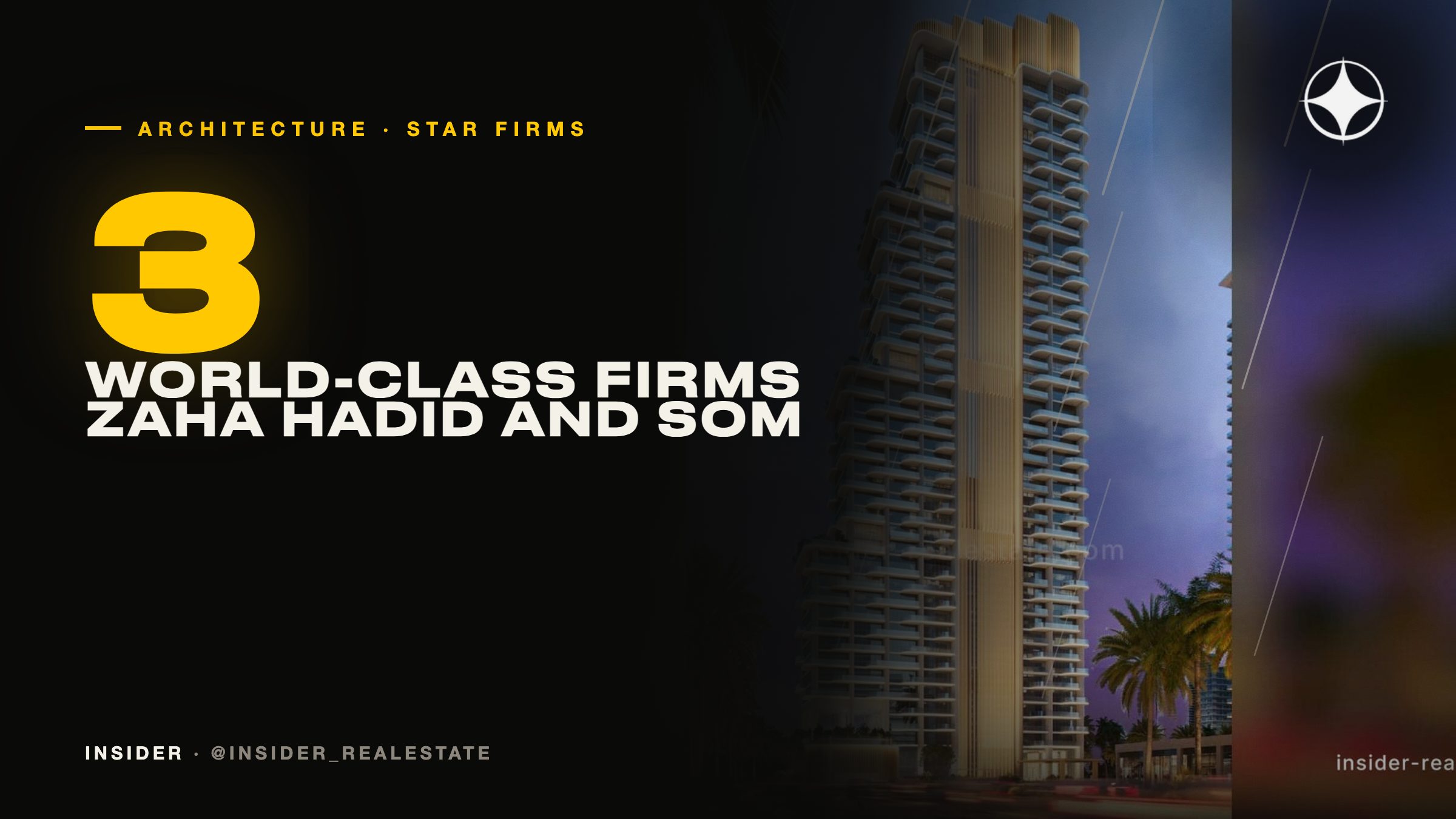
In Dubai, a recognisable architectural name on the façade has become its own sales argument and its own line in the price per square foot. But "designed by a world-renowned firm" covers very different situations. Sometimes the firm shaped the building's form and engineering from the first sketch to the last detail; sometimes it signed off on a concept that a local executive architect then carried to completion. Which scenario you are buying into decides whether the premium survives resale.
Which global firms are already building in the UAE
| Firm | Known for | UAE project | Role on the project |
|---|---|---|---|
| Zaha Hadid Architects | Sheikh Zayed Bridge in Abu Dhabi; first woman to win the Pritzker Prize | The Opus in Business Bay; the new Oystra on Al Marjan Island, Ras Al Khaimah | full authorship: exterior and interiors |
| SOM (Skidmore, Owings & Merrill) | Burj Khalifa; One World Trade Center in New York | Atelis in d3; "The Gateway" Blue Line station in Creek Harbour | architectural concept and façade design |
| Squire & Partners | Bulgari Hotel, London | St. Regis Residences on Al Maryah Island, Abu Dhabi | concept design; delivery handled by local firm BSBG |
What sits behind each name
Zaha Hadid Architects is the rare case of a firm carrying a project from concept through to the last interior detail. The Opus in Business Bay — a cube with a carved-out "void" — is one building where the firm designed both the façade and the interiors of the ME Dubai hotel inside it; we cover how the building became a price anchor for the whole district in a separate piece. Its new project, Oystra on Al Marjan Island in Ras Al Khaimah, keeps the same signature: sculptural, wave-like towers across 950 residences for developer Richmind.
SOM sits at the other end of the spectrum — an engineering-led practice behind some of the world's most technically demanding towers, Burj Khalifa included. In Dubai it currently has two live projects: Atelis, a 45-storey residential tower in d3 with curved, petal-shaped balconies along the Creek waterfront, and "The Gateway," a 74-metre metro station in Creek Harbour that, on opening, will be the tallest metro station in the world and is designed to handle 160,000 passengers a day. SOM taking on a piece of public infrastructure is a strong signal of how seriously Dubai now treats civic architecture, not just luxury housing.
Talk to a licensed broker: 📲 +971 50 120 32 64 on WhatsApp, @dubai_oleg on Telegram
Squire & Partners, a London practice best known for the Bulgari Hotel in London, is behind the concept design of St. Regis Residences on Al Maryah Island in Abu Dhabi — a 38-storey tower with 161 residences, with local firm BSBG carrying the design through construction and engineering. That "star-firm concept plus local executive architect" split is the standard model for large branded residences, and it is worth checking before you buy: a name on the developer's site does not always mean that firm designed the whole building.
How an architect's name moves price
- Scarcity carries the premium, not name recognition alone. The Opus stays rare because it is the only such building in the city. A mass-market development that only lists a firm as a "design consultant" rarely holds the same premium.
- Full authorship outweighs a partial concept. When one firm handles both façade and interiors, as Zaha Hadid Architects does, the building is harder for competitors to replicate — which protects its scarcity value. When a firm supplied only the concept and a local studio finished the job, the gap between "designed by" and "inspired by" often shows up in the finishing.
- Infrastructure projects work differently. SOM's metro station is not for sale, but buildings near it usually pick up an accessibility premium — better transit access tends to lift prices within walking distance of a new station.
- Verify authorship in the contract, not the brochure. A firm's name in marketing material does not guarantee it designed the whole building — confirm the architect's actual role with the developer before you sign.
What it means for a buyer
An architectural name is not a yield guarantee — it is a scarcity factor that only works alongside location and build quality. The Opus already showed how one architect's statement building can move prices across an entire district, not just inside the tower itself. Atelis is interesting for a different reason: it is the first residential building on the Creek waterfront in a design district that never had housing before, so the premium there is as much about a unique location as it is about SOM's name.
Layouts and current units in the SOM-designed tower are on the Atelis at D3 page, and the Zaha Hadid building in Business Bay is covered in "The Opus: how a Zaha Hadid building became a price anchor in Business Bay."
Video on this topic
The same subject on the English channel — each clip has a written version of its own.
 21:45Furnished offices in Business Bay: Rove HQ and the fitted-office model16 October 2025
 10:32Lumena Alta by Omniyat: Dubai’s most luxurious office tower12 October 2025
 1:35Binghatti Aquarise, Business Bay: the pitch and the reality check12 September 2025
 1:17Skyrise by Binghatti: a landmark tower at mid-market pricing11 September 2025


In the news
Other write-ups on the site about the same thing.
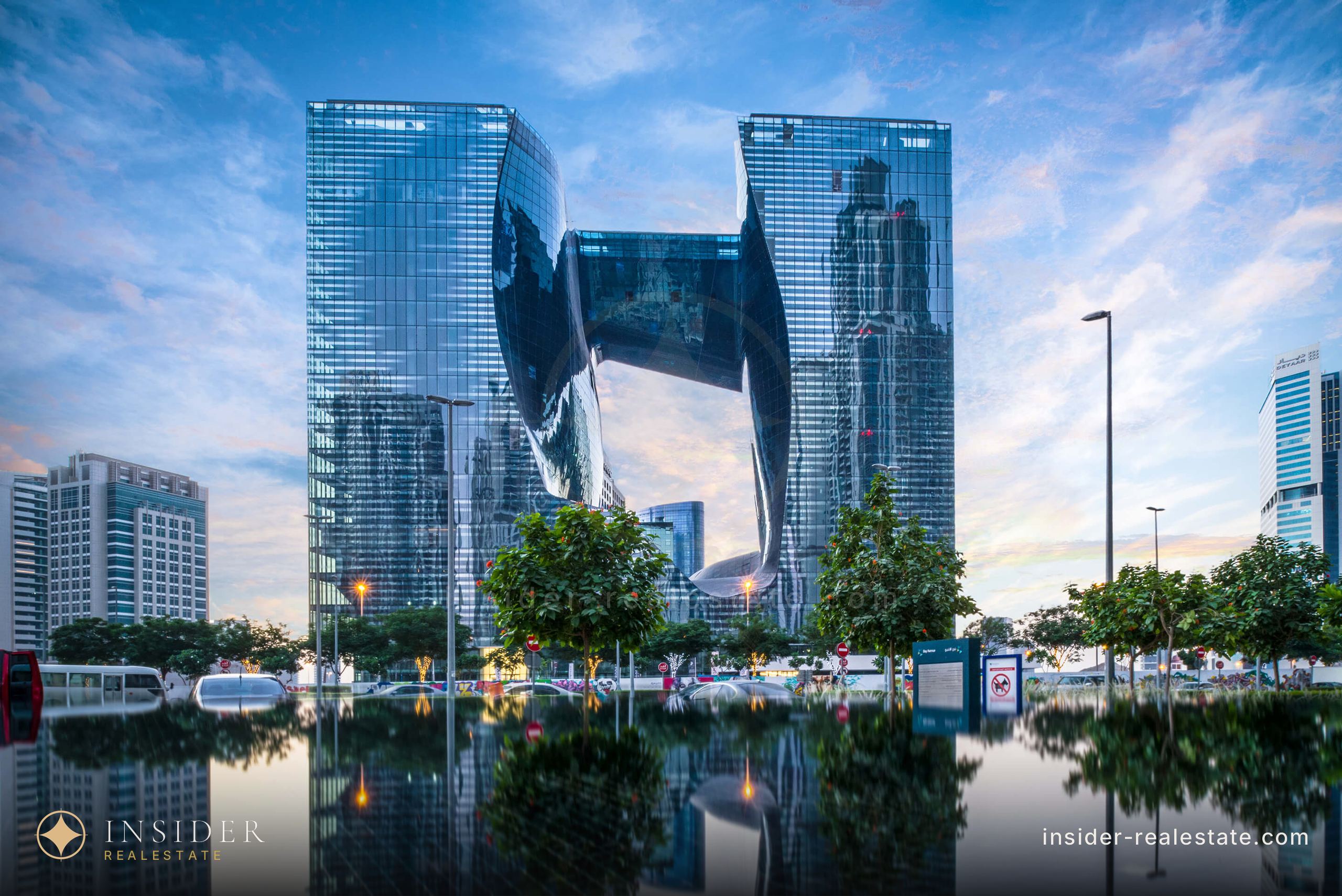
The Opus: how a Zaha Hadid building became a price anchor in Business Bay
A cube with a living form carved out of its centre — Zaha Hadid’s last Dubai project, where her practice designed both the exterior and the interiors of the ME Dubai hotel. How an architectural statement works on the value of the district around it.

Business Bay overtakes Palm Jumeirah in prime deals in August 2026, even as Dubai's wider market cools
Business Bay recorded 14 prime transactions in August 2026 against Palm Jumeirah's 10 — while Dubai-wide transaction volume fell 37% year-on-year and value fell 44%. Rental search demand rose 44% over the same period. What these seemingly contradictory numbers actually mean.
Dubai skyscrapers: Corinthia Dubai above 500 metres and Al Habtoor’s AED 5bn tower in Al Habtoor City
Corinthia Dubai, twin towers above 500 m on Sheikh Zayed Road with a rooftop pool and a Corinthia hotel, is due by 2030. Al Habtoor Group has announced an AED 5bn ($1.36bn) office tower in Al Habtoor City. What the two projects say about the market and who should care.
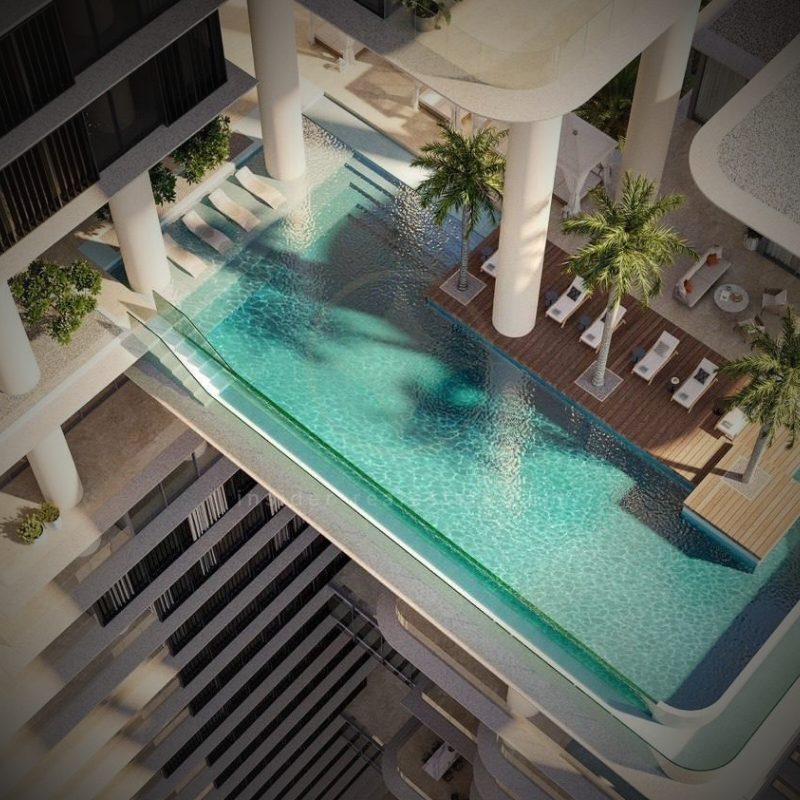
Omniyat's Marasi Bay island: a beach club by the Burj Khalifa and a fully funded $11.7bn portfolio
Omniyat bought a reclaimed island in Marasi Bay to build the Burj Khalifa district's only urban beach club and Sunset Park, a private floating island for VELA Viento residents. In March 2026 it priced a $600m sukuk at 7.25% and said its $11.7bn launched portfolio is fully funded to completion.
Business Bay apartments: Deyaar’s DWTN Residences — 445-metre twin towers planned around Maslow’s pyramid
Deyaar is building DWTN (Downtown) Residences in Business Bay: twin 445 m, 111-storey towers with 522 homes — 432 apartments, 76 duplexes, 13 penthouses and a “Royal Palace”. From AED 1.86m with half due at keys. Construction began in January 2026; completion is quoted for 2029–2030.
Binghatti developer: an AED 100bn portfolio, Bugatti, Mercedes-Benz and Binghatti City — two years of growth
In October 2024 Binghatti said it would lift its portfolio from about AED 40bn to AED 100bn ($27.2bn) in 18 months. In 2025 revenue reached AED 12.43bn, more than 17,000 units were sold, and the AED 30bn Binghatti City launched in Nad Al Sheba. What the growth means for buyers.