What this community is
Al Reef is a residential development on the mainland between Abu Dhabi city and the international airport, close to the interchange for the Dubai road. It splits into two halves: villas and townhouses on one side, apartments on the other. Downtown is the apartment half.
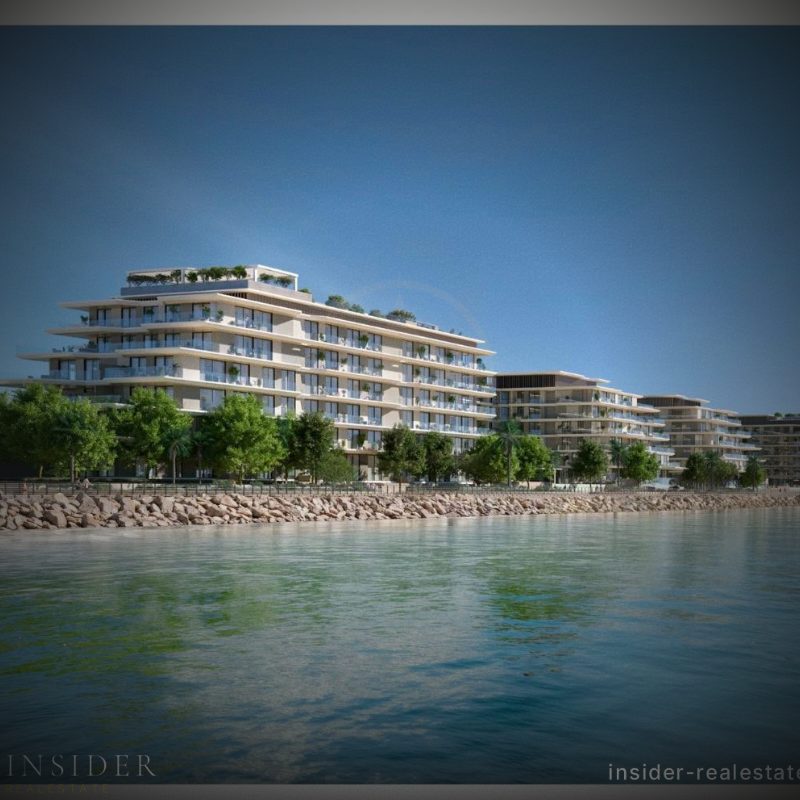
The built form is several dozen mid-rise blocks grouped into courtyards with pools and play areas. The units are compact — mostly studios and one-bedrooms with a smaller number of two-bedrooms — and the design is functional rather than aspirational.
Supermarkets, pharmacies, cafés, gyms and nurseries operate inside the community. It was designed to be self-sufficient for everyday needs and it broadly is.
It was completed and fully occupied many years ago. This is a settled, lived-in community rather than a construction site, which means you can inspect the buildings and judge the management with your own eyes before buying.
Why the yield is the highest in the emirate
Al Reef Downtown consistently tops the Abu Dhabi yield tables, and the reason is arithmetic rather than magic: a very low purchase price against a rent that has held up.
Geography supplies the demand. The airport is next door with its ground staff, crews and technical operations. The industrial and logistics zones on the mainland, including KIZAD, are close. And the Dubai highway interchange is right there, so a portion of residents work in Dubai and live here because the rent is a fraction of what Dubai charges.
The unit mix helps too. Compact apartments let faster and earn more per square metre than large ones, and demand for the most affordable accommodation in any city is durable.
What matters is understanding that the high percentage is compensation, not a gift. It pays you for distance from the city core, for a modest environment and for the near-absence of capital growth in this segment.
Who rents here
Airport and airline staff — ground handling, crew, engineering — for whom proximity to work decides everything.
Employees of the industrial and logistics zones on the mainland side of the emirate.
Dubai commuters. Al Reef sits at the highway interchange, and for some tenants it is a deliberate trade: an hour in the car in exchange for rent at half the Dubai level.
Families on constrained budgets, drawn by the nurseries and play areas inside the community.
Demand is steady and unseasonal, but it is price-sensitive by definition. A tenant chose Al Reef for the price and will leave for something comparable that is cheaper.
What to weigh against it
Distance. The drive to central Abu Dhabi is meaningfully longer than from the island districts, public transport is weak, and a car is effectively mandatory.
Age of the stock. The community has been standing for well over a decade and questions about mechanical systems, finishes and the state of the common areas are now live. There is real variation between buildings within the same development.
The environment. It is functional rather than rich; for variety, large-format shopping and entertainment residents drive to the city or to Yas Island.
Liquidity. Units are near-identical and buyers are few, mostly other investors running the same yield calculation. Selling takes time.
Capital growth. There is effectively none: the segment is mass-market and no scarcity is being created.
What to check before buying
The specific building rather than the community. Ask for the service charge history and look at the corridors, the lifts and the pool on a normal weekday.
The owners association position and whether maintenance is actually being funded.
Achieved rents for that building rather than a community-wide figure.
Parking allocation, which in a car-dependent location directly affects lettability.
And the ownership designation — Abu Dhabi permits foreign freehold only in designated investment zones, and confirming that for the specific unit is the first step, not the last.
Who this suits
An investor optimising purely for cash yield at the lowest possible ticket size, who will do the building-level work and hold long term.
It suits poorly anyone expecting appreciation, anyone who might need to exit quickly, and anyone buying without inspecting the specific building.
If the number still works after the service charge, after a realistic vacancy allowance and after honest maintenance provisioning, it is a sound cash-flow purchase. If it only works on gross yield, it is not.
How Downtown differs from the villa side
Al Reef is one development with two halves that behave as separate markets. Downtown is the apartment component: mid-rise blocks around courtyards, compact units, and the highest yields in the emirate.
The villa side — Arabian, Mediterranean, Desert and Contemporary clusters — is townhouses and houses with private gardens, at several times the ticket size and a materially lower percentage return.
They share the location, the road access and much of the community infrastructure, and they share almost nothing else: different tenants, different holding periods, different resale markets.
Anyone comparing an Al Reef yield figure should establish which half it refers to. The blended number describes neither.
The building-by-building spread
Within Downtown itself the variation between buildings is wider than the price differences suggest. Some blocks have been maintained properly for a decade; others have visible deferred works in the common areas, the lifts and the pool areas.
Because rents here are low in absolute terms, a service charge that would be unremarkable in a central district consumes a large share of gross income — and a building where the charge has risen to fund catch-up maintenance can consume considerably more.
Ask for three years of charge history and the owners association budget, and walk the building on an ordinary weekday. Ten minutes in a stairwell tells you what a brochure will not.
Occupancy in the specific block is the other tell. In a district with this much near-identical stock, visible vacancy is information.
The exit
Al Reef Downtown units are highly standardised, which is efficient for letting and unhelpful for selling: your buyer is almost always another yield investor running the same arithmetic, and they negotiate.
That, plus the modest transaction volume in Abu Dhabi generally, means resale takes longer than a Dubai equivalent would.
Capital growth is close to flat over long periods, because the segment is mass-market, land in the mainland corridor is abundant and no scarcity is being created.
So the return is the rent, and the plan should be to hold long enough that the rent has done the work. Bought on that basis with the building properly checked, it is a sound cash-flow asset; bought expecting appreciation, it disappoints.
The community by the numbers
Al Reef was built by Manazel Real Estate. The apartment side runs to 46 buildings of studios and one-to-three-bedroom units, and the community is freehold — a foreign buyer takes full title.
Zayed International Airport is about ten minutes away, Yas Mall twelve to fifteen, central Abu Dhabi around thirty-five and Dubai roughly fifty.
The Maple Bear and Redwood Montessori nurseries operate inside the community, with Al Raha International School nearby. Daily needs are covered by Carrefour and the Al Reef Medical Centre; for a bigger shop residents drive to Yas Mall or Deerfields Mall.