
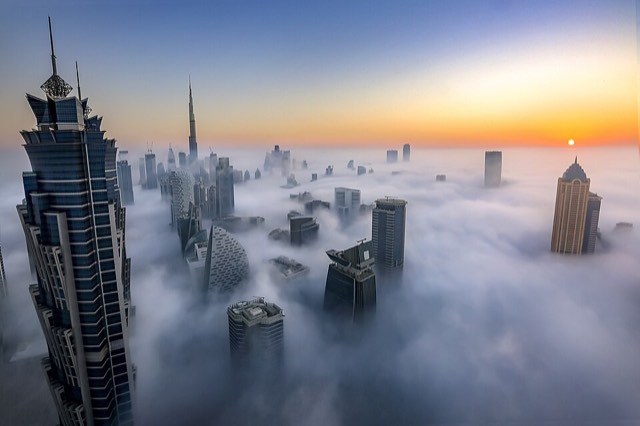
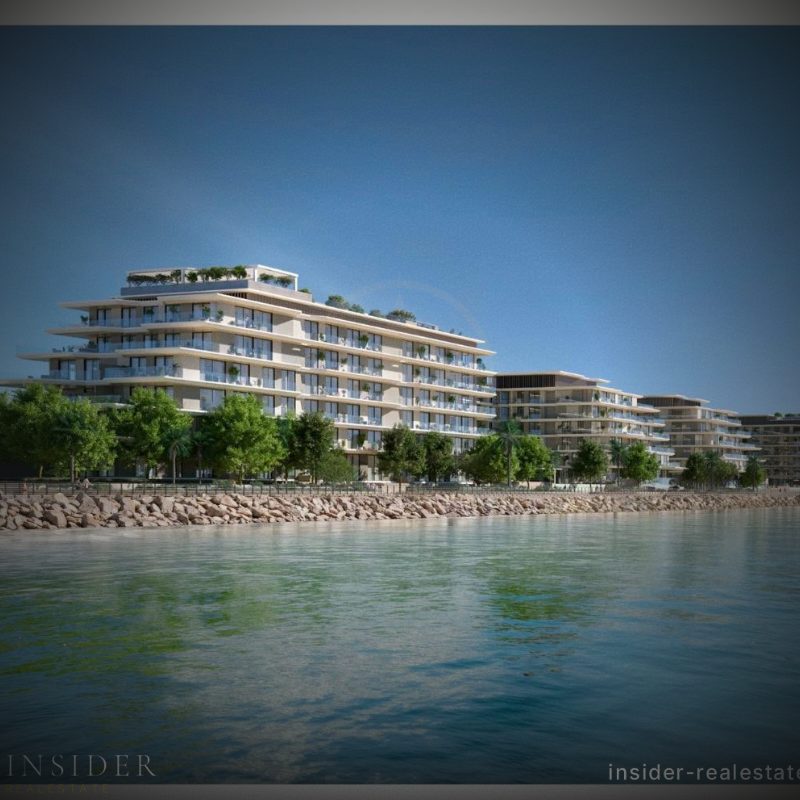
 −40% Illustrative photo
 Masdar City
The purpose-built sustainable district next to the airport: low-rise, shaded, walkable and unlike anywhere else in the Gulf.
- strong yields with an institutional tenant base
- walkable shaded streets
- low cooling costs
Indicative gross yield 8.9% per annum, before costs
Entry price $197K AED 723,483 · for a studio
Format Apartments apartments
Regulator DMT Dept. of Municipalities & Transport, Abu Dhabi
What this district is actually like
What Masdar City is
Masdar City is a planned low-carbon district on the mainland near Abu Dhabi International Airport, begun in the late 2000s as an experiment in sustainable urban design and now a functioning mixed community of housing, offices, a university and research institutions.
The urban form is deliberate and unusual for the Gulf: narrow shaded streets oriented to catch prevailing breezes, buildings placed close together to shade each other, wind towers, and a pedestrian-first layout with vehicles largely kept to the perimeter.
It works. Ambient temperatures in the shaded streets are measurably lower than in the surrounding open desert development, and it is one of the few places in the UAE where walking outdoors in the shoulder seasons is genuinely pleasant.
Who lives here
Staff and students of the Mohamed bin Zayed University of Artificial Intelligence and the Khalifa University Masdar Institute campus, employees of the companies based in the district, and airport-adjacent workers.
The demographic skews young, international and academic, which produces a different rental market from the rest of the emirate — shorter average tenancies, but consistent turnover demand from an institution that keeps bringing new people in.
That institutional anchor is the key to the rental case here. Unlike a purely speculative district, Masdar has a built-in source of tenants who need to be within walking distance.
The property
Predominantly apartments in mid-rise buildings, with entry prices among the lowest in the emirate for new-ish, well-designed stock.
The specification is generally good and the buildings are efficient by design, which shows up in lower cooling bills — a real running-cost advantage in this climate that most Abu Dhabi stock does not offer.
New residential phases have continued to be released, so supply is still growing within the district.
The constraints
Location. Masdar is out by the airport, well away from central Abu Dhabi and the island districts. A car is needed for anything outside the district even though the district itself is walkable.
Retail and dining inside are limited relative to a mature area, though they have grown considerably and the district now has a genuine centre.
It remains partly a work in progress. The original masterplan was scaled back substantially from its most ambitious version, and phases continue to be added.
The tenant pool, while reliable, is narrow: it is tied closely to the universities and the businesses in the district.
What to check
The freehold designation for the specific building, since foreign ownership in Abu Dhabi is restricted to investment zones.
Which phase, and what remains under construction nearby.
The service charge, and specifically whether the sustainability infrastructure carries any additional cost or, as is often the case here, saves you money on cooling.
Walking distance to the university campuses, which is what most tenants are actually paying for.
Achieved rents for the specific building.
The investment view
Strong gross yields at a low entry price, supported by an institutional tenant base that is unusual in the region for its reliability.
Capital growth prospects are modest — the district is still adding supply and the location is not central — but the sustainability positioning and the university anchor give it a durable identity that most affordable districts lack.
It suits an investor who wants yield with a defensible tenant story, and a resident who values a genuinely walkable, thermally comfortable environment. It suits poorly anyone who needs to be in central Abu Dhabi.
What the original plan promised and what was delivered
Masdar City launched in 2008 as an attempt at a zero-carbon, car-free city for fifty thousand people, complete with a personal rapid transit system of driverless pods and a fully renewable energy supply.
What was actually built is smaller and more pragmatic: a low-carbon district of several thousand residents and workers, with the pod system operating on a short demonstration route rather than city-wide, and grid power supplemented by solar rather than replaced by it.
The scaling back is well documented and it is a fair thing for a buyer to know. It is also not the whole story — the parts that were built work, and the thermal performance of the streets and buildings is measurable rather than aspirational.
The lesson for anyone buying into a phased masterplan anywhere is the usual one: value what exists, and treat the rest as intention.
The university anchor
The Mohamed bin Zayed University of Artificial Intelligence and the Khalifa University Masdar Institute campus sit inside the district, along with research institutes and the companies that cluster around them.
That produces a tenant base with an unusual property: it renews itself. Cohorts arrive and leave on academic cycles, faculty and researchers rotate, and the institution keeps supplying new people who need to live within walking distance.
It is reliable in a way that a speculative district’s demand is not, and it is largely insulated from the property cycle.
It is also narrow. If a building is not within a comfortable walk of the campuses or the business park, it is competing for a much smaller pool, and that is worth checking before you assume the district’s reputation applies to your specific unit.
The running-cost advantage
Masdar’s buildings were designed to a higher thermal standard than the UAE norm, and the urban form — narrow shaded streets, buildings shading each other, orientation to prevailing wind — lowers the ambient temperature measurably.
The practical result is lower cooling bills, and in a market where a tenant compares total monthly cost rather than headline rent, that is a genuine competitive advantage for a landlord.
It is worth asking for actual summer utility figures for the unit rather than taking the design intent on trust, and comparing them against an equivalent apartment elsewhere in the emirate.
Where the difference is real it should be part of how you market the unit, because most tenants do not know to ask.
Masdar by the numbers
The city is masterplanned for more than 50,000 residents and sits in the Khalifa City area, roughly seventeen kilometres from central Abu Dhabi. Yas Island's beaches are a quarter of an hour away by car, Dubai about an hour.
Transport inside the district is part of the experiment: a driverless NAVYA shuttle carrying twelve passengers, e-scooters, and a driverless delivery service now in operation, with light rail in the longer-term plans.
The business core is Masdar City Square — 29,000 square metres across seven office buildings, one of them designed to net-zero energy. Masdar's office buildings hold the top 5 Pearl sustainability rating, with energy savings the city puts at up to 91% and water savings up to 45% against conventional stock.
Daily life is covered on site: Ryan School Masdar City, The Doctors medical centre and the Amana Healthcare rehabilitation hospital — all inside the district, with no trip into town.
What we have in Masdar City
Showing 12 of 19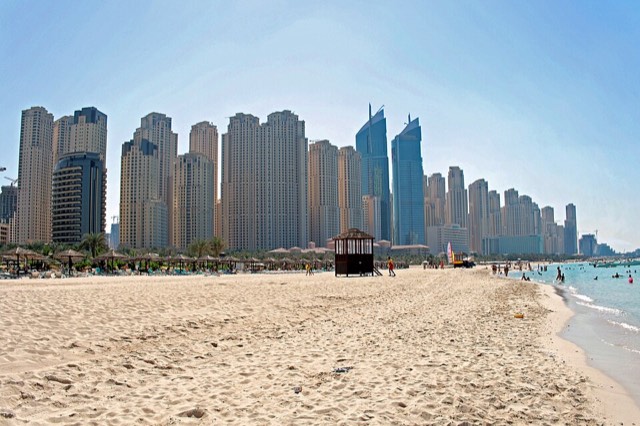
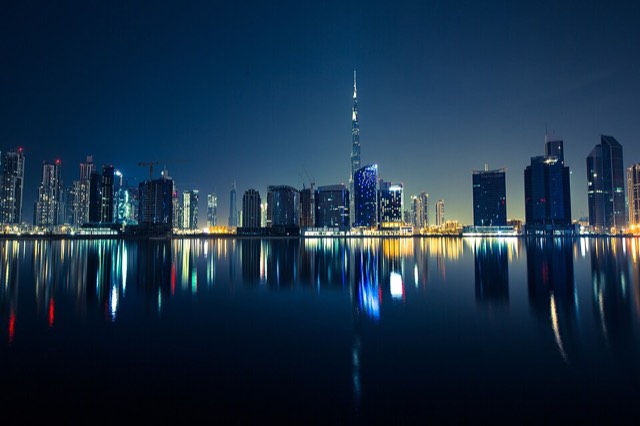
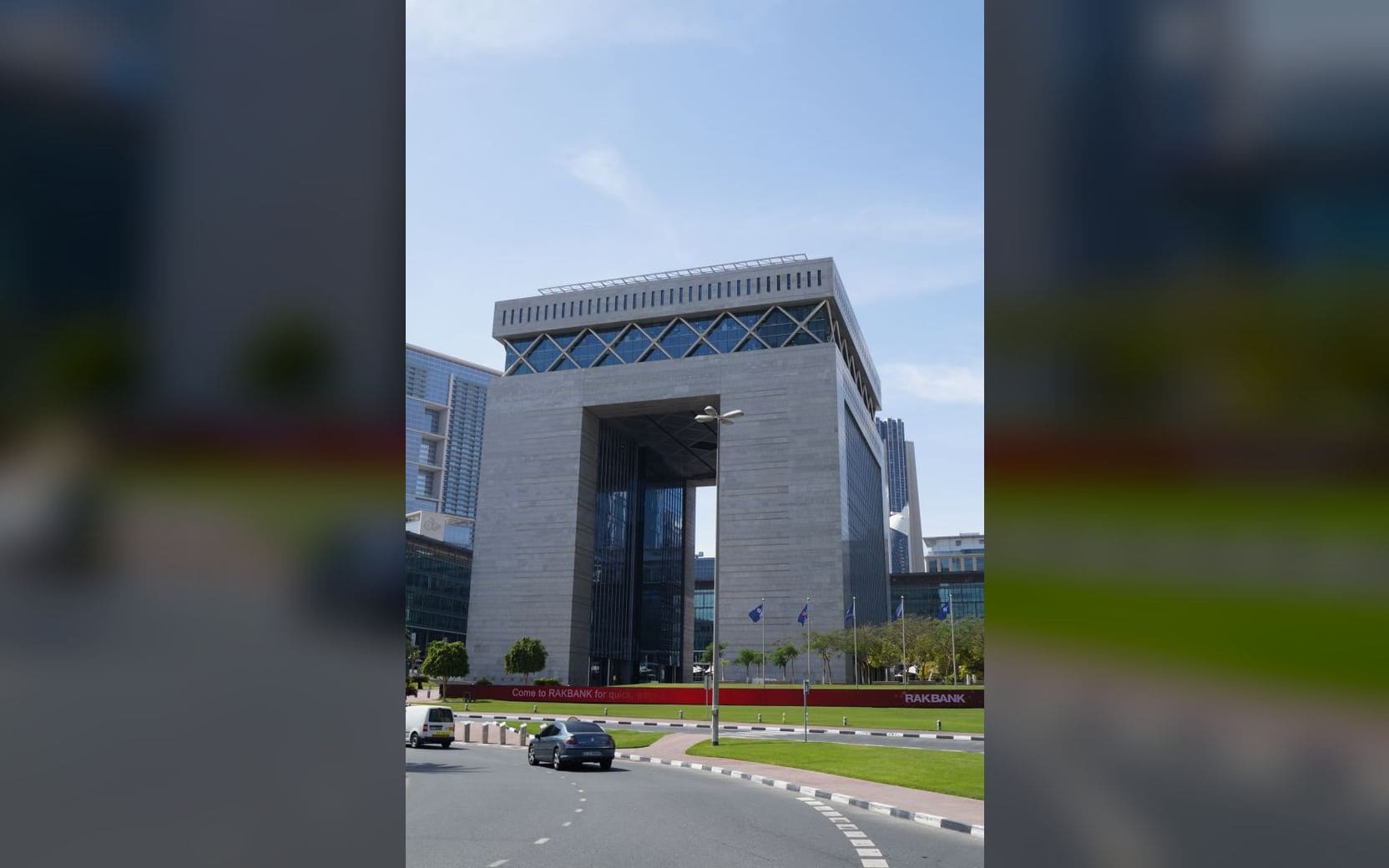
Projects in Masdar City
Full catalogue →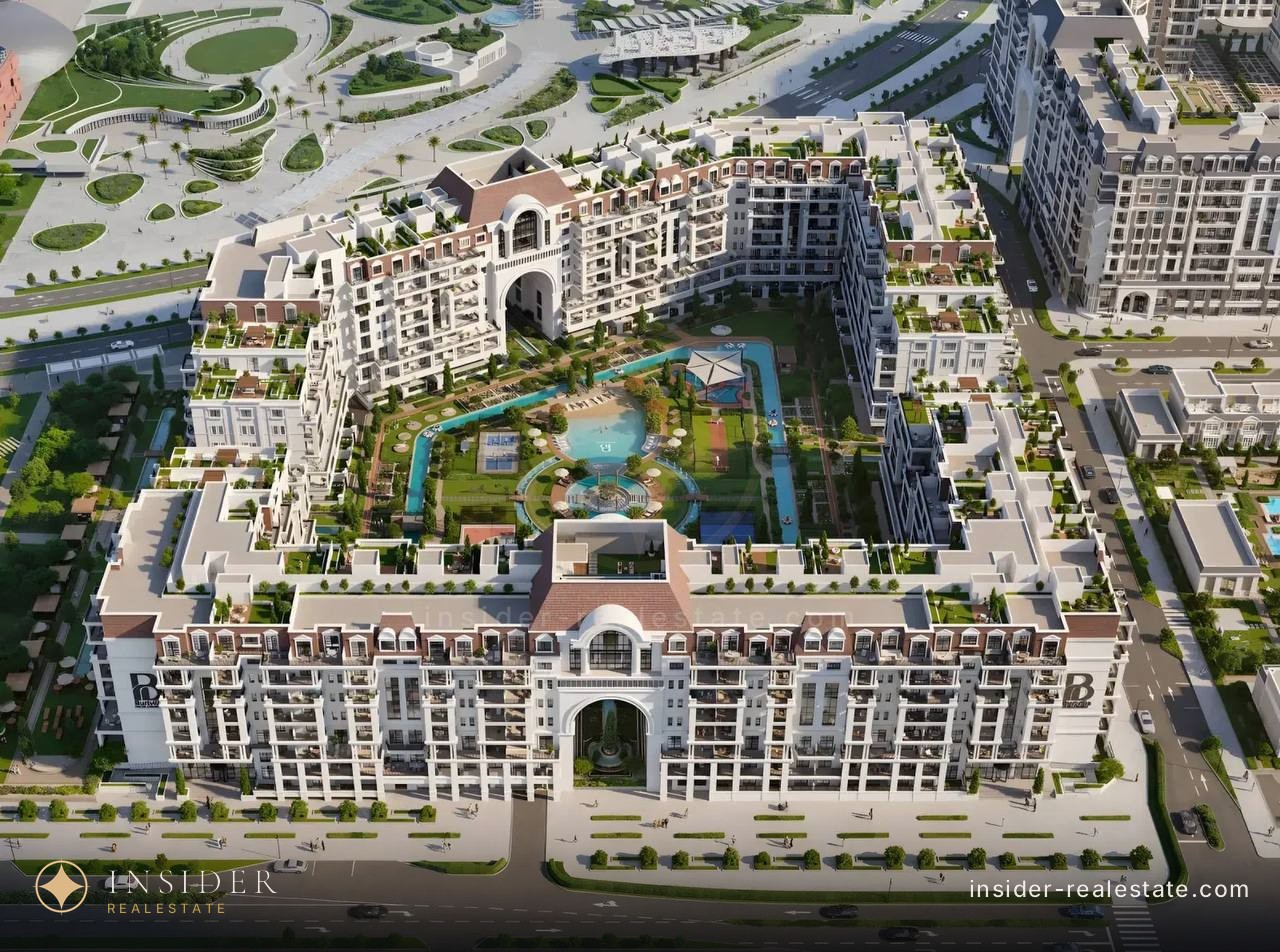
Video
Abu Dhabi on camera
Films from the channel about the emirate. They are not cut by district — the market, the islands and the ownership rules are the same conversation across all of them — so the rail is the emirate's rather than this district's.
Full reviews


Questions about Masdar City
Is Masdar City actually finished?
It is a functioning district with housing, offices, universities and retail, but the original masterplan was scaled back substantially and new phases continue to be added. Confirm what is under construction near any specific building.
Why are cooling costs lower in Masdar City?
The urban design — narrow shaded streets, buildings placed to shade each other, wind towers and orientation to prevailing breezes — lowers ambient temperatures measurably, and the buildings themselves are built to a higher efficiency standard.
The yield and entry price shown above are indicative figures for comparing districts against each other, drawn from market summaries rather than calculated from our own inventory the way the Dubai numbers are. They are not a valuation of any specific property and they are not investment advice. Foreign freehold ownership in Abu Dhabi is available only within designated investment zones — confirm the designation for any specific property before proceeding.
In the news
HELM Abu Dhabi longevity cluster: 30,000 jobs and $25.6bn of GDP by 2045 — what it means for housing demand
Abu Dhabi launched HELM, a life-sciences and longevity cluster based in Masdar City, in April 2025. Targets for 2045: $11.5bn of investment, 30,000 jobs and $25.6bn added to GDP. The first shared lab opened in 2026. Who it brings to the capital and where they will live.
Abu Dhabi 2040: a doubling population, AED 240bn of infrastructure and the transport pipeline
Abu Dhabi expects its population and GDP to double by 2040; the emirate had 4.14m residents at the end of 2024. AED 240bn is earmarked for housing, transport, health and schools. The widely quoted "6 million by 2040" is not an official figure. What is actually being built.
Hafeet Rail: the UAE–Oman railway, Abu Dhabi to Sohar in 100 minutes, and 40% built
Hafeet Rail is a $2.5bn joint venture between Etihad Rail, Oman Rail and Mubadala: 238km from Abu Dhabi through Al Ain to the Omani port of Sohar. The passenger service will run at up to 200km/h; as of spring 2026 the line was 40% complete, and Oman ratified the agreement in September.
Zayed International Airport, Abu Dhabi: Terminal A, a record 32.5m passengers, and what it did for Yas Island and Al Raha
Terminal A at Abu Dhabi’s airport opened in November 2023 after years on hold: 742,000 sq m, capacity for 45m passengers a year. Renamed Zayed International in February 2024, it handled a record 32.5m passengers in 2025 (+12.8%). What that means for housing on Yas Island and in Al Raha.
Hudayriyat Island, Abu Dhabi: Modon’s masterplan, Nawayef and Bashayer, and what people are actually buying
Hudayriyat is a 3,000+ hectare island off Abu Dhabi’s southern shore that state developer Modon is turning into a sports and residential district. Nawayef Village’s 378 townhouses (about AED 2bn) sold out on launch day; Bashayer sold roughly AED 3bn in a day in December 2025.
UAE's New Oases: How Dubai and Abu Dhabi Are Turning the Desert Green
Dubai ecotourism and green communities: Al Layan Oasis in Al Marmoom, Expo Valley Nature Reserve at Expo City Dubai, Hudayriyat Island in Abu Dhabi and Kalba in Sharjah. What is being built, when it opens and why nature is becoming part of UAE real estate.
Saadiyat Beach Ranks in the World's Top 20: Abu Dhabi Beats Famous Resorts
Saadiyat Beach in Abu Dhabi is No. 19 in The World's 50 Best Beaches 2026. Why Saadiyat Island made the list of the best beaches in the world, and how the Louvre, a marine reserve and luxury resorts are turning it into Abu Dhabi's main tourism hub.
Abu Dhabi property market 2026: AED 117bn in six months and a run of ADREC records
ADREC data: AED 117bn of transactions in H1 2026 (+112%), AED 86.1bn of sales and AED 13.8bn of foreign direct investment (+309%, more than all of 2025). Full-year 2025 was a record AED 142bn. What sits behind the numbers.
Al Maryah Island apartments: W Residences Abu Dhabi, the capital’s first W-branded homes, due in 2027
W Residences Abu Dhabi is the first W-branded residential project in the UAE capital, on the financial district of Al Maryah Island. Developer Taraf (Yas Holding) broke ground in January 2025 with Marriott; 1–4 bed apartments, duplexes and penthouses launched from AED 2.2m, with handover in Q4 2027.
Other apartment districts
All Abu Dhabi districts →Is Masdar City the right call for you?
Tell me the budget and what the purchase is for — a percentage, a resale, or somewhere for the family to live. I will run it against the Dubai alternative at the same money and say plainly which side wins. It is often not the side people expect.
Ask on WhatsAppAsk a question
Telegram is the fastest way — I answer personally.
Message on Telegram